When "security" once again becomes the focus, how does BIT make trust verifiable?
Recently, the digital asset industry has seen a series of security incidents, with multiple attacks and stolen funds once again putting platform security at the center of market attention. As attack methods continue to evolve, risks are no longer limited to a single wallet or technical vulnerability, but may involve multiple stages including account permissions, private key management, asset transfers, and third-party infrastructure.
For users, a more practical question than "is the platform secure?" is: when anomalies truly occur, can the platform detect and contain risks earlier? Are there sufficient authorization and checks-and-balances mechanisms for critical operations? And as assets further extend into categories like US stocks and RWAs, can security and risk control systems keep pace with these new business boundaries?
Against this backdrop, global digital financial services platform BIT (formerly Matrixport) has officially released the "BIT Trust Whitepaper" V2.0. Centered on security, compliance, transparency, and verifiability, it systematically presents BIT’s current risk governance, security architecture, regulatory compliance, and independent verification mechanisms, while further extending to regulatory, governance, and transparency arrangements across different business scenarios such as US stocks, RWAs, and asset management.
As a platform carries more and more assets and businesses, how can security and trust expand in tandem?

What Can Platforms Do Before Risks Truly Occur?
No platform can eliminate all risks with a simple claim of being "secure." For users, what deserves more attention is whether defensive lines exist before risks materialize, and whether mechanisms are in place to promptly identify and contain risks when anomalies occur.
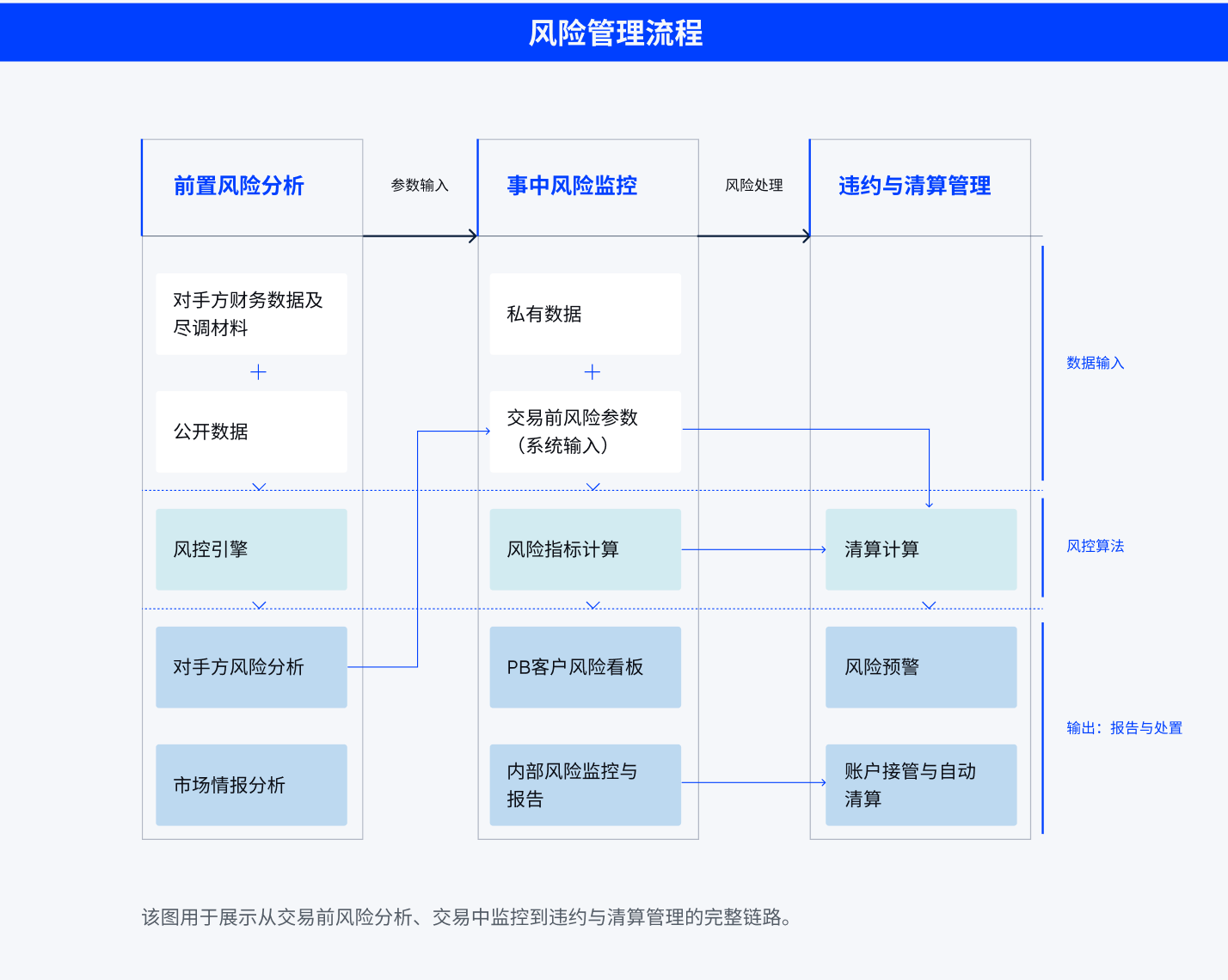
The whitepaper emphasizes that risk management is not merely post-event response, but should permeate pre-trade assessment, in-trade monitoring, and post-trade handling. In specific business scenarios such as margin funding and collateralization, this framework is further implemented through due diligence, risk parameter setting, real-time monitoring, early warning systems, and default and liquidation procedures.
These mechanisms ultimately translate into account and asset security that users can more easily perceive. For example, BIT conducts 24-hour dynamic monitoring of high-risk behaviors such as anomalous logins, suspicious devices, and irregular withdrawal requests, triggering alerts, delayed processing, or manual review based on risk levels. Security systems must do more than simply "discover what happened after the fact"; they need to identify risks as soon as anomalies arise and intervene promptly.
At the digital asset protection level, the majority of assets are stored in cold wallets; private keys are kept in Hardware Security Modules (HSMs) certified at the FIPS 140-3 Level 3 standard and cannot be accessed or exported in plaintext.
But a more critical issue than technical tools is: when business advancement conflicts with security requirements, who has the authority to say "no"?
According to the whitepaper, if product proposals, system architectures, or go-live changes pose significant security risks or fail to meet security baselines and compliance requirements, BIT's security team holds veto power. For critical operations such as asset transfers, permission changes, and trade execution orders, a "four-eyes principle" is enforced, requiring participation from at least two authorized personnel.
The logic behind this mechanism is not to promise that risks "will never happen," but rather to prioritize security ahead of potential risks—identifying anomalies earlier, establishing constraints sooner, and minimizing the impact of single-point failures as much as possible.
From Digital Assets to US Stocks, How Can Security Keep Pace with New Business Boundaries?
As businesses expand from digital assets into areas like US stocks, RWAs, and asset management, the meaning of "security" also evolves. Users no longer only care about account safety and how digital assets are stored; they also look into who operates the business, under what regulatory framework, and through which stages assets pass.
Taking US stock trading as an example, the updated whitepaper provides further details on regulatory oversight, account structure, clearing, and custody arrangements. BIT’s securities business is operated by Matrix Gelephu Pte Ltd and regulated by the Gelephu Financial Services Office (GFSO); relevant operations are supported by applicable regulatory and licensing frameworks, client asset protection mechanisms, and licensed third-party financial institutions, providing corresponding compliance and infrastructure support.
What appears to a user as a simple "buy" order actually connects multiple back-end stages: operations, regulation, trade execution, clearing, and asset custody. For financial platforms, the broader their business reach, the more they must extend corresponding risk governance and compliance mechanisms in tandem, rather than simply adding new product entry points.
The same logic extends to BIT’s other operations. The updated whitepaper adds regulatory and governance information for Matrixport Asset Management (MAM), and outlines the compliance footprint of BIT Group entities across multiple jurisdictions including Hong Kong, Bhutan, Singapore, Switzerland, the UK, the US, and the British Virgin Islands.
Spanning from digital to traditional financial assets, what BIT presents is not a point-specific security mechanism for a single product, but a comprehensive risk governance and trust framework that scales alongside expanding business boundaries.
Beyond Security, Why Does Trust Require "Verifiability"?
Risk control addresses how risks are identified and managed, but for a financial platform spanning multiple assets and businesses, simply telling users "we have risk controls" falls short. If security, compliance, and asset arrangements can only be explained internally by the platform, trust ultimately remains pinned on "believing what the platform says."
Therefore, BIT establishes the foundation of compliance and regulation, independent audit and assurance mechanisms, and technological and operational transparency as the three pillars of its overall trust framework, enabling "trust" to be broken down into more concrete questions: Who regulates the platform? How are assets protected? How is risk controlled? Can these mechanisms be independently verified?
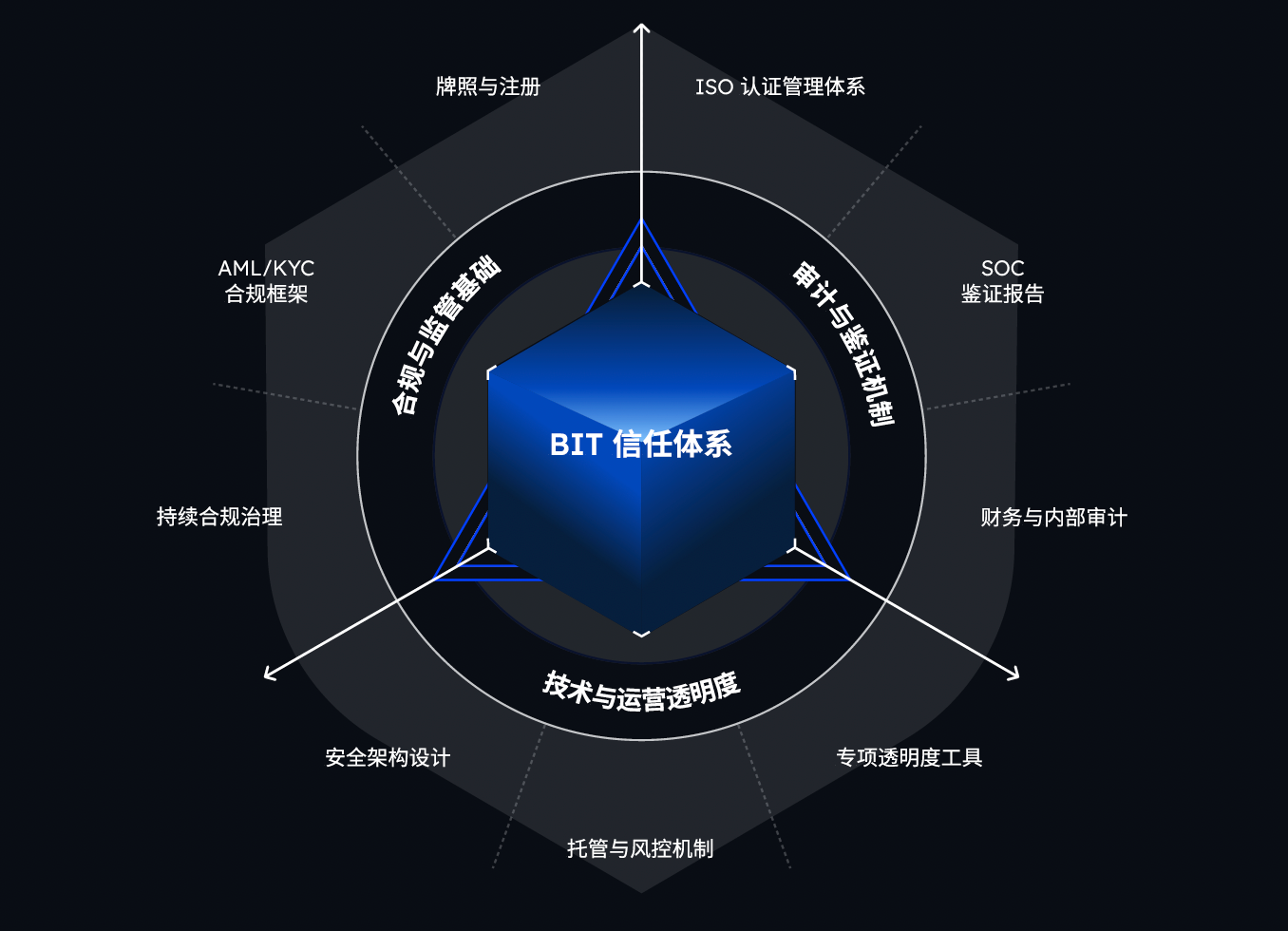
At the audit and assurance level, BIT utilizes ISO management system audits, independent SOC assurances, annual financial audits, and internal audits to build a multi-tiered, complementary verification system tailored to the scope of different entities and business lines, avoiding over-reliance on any single audit or assurance mechanism.
Transparency addresses whether information can be seen, while verifiability goes further to answer whether that information can be independently audited.
As the industry once again places "security" front and center for all platforms, what truly matters may not be repeating the phrase "we are secure," but rather whether platforms can allow users to see the mechanisms behind those words.
Trust does not stem from a single commitment or one-off audit, but rather from long-term, continuous institutional operation and external verification. Security requires ongoing operation, while trust demands continuous verification.
Full version link for the "BIT Trust Whitepaper V2.0": https://www.bit.com/whitepaper
Join TechFlow official community to stay tuned
Telegram:https://t.me/TechFlowDaily
X (Twitter):https://x.com/TechFlowPost
X (Twitter) EN:https://x.com/BlockFlow_News
 @Matrixport_CN