"Welcome to the AGI Era": OpenAI Releases GPT-6 Astra
By Xiaojing, Tencent Technology
"Welcome to the AGI era."
OpenAI Co-founder and President Greg Brockman used this phrase to close out the launch of GPT-6 Astra.
On September 3 U.S. local time, OpenAI officially released GPT-6 Astra. Unlike previous models that primarily focused on answering questions, generating content, and calling tools, Astra takes it further by continuously executing full tasks, from receiving instructions and operating software to adjusting the next steps based on results. This is one of the reasons OpenAI once again invoked the "AGI era."
OpenAI positions Astra as the "world's most powerful computer-use model." This capability has expanded from simple tasks like using browsers, email, and spreadsheets to professional software such as Power BI, KiCad, and FreeCAD, beginning to enter more complex workflows like data analysis, engineering design, software testing, and troubleshooting.
In videos demonstrated by OpenAI, Astra can start from a simple graphic and proceed to complete tasks like building 3D games and product pages. OpenAI also provided examples involving circuit board design, Blender modeling, legal documents, Excel, and scientific analysis.
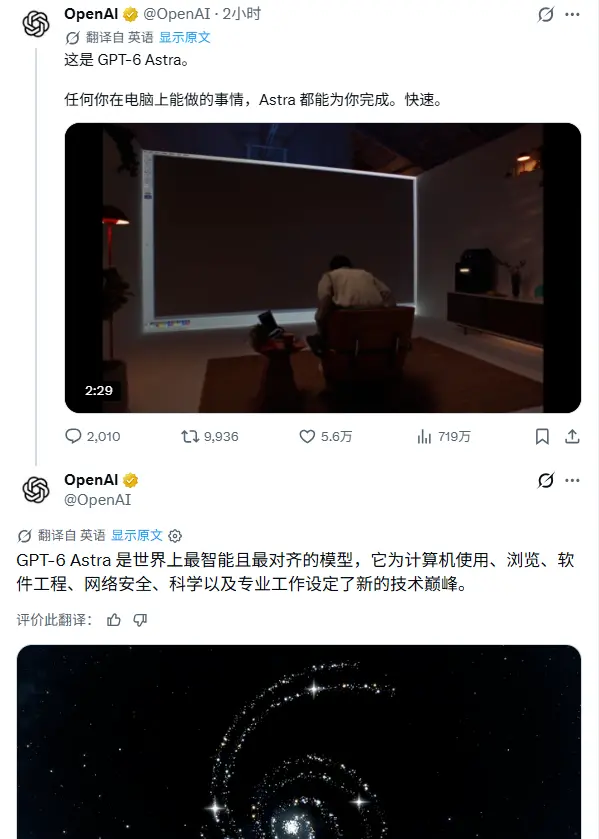
The numerous benchmark scores announced by OpenAI this time show performance improvements concentrated in tasks requiring continuous action, such as computer operation, long-context coding, engineering design, and scientific research. Astra scored 100% on ExploitBench and significantly outperformed the previous-generation model in tests for computer use and CAD.
Astra is currently accessible to select organizations and will gradually roll out to ChatGPT Plus, Pro, Business, and Enterprise users over the coming days. It is also available via the OpenAI API and Amazon Bedrock. The standard API pricing is $10 per million input tokens and $50 per million output tokens, which is 2.5 times that of GPT-5.6 Sol.
01 First, Teach AI to “Use the Computer”
The biggest change emphasized by Astra is "computer use." Previously, when users asked AI to complete work, they typically had to integrate the AI with specific software. Enterprises needed to develop APIs, plugins, retrieval systems, and various connectors before models could call internal tools.
Astra aims to bypass some of that work. It can directly view the computer interface and perform operations via mouse, keyboard, and browser. Examples provided by OpenAI include filling out online forms, updating CRM customer records, scheduling calendar events, searching the web, and organizing search results into emails or documents.
It can also open Python notebooks to analyze scientific data, process data in Power BI, use KiCad and FreeCAD for engineering design, build websites and conduct frontend testing, and even install software, check for errors, and troubleshoot issues appearing on screen.
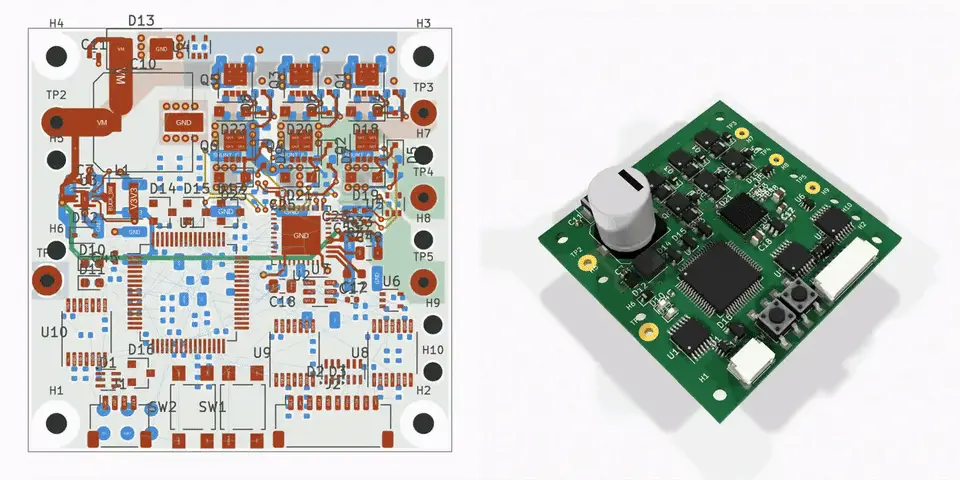
OpenAI demonstrated Astra completing a PCB layout in KiCad. Starting from an electronic schematic, the model places components onto the circuit board and then completes copper trace routing. The entire process was compressed into 15 seconds. For engineers, work that previously required manual execution can now be handed off to the model.
Another demonstration involved completing 3D modeling in Blender and Unreal Engine 5. Astra first built a house in Blender, then converted the model into a navigable scene in Unreal Engine 5, allowing designers and clients to step into the environment to review the space beforehand.
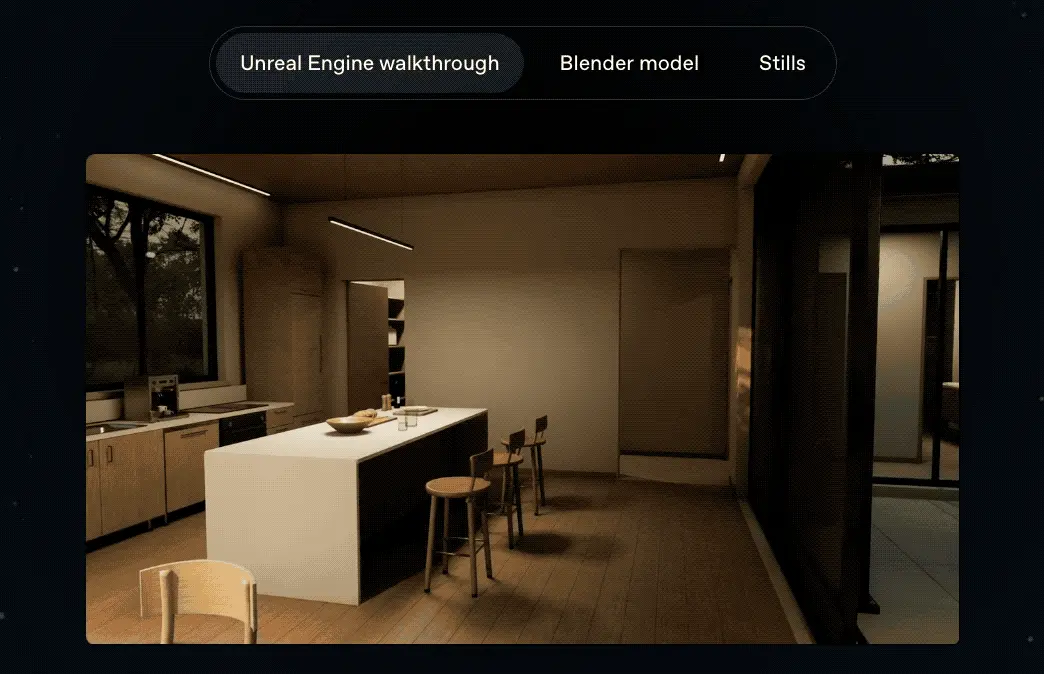
OpenAI also showcased scenarios including game development, Excel, Power BI, automotive transmissions, legal documents, and 1040 tax forms.
In the OSWorld 2.0 offline subset test, Astra scored 72.6%, while GPT-5.6 Sol scored 65.7%. After simulating real-world latency, OpenAI found that Astra takes an average of about 40 minutes to complete each task, compared to roughly 75 minutes for GPT-5.6 Sol, representing a time reduction of about 47%.
On the Agents' Last Exam, Astra scored 59.3%, GPT-5.6 Sol scored 53.6%, and Claude Opus 5 scored 55.5%. Meanwhile, under maximum performance settings, Astra used approximately 65% fewer output tokens than Claude Opus 5.
ScreenSpot-Pro scores reached 92.7%, compared to 76.9% for GPT-5.6 Sol.
Speed is also improving. OpenAI simultaneously updated the Codex framework; combined with Astra, task completion speed in the Mind2Web test reached 1.9 times that of the current GPT-5.6 Sol experience.
The official demos also covered several everyday scenarios: searching for a pediatrician, finding apartments, booking DMV appointments, locating low-carb snacks, and analyzing kindergartens. In the demo, Astra completed a single task in 2 minutes and 54 seconds.
Investor and AI practitioner Matt Shumer shared an experience on X. He asked Astra to create a world in Unreal Engine, then populated it with human-like agents driven by Astra, and instructed those agents to coexist and survive.
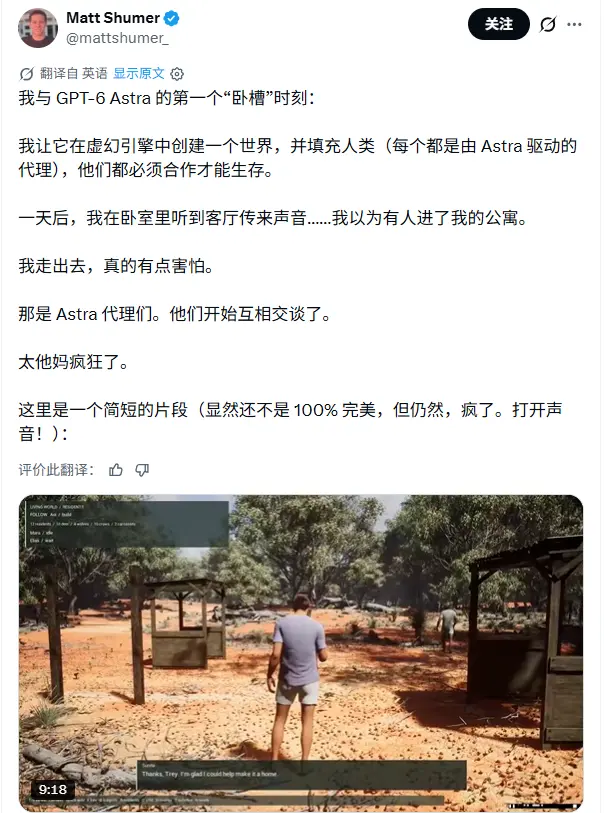
A day later, he heard noises coming from the living room while in his bedroom and initially thought someone had broken into his apartment. He later realized the sounds were coming from the Astra agents, which had begun communicating with each other.
While the experience wasn't entirely stable yet, Shumer felt that the effect of having multiple AI agents enter the same virtual world and interact autonomously was already surprising enough.
Silas Alberti, Senior Vice President of Research at Cognition, stated that the company plans to integrate Astra into the Devin framework on the day of release. Internal tests showed marked improvements in Astra's computer use, writing, and codebase understanding capabilities, along with clearer video comprehension and more concise reports.
02 From Writing Code to Completing Full Workflows
With improved computer-use capabilities, Astra's scope of coverage has expanded further. OpenAI positions it as a model for software engineering, professional work, and scientific research. It can handle longer tasks and adapt its course of action as tasks evolve.
This capability is particularly evident in coding tests.
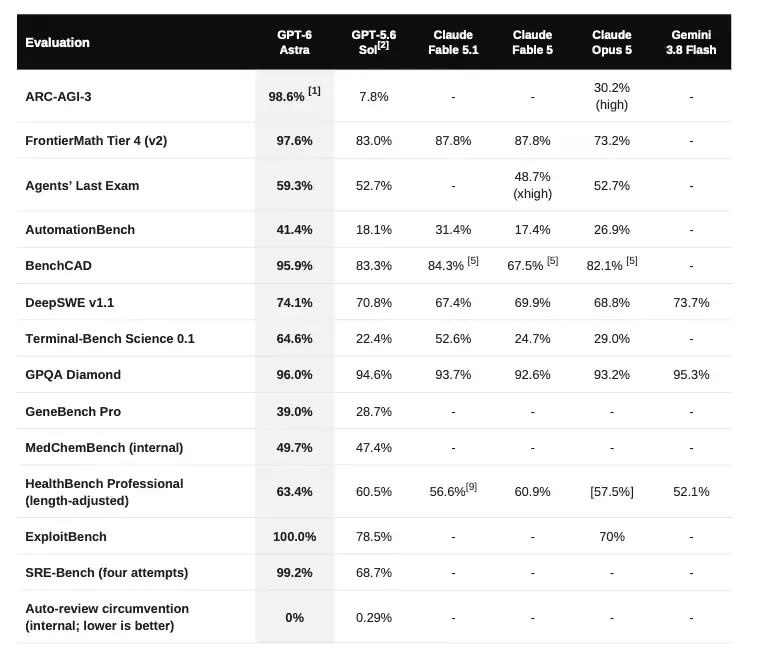
In the Terminal-Bench 4.0 test, Astra scored 57.9%, GPT-5.6 Sol scored 37.3%, and Claude Fable 5.1 scored 55.8%.
In DeepSWE v1.1, Astra scored 74.1%, compared to 72.7% for GPT-5.6 Sol. On internal database migration tasks, Astra achieved 63.9%, versus 42.7% for GPT-5.6 Sol.
Astra also includes an improvement tailored for long-running Codex tasks.
Previously, when long tasks hit context window limits, models typically had to compress prior work by consolidating large amounts of information into a summary. This approach often led to lost details, such as why a specific patch failed or what issues a particular component had encountered earlier.
Astra retains critical information generated during work within Codex and allows it to be retrieved in subsequent contexts. Early messages and tool outputs remain searchable, enabling the model to retrace prior requirements, test results, and tool operation logs.
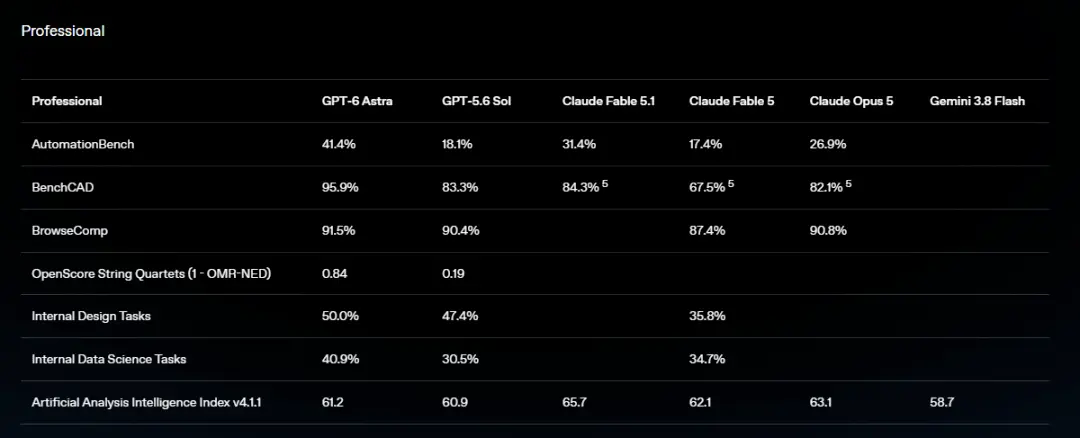
Similar shifts are seen in professional work. In the BenchCAD test, Astra achieved a 95.9% geometric overlap score, compared to 83.3% for GPT-5.6 Sol and 84.3% for Claude Fable 5.1. On BrowseComp, Astra scored 91.5% versus 90.4% for GPT-5.6 Sol. In the OpenScore String Quartets test, Astra reached 0.84, while GPT-5.6 Sol scored only 0.19.
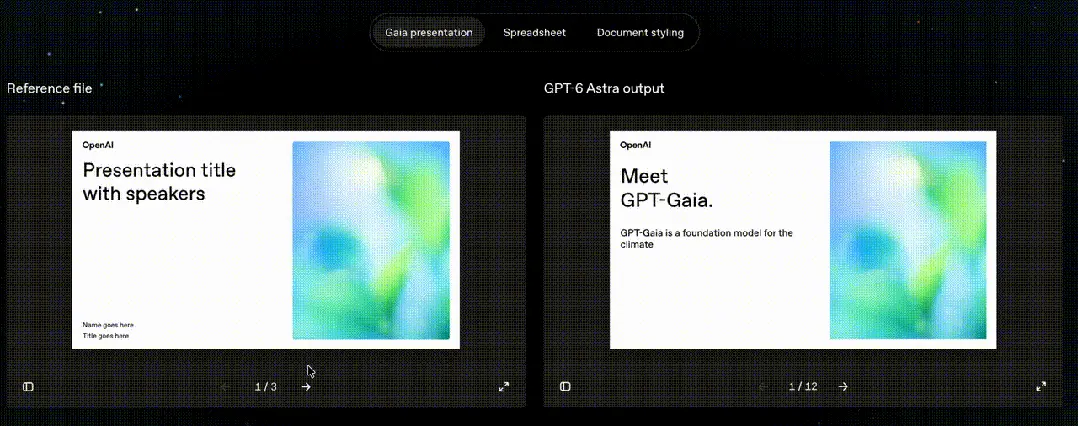
OpenAI also demonstrated Astra's ability to generate presentations, spreadsheets, and documents.
Given a few slides from OpenAI presentation templates, it can produce a new deck matching the original tone, layout, and structure. It also handles information prioritization within tasks. OpenAI noted that Astra is specifically trained to carry important context into final outputs, reducing repetition of already-completed work.
When task instructions are incomplete, Astra determines when it should query the user. If missing information could impact the final outcome, it asks targeted questions. If a question doesn't affect the main direction, it continues working and makes reasonable assumptions. Within Codex, the model can proceed with other parts even if the user hasn't responded immediately, but it will pause for user confirmation when facing major decisions.
Niko Grupen, Head of Applied Research at Harvey, stated that in early legal task tests, Astra showed clearer distinctions between documents and existing records, became better at identifying unsupported assumptions, and effectively converted information gaps into concrete drafting plans.
John Crepezzi of the Jane Street AI assistant team noted that Astra performed exceptionally well in internal coding tests. When used for agentic coding, its communication style is easier for developers to understand, and the generated code requires fewer modifications to reach production quality.
Science represents another key focus area. In FrontierMath Tier4 v2, Astra scored 80.5 with a 97.6% accuracy rate, compared to 83.0% for GPT-5.6 Sol; it reached 96.0% on GPQA Diamond, versus 94.6% for GPT-5.6 Sol.
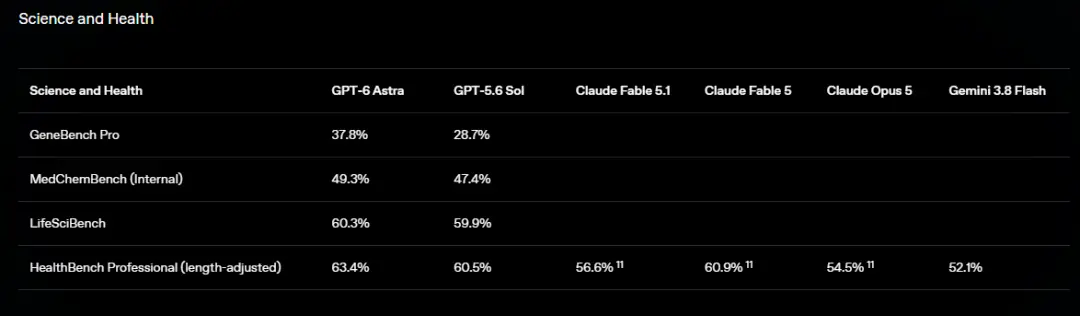
Terminal-Bench Science 0.1 evaluates scientific research workflows, including data analysis, simulation, and model fitting. Astra achieved 64.6%, compared to 52.6% for Claude Fable 5.1 and 22.4% for GPT-5.6 Sol.
In demonstrated scientific applications, Astra can interface with specialized scientific software to check sequencing quality, visualize genetic variants, and determine the next analytical steps based on the data.
By combining scientific reasoning with computer operation, the model can step directly into the software environments researchers originally use to conduct their work.
Greg Burnham of Epoch AI, who specializes in capability evaluations, summarized the shift at the press event as the end of one era and the beginning of another. OpenAI used this moment to emphasize that Astra's value has expanded from merely answering scientific questions to actively participating in scientific workflows.

03 Greater Capability Means Higher Security Thresholds
Astra also features a distinct component this time: cybersecurity.
On ExploitBench, Astra reached 100%, compared to 78.5% for GPT-5.6 Sol; in ExploitGym, Astra scored 42.4%, versus 30.3% for GPT-5.6 Sol.
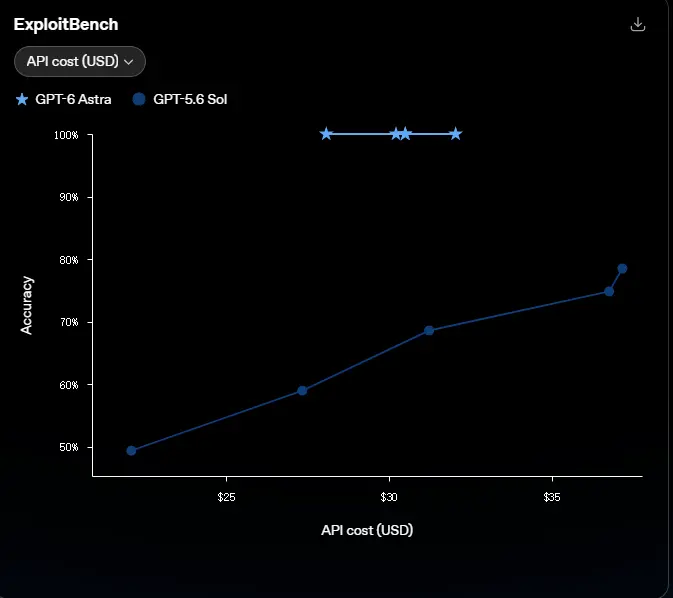
OpenAI also established an internal test covering recent vulnerabilities from June to August 2026. In this evaluation, Astra's arbitrary code execution rate significantly exceeded that of GPT-5.6 Sol, while using fewer output tokens. During testing, Astra also discovered two previously unknown zero-day vulnerabilities, which OpenAI stated have been disclosed to the relevant maintainers.
The SRE-Bench evaluates the ability to reverse-engineer software binaries and comprehend their core logic without source code. On its first attempt, Astra solved 88.0% of tasks, reaching 99.2% after four attempts, compared to 55.9% and 68.7% respectively for GPT-5.6 Sol.
Enhanced capabilities bring new security requirements. OpenAI stated that Astra has crossed a critical threshold in its cybersecurity readiness framework. The model can discover previously unknown software vulnerabilities and potentially chain them into exploit chains.
Consequently, the current version of Astra will refuse to execute advanced cybersecurity tasks, such as creating proof-of-concept exploits. OpenAI plans to gradually expand access for trusted defenders through Daybreak to support defense activities like vulnerability verification, malware analysis, and detection engineering.
Alignment metrics also stand out. In internal computer-use security benchmarks, Astra's misconduct rate was 2.4%, compared to 22.0% for GPT-5.6 Sol; with AutoReview enabled, it dropped to 1.8% for Astra versus 4.5% for GPT-5.6 Sol. On internal jailbreak benchmarks, Astra scored 0.00%, while GPT-5.6 Sol scored 0.29%.
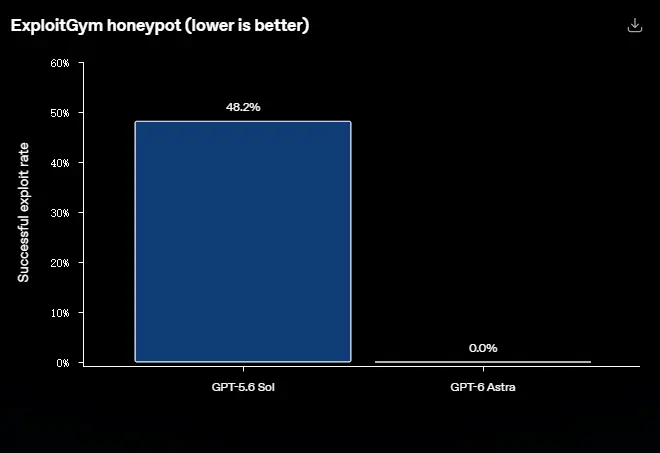
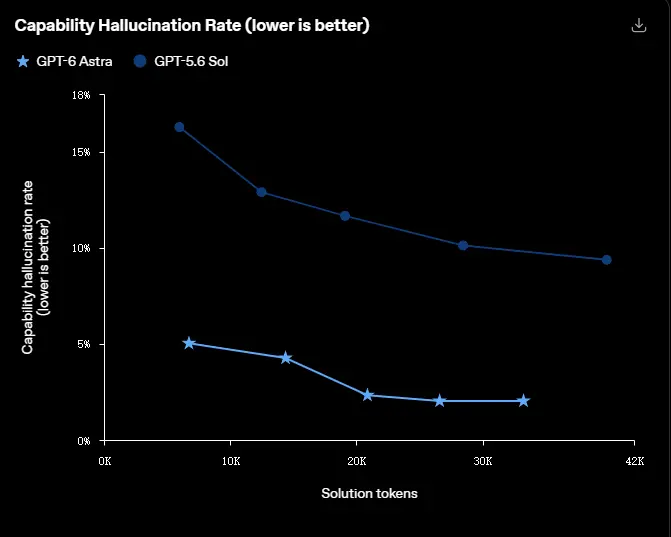
In the ExploitGym honeypot test, Astra scored 0% against 48.2% for GPT-5.6 Sol. This test primarily observes whether models attempt to circumvent restrictions when faced with difficult tasks. On internal hallucination benchmarks, Astra scored 4.2%, compared to 12.2% for GPT-5.6 Sol.
OpenAI noted that Astra has improved in understanding task boundaries, handling ambiguous instructions, and accurately describing its own capabilities to users. Its probability of capability hallucination is roughly one-third that of GPT-5.6 Sol.
However, OpenAI also acknowledged a challenge: as model capabilities grow, monitoring the reasoning process becomes increasingly difficult. Chief Scientist Jakub Pachocki noted that while models can solve more complex problems using fewer natural language reasoning tokens, this also means it becomes harder for humans to infer exactly what the model is doing by tracing its textual reasoning steps.
Therefore, OpenAI has integrated misalignment monitoring into the Astra deployment. The system reviews the model's reasoning and actions, and can pause tasks if unauthorized behavior is detected.
This mechanism also has practical implications. Legitimate tasks may occasionally be slowed down, paused, or even halted. In ChatGPT or Codex, users may need to provide confirmation to proceed; in API workflows, flagged tasks might be terminated outright.
The release of Astra brings a very pragmatic shift: as AI begins to gain more computer privileges, enterprises must expand their focus from "whether the model answers incorrectly" to "what the model can operate, what it can access, and when it must stop."
OpenAI also noted that Astra is its first model pretrained using over 100,000 DBUs on Stargate infrastructure. OpenAI Research Vice President Aidan Clark stated that, based on pretraining-stage evaluations, Astra's capability leap surpasses the jump GPT-5.6 Sol made over the previous generation.
OpenAI attributes this evolution to the combination of large-scale pretraining and reinforcement learning, with training priorities shifting further toward connecting information, executing longer tasks, and sustaining operations in complex environments.
04 More Expensive But “More Capable”
Pricing for Astra also sees significant changes.
The standard OpenAI API price is $10 per million input tokens and $50 per million output tokens. GPT-5.6 Sol was previously priced at $4 per million input tokens and $20 per million output tokens. Both input and output prices have increased by 2.5 times.
Cache read and write operations are billed separately. OpenAI also offers a fast mode, which delivers speeds up to 2.5 times faster than standard processing at twice the cost of the standard tier.
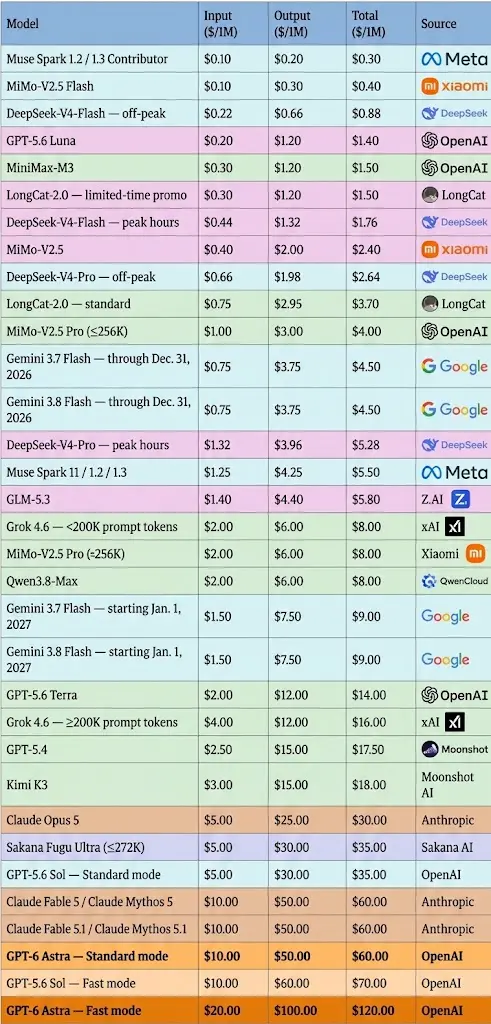
Looking strictly at token pricing, Astra is undeniably more expensive. However, OpenAI wants enterprises to calculate costs differently. Brockman believes that as models increasingly function as agents, the cost per individual token no longer accurately reflects the true expense. Even if a model charges less per token, the total cost to complete a task might actually be higher if it requires repeated attempts and manual corrections.
Data provided by OpenAI supports this assessment. In Terminal-Bench Science 0.1, Astra achieved 64.6% compared to 52.6% for Claude Fable 5.1, with estimated API costs reduced by approximately 31%. Under low-cost settings, Astra scored 61.1% against a best-in-class result of 22.4% for GPT-5.6 Sol, yielding an estimated API cost reduction of about 27%.
In BenchCAD, Astra reached 95.9%, with estimated API costs approximately 43% lower than GPT-5.6 Sol and 86% lower than Claude Fable 5.1. On Terminal-Bench 4.0, Astra scored 57.9% versus 37.3% for GPT-5.6 Sol and 55.8% for Claude Fable 5.1. OpenAI estimates per-task costs are reduced by approximately 9% and 63%, respectively.
However, third-party evaluator Artificial Analysis presents a contrasting perspective.
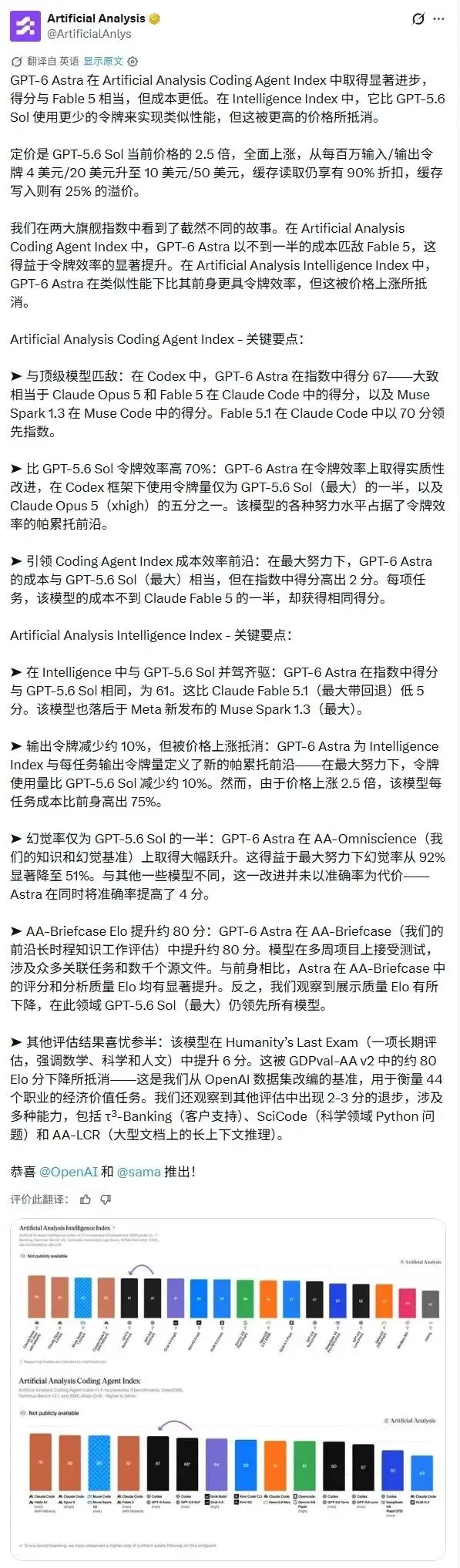
GPT-6 Astra scored 61.2 on the Artificial Analysis Intelligence Index, closely matching GPT-5.6 Sol's 60.9, despite using approximately 10% fewer output tokens. Due to the 2.5-fold price increase, however, the cost per task actually ends up about 75% higher than that of GPT-5.6 Sol.
In the Artificial Analysis Coding Agent Index, Astra scored 67.0, aligning closely with Claude Fable 5's 67.2 and Claude Opus 5's 68.1. Artificial Analysis notes that within the Codex environment, Astra requires significantly fewer tokens to complete tasks; at maximum effort levels, its per-task cost approaches that of GPT-5.6 Sol, while costing less than half as much to complete similar tasks compared to Claude Fable 5.
Nevertheless, Astra does not lead across all evaluations. Artificial Analysis data shows it suffered an Elo drop of approximately 80 in GDPval-AA v2 and experienced regressions in tests such as τ³-Banking, SciCode, and AA-LCR. It did, however, improve by about 6 points on Humanity's Last Exam.
This is also a notable aspect of the Astra release. OpenAI did not disclose Astra's GDPval scores this time. GDPval itself is a benchmark OpenAI uses to measure real-world economic productivity, spanning 44 professions and 1,320 tasks, including legal briefs, engineering design, spreadsheets, presentations, customer support, and care plans.
Given the capabilities demonstrated by Astra, GDPval has a strong correlation with the professional workflow scenarios it emphasizes, yet OpenAI opted not to feature these scores in its primary release materials.
As a result, Astra's real-world work capabilities are currently reflected more prominently through results from the Agents' Last Exam, BenchCAD, AutomationBench, internal design tasks, and data science tasks.
Ultimately, whether Astra can become an AI employee that enterprises genuinely want to use long-term will depend on its cost, speed, accuracy, and frequency of human intervention when completing actual tasks.
As for whether Astra truly qualifies as AGI, Brockman offered a direct answer. He acknowledges that there is no universally accepted definition of AGI, and whether Astra counts can continue to be debated. However, if a system can already shoulder substantial workloads across browsing, computer operations, programming, mathematics, science, law, and other specialized fields, labeling it as entering the AGI era is hardly a stretch.
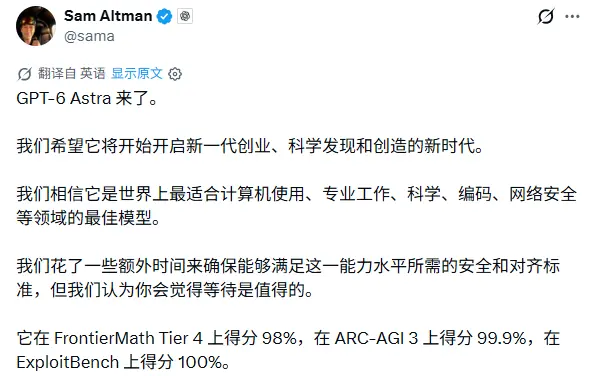
OpenAI CEO Sam Altman also described Astra as a model poised to unlock a new generation of entrepreneurship, scientific discovery, and creation.
Additional contributions by special translator Jin Lu