From AI Agent to Robotaxi: How Hao Sun Turns Cutting-Edge Technology into Trustworthy Systems?
Today, as AI Agents and autonomous driving simultaneously move into the deep waters of industrial application, the truly scarce engineers are not merely those who can build features, but those who can translate ambiguous technical visions into infrastructure that users, teams, and the industry can repeatedly rely on. Hao Sun’s career trajectory unfolds precisely along this path.
Over the past two years, AI Agents have become one of the most closely watched technical directions in Silicon Valley. From personal assistants capable of understanding natural language instructions to intelligent systems that can execute tasks across web, mobile, and cloud environments, Agentic AI is attempting to redefine the relationship between humans and software: users no longer simply click buttons or fill out forms; instead, they hand their goals over to the system, which breaks down the steps, calls upon tools, and drives progress forward.
Yet amid this wave, a more challenging question gradually emerges: If AI is truly to take on complex tasks on behalf of humans, how must it be understood, controlled, evaluated, and ultimately trusted?
Hao Sun’s work has revolved around this question for years. As an engineer in Agentic AI Systems and software infrastructure, he has held key technical roles at companies such as Meta, Okay, Please AI (formerly MultiOn AI), and Tesla AI. Spanning large-scale platforms, developer tools, consumer-grade AI agents, and autonomous driving evaluation systems, these experiences may appear scattered, yet they follow a clear underlying thread: transforming complex technology into usable, scalable, and verifiable systems within real-world scenarios.
Understanding Scale at Meta
Hao Sun’s engineering foundation was largely forged at Meta.
During his tenure at Meta, he managed frontend engineering for Facebook products and cross-platform Meta initiatives. As one of the primary maintainers of foundational, accessible, and reusable component libraries, he supported product needs across different design systems such as Facebook, Instagram, and WhatsApp. To everyday users, component libraries are invisible; but on a platform serving billions, they determine whether product experiences remain consistent, whether design standards are actually implemented, and whether engineering teams can sustain efficiency in high-complexity environments.
He also initiated and built internal UI galleries, helping thousands of engineers and hundreds of designers explore components and design standards. Though not directly exposed to the public, such tools serve as critical infrastructure for large technical organizations aiming to maintain collaborative efficiency. They transform design systems from static documentation into functional interfaces that engineers and designers call upon, compare, and validate every day.
In the open-source space, Hao Sun also led contributions to the CSS-in-JS library StyleX. StyleX optimizes style organization and bundle size through approaches like atomic styles, addressing performance and maintainability challenges in modern frontend engineering. For him, open source is not merely a resume addition, but a channel for scaling engineering expertise outward into the broader developer ecosystem: once a tool is understood and adopted by more engineers, its impact transcends the boundaries of a single company.
These experiences exposed Hao Sun early on to a core reality: technical systems are proven not in demonstrations, but through repeated testing under high concurrency, across multiple teams, platforms, and genuine user feedback.
At Please AI, Translating Natural Language into Executable Plans
What truly brought Hao Sun’s work into the core arena of AI agents was his tenure at Please AI.
Originally known as MultiOn AI, Please AI is a consumer-grade AI technology company that completed a $20 million Series A round, backed by investors including General Catalyst, Amazon Alexa Fund, Samsung, Forerunner Ventures, Mastercard, and Blitzscaling Ventures. The company focuses on moving AI beyond mere answer generation, instead helping users advance toward real-life goals by continuously executing tasks—such as planning trips, scheduling events, researching information, devising strategies, or completing multi-step actions.
As a founding engineer at Please AI, Hao Sun led frontend development for consumer-facing products, including the Chrome extension, web app, and iOS app. He did more than just implement product interfaces; he oversaw the entire journey from MVP to user research, feedback iteration, and product-market fit exploration. This meant his role extended far beyond “turning designs into code,” requiring constant balancing among technical feasibility, user comprehension costs, and agent execution capabilities.
The true challenge of AI agents rarely lies in generating seemingly coherent text; rather, it stems from converting users’ vague natural language goals into structured, verifiable, and executable multi-step plans. For instance, when a user says “help me plan a move” or “help me prepare for a weekend trip,” the system must comprehend the objective, break down constraints, schedule steps, offer recommendations, and keep the user informed throughout the process about what the AI is doing, why it’s doing it, and what comes next.
Hao Sun’s original contributions are precisely embodied in this “translation layer”: he architected and delivered the frontend software and core experience that transforms high-level autonomous AI visions into scalable, production-ready systems. According to Please’s founder, Hao began architecting and implementing the web app, Chrome extension, backend infrastructure, and internal tools from the earliest stages, designing foundational UIs and UX flows that enabled non-technical users to delegate multi-step tasks via natural language with minimal friction. This “user-to-AI-agent interaction model” later became the cornerstone of Please’s product experience.
MultiOn / Please’s product and technical direction has also drawn attention from media outlets such as Forbes, The Information, PhocusWire, and Business Insider. Notably, Forbes covered the company’s explorations in virtual agents under the headline “MultiOn Innovates With Virtual Agents,” highlighting a demo where MultiOn’s AI agent successfully negotiated and ordered a Tesla Cybertruck. This case garnered interest precisely because it translated the abstract concept of “AI handling complex digital tasks on behalf of humans” into a concrete, publicly understandable scenario.

Under Hao Sun’s technical leadership, Please AI’s system amassed over 3,000 customers shortly after launch. In this sense, his value went beyond delivering a single product feature; he spearheaded the creation of a technical pipeline that allowed Agentic AI to transition from conceptual prototype to daily user practice.
Joining Tesla, Building Trusted Tools for Autonomous Driving Evaluation
If Please AI represented the deployment of Agentic AI in consumer scenarios, then joining Tesla AI placed Hao Sun’s expertise into a higher-stakes, higher-standard systemic environment.
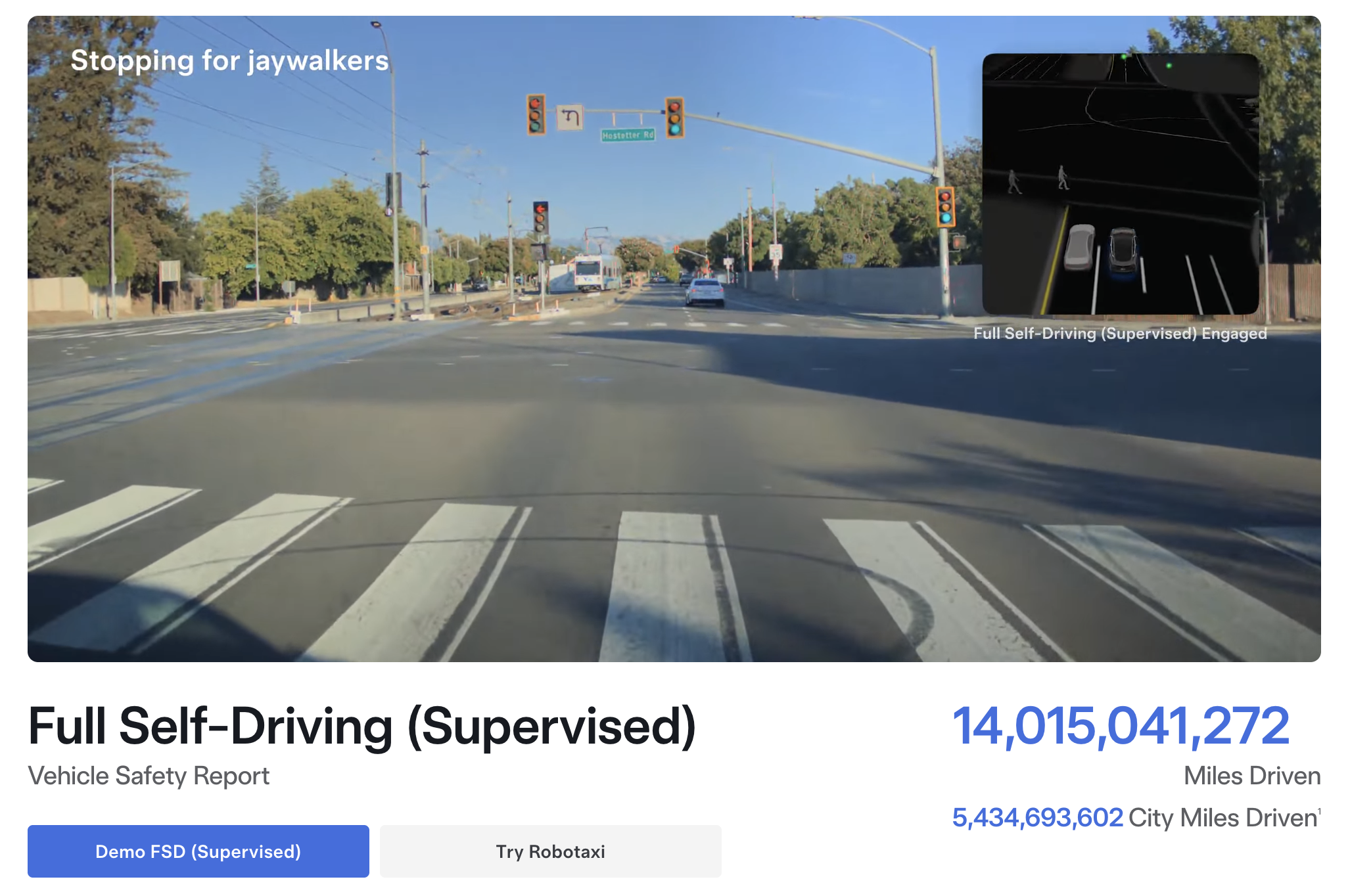
Since September 2025, Hao Sun has joined Tesla AI as a Senior Autopilot Software Engineer, driving the evaluation and sign-off processes for Tesla Full Self-Driving (FSD). As the frontend lead for model evaluation tools, he initiated and built multiple tool solutions tailored for modeling, annotation, and evaluation teams to support closed-loop assessment. The evaluation system he leads assists machine learning engineers in assessing models from a Level 4 autonomous driving perspective, serving as a critical component within Tesla’s autonomy safety and readiness framework. It has facilitated the internal evaluation and scaling of the L4 Robotaxi program from zero to deployment across numerous U.S. cities.
Evaluating autonomous driving models extends far beyond checking whether a model performs well on a test set. It requires synthesizing a vast array of complex signals—including real-world roads, simulation environments, driver takeovers, vehicle ride quality, safety metrics, and anomalous behaviors—enabling engineering teams to pinpoint failure modes, compare different model configurations, and determine whether a system is mature enough to advance to the next phase.
Hao Sun’s architecturally led Labeling, Evaluation, and Comparison Tool was built precisely to address this challenge. He designed and implemented the corresponding interfaces, integrated backend data pipelines, and leveraged modular design systems, dynamic metric visualizations, real-time data streams, and interactive dashboards to significantly improve the evaluation team’s efficiency in analyzing failure cases and diagnosing issues. The tool is used to compare autonomous driving models and configurations, analyzing multidimensional data covering safety, comfort, vehicle motion anomalies, operator or customer takeovers, and ride comfort metrics. It transforms the most critical questions in model iteration—“why did it fail, where did it fail, and how do we compare?”—into a reusable training asset for engineering teams.
Such work is vital to the safe evolution of autonomous driving systems. For FSD and Robotaxi, the real difficulty lies not in showcasing a single successful drive, but in establishing a repeatable, comparable, and traceable evaluation mechanism that allows model iterations to be systematically validated by engineering organizations.
Currently, the evaluation system he leads has become one of the primary benchmarks within the Tesla AI division for assessing autonomous driving capabilities, playing a key role in internal decision-making and in materials shared with regulators and the public, having now supported over 14 billion miles of autonomous driving. Its methodologies are also being extended to closed-loop evaluation scenarios for the Tesla Optimus humanoid robot, exploring how capabilities like navigation, task execution, environmental interaction, and obstacle avoidance can be systematically measured. This means that what Hao Sun has spearheaded is not merely a point solution, but a reusable engineering framework.
From AI agents to Robotaxis, and now to robotics, the underlying question remains strikingly similar: As systems gain increasing autonomy, how should humans understand, evaluate, correct, and trust them? Hao Sun’s work is dedicated to providing engineered answers to this very question.
Technical Influence Also Stems from Judgment
In Silicon Valley, outstanding engineers are often measured by their products and code; yet in emerging technological fields, influence is equally reflected in whether peers trust their judgment.
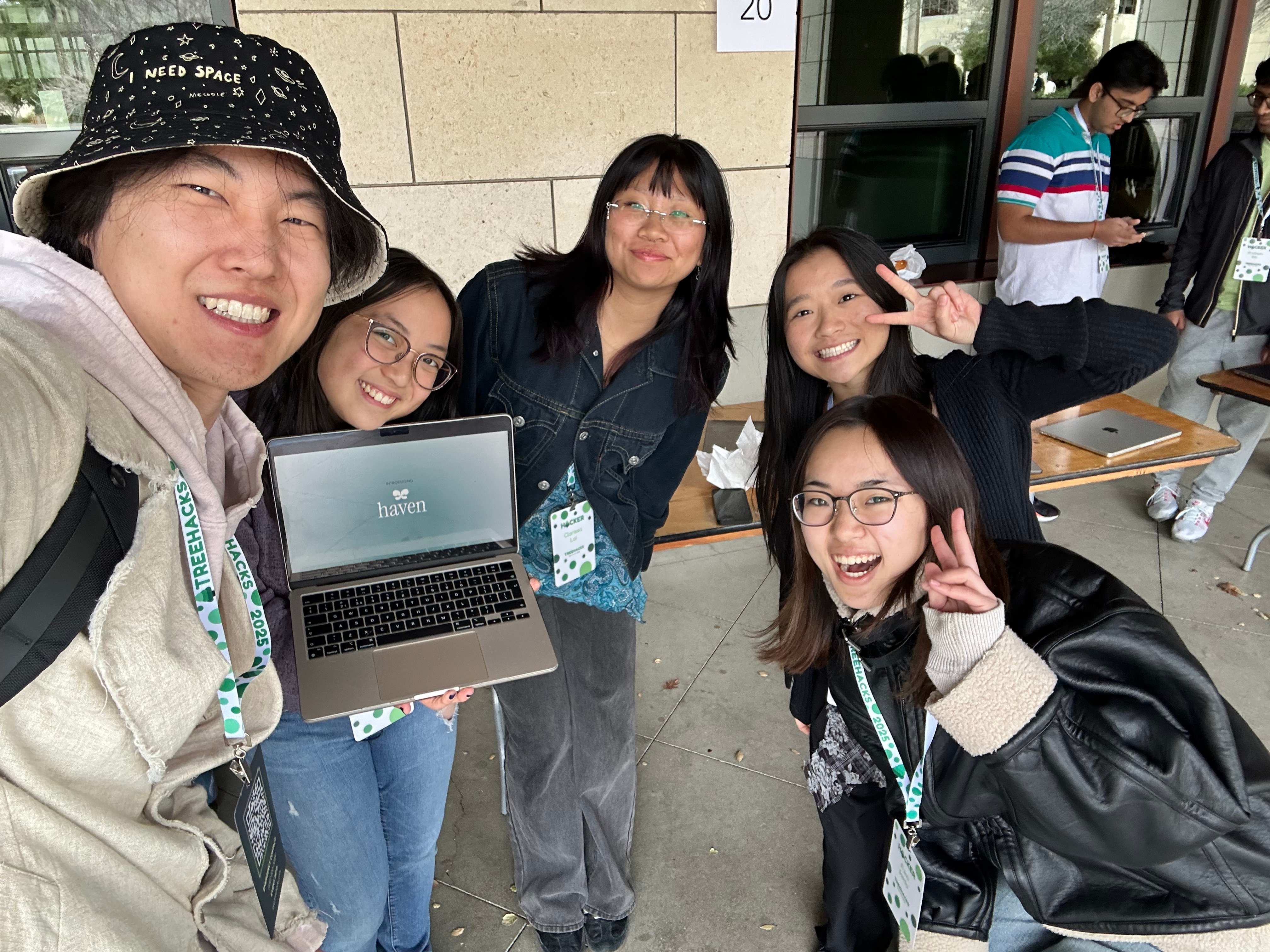
Hao Sun has been invited to serve as a judge for several technical competitions and hackathons, including the DevDay x MultiOn API Hackathon, the AI Agents 2.0 Hackathon by MultiOn & AgentOps, Stanford TreeHacks 2025, and CruzHacks 2025. These events focus on AI agents, developer platforms, infrastructure, and real-world applications. Judging requires evaluating proposals from the perspective of top-tier venture capital—assessing not only implementation details but also whether a solution possesses scalability, innovation, and commercial viability. Stanford TreeHacks 2025, for instance, drew over 1,000 engineering students from 30 universities across 12 countries, selected from more than 12,000 applications. Such judging engagements further illustrate that his professional judgment in AI and software infrastructure is increasingly recognized and utilized by external communities.

Another notable characteristic of Hao Sun’s career trajectory is his consistent positioning at the intersection of “complex technology” and “everyday users.”
At Meta, he transformed design systems and component capabilities into foundational tools that thousands of engineers could reuse. At Please AI, he converted the reasoning and planning abilities of Agentic AI into the first AI products trusted by non-technical users. At Tesla, he distilled the complex data inherent in autonomous driving model evaluation into interfaces that research and engineering teams could interpret and act upon. Each time, he did not simply stand on the backend nor merely dwell on the frontend; instead, he built bridges between the two.
This capability is especially crucial in the age of AI. As models grow increasingly powerful, the true bottleneck hindering industrial adoption is rarely whether “AI can generate an answer,” but rather whether “the system can be reliably used, evaluated, and iterated upon.” What Hao Sun does is precisely enable cutting-edge AI to transition from demos to infrastructure, from single interactions to continuous workflows, and from technical concepts to systems trusted by organizations and end-users alike.
Hao’s technical influence is also beginning to spread across the industry through more public channels. As a member of the Forbes Tech Council, he publishes technical articles on the platform, sharing his original methodologies for AI agent system design: how to decompose user objectives into executable workflows, and how to keep agentic systems controllable, traceable, and reusable within real-world business environments. For him, writing is not merely an exercise in opinion expression, but a means of codifying frontline engineering practices into frameworks that the industry can discuss and reference.
Concurrently, he leads an open-source project targeting industrial scenarios, leveraging agentic workflows to automate factory processes and enhance efficiency. In manufacturing environments, many workflows are not single-step operations; rather, they comprise scheduling, material handling, equipment status monitoring, manual inspections, exception handling, and data feedback loops. The open-source initiative championed by Hao Sun aims to extend AI agents beyond consumer task execution into these more complex industrial processes, ensuring automation evolves past merely “clicking on behalf of humans” to genuinely comprehending workflows, coordinating steps, and helping organizations reduce repetitive labor and response latency.
Amid the converging technological waves of Agentic AI, autonomous driving, and robotics, Hao Sun’s story offers a clear footnote: what truly propels an industry forward is rarely making technology appear more miraculous, but rather making it clearer, more controllable, and more worthy of trust.