Hyperliquid’s Path to US Compliance: From Permissionless to Permissioned via HIP-3
Written by: shaundadevens
Translated by: Baihua Blockchain
Hyperliquid remains geoblocked from the U.S. market because its permissionless on-chain infrastructure conflicts with U.S. market structure laws—which strictly limit futures trading to registered exchanges, clearinghouses, and brokers. The Hyperliquid Policy Center has urged the CFTC and SEC to modernize these regulatory frameworks, arguing that as long as regulated entities assume corresponding compliance obligations, they should be allowed to build products on HyperCore through builder and deployer seats. Now, corroborated by Trump’s statement, onshoring Hyperliquid through a permitted HIP-3 DEX has become the most likely path forward.
Core Details
Over the past year, most of our work on Hyperliquid has been repositioning it from a “decentralized perpetual futures trading platform” to “modern market infrastructure”: a globally accessible, composable financial instrument platform encompassing perpetuals, spot, and prediction markets.
Unlike monolithic crypto platforms such as Coinbase and Binance that operate end-to-end (covering user access, custody, and trade execution), Hyperliquid’s infrastructure layer more closely resembles the division of responsibilities across entities in traditional finance (TradFi): Designated Contract Markets (DCMs) are responsible for listing contracts and matching trades, Derivatives Clearing Organizations (DCOs) provide margin and ensure settlement, and Futures Commission Merchants (FCMs) manage user onboarding and route trading traffic.
Similarly, Hyperliquid’s modular tech stack reflects this exact division of responsibilities. HyperCore (the exchange and clearing layer) runs matching, margin calculations, and settlement as core protocol logic, marks positions to market based on validator oracles, and executes liquidations via a deterministic liquidation waterfall mechanism. Deployers must stake 500,000 forfeitable HYPE tokens as collateral, responsible for token listings, setting contract specifications, leverage caps, and oracle configurations, while retaining up to 50% of the fees generated by their market. Builders act as brokers, guiding user onboarding and routing trading traffic to HyperCore in exchange for a share of the trading fee revenue.

However, Hyperliquid reconstructs these layers on-chain and enforces them via code: access and market creation are both permissionless, assets are fully user-self-custodied, other apps can build on top of it, and all assets trade 24/7 on a single global platform, eliminating the geographical and legal fragmentation seen in TradFi.
Hyperliquid’s Regulatory Challenges
Against this backdrop, Hyperliquid’s greatest hurdle lies in regulation: U.S. market structure laws were tailor-made for traditional architectures, and each statutory registered role structurally conflicts with Hyperliquid’s underlying design. For example:
Designated Contract Markets (DCMs) must comply with 23 core principles under Section 5(d) of the Commodity Exchange Act (CEA), including market surveillance and customer identification. Anyone, however, can access HyperCore with just a wallet.
Derivatives Clearing Organizations (DCOs) must calculate margins using board-approved models with a 99% confidence interval and settle through approved clearing banks (17 CFR §§39.13–39.14). HyperCore, by contrast, relies on protocol logic for margin calculations and settles at the consensus layer.
Futures Commission Merchants (FCMs) must segregate and custodian client funds pursuant to Section 4(d) of the CEA. Hyperliquid users, however, are self-custodial, which starkly contrasts with the custodial FCM model.
These stringent requirements mean that even exchanges implementing centralized KYC, like Coinbase, have been forced to register as FCMs and acquire existing DCMs for their U.S. operations. Hyperliquid cannot simply replicate this model, as acquiring a DCM and conforming to legacy regulations would contradict its mission to “revolutionize underlying infrastructure”; thus, it chose to geoblock itself, stepping out of the world’s largest capital market.
Despite this, Hyperliquid’s goal is not to remain permanently offshore: In February 2026, it announced the establishment of the Hyperliquid Policy Center (HPC), injecting 1 million HYPE (approximately $72.5 million at current prices) to integrate this new market structure into the U.S. legal framework. In July, the HPC jointly petitioned the CFTC alongside Phantom to confirm that publishing on-chain software does not inherently trigger licensing registration requirements, allowing existing licensed entities to run matching, settlement, and margin calculations on the on-chain infrastructure, and establishing exemptions allowing non-custodial wallets to route users to regulated derivatives. In August, the HPC and TradeXYZ brought the same logic to the SEC, proposing a regulatory framework for Pre-IPO perpetual contracts (such as quasi-listed assets like SpaceX and Cerebras already trading on Hyperliquid), complete with disclosure and qualification rules required to open them to U.S. investors. Early signs indicate the strategy is working and U.S. regulators are adopting an open stance, most notably marked by Trump announcing that Chairman Selig plans to advance the onshoring of Hyperliquid.

The HPC’s strategy does not call for opening Hyperliquid directly to U.S. investors without KYC, but rather advocates treating it as neutral infrastructure: if U.S. companies can fulfill their regulatory duties under current laws while using it, it should serve as an option alongside traditional DCMs. For example, as long as brokers complete KYC obligations, they can route client trading flows to HyperCore; or deployers can assume the role of a registered exchange, retaining listing discretion, market surveillance, and emergency powers.

Compliance Use Cases for Hyperliquid
As Washington policy lobbying advances, Hyperliquid Labs has rolled out updates on the testnet, theoretically enabling this compliant access. The most typical example is the HIP-3 deployer with permission management: unlike Hyperliquid’s native markets and existing HIP-3 deployments which are fully open, these new deployments are restricted to whitelisted users only. Such deployments provide a clear pathway for regulated entities to launch markets, execute KYC, and whitelist compliant users for trading.

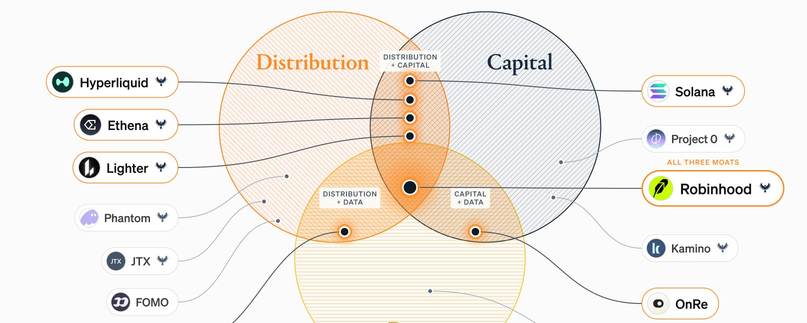
These compliance examples will manifest as segmented order books, since all markets (e.g., BTC and RWA markets) need to be relisted. However, whitelisted market makers will bridge liquidity between the two order books, eliminating liquidity fragmentation and allowing new deployments to inherit Hyperliquid’s deep liquidity while maintaining independent order books. This independent order book model has precedents (such as early BNB US and today’s Lighter deployment on Robinhood Chain), but unlike those cases, because both markets on Hyperliquid run on the same L1 sharing collateral and margin without cross-chain or cross-exchange bridges, liquidity can flow seamlessly between order books rather than being isolated.

These trading platforms also incorporate other parameters, such as the “PA” operation permission in payloads, which allows the DEX to directly execute actions on user accounts: placing reduce-only orders, canceling orders, and transferring USDC internally within the DEX—closely mirroring an FCM’s close-out authority over client accounts. Together, these elements forge the future evolution path: U.S. brokers and institutions now possess the tools to build compliant Hyperliquid products on HyperCore. This approach is complementary and additive—the native markets of Hyperliquid remain permissionless, and its positioning as neutral infrastructure remains unchanged.
Research Perspectives
Hyperliquid’s recent moves in Washington indicate that entering the U.S. domestic market through compliance is the current core priority; however, it is equally clear that operating directly through its native KYC-free frontend would be non-compliant under current U.S. law. We believe the HPC’s efforts point toward a pathway to achieve KYC-compliant access: allowing usage of Hyperliquid’s underlying infrastructure provided that serving companies fully adhere to regulatory requirements. With enablement tools rolling out on the testnet (permitted HIP-3 deployers, PA account control rights), we anticipate this implementation method will provide U.S. investors a compliant channel to participate in Hyperliquid markets while preserving the protocol’s inherent status as neutral infrastructure.
Join TechFlow official community to stay tuned
Telegram:https://t.me/TechFlowDaily
X (Twitter):https://x.com/TechFlowPost
X (Twitter) EN:https://x.com/BlockFlow_News
 @blockworksres