When AI Agents Start Owning "Wallets": After Economic Autonomy, Who Will Maintain Control?
Written by: imToken
On August 4, Cloudflare did something quite symbolic, officially announcing Cloudflare Wallets and starting to prepare "wallets" for AI Agents.
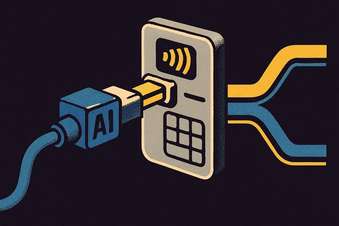
On this basis, AI Agents are no longer limited to calling APIs, reading data, or executing code; they can also possess independent Virtual Wallets to purchase APIs, data, content, and computing services using stablecoins like USDC within preset budgets and permissions.
Almost in the same week, another route was also accelerating.
On August 6, MetaMask also launched Agent Wallet, enabling Agents to connect to on-chain wallets and execute operations such as Swap, perpetual contracts, prediction markets, and liquidity management within permissions preset by users.
Although the two seem to belong to different products, they jointly fill a piece of infrastructure long missing for AI Agents, which may also be one of the structural changes most worthy of long-term attention in the recent convergence of AI and Crypto.
I. Agents Have Always Lacked Accounts That Can Pay Themselves
Let's look at Cloudflare first.
As everyone knows, although the capabilities of Agents and Agent clusters have leapfrogged since the beginning of this year, even so, they are still likely stuck in a very traditional process: find a service, enter the official website, register an account, add a credit card, purchase a plan, obtain an API Key, and then truly start calling.
For humans, this process is just somewhat cumbersome, but for software hoping to complete tasks autonomously, any step in login, registration, payment, and identity verification may force it to stop and seek human takeover again.
In other words, the "brains" of Agents have progressed rapidly in the past few years, but the payment infrastructure of the entire internet is essentially still designed around humans.

This is exactly what x402 wants to change.
It re-enabled the "402 Payment Required" status code that has long existed in HTTP but is rarely truly used, embedding payment requirements directly into the internet's most basic request-response flow.
According to Coinbase's design for x402, when an Agent requests a paid API, the server can directly tell it how much needs to be paid, what assets are accepted, and where to pay; after the Agent completes the payment and requests again with payment credentials, the server side verifies the payment result and then returns the corresponding resources.
Thus, the original "register account → bind payment method → recharge or purchase plan → obtain API Key → call service" may be compressed into "initiate request → receive payment requirement → pay → obtain resources", wherein an account is not necessarily needed, a subscription is not necessarily needed, nor is it necessary to purchase a one-month or one-year plan in advance to call the API a few times.
This matter seems to just lack a few steps, but it is very suitable for AI Agents. Because the payment method Agents truly need is not stopping to let the owner enter a verification code every time before purchasing, but a payment protocol that can be understood by programs, automatically executed, and accurately billed just like software calls.
Stablecoins happen to provide such a settlement foundation.
Cloudflare's current x402 development documentation already supports machine-to-machine payments based on on-chain assets such as USDC; an Agent can complete payments directly when requesting APIs, MCP Tools, or other digital resources, rather than jumping to traditional payment pages first (Further Reading "Panorama of Crypto AI Protocols: Starting from Ethereum's Main Battlefield, How to Build a New Operating System for AI Agents?").
It is even starting to change the pricing method of internet content.
After all, the traditional internet usually has only two choices: either open for free, or put content behind a subscription wall, letting a "human" register first and become a paying member, but facing Agents, a new model may be more natural—no longer requiring it to subscribe to the entire service, but paying per time according to actually consumed data, API requests, computing power, or content pages.
This is also why Cloudflare Wallets are worth attention.
For example, a research Agent can get a budget of 10 USDC to compare prices, speed, and quality among dozens of data sources on its own; if an API only costs a few cents, it just tries it once; if the effect is not good, it continues to look for the next one, without needing to come back to apply to the owner every time a few cents of expenditure is incurred.
Interestingly, these restrictions seem to bind the Agent on the surface, but in fact, they precisely give it greater autonomous space.
If users must manually confirm every call of 0.01 USDC, then the so-called "autonomous Agent" is still just a semi-automated tool; only by first drawing a clear enough budget boundary for it, with humans holding final control outside the boundary, can the Agent truly act freely within the boundary.
Therefore, Cloudflare Wallets actually reflect a more underlying change, namely that in the past, the economic entities defaulting to participate in transactions on the internet were mainly individuals and enterprises.
And now, from identity, payment to pricing methods, part of the internet infrastructure has begun to seriously redesign for another type of participant, that is AI, or the Agent itself.
II. How to Give Agents Economic Autonomy?
If Cloudflare mainly solves "how Agents buy things", then the other step MetaMask Agent Wallet moves forward is "how Agents directly use assets".
It begins to attempt letting Agents directly execute on-chain operations within user-preset permission scopes, which is no longer the same as the past "let AI help me analyze whether ETH is worth buying".
In the past, the division of labor between humans and AI was roughly AI collects information, analyzes problems, and proposes suggestions; humans decide whether to execute based on suggestions.
And under the Agent Wallet framework, an instruction may gradually become "if ETH falls to around 3000 USD, and Gas is lower than the average of the past 24 hours, then buy 0.2 ETH", which also means users provide goals, conditions, and permissions; the subsequent continuous monitoring, condition judgment, transaction preparation, and even final execution can be partially handed over to the Agent to complete.
And the so-called "economic autonomy" of Agents, what is truly worth paying attention to is precisely this layer.
It does not mean that the Agent truly owns property belonging to itself, but that it begins to possess an account, a disposable budget, and a set of economic permissions that can be actively called according to environmental changes; it can autonomously purchase external information and computing resources, and can also mobilize real assets to complete goals within the rules delineated by users.
This step seems logical, but it also connects AI errors directly to real economic losses for the first time.
If an AI that can only chat misunderstands a sentence, the result is usually just outputting a wrong answer; but when it possesses a wallet and execution permissions, similarly, one misunderstanding, prompt injection, or malicious tool call may immediately convert into an irreversible on-chain transaction (Further Reading "Sign Is Not Just Signing: When AI Agent Signs for You, Who Holds Control?").

This is also why one cannot simply hand a wallet with infinite permissions to AI.
Users can set daily expenditure limits, allowed interactive protocols, and risk preferences in advance; supported EVM transactions will also undergo transaction simulation, threat scanning, and MEV Protection; if a transaction is identified as abnormal, or exceeds the Policy preset by the user, the system will pause automatic execution and re-request human 2FA confirmation.
Thus a very important principle gradually becomes clear, that is economic autonomy does not equal infinite authorization.
A truly usable Agent is more like an employee holding a company card and position permissions, rather than a person taking the company safe key. What it can buy, how much it can spend at once, how much it can spend at most in a day, what things can be decided on its own, and what things must request approval again, should all be clarified before authorization occurs.
From this perspective, the core innovation of Agent Wallet is not even just "letting AI have a wallet", but for the first time starting to systematically handle how humans safely delegate economic permissions to software.
And when the problem advances to here, the wallet itself must also change.
III. When Agents Can Spend Money Themselves, What Kind of "New Wallet" Is Needed?
In the past decade or so, the core proposition of crypto wallets has actually been very stable, which is how to securely manage private keys.
No matter how the wallet interface changes, the basic relationship behind it has not changed—humans initiate operations, humans check transactions, humans finally confirm signatures; the most important duty of the wallet is to protect that private key capable of deciding asset ownership and completing final authorization.
But after Agents join, a layer is suddenly added in this chain.
Many operations no longer require users to construct transactions one by one, but gradually shift from "humans directly operating assets" to "humans first express goals, then delegate part of execution rights to Agents", which means the questions wallets need to answer in the future will extend into a whole set of new permission relationships:
- Who can use assets on my behalf?
- Which assets can it use, and which protocols can it access?
- What is the maximum amount for a transaction, and how many times can it be executed at most in a day?
- In what situations can it judge autonomously, and in what situations must it come back to me for confirmation?
- Once the Agent appears abnormal, can I immediately pause it, revoke permissions, and reclaim assets?
From the perspective of ordinary users, the most important thing is undoubtedly how to let people truly manage these Agents that already have action capabilities with peace of mind.

This is also another layer of questions imToken focuses on around UI 3.0 and Agent Wallet; in imToken's thinking on next-generation wallet interaction, an important change is that the user role begins to shift from the past "Operator" to "Manager".
In the past, when users completed a transfer, they needed to select the network, input address and amount, judge Gas themselves, then check and sign step by step; in an intent-driven wallet, users might only need to say "transfer 500 USDT to Frank", and the system can first convert natural language into structured Intent, identify payee, amount, asset, network and estimated fees, then hand back the final result needing confirmation to the user.
But reduced interaction steps do not mean control boundaries can disappear together. On the contrary, when more and more execution processes are automated by the system, those steps no longer appearing before users' eyes must be constrained by more explicit authorization mechanisms.
In imToken's product design thinking for Agent Wallet, each Agent obtaining execution permissions corresponds to an independent Agent account, its Session Key is generated and isolated in a Trusted Execution Environment (TEE), and the key does not leave the corresponding security environment; at the same time, the Agent account must bind explicit Policy, including allowed interactive protocol whitelists, single transaction limits, daily limits, operation frequency and validity period, etc.
Therefore, what the Agent obtains is not a wallet without boundaries, but an execution account surrounded by policy fences.
In this relationship, users hold a higher level of control, can adjust Policy, pause or resume Agents at any time, and can also revoke permissions and reclaim funds. AI can help parse intents, plan paths, estimate fees and prompt risks, but Agents can only execute within the Policy range pre-authorized by users, and operations exceeding boundaries must return to user confirmation.
More importantly, authorization should not be a jump from 0 to 100 at once, but should increase gradually with trust.
An Agent just starting to use can first stay at the observation and analysis stage; after users gradually build trust, then allow it to give suggestions, prepare transactions; further is execution after user confirmation; only after rules are clear enough and risk boundaries can be controlled, does it enter automatic execution within the policy range.
From L0 observation, to L1 suggestions, L2 execution after confirmation, to L3 autonomous execution within policy, it essentially corresponds to a set of progressive trust relationships.
Agent autonomy is not possessed by default by the system, but is granted step by step by users.

This will also change the reason users open wallets in the future.
Today, people entering wallets usually means "I want to check balance", "I want to transfer", or "I want to do a Swap"; but when more and more daily operations are taken over by Agents, what users are more likely to care about when opening wallets is another thing: "What did my Agent do recently, is there anything needing me to handle?"
Thus, the core interaction provided by wallets may also gradually shift from operation panels to management panels.
At this time, the role undertaken by wallets is no longer just storing assets and initiating transactions; it is more like a permission control layer located between humans and Agents.
This may also be an important change in the wallet value proposition in the Agent era—from "securely manage your private keys", towards "securely manage your assets, and those Agents authorized by you to use assets".
Final Thoughts
If time is stretched out to look, AI Agents gaining economic autonomy may be one of the structural changes most worthy of long-term observation in this round of AI and Crypto convergence.
Because models becoming smarter and Agents calling more tools essentially still happen in the information world; but when Agents possess accounts, budgets, and asset execution capabilities, they for the first time begin to become active participants in real economic activities.

Therefore, what truly determines whether Agents can enter real financial scenarios on a large scale next may no longer be just whether it is "smart enough", but whether we can establish a permission system matching its capabilities.
Because the other side of autonomy is always authorization, wallets in the Agent era may not simply disappear in the background, but will instead undertake a more important role than today, that is both letting automation truly happen, and letting final control rights always be able to return to human hands.
After all, letting Agents go ahead and do things does not equal letting humans give up control.
This boundary may be the core question wallets need to answer before "economic autonomy" truly moves towards reality.
Join TechFlow official community to stay tuned
Telegram:https://t.me/TechFlowDaily
X (Twitter):https://x.com/TechFlowPost
X (Twitter) EN:https://x.com/BlockFlow_News
 @imTokenOfficial