Virtual Bank Card Giant Sued by Binance Before IPO
Author: Jaleel
Binance is truly angry this time.
Searching through public records, the Binance system rarely sues partners for breach of commercial cooperation agreements.
Its most famous lawsuit occurred seven or eight years ago, a financing dispute with Sequoia Capital.
This time, it has aimed its spear at a U Card payment company called RedotPay, which has cooperated with it twice and is preparing to ring the bell in the US, and directly sued the three founders personally.
The claimed amount is $472.8 million, roughly equivalent to two and a half years of revenue for this payment company.
The timing of Binance's move is also subtle.
At this time, RedotPay is considering going public with a valuation of about $4 billion, while also negotiating a new round of financing.

At 11:30 noon today, the Supreme Court of Singapore held a procedural meeting that could be concluded in fifteen minutes.
Forty-eight hours before this hearing, Bloomberg obtained a Hong Kong court document: three entities affiliated with Binance sued RedotPay's three co-founders: Gao Zhangpeng, who is the company's current CEO; Chan Wa Choi; and Yao Chao.
In the complaint, Binance used a very heavy word: fraud scheme.
The allegations are: more than 470,000 users originally belonging to Binance Card were directed to RedotPay; funds from Binance Pay were not isolated as agreed, but instead were allowed, or even encouraged, to be used to top up RedotPay cards.
Binance calculated the claim of approximately $472.8 million based on a lifetime value of $925 per user.
Binance's Most Troublesome Year
The starting point of the story between RedotPay and Binance was three years ago.
2023 was Binance's most troublesome year.
In June, the US SEC sued Binance and Zhao Changpeng.
In July, Visa stopped issuing new Binance co-branded cards in Europe.
In August, Mastercard announced the termination of cooperation with Binance Card, and some users in South America were notified that their cards could no longer be used.
In October, Binance issued another announcement stating that Visa debit card services in the European region would be terminated.
But Binance provided an alternative solution in the announcement: switch to Binance Pay.
This was a forced strategic turn for Binance.
Binance Card was gone, but the demand for users to spend crypto assets did not disappear. Binance still had a payment channel, Binance Pay, but this channel still needed polishing, especially in operations.
At this time, a company called RedotPay was also established in Shenzhen and Hong Kong.
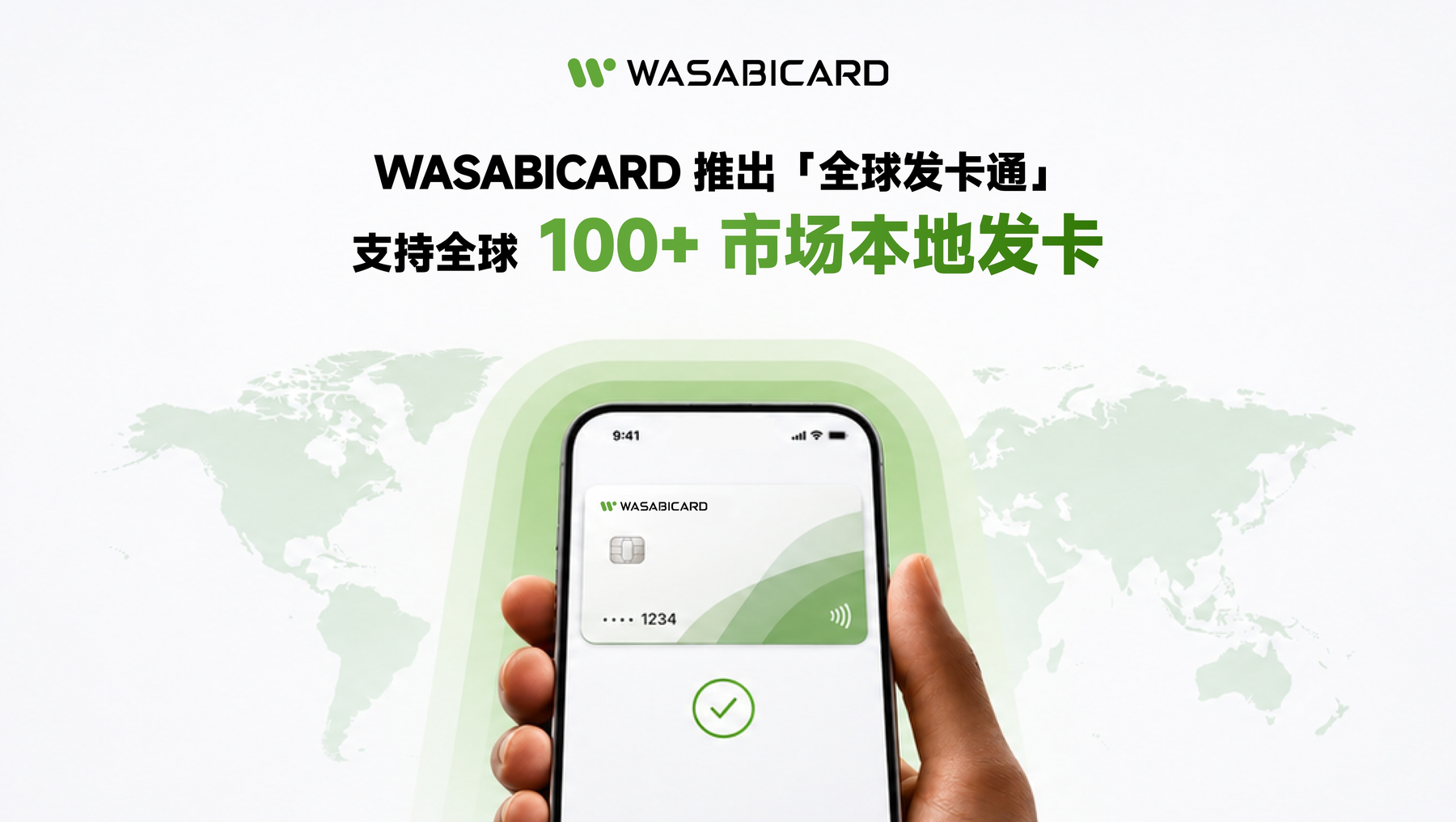
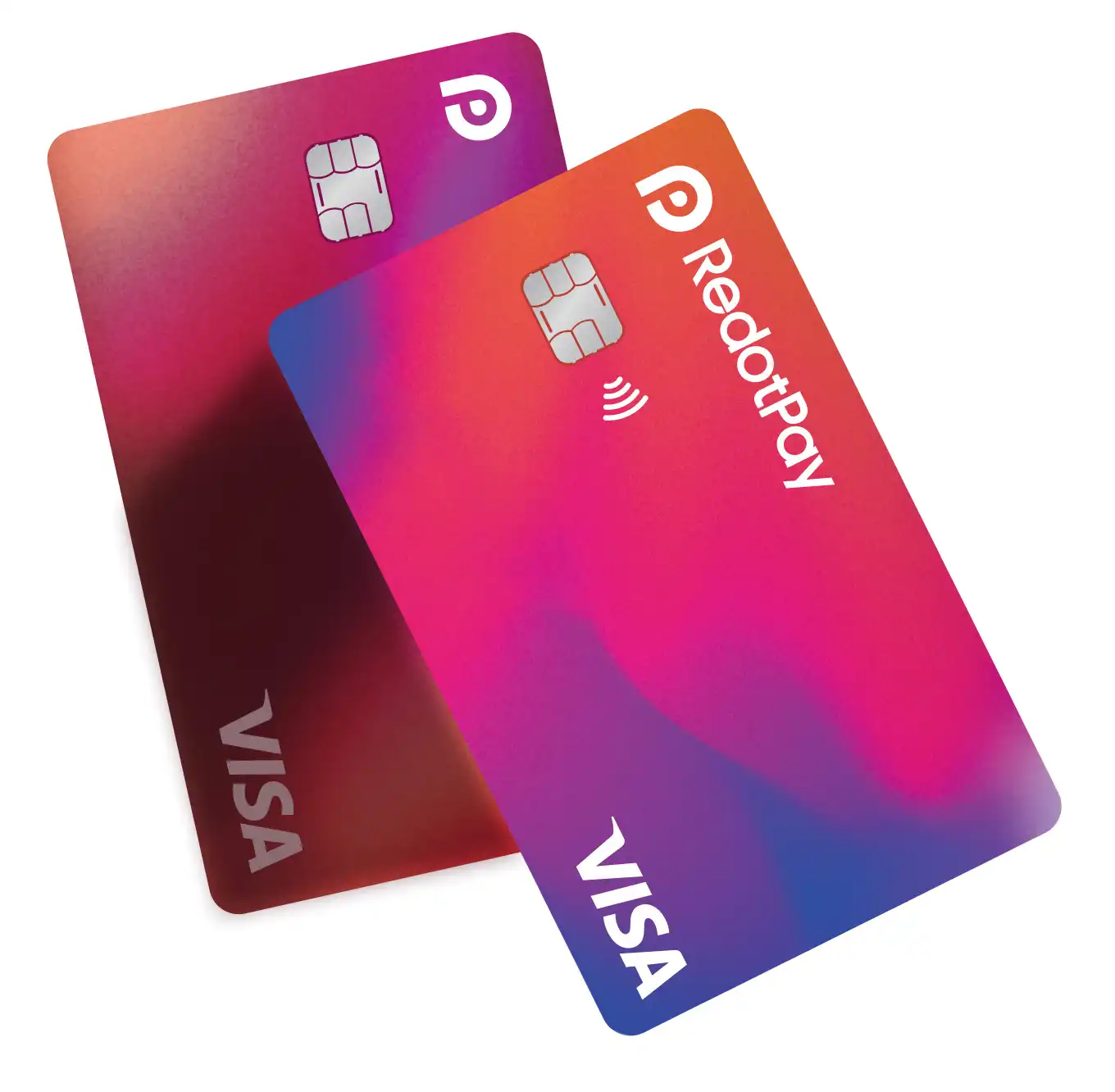
RedotPay's legal entity is called Red Dot Technology Limited, registered in Hong Kong in 2023. Its main product is a Visa card plus a stablecoin wallet: users top up USDT or BTC into the App, and can swipe cards, withdraw cash, or bind Apple Pay on the Visa network, with the system automatically completing the settlement from crypto assets to fiat currency in the background.
Its App was launched in August 2023, and physical cards were issued in October.
In the Chinese community, it is more commonly called "Little Red Card".
The person standing behind it is Yuan Dawei.
This early co-founder of Huobi left Huobi in 2015 and founded CoolWallet in Beijing in 2016, one of the first people in China to work on digital asset hardware storage; according to industry reports, RedotPay was initially invested and incubated by him.
He started researching Bitcoin in 2010, and the trust accumulated in the early Bitcoin holder and miner circles was the resource this new company could initially mobilize.
Therefore, the explanation in the industry at the time for "RedotPay and Binance cooperating" was very simple: Yuan Dawei had a good relationship with the Binance system, so he got the initial contact and cooperation.
After all, initially, the company RedotPay itself was smaller than outsiders imagined.
"Because RedotPay was initially a project with very few people itself, and the relationships inside were quite complicated," a source told BlockBeats. "Mr. Yuan should just be a shareholder, not really involved much in actual operations. There were very few full-time employees at RedotPay in the early days. The technical product side were not full-time people from RedotPay, but part-time."
On the card issuance side, RedotPay's initial cards were issued in cooperation with Hong Kong card issuance service provider Reap. "Generally speaking, it was packaged as a way of issuing cards for enterprises," the source explained.
Reap is a Hong Kong fintech company holding Visa principal membership, and its main business is white-label card issuance and cross-border payment for other enterprises.
According to his inference, the group of people who founded RedotPay should also be operating another entity at the same time, using the identity of this operating company to do operations and promotion of payment business for Binance Pay, similar to a contractor.
That company may have no relationship with RedotPay in terms of equity, "it's just that some actual controllers behind them overlap".
In other words, in the summer of 2023, RedotPay had a usable card, a team with almost no people, and a volume that kept failing to take off.
"There was no volume at the beginning," he said. "I know quite clearly that their first wave of significant volume came from Binance."
The First Fallout Between Binance and RedotPay
In November 2023, a Binance affiliate signed the first cooperation agreement with RedotPay.
This is the time point mentioned in the Hong Kong complaint.
The announcement later deleted by RedotPay but left by web archives described this relationship unequivocally: users open the Binance App, enter the mini-program, select RedotPay, enter the amount, click "Pay with Binance Pay", and get a top-up redemption code.
The announcement said this path compressed top-up time from minutes to seconds.
The fees were listed clearly: Binance Pay charges 1%, and the RedotPay mini-program charges 1%.
The announcement also specifically introduced a function called Lightning Deposit, allowing Binance users to directly deposit USD stablecoins from their accounts into RedotPay.

Cooperation announcement released by RedotPay in 2024
For RedotPay, this channel saved the most expensive part of customer acquisition: persuading a stranger to download the App, register, complete KYC, and deposit funds.
It no longer needed to find users one by one; the users were right at the door.
But this first agreement did not survive half a year.
Public reports citing the complaint stated that it broke down less than six months after signing, with the dispute point being that funds from Binance Pay were used to top up prepaid RedotPay cards.
Here appeared the most glaring contradiction in the entire case: RedotPay's public announcement at the time stated that direct card top-up was possible.
For the same path, on one side was the product selling point on the official website, and on the other was the overstep in Binance's eyes.
Whether the promotion ran ahead of the contract, whether certain specific paths were non-compliant, or whether the two parties had different understandings of "top-up account" and "top-up consumable card", we have no other information to judge before the original contract is made public.
But this fallout did not stop RedotPay.
In 2024, in documents for Series A financing, RedotPay still listed cooperation with Binance as a factor for "accelerating user adoption", and explicitly stated that users could deposit directly from Binance Pay to RedotPay cards.
These were all told to investors as RedotPay's growth story.
Two Years, $1 Billion Valuation
Perhaps the relationship was strong enough, or perhaps "connections were properly managed".
In March 2025, Binance and RedotPay sat back at the negotiation table.
They initiated the second cooperation agreement.
According to public reports recounting the complaint, the core of the second agreement was: funds from Binance could be used to exchange for fiat currency, transfer within the RedotPay App, and purchase RedotPay's own products, but could not directly become consumable balance on RedotPay cards, and must be isolated and labeled in accounting.
Simply put: Binance's money could still enter RedotPay's door, but could not exit RedotPay's door.
Why did Binance fixate on this step? Because account balance and card balance are two different worlds.
Account balance is the endpoint of a transfer; card balance is the starting point of a consumption relationship.
Once users put money into the card wallet, they will bind Apple Pay, buy coffee, pay subscriptions, and pay phone bills; their daily cash flow will grow on this platform from then on.
This is also where U Cards truly make money: exchange rate spreads, card swipe fees, balance retention, not that small card opening fee.
So-called fund isolation is not putting money into different drawers, but labeling it with a source tag in the system: this money comes from Binance Pay, can only follow the few paths allowed by the contract, cannot be commingled with ordinary balance, and even less automatically become swipable balance.
After the second cooperation began, RedotPay's financing pace began to accelerate.
Also in March 2025, RedotPay announced the completion of a $40 million Series A financing, led by Lightspeed, with participation from HSG and Galaxy Ventures.
In September, Coinbase Ventures entered, adding $47 million in strategic financing, and the company's valuation stood at $1 billion for the first time, officially becoming a unicorn.
In December, Goodwater Capital led a $107 million Series B, with Pantera Capital, Blockchain Capital, and Circle Ventures following, and HSG continuing to increase investment.
Within one year, RedotPay raised $194 million.
The operating data in the same financing materials were equally steep: as of November 2025, registered users exceeded 6 million, covering more than 100 markets; annualized payment volume exceeded $10 billion, and annualized revenue exceeded $150 million.
Annual payment volume tripled, with 3 million new users added.
A company that only had a few full-time employees two years ago and relied on others to issue cards, just like that, reached a valuation of $1 billion.
Mass Emails, "Prying Away" Binance Customers
Binance's allegation is: more than 470,000 users originally belonging to Binance Card were directed to RedotPay.
How did RedotPay "pry away" users? We did not see a reasonable explanation on various channels.
However, a source pointed out to us that the most critical move, and also the most primitive move, for RedotPay in the business war was: sending emails.
According to the complaint, Binance discovered the problem in March 2026: RedotPay was still allowing and encouraging unisolated Binance Pay funds to be used for prohibited purposes, including topping up RedotPay cards.
Then on April 3, Binance stopped relevant support, giving the reason externally as reviewing merchant partners.
Then, four months later, Binance submitted a complaint to the Hong Kong court.
But in the source's memory, Binance might have discovered problems with RedotPay in 2023, during the time when Binance Card had problems and cards in the hands of many users could not be swiped.
"The few people doing operations for Binance Pay should be the founding team of RedotPay. Those few people had Binance customer emails, so they basically just sent emails directly to customers, directing traffic to RedotPay," according to this source.
"This is definitely not normal." When asked if this counts as standard operation in the industry, he answered quickly, "If it was not explicitly agreed by Binance, then it is definitely not normal business behavior."
But immediately, this source also stated: "Speaking of this matter, I think it is unlikely that Binance knew nothing about it at the time."
He believes: An exchange willing to hand over this operation and the permission to access user data to an external team itself indicates the existence of a very deep personal relationship.
The more likely scenario is that Binance's core executives would not ask about this business line with insignificant volume at all, and the person specifically responsible for this project "turned a blind eye and tacitly approved, or even had verbal tacit approval".
Revenge, on the Road to RedotPay's Bell Ringing
In February 2026, Bloomberg reported that RedotPay is cooperating with JPMorgan, Goldman Sachs, and Jefferies to prepare for a New York listing, with a fundraising scale possibly exceeding $1 billion, valuation exceeding $4 billion, and could be realized as early as this year.
This will be one of the largest IPOs in the Asian stablecoin track this year.
But this road was not steady to begin with.
In March, Bloomberg reported again that RedotPay had lost at least five executives in the past 12 months, still had no CFO until the sprint for listing, and was simultaneously seeking up to $150 million in new financing.
A company with no CFO, executive turnover, and currently fundraising, received a bill equivalent to two and a half years of its own revenue at this moment.
Is this a coincidence?
"Actually, RedotPay should have had the ability to pay this one year ago," he guessed. Both parties most likely had been negotiating on this matter for a long time, but just couldn't reach an agreement, and now is the good timing for "revenge".
Because from RedotPay's perspective, for a payment company preparing to list in the US, the thing that should least appear in the prospectus is a cross-border lawsuit with no end in sight.
Underwriters will ask, investors will ask, regulators will ask.
In comparison, putting up a sum of money at once to exchange for a settlement agreement, turning the risk from "pending litigation" to "settled matter", is the fastest road to ringing the bell.
It seems that settlement should be a highly probable event.
"I feel the penalty amount Binance wants is a not too big, not too small amount," this source said. If the claim amount was opened to over $1 billion, the other party would directly stop negotiating and simply drag it out; but $470 million is a figure that "makes RedotPay bleed heavily, but is also a number they can grit their teeth and pay".
This is a quote designed for settlement.
Join TechFlow official community to stay tuned
Telegram:https://t.me/TechFlowDaily
X (Twitter):https://x.com/TechFlowPost
X (Twitter) EN:https://x.com/BlockFlow_News
 BlockBeats