OpenAI Moves Downward, DeepSeek Moves Upward
By: Xiao Bing
On August 7, OpenAI announced that ChatGPT's weekly active users have reached 1 billion, while making GPT-5.6 Luna available to free users with unlimited text conversations.
The day before, multiple DeepSeek API users received notice: The company plans to generally raise API service prices in the near future, "expected increase is significant," specific prices and execution time await further announcement.
This seems somewhat counterintuitive.
For the past two years, the narrative Chinese large model vendors are best at is extreme cost-performance ratio.
Previously, DeepSeek provided performance close to GPT-4 levels at less than one-thirtieth of OpenAI's price, known in the industry as the "Price Butcher," Liang Wenfeng became "Saint Liang," the consensus was: The core advantage of Chinese large models is to drive the usage cost of AI to the floor.
Now the floor has loosened, OpenAI has become the one giving things away for free to the world, while Chinese vendors are starting to talk about payment and price hikes. Between offense and defense, has the position really changed?
OpenAI: Free Is Not Charity
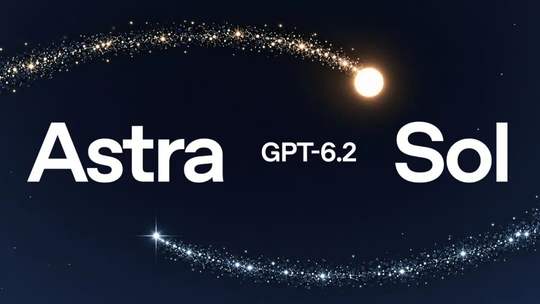
Let's clarify one thing first: GPT-5.6 Luna is not OpenAI's strongest model.
It is positioned in the medium capability range, more than enough for daily conversations, simple writing, and basic translation, but complex reasoning and multi-step code analysis still rely on the more advanced SOL series.
OpenAI takes a "good enough" model to cover the widest user scenarios.
This strategy has its backing, and also its costs.
The backing comes from the cost side.
Over the past 18 months, the unit Token cost curve for large model inference has been astonishingly steep: model architecture optimization, quantization technology maturity, and inference engine upgrades combined together, the same computing power cluster can serve dozens of times the request volume today compared to two years ago.
When marginal costs are low enough, free approaches the logic of Google Search: free entry, monetize the ecosystem.
The costs are equally clear.
In Q1 2026, OpenAI revenue was $5.7 billion, non-GAAP operating loss rate -122%, for every $1 earned it loses an additional $1.22, full year estimated net loss $14 billion.
Of the 1 billion weekly active users, 50 million are paid subscribers, a payment rate of about 5%.
Subscription fees obviously cannot support this company, money comes from elsewhere: advertising business launched 6 weeks ago reached $100 million annualized revenue; enterprise API continues to expand, Codex 5 million weekly users, enterprise customers currently contribute over 40% of revenue...
In other words, ChatGPT's business model is switching from "selling model subscriptions" to "collecting platform tax": the model itself is free, advertising, enterprise services, and developer ecosystem growing on top of the model are the revenue sources.
1 billion weekly active users is the core of this strategy, it doesn't need every user to pay, only needs users to open it every day, then charge from a minority of high-value demands.
This is very classical internet platform economics, previously often compared to Claude's "enterprise market, paid programming" route, now looking at it, OpenAI is determined to become the universal entry point of the AI era.
DeepSeek: Servers Can't Hold Up
DeepSeek's situation is completely different from OpenAI.
V4 Flash topped the OpenRouter global call volume weekly chart, processing 7.22 trillion Tokens in a single week.
According to OpenCode data, on August 1 alone, V4 Flash single-day processing volume reached 8 trillion Tokens.
Interface timeouts and lag occurred frequently during peak hours on weekdays, mid-July first implemented peak-valley pricing mechanism (peak doubled), August 6 directly announced comprehensive significant price increase.
In other words: Too many users, insufficient computing power.
Too low pricing attracted a large number of low-frequency, low-payment willingness calls, server resources were occupied by invalid requests, enterprises and developers who truly need deep reasoning instead did not get stable experience.
DeepSeek needs to keep users who treat AI as a toy outside the door, let those willing to pay for high-quality reasoning stay.
Doubao launched paid version on June 24 (68/200/500 yuan three tiers monthly fee, basic functions remain free) is an action on the same logic line, 345 million monthly active users, daily consumption of tens of millions of yuan inference costs, e-commerce commissions cannot make up for it.
Nowadays, domestic large model competition has become white-hot, financing environment is also cooling, insufficient computing power is always a stranglehold, past strategies of relying on capital to extend life and unlimited subsidies are unsustainable, proving profitability has become a more urgent task than proving technological leadership.
Of course, Chinese large model price increases do not mean giving up price advantages.
More accurately, the cold start phase of the price war has ended.
The task of the previous phase was "let users be able to use it", now the task has become "let users be willing to pay for good things".
One Sinks Down, One Goes Up
When GPT-4 was just released, everyone compared model capabilities, who read more books, who had higher exam scores.
By the GPT-5.6 Luna stage, the gap between top models is visibly shrinking, continuing to compete on benchmark test scores yields diminishing marginal returns.
Competition is shifting from "who is smarter" to "who is more indispensable".
OpenAI chose to push free at this node, betting on user time and entry status.
It wants to make itself the default way for most people to access AI, just like Google used to be the default way for search.
Chinese large model vendors choosing to raise prices or launch paid versions, is under the dual pressure of capital ebb and computing power control, seeking certainty of a business closed loop, no longer satisfied with "many users but not making money" situation, need to prove the large model business can become self-sustaining.
Directions are opposite, anxiety is symmetrical.
OpenAI needs to prove platform tax can cover inference costs before the financing window closes; Chinese companies need to turn user scale into sustainable revenue before computing power peaks.
This differentiation may eventually grow into a three-layer structure.
The bottom layer is daily conversation and general Q&A.
Model capabilities have already overflowed, costs are low enough to be negligible, free will become the norm.
Whoever charges here will be abandoned by users, OpenAI making Luna free is to pull as many people as possible into this layer.
The middle layer is professional reasoning.
Code generation, data analysis, legal assistance, medical diagnosis, these scenarios have rigid requirements for accuracy and depth, users are also willing to pay for results, DeepSeek and Doubao's paid versions, target precisely this layer.
The top layer is Agent execution.
AI no longer just answers questions, but directly completes operations for users: negotiating business, fixing code, passing audits... At this layer, charging model will change from "charge by Token" to "charge by result".
Each has troubles, each has dreams.
OpenAI sinks down, betting on entry and habits, wants 1 billion people to be inseparable from it; Chinese large models go up, want users to actively pay... Both dreams are not cheap, the only thing certain is: The era of free regardless of cost has ended, the free that remains consists of businesses that can balance the books.
Join TechFlow official community to stay tuned
Telegram:https://t.me/TechFlowDaily
X (Twitter):https://x.com/TechFlowPost
X (Twitter) EN:https://x.com/BlockFlow_News
 深潮TechFlow