Top Three Memory Manufacturers Abandon Self-Developed CXL Controllers, Fearing It Will Undermine Their DRAM Business
TechFlow Selected TechFlow Selected
Top Three Memory Manufacturers Abandon Self-Developed CXL Controllers, Fearing It Will Undermine Their DRAM Business
Design is outsourced to professional companies, manufacturing is still done in-house, each earns their own money.
 Navigating Web3 tides with focused insights
Author: ZDNet Korea
Compiled by: TechFlow
TechFlow Editor's Note: Samsung, SK Hynix, and Micron have collectively abandoned in-house CXL controller development, turning instead to purchasing Fabless chip solutions. The reason is realistic: producing high-priced integrated modules in-house would cannibalize traditional DRAM orders, and customers prefer cheaper disaggregated solutions. This is not a technological retreat, but a calculated decision—design is handed to professional companies, manufacturing remains in-house, and everyone earns their share.
The world's top three memory manufacturers have collectively abandoned independent R&D of CXL (Compute Express Link) controllers. The reason is concern that forcing their own chips into the market would undermine the demand for their core revenue source—standard DRAM (DIMM)—leading to a "self-cannibalization" dilemma. These memory giants are rapidly shifting to an outsourcing strategy, adopting chip designs from professional Fabless companies.
On July 20, semiconductor industry sources revealed that Samsung Electronics, SK Hynix, and Micron have scaled back or canceled commercialization plans for CXL expansion device controllers. The vacant positions are being filled by Fabless enterprises such as Montage, Astera Labs, and Primemas.
Micron and SK "Admit Defeat," Samsung "Waits and Sees": Three Companies, Three Exit Strategies
The first to abandon in-house development was Micron from the US. Micron closed its independent controller R&D line and turned to adopting Primemas' solutions. Primemas' solutions have also begun appearing in Micron's product catalog.
SK Hynix recently also formally communicated the decision to stop in-house CXL controller business to major partners. SK Hynix is reallocating relevant personnel to the next-generation processing-in-memory semiconductor PIM (Processing In Memory) field, concentrating limited R&D resources on more certain future businesses.
Samsung Electronics' in-house developed CXL controllers are for internal research use by the development team only. The team studies unverified areas such as LPDDR (Low Power DRAM) based CXL solutions. For external sales, they purchase controllers from Fabless companies.
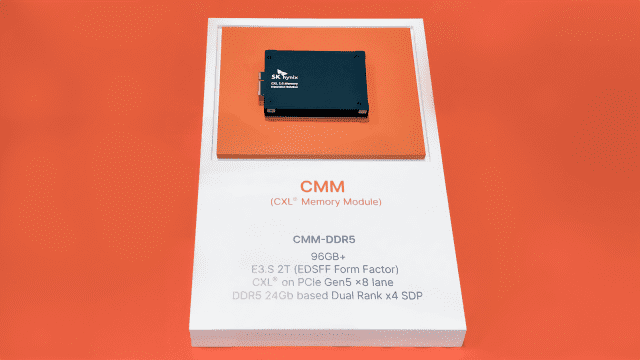
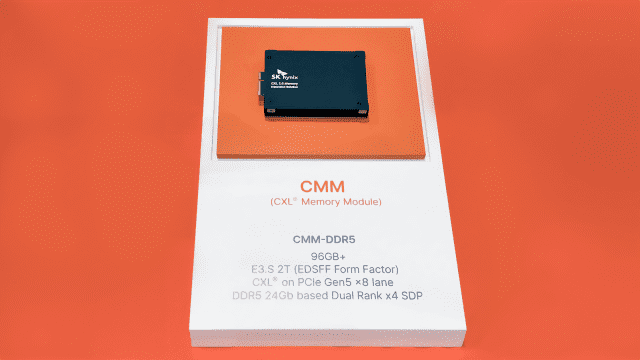
This differs from Samsung Electronics' original plan. Samsung originally planned to launch modules combining in-house controllers and CMM, but has removed the formal productization plan for internal controllers from the official roadmap.
Semiconductor industry insiders familiar with the matter revealed: "Samsung Electronics' internal product planning department has removed internal controllers from formal commercialization projects, retaining them only as pure advanced R&D projects. Currently, the development team is only studying areas with uncertain short-term commercialization possibilities, such as running mobile DRAM (LPDDR) on CXL; in fact, it has turned into a market exploration battle."

"Want to Push CXL but Fear Shaking DRAM": The Self-Cannibalization Dilemma
Semiconductor industry sources indicate that the original concept of the three memory companies was to sell "integrated CXL modules" like Samsung Electronics—binding in-house controller chips and DRAM on one board, supplied as high-priced finished products.
However, the needs of major data center customers are different. To save on huge infrastructure construction costs, they want a "disaggregated" structure—installing CXL controllers separately on the system motherboard, and inserting common cheap standard DRAM (DIMM) available on the market into backend slots for reuse.
Industry analysis suggests that the conflict in business models at this point is the main reason for the strategic adjustment. If memory manufacturers invest huge development costs to create independent controllers and then force expensive integrated products, cost-conscious customers will tighten their purse strings. To make matters worse, demand for standard DRAM, originally sold in large volumes, will also decrease. Forcing CXL finished products would instead destroy the company's biggest cash cow, the DIMM market, leading to a "self-cannibalization" contradiction.
Semiconductor industry analysts analyzed: "For memory manufacturers, if self-made CXL expansion device finished products ultimately compete head-on with their core cash cow DIMM products in the market, it will be difficult to aggressively push forward the business. This is the result of management's calm judgment—forcing commercialization of internal controllers carries the risk of conflicting with existing core businesses and yields no actual benefit."
Experts emphasize that this move by the three memory companies should not be interpreted as a retreat or abandonment of CXL technology and the market itself. This is more about eliminating risks during the uncertain early stage of the market and returning to the originally efficient division of labor system of the semiconductor ecosystem.
Another semiconductor industry insider stated: "Rather than unreasonably monopolizing CXL dominance, it is better to choose a pragmatic division of labor with Fabless companies. As the global semiconductor market becomes more highly specialized in the future, the optimal ecosystem division of labor trend where design is handled by professional Fabless companies and manufacturing by memory factories will further accelerate."
Join TechFlow official community to stay tuned
Telegram:https://t.me/TechFlowDaily
X (Twitter):https://x.com/TechFlowPost
X (Twitter) EN:https://x.com/BlockFlow_News