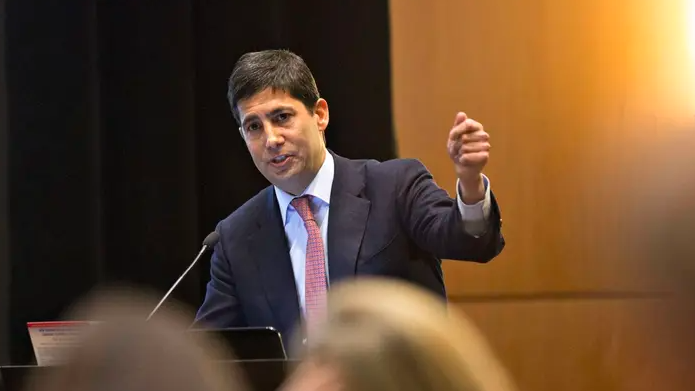
Warsh Hearing Debut May Face Numerous "Grillings": Inflation, Reaction Function, Interest Rates, Independence, etc.
TechFlow Selected TechFlow Selected
Warsh Hearing Debut May Face Numerous "Grillings": Inflation, Reaction Function, Interest Rates, Independence, etc.
Facing tonight's questioning from lawmakers, Wall Street hardly expects this new Federal Reserve chief, who refused to provide any outlook, to give a clear response, hoping only for his views on the economy.
 Navigating Web3 tides with focused insights
Source: Jin10 Data
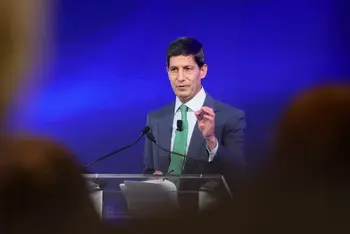
On July 2, Federal Reserve Chair Wash publicly stated that he would not provide forward guidance, then added: "I can update one piece of information: we will meet in four weeks." Regarding the discussion at that time, he also said: "I hope we can have a wonderful 'family quarrel'... When we walk into that room and close the door, we will have a full debate, but beyond that, I cannot provide more information."
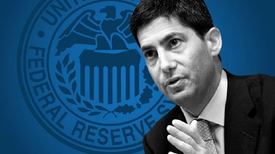
This style of statement will form the background for his Congressional hearing this week. According to law, the Federal Reserve Chair must testify before Congress twice a year; Wash will appear before the House Financial Services Committee and the Senate Banking Committee this week, at 10 p.m. Beijing time on Tuesday and Wednesday respectively.
Lawmakers are expected to continuously question him on the economy, inflation, and interest rate outlook, but judging from Wash's recent public speeches, they are unlikely to get clear answers. Even though he reaffirmed the Federal Reserve's commitment to lowering inflation at a seminar in Portugal, he still refused to provide specific explanations regarding the current economic situation or interest rate path.
The Federal Reserve submitted the Semiannual Monetary Policy Report to Congress last Friday. The report states that with inflation still high, the Federal Reserve "will achieve price stability," which is also the core policy message the Fed released to lawmakers before Wash's first testimony before Congress.
Since the beginning of this year, US Treasury yields have continued to rise, and the market has priced in higher interest rate expectations. The report also mentions that as inflation rises, the federal funds rate level corresponding to a quantitative policy rule adopted by the Federal Reserve is higher than the current target range of 3.5% to 3.75%.
However, the report also specifically warned against mechanically interpreting this rule. "However, the prescription shown here ignores the fact that if the policy rate follows a path prescribed by the rule, the evolution of the economy will be different, therefore, these prescriptions should be interpreted with caution," the report wrote.
On Tuesday, the US will also release the latest inflation data, which means Wash may face questions about CPI on the day he testifies before the House. The market expects that affected by falling oil prices, the year-on-year CPI increase for June will be 3.8%, lower than May's 4.2%; the core CPI annual rate excluding food and energy is expected to drop slightly from 2.9% to 2.8%.
However, even if the data is released on the same day, according to Wash's recent communication style, he will most likely still avoid making clear comments on the data.
Interest Rate Divergence and "Reaction Function" Debate
The June policy meeting minutes show that most Federal Reserve officials believe there are two possible paths for interest rates this year, and the dividing point lies in whether inflation falls. If inflation cools, interest rates can maintain current levels, or even decrease in the future; if inflation remains stubbornly high, further rate hikes may be needed.
The minutes also present a more constrained scenario: if AI-related demand remains strong, the Middle East conflict continues, or tariff impacts continue to transmit, while inflation remains high despite a stable labor market, then almost all officials believe it is necessary to "tighten policy to some extent," meaning raising interest rates.
But for the outside world, the real uncertainty lies not only in whether interest rates may rise or fall, but more in how Wash himself will react based on economic changes. What the outside world is concerned about is the Federal Reserve Chair's "reaction function," that is, how the central bank will adjust policy when the economy deviates from expectations, rather than a pre-committed interest rate path.
Andrew Sacher of Bloomberg Economics made this distinction: "Forward guidance tells the market what path the central bank thinks it will take. Whereas the reaction function tells the market, without providing an expected path, how the central bank will respond to unexpected situations."
New York University Professor Richard Berner served on the Federal Reserve research team in the 1970s. He said: "Good communication conveys the Federal Reserve's reaction function, that is, the relationship between economic conditions and the policy interest rate path. And this is what is truly essential." He also emphasized, "This is different from forward guidance."
The debate surrounding this point has extended from the market to within the Federal Reserve. Last week, when Federal Reserve Governor Waller spoke in Rome, he specifically distinguished between providing forward guidance and explaining how policy reacts under different economic environments. He stated that the latter can reduce uncertainty faced by markets and households, "this will make everyone's life better."
Wash himself clearly focuses on compressing forward-looking signals. On July 1, when Wash participated in a seminar with other central bank governors in Portugal, he also used bond market performance to defend his communication style. He said: "Volatility has not risen, but is falling." He then stated: "So I hear these claims, as if people don't understand. I think they actually understand very well."
Not all observers accept this judgment. JPMorgan Chase Chief US Economist Michael Feroli believes that if Wash continues to remain silent, he may cede the initiative in Federal Reserve communication to other policymakers. Feroli said: "He has not yet proven that he has any control over the current economic situation. We can only turn to other Federal Reserve officials to understand their interpretation of the economy."
A Federal Reserve spokesperson declined to comment.
What Other Questions Will Wash Face?
In addition to inflation and interest rates, Wash may also be asked about central bank independence at the hearing. Last week, when asked whether the Federal Reserve would take necessary measures to control inflation regardless of whether Trump prefers low interest rates, Wash answered: "We have long been an independent central bank, and you will not see any change in this regard."
Artificial intelligence will also be one of the topics lawmakers focus on questioning. Last week when asked whether artificial intelligence would exacerbate inflation, Wash did not give a clear judgment, only stating that the impact of artificial intelligence has currently been seen on the demand side of the economy, and he "believes we will also see its impact on the supply side at some point."
When he took office as Federal Reserve Chair, he once stated that artificial intelligence might increase productivity and lower inflation, thereby creating conditions for rate cuts. Wash also appointed five special working groups to study Federal Reserve public communication, balance sheet policy, quality of existing data sources, how the central bank views inflation, and how artificial intelligence will affect productivity and employment. The Semiannual Monetary Policy Report points out that these areas may affect policy implementation methods in the future.
Wash's communication strategy has also been reflected in institutional arrangements. In June, when policymakers submitted quarterly economic and interest rate forecasts as usual, used to form the so-called "dot plot," Wash did not participate; the length of the post-meeting statement was significantly shortened, and the length of the meeting minutes released three weeks later was also compressed. Wash received support from some participants in compressing the post-meeting statement, and some officials welcomed re-examining the Federal Reserve's communication practices. Against the background of rising economic uncertainty, other officials have recently mentioned that it is necessary to reduce forward guidance to investors.
But this support is not without conditions. If the new communication method makes it harder for the outside world to understand how the Federal Reserve judges the economy and adjusts policy accordingly, support may weaken. Waller stated in Rome that maintaining clarity on the reaction function is "one of the most critical lessons learned" from central bank operations over the past thirty years.
This controversy also reminds many seasoned observers of the Federal Reserve in earlier periods. Wrightson ICAP Chief Economist Lou Crandall recalled that when he started his career in the 1980s, the Federal Reserve would not even publicly communicate interest rate decisions, "that was simply an absurd mess."
Greenspan gradually expanded communication with the market, but even so, his wording was often vague, so that investors would bet based on extremely subtle clues, even including the thickness of his briefcase when attending policy meetings. Crandall said: "There are many people in the market who have their own unique insights into the Federal Reserve's thoughts and make a big deal out of it. When the Federal Reserve does not attempt to outline its own views—not needing absolute certainty, but needing a certain clarity—such theories will proliferate."
Former Federal Reserve Vice Chair Don Kohn believes that it is understandable for the new Chair to spend some time sorting out his thoughts, but this state will not continue indefinitely. He said:
"At some point, he will have to provide more detailed economic views, tell us his views and how this fits with the Committee. I guess this situation will not last forever."
Join TechFlow official community to stay tuned
Telegram:https://t.me/TechFlowDaily
X (Twitter):https://x.com/TechFlowPost
X (Twitter) EN:https://x.com/BlockFlow_News