Self-Developed Chips, The Arithmetic Problem of DeepSeek and Zhipu
TechFlow Selected TechFlow Selected
Self-Developed Chips, The Arithmetic Problem of DeepSeek and Zhipu
The longer you pay rent, the more you want to have a house of your own.
 Navigating Web3 tides with focused insights
Written by: Xiao Suan
In 2013, Google engineers solved an arithmetic problem.
The question was simple: if every user spent 3 minutes per day on voice search, how much would Google's global data centers need to expand?
The answer made everyone gasp: double.
Filling this gap by buying Nvidia GPUs would have bankrupted Google with bills first. So the search company made a decision that seemed heretical at the time: to build its own chips. Everyone knows the story since then. That chip was called TPU, and today it is Google's strongest bargaining chip against the "Nvidia Tax".
Thirteen years later, this arithmetic problem landed in Chinese hands.
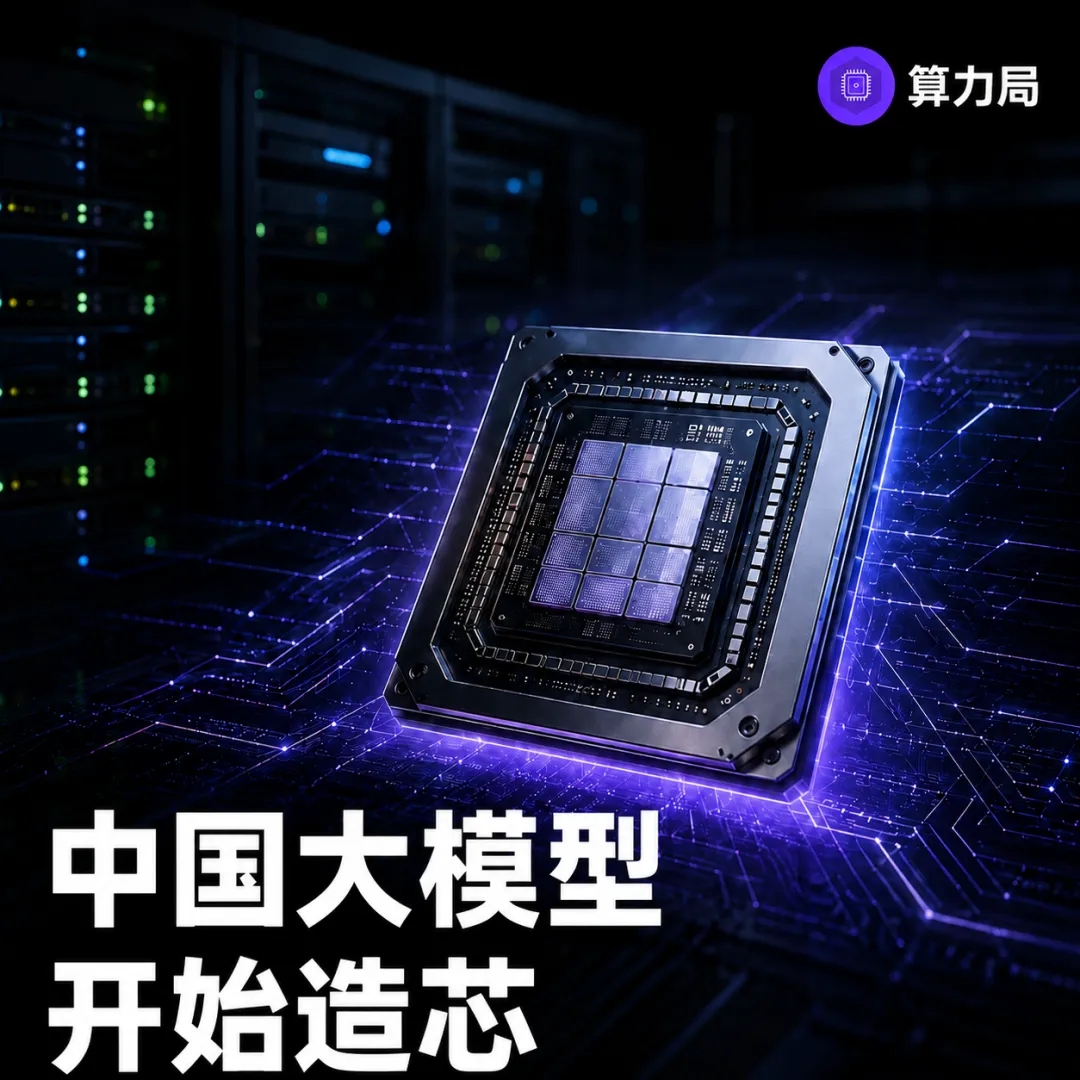
On the evening of July 7, Reuters cited three informed sources stating that DeepSeek is developing its own AI chips. The project started a year ago and has already been in contact with chip design companies, wafer foundries, and storage manufacturers. A few hours later, The Information added that Zhipu is also evaluating custom self-developed chips and is contacting domestic chip design companies.
Within 24 hours, China's two top large model companies were exposed taking the same action:
Building chips.
1.
DeepSeek's chip has an intriguing qualifier: focused on inference, not training.
Training is teaching the model; the cost is astonishing, but paid once. Inference is the model going to work; every time a user asks a question, electricity is burned in the server room. The more users, the more burned, and it never stops.
Training is buying a house, inference is paying rent. The real cost black hole in the AI industry is never in the down payment, but in the rent.
The problem DeepSeek prioritizes solving, translated into just one sentence:
How much does it cost to serve each user.
The company's founder, Liang Wenfeng, is one of the very few who treated chips as a life-or-death issue from day one. He came from quantitative funds and was known in the circle for hoarding graphics cards long before the large model boom. From 2023 to 2024, he was interviewed twice by Deep Waves, saying a sentence that was later repeatedly quoted:
Our real challenge has never been funding, but the export ban on high-end chips.
What was said was also done. DeepSeek's R1 model was trained on Nvidia H800, then shifted to Huawei Ascend; the engineering team designed the UE8M0 FP8 data format within the model, universally recognized in the industry as tailored to the hardware characteristics of the next generation of domestic chips.
By June this year, the ammunition was ready. This company, which had refused external investment for years, completed its first round of financing, raising about 51 billion RMB, with a post-money valuation of 52 billion to 59 billion USD. The disclosed use of funds was clear: expand domestic computing centers and self-develop AI chips.
In recent months, DeepSeek has been recruiting chip design engineers. None of the positions appeared on any public recruitment platforms.
2.
Zhipu is another solution to the same arithmetic problem.
This company, emerging from Tsinghua laboratories, rang the bell on the HK stock market this year, bearing the title of "First Stock of Large Models," with a market cap once exceeding 1 trillion HKD. Behind the glory is a tight financial statement: a loss of 2.958 billion yuan in 2024, another loss of 2.358 billion yuan in the first half of 2025, burning 5.3 billion in one and a half years.
In February this year, GLM-5 was released, becoming hugely popular overseas, with coding capabilities rivaling top closed-source models. As overwhelming traffic poured in, the first thing Zhipu did was raise prices, increasing the Coding package price by 30% or more; the second thing was to release a "Computing Power Partner" recruitment order, publicly inviting chip manufacturers to cooperate on optimization.
A newly listed star company publicly posting to find computing power. Business so good that it relies on price hikes to discourage users is rare in business history.
So The Information's report was no surprise. The route Zhipu is evaluating is cooperative customization: providing the model architecture and requirements themselves, while domestic chip design companies provide engineering capabilities.
DeepSeek builds its own factory to make cars; Zhipu takes the blueprint to find a car factory for modification. There is no high or low distinction in the route, only difference in the bill.
3.
In this chip-building movement, the most worth savoring is a direct quote from Reuters:
DeepSeek is building chips to reduce reliance on Nvidia, and reliance on Huawei.
The first half is almost nonsense. Under export controls, Nvidia's share in China's data center market is close to zero. The second half is the real news.
In the past two years, the four words "domestic substitution" in the computing power context roughly equated to "switching to Ascend". DeepSeek itself is the most active practitioner; the V4 series completed Ascend adaptation, and Huawei confirmed its own processors participated in part of the training. Zhipu went further; the GLM architecture adapted to over 40 domestic chips. On the day the new model was released, Hygon, Moore Threads, and MetaX lined up to announce completed adaptation.
The deeper the embrace, the clearer one thing becomes. A company with an annual inference bill in the billions cannot bet its lifeline on any single supplier.
Even if that supplier is one of their own.
Embracing Ascend solves the problem of "having or not"; self-developed chips solve the problem of "who to listen to". In the fifth year of the domestic substitution narrative, internal stratification has begun.
4.
Model companies building chips is already standard practice on the other side of the Pacific.
Last month, OpenAI announced a custom inference chip developed in collaboration with Broadcom, codenamed Jalapeño; Anthropic was reported to be evaluating the same thing. Along with earlier efforts from Google, Amazon, and Microsoft, any company in Silicon Valley with a large enough inference bill has a self-developed chip in hand, or at least a PPT for one.
For China's chip industry chain, this is a two-sided coin.
On the positive side, custom orders from model companies are revenue domestic chip design companies dream of; Zhipu's cooperative customization model is almost written according to their script; storage manufacturers also benefit, inference chips rely heavily on bandwidth, the demand curve for high-bandwidth memory will only be steeper.
On the negative side, today's major customers are learning the skills to shake you off tomorrow. Google was also a quality customer of chip suppliers back then; later, it became the owner of TPU.
Of course, the cards have just been dealt. A competitive AI chip usually requires several years and billions in investment; no one guarantees success. Meta's self-developed chip plan was once completely scrapped and restarted. More subtly, custom chips bet on model architecture tending towards stability, while DeepSeek and Zhipu's new generation models have just started using new mechanisms like sparse attention. The blueprints sent for tape-out today, by the time the chip comes off the line two years later, the architecture may have already moved on.
In 2013, the answer to the problem Google calculated was TPU.
In 2026, Chinese model companies have just started writing this problem. The person setting the question has changed, but the logic of solving it hasn't:
The longer you pay rent, the more you want a house of your own.
Join TechFlow official community to stay tuned
Telegram:https://t.me/TechFlowDaily
X (Twitter):https://x.com/TechFlowPost
X (Twitter) EN:https://x.com/BlockFlow_News