Worth’s Blow to the “Weakening Dollar Trade”: Gold Plummets, Bitcoin Tumbles—How Long Can the Chip Rally Last?
TechFlow Selected TechFlow Selected
Worth’s Blow to the “Weakening Dollar Trade”: Gold Plummets, Bitcoin Tumbles—How Long Can the Chip Rally Last?
Under the strong-dollar storm, gold, silver, and Bitcoin suffered heavy losses and breached key price levels.
 Navigating Web3 tides with focused insights
By Xu Chao
The “dollar depreciation trade”—the dominant driver of Wall Street’s performance this year—is rapidly unraveling. Fed Chair Kevin Warsh’s hawkish stance has intensified market expectations of rate hikes, while a sharp rise in the dollar exerts dual pressure—causing gold, silver, and Bitcoin to breach key support levels one after another. Meanwhile, massive capital is rotating out of precious metals and into the semiconductor sector, raising growing market concerns about the sustainability of this chip-fueled rally.
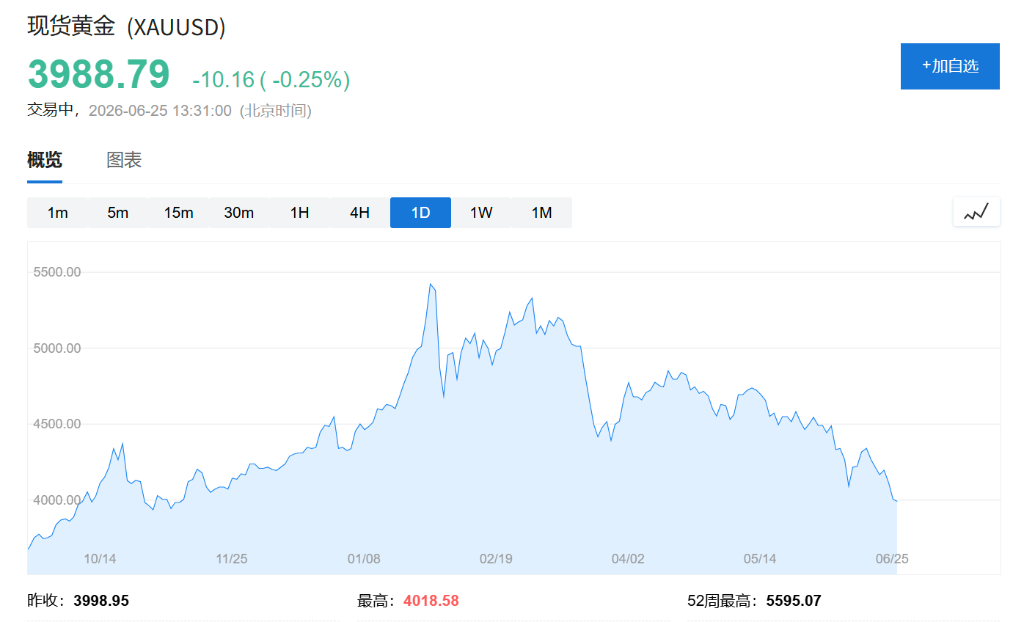
On Wednesday this week, gold fell below $4,000 per ounce—the first time in roughly eight months—and is down nearly 29% from its record high of approximately $5,600 per ounce in January this year. Silver plunged below $60 per ounce, more than halving from its peak of $121. Bitcoin simultaneously dropped below $60,000—the lowest level since late 2024. The U.S. Dollar Index (DXY) rose 2.8% month-to-date, closing at a 14-month high and on track to post its strongest monthly gain in nearly a year.
A pivotal turning point came during Warsh’s press conference as Fed Chair, where he placed price stability above all else—further cementing market conviction that he will adopt a more aggressive anti-inflation posture. A stronger dollar makes dollar-denominated precious metals more expensive for overseas buyers, while rising rate-hike expectations directly increase the opportunity cost of holding non-yielding assets.
Micron Technology’s after-hours earnings report—surpassing expectations—temporarily halted the semiconductor sector’s sell-off, prompting rebounds in Korean chip stocks such as SK Hynix. Yet multiple market participants warn that this highly volatile chip rally already exhibits several hallmarks of a historical market top.
Warsh’s Hawkish Debut: Rate Expectations Reset, Depreciation Narrative Shattered
The “dollar depreciation trade” was built upon concerns over fiscal profligacy and central bank tolerance of inflation—factors that have driven gold, silver, and Bitcoin higher in recent years. When Warsh was nominated Fed Chair in January, gold plummeted over 13% that day—the largest single-day drop in over 40 years—Bitcoin subsequently collapsed, and the dollar reversed its long downtrend and rebounded from its lows. Markets voted with prices, signaling that Warsh’s hawkish credibility was taken seriously from the outset.
Robin Brooks of the Brookings Institution argues that the root cause of the depreciation trade lies in flawed fiscal policy, with monetary policy merely acting as an “accomplice”: only when policymakers attempt to erode unsustainable debt burdens through inflation do they resort to printing money. This framework explains why markets are so sensitive to Fed leadership appointments—and why Warsh’s emphasis on price stability during his first press conference triggered such dramatic asset repricing.
Stephen Innes, Executive Partner at SPI Asset Management, says Warsh’s first public appearance has convinced markets he is pursuing a tougher anti-inflation path. The S&P 500 index priced in gold—a classic gauge distinguishing real economic expansion from currency depreciation—reversed sharply upward three months ago, indicating the market’s confidence in the depreciation narrative has already crumbled. Notably, the Middle East ceasefire agreement also provided additional tailwinds for the dollar.
Gold & Silver Retreat Deepens; Key Support Levels and Buying Windows Emerge
This round of precious metals declines marks a dramatic reversal from the historic rally earlier this year. Early in the year, gold surged to a record high near $5,600 per ounce, and silver broke above $121—outperforming even the “Magnificent Seven” tech stocks and becoming Wall Street’s most crowded momentum trade. That boom is now history.
Nate Miller, VP of Product Development at Amplify ETFs, notes that rising yields and a stronger dollar have increased the opportunity cost of holding metals. Silver, with its dual identity as both a precious metal and an industrial raw material, typically falls more sharply than gold during macro tightening—precisely why its decline has been so steep this cycle.
Ben McMillan, Chief Investment Officer at IDX Advisors, identifies rising rate expectations and liquidity-driven deleveraging as the “primary culprits” behind gold’s sharp drop—but also views the current pullback as a “generational buying opportunity.” Peter Grant, Senior Precious Metals Strategist and VP at Zaner Metals, forecasts gold’s next key support level at $3,800 per ounce, with a potential rebound to $4,500 by year-end. However, restoring market confidence in gold’s ability to set new all-time highs would require a sustained move above $4,800.
Dollar Strength Weighs on Bitcoin: Negative Correlation Dominates Crypto Moves
Bitcoin’s break below $60,000—coinciding with the dollar index hitting a 14-month high—once again confirms their long-standing negative correlation.
Standard Chartered strategist Steven Englander points out that the divergence between real and nominal interest rates has become the main driver behind the dollar’s strength since early May. He expects the Fed to hold rates steady while the European Central Bank retains room for at least one cut in the first half of next year—keeping the U.S.-Europe rate differential supportive of the dollar and creating persistent headwinds for Bitcoin.
Vincent Deluard of StoneX Financial warns that although the Middle East ceasefire eases oil-price shocks, inflation will not smoothly return to the 2% target—it will instead remain stubbornly elevated, consolidating in a 3.5%–4% range.
Torsten Slok, Chief Economist at Apollo Global, presents a counterintuitive scenario: falling oil prices could act like a tax cut, further stimulating already overheated aggregate demand—thereby pushing inflation higher and giving the Fed justification to hike. If this path materializes, the depreciation trade would face even greater pressure.
Capital Rotates Into Semiconductors; Chips Take Over as New Momentum Favorite
Mark Hackett, Chief Market Strategist at Nationwide Investment Management Group, observes that a large, highly coordinated pool of capital is collectively shifting substantial positions out of cryptocurrencies, meme stocks, and precious metals—and into semiconductor stocks. Samsung Electronics and SK Hynix have become primary destinations for this rotation.
Speaking to MarketWatch, he says the dollar’s strength triggered the precious metals sell-off, and shifting Fed policy expectations underpin the dollar’s rally. “But it’s almost being used as a pretext for investors to collectively exit precious metals,” he adds.
Micron Technology’s after-hours earnings report eased short-term selling pressure on the chip sector: its revenue guidance exceeded expectations, and profits vastly outperformed forecasts. Its rolling 12-month earnings quadrupled over two quarters, and its after-hours market cap rebounded to roughly $1.4 trillion. SK Hynix—which had previously sold off after announcing a strategic shift toward lower-margin DRAM memory chips—also gained momentum, despite disclosing a $29 billion U.S. equity offering on the same day.
Chip Rally Shows Top Signals; Defensive Positioning Gains Consensus
Yet extreme volatility itself serves as a warning sign. Larry McDonald of Bear Traps Report notes that semiconductor stocks experiencing intraday market-cap swings exceeding $100 billion is extremely rare—historically occurring only near major market tops or bottoms.
BCA Research recommends ending the long position launched earlier this year—now up over 100%—that bets on emerging-market semiconductor stocks while shorting the “Magnificent Seven” cloud-computing giants whose massive spending funds them. BCA points out that the Korea Composite Stock Price Index (KOSPI)’s one-month implied volatility has surpassed historical peaks—levels historically associated with “bear-market bottoms rather than all-time highs,” suggesting the current rally is being amplified by “highly speculative forces”—a classic top formation.
McDonald also cautions that the convergence of month-end, quarter-end, and the upcoming U.S. long holiday weekend has historically coincided with large-scale portfolio rebalancing and sluggish summer trading. A wave of new stock offerings will strain market liquidity absorption capacity, while significant insider selling often precedes market tops. For investors still holding chip long positions, Micron’s strong after-hours performance may offer a relatively favorable opportunity to exit near the top.
Join TechFlow official community to stay tuned
Telegram:https://t.me/TechFlowDaily
X (Twitter):https://x.com/TechFlowPost
X (Twitter) EN:https://x.com/BlockFlow_News