The most crypto-native people are becoming the least crypto-native.
TechFlow Selected TechFlow Selected
The most crypto-native people are becoming the least crypto-native.
Hong Kong Carnival × Bangkok Money20/20 Observations
 Navigating Web3 tides with focused insights
By Will Awang
During Hong Kong Blockchain Week this April, what stuck with me most wasn’t any panel discussion—but a single scene.
Around 10 p.m., inside a cha chaan teng in Wan Chai, four or five people were crammed around one table, eating dry-fried beef chow fun while discussing their next steps. A friend who previously worked on stablecoin payments told me his team had fully pivoted to AI; another, who’d built on-chain data tools, said he now spent half his time helping AI companies set up data pipelines.
No one talked about token prices. No one discussed narratives. The term “Web3” barely came up at all.
I didn’t feel surprised—just oddly familiar. Three years earlier, those same people sat at that very table, passionately debating DeFi, NFTs, and blockchain gaming. They were the same individuals—equally excited, equally immersed.
After attending both the Hong Kong Carnival and Money 20/20 in Bangkok, one phrase kept echoing in my head: *The most crypto-native people are becoming the least crypto.*
So what remains after the Web3 tide recedes? Having covered both events, I’ve formed my own answer.
I. Hong Kong: Familiar Faces, Unfamiliar Topics
Let’s start with Hong Kong. This year’s carnival saw far fewer crypto-native project teams compared to previous years—the hype of free T-shirts and ubiquitous narrative-pumping was gone.
This year’s official theme was “Mountains, Wind, Clouds, Sea,” signaling a clear departure from speculative trading narratives. Three years ago, such a statement would have drawn boos from the audience. This year, no one batted an eye—because nobody was talking about tokens anyway. An unspoken consensus had formed.
Walking the exhibition floor, the faces were familiar: OKX Wallet, TRON, ZA Bank, HashKey, and Xinhuo. But their talking points had shifted dramatically—centered almost exclusively on two themes: RWA and AI.
RWA continues last year’s momentum—but frankly, everyone knows who’s building real projects and who’s just performing. One observation holds true: For Hong Kong, RWA is fundamentally about financial productization—tokenizing real-world assets to enable more efficient, cross-border distribution. That happens to be precisely where Hong Kong excels: institutional design and financial engineering. As the bubble deflates, Hong Kong feels more at ease—those restless energies that never truly belonged here have finally dissipated.

AI is even more intriguing. Nearly every panel touched on AI–Web3 convergence—but after sitting through several, I’ll be honest: Most discussions remained at the level of “these two things should combine.” Nobody could clearly articulate *how* they should combine—or what specific problems such integration would solve.
My impression? Web3 is latching onto AI not because it has figured things out—but because without AI, there’s simply no narrative left to sell. And the speakers onstage likely know this too. But survival comes first—that’s always been the industry’s operating principle.
Hong Kong dollar stablecoins, meanwhile, generated little new news. Licenses have already been issued—but after speaking with multiple parties, it’s clear both major banks are proceeding at their own pace, with no rush for fanfare. Turns out, nobody really cares.
What moved me most, however, were the people in the audience. This year, the busiest people at the venue weren’t the panelists—they were the casually dressed attendees wearing exhibitor badges, constantly shuttling across the networking zone: BD managers, community builders, content creators, and resource connectors. They lacked polished resumes and didn’t always speak “professionally”—but their understanding of the industry had been forged over countless meals and repeated setbacks. This kind of insight isn’t gleaned from reports—it’s bought with time.
An industry’s ability to survive cycles doesn’t hinge solely on how many star companies sit at the top—it also depends on how many people remain committed to grinding, even when no one’s applauding.
The Web3 foundation remains intact. But what runs atop it has completely changed.
II. Bangkok: Stablecoins as the Trojan Horse
Flying from Hong Kong to Bangkok marked a sharp shift in tone.
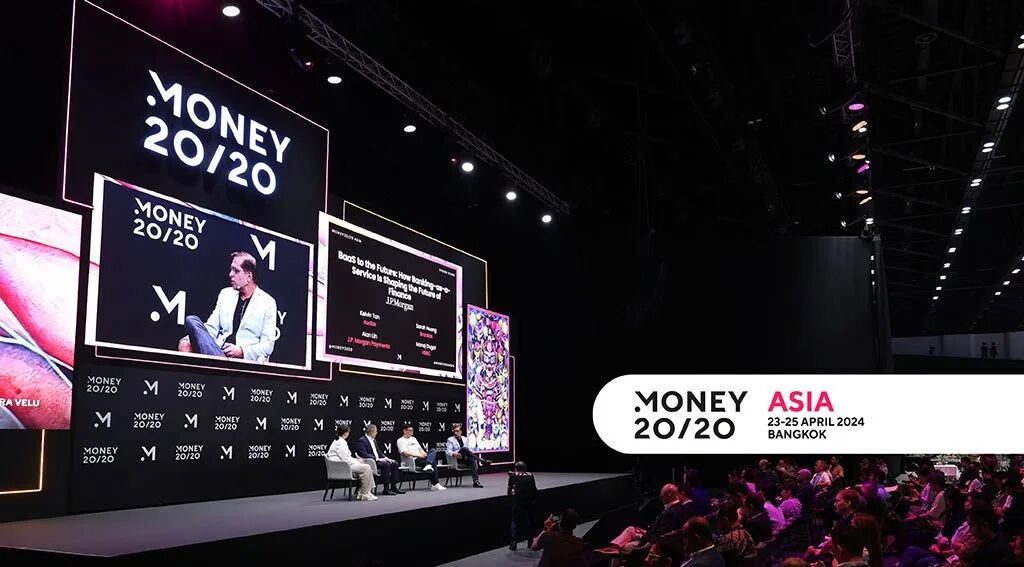
Money 20/20 is a pure fintech B2B expo—expensive to attend, and attendees dress like they’re walking into client meetings. Panel areas often had empty seats, but the business matchmaking zone was packed from opening to closing.
What surprised me was that stablecoins and crypto-native firms made up roughly one-third of exhibitors: OSL, Circle, Ripple, Fireblocks, Cobo, Pyth… at least a dozen, many attending for the first time. Money 20/20 even launched a new dedicated zone this year called “Intersection,” explicitly designed as a meeting point between TradFi and DeFi—stablecoins are no longer relegated to the periphery of fintech expos. They’re now central to the main agenda.
Here’s the twist—none of these crypto-native exhibitors were selling crypto on their booths.
Instead, they sold payment rails, settlement infrastructure, and digital asset custody solutions. Some even branded themselves “Web 2.5 finance”—one foot in crypto-native infrastructure, the other in traditional payments. Business visitors didn’t care which chain ran underneath—they wanted just three things: fast settlement, low cost, and regulatory compliance.
I spent two afternoons in the matchmaking zone. Every ten minutes, I heard “stablecoin” mentioned at the next table—never about price, always about integrating rails, onboarding merchants, or selecting compliance providers. These were practitioners with real business needs to execute.
At one panel, the moderator directly challenged the speakers: “Brazil’s Pix already enables instant, free domestic transfers—so why bother with stablecoins?” The reply was crisp: “Pix solves domestic payments. Cross-border remains unsolved.” That’s perhaps the most honest positioning of stablecoin payments: not replacing local payment systems—but filling the persistent gap in cross-border finance that traditional systems have long failed to address.
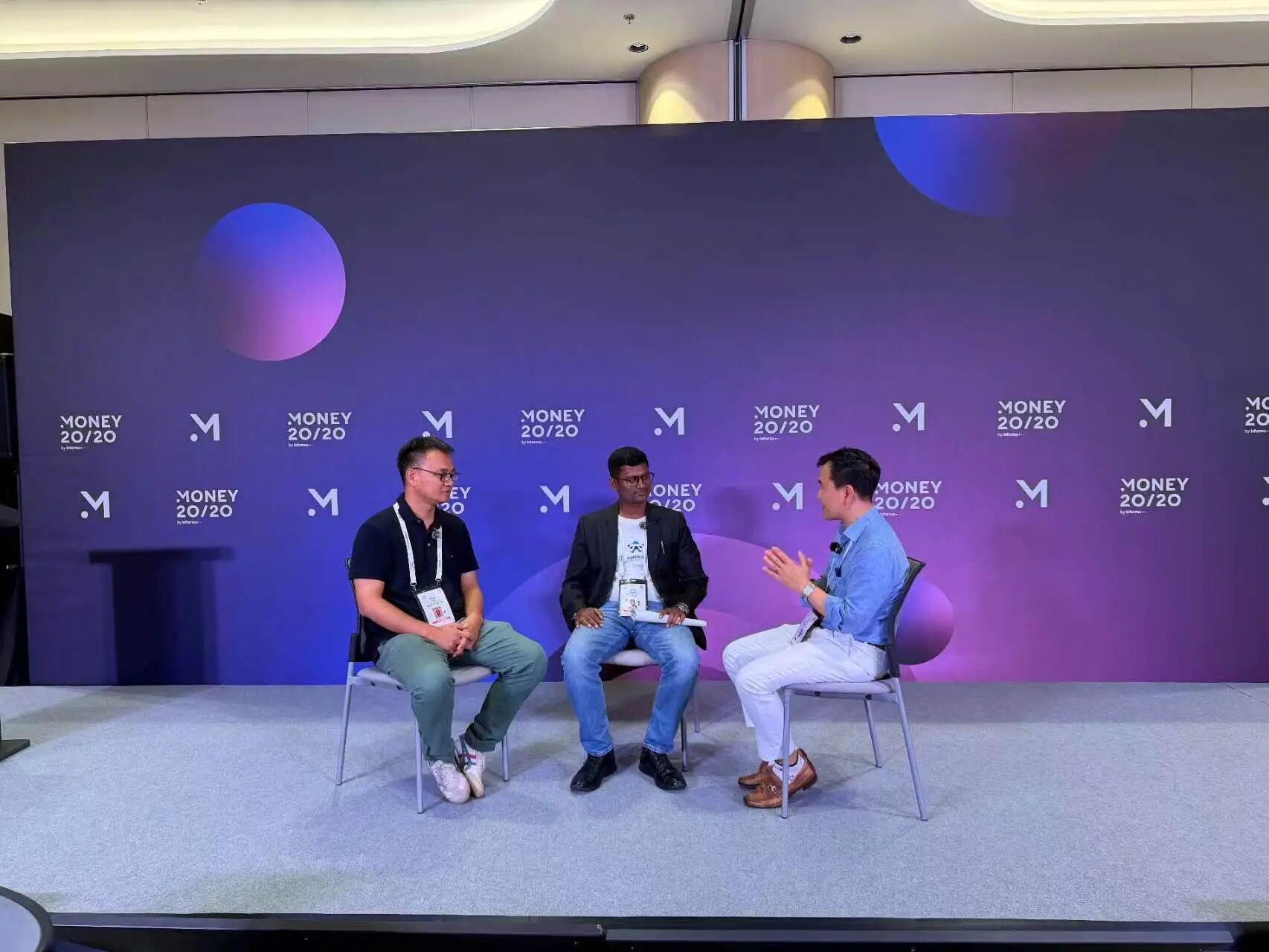
Thanks to Finternet’s invitation, I conducted an interview with Sumsub. What struck me most afterward was this: Sumsub, a KYC/KYB provider, originally served almost exclusively Web3 clients—exchanges, wallets, and DeFi protocols. Today, its fastest-growing customer segment comes from Web2: payment processors, banks, and global enterprises. Its deep Web3 background actually serves as credibility—enabling smoother entry into traditional financial markets. Web3 gave them training wheels; Web2 is the real market.
See? That’s the footnote to my earlier line: *The most crypto-native people are becoming the least crypto.* Stablecoins aren’t just “entering” traditional finance anymore—they’ve fully merged into it. So thoroughly, in fact, that at the expo you can’t easily tell which booth belongs to a stablecoin firm and which belongs to a fintech. Even institutions that don’t build stablecoin products themselves will be pressured by their clients to integrate them.
Stablecoins didn’t storm the castle gates of traditional finance. They slipped in through the back door—and by the time the castle dwellers noticed, the infrastructure was already laid.
III. AI Label Inflation
The infrastructure is in place—but new labels have been slapped on top.
In Bangkok, I counted: Of the booths I passed, roughly eight out of ten featured “AI” or “Agentic”—Agentic Payment, Agentic Wallets, Agentic Banking.
I stopped by several and asked: “What’s your most mature AI use case?” Answers were vague—mostly pointing toward future A2A (Agent-to-Agent) scenarios. Real transaction volumes? Everyone tactfully avoided numbers.
One company that previously built stablecoin payment infrastructure made a choice many had contemplated but few executed. With the infrastructure layer already saturated, building yet another rail meant competing against near-identical alternatives. Rather than wait for demand to arrive, they chose a different river—one already flowing with water—and pivoted to delivering payment solutions *for* AI companies. Not slapping AI labels on existing products—but building services *for* AI. Compared to the fuzzy A2A concepts dominating the expo, this was refreshingly concrete: Don’t wait for agents to autonomously pay each other—solve the real, immediate payment pain points AI companies face *today*.
That said, the AI frenzy at the expo does strongly echo Web3 in 2021—infrastructure-first, killer apps still undefined. One key difference: In 2021, demand was invented and then users hunted down; today’s agentic payments rest on a real premise—AI agents *are* growing exponentially, and they *will* eventually need to pay and receive money autonomously. The question isn’t whether demand exists—but when and in what form it arrives.
During that “when” window, slapping on the AI label is the safest move.
What if it *does* arrive?
IV. After the Infrastructure Is Laid—Then What?
Viewing Hong Kong and Bangkok together reveals a clear divergence.
Hong Kong focuses on financial productization—RWA, wealth management, asset management—competing on product design, distribution channels, and layered with crypto-native operational thinking. Bangkok focuses on payment rails—stablecoin-based cross-border settlement—competing on regulatory licenses and local channel partnerships. Together, these two paths represent what truly remains of blockchain *after* the Web3 wave recedes: financial infrastructure.
Not the yield-chasing euphoria of DeFi Summer. Not the mass FOMO of NFTs. Just rails, licenses, and partnerships.
Boring—but real.
Web3 once promised “decentralized reconstruction of everything.” What survived the retreat isn’t revolution—it’s patches and extensions to centralized financial systems. The cypherpunk revolution never happened. But the pipes have already been threaded into the city walls—and that, perhaps, may prove more enduring than revolution itself.

The infrastructure is laid—but three questions remain unresolved:
- Is it too late for stablecoin infrastructure? There are already too many infrastructure players at the Bangkok expo—differentiation space is shrinking rapidly. New entrants don’t need more rails—they need to decide *what flows through them*. Whoever embeds stablecoins into high-frequency, mission-critical use cases wins the next phase—not the rail-builders, but the rail-users.
- Application-layer solutions are the direction forward. Infrastructure layers are now sufficiently thick—value is migrating upward to applications. In the 2000s, broadband infrastructure providers captured the first wave of value; the real giants emerged later—Taobao and WeChat—running *on top* of that infrastructure. Stablecoins are approaching that inflection point.
- What about Agentic Payment? I’ve been tracking this space for some time. Visa, Mastercard, Stripe—all are building. The x402 protocol is advancing. Yet the gap between protocol and real-world deployment isn’t technical—it’s about trust frameworks and finding a large enough cross-border transaction scenario. Without that, it remains stuck in demos and panels.
- That said—back in 2021, when stablecoin cross-border payments were first pitched, the reception was similar: “Conceptually sound, but real-world adoption is still far off.” Five years later, stablecoins are embedded in the capillaries of traditional finance. Agentic payment may be at exactly that stage—only this time, the window will be much shorter.
V. Final Thoughts
On the flight home, what replayed in my mind wasn’t panel content—but that cha chaan teng table.
One person pivoted to AI. Another helps AI firms build data pipelines. Others continue integrating stablecoin payments into more merchants. Three years ago, they spoke of another world—but one thing hasn’t changed: They’re still present, still working, still diving headfirst into the pool.
What makes this ecosystem unique isn’t how cutting-edge the tech is—but how naturally it attracts *this kind* of person: someone who jumps in first, asks questions later—no matter how cold the water gets. Trends shift. Narratives rotate. But this raw, organic sense of participation never fades—it just puts on a different outfit.
No revolution occurred after the tide receded. But the most crypto-native people—armed with their tactics, speed, and survival instincts—are now infiltrating larger battlefields: traditional finance, AI, and cross-border payments. They’ve stopped shouting slogans—but they’re more dangerous than ever.
Because this time, they’re wearing suits.
Join TechFlow official community to stay tuned
Telegram:https://t.me/TechFlowDaily
X (Twitter):https://x.com/TechFlowPost
X (Twitter) EN:https://x.com/BlockFlow_News
 0xWillmfer