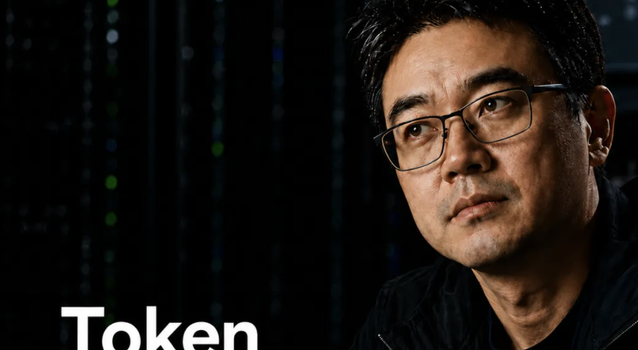
Tokens don’t need Chinese names, but the underlying businesses do.
TechFlow Selected TechFlow Selected
Tokens don’t need Chinese names, but the underlying businesses do.
Everyone across China is naming tokens—except linguists.
 Navigating Web3 tides with focused insights
Author: Kuli, TechFlow
Recently, you may have noticed something: people have started debating what “Token” should be called in Chinese.
Professor Yang Bin of Tsinghua University published an article titled “Determining the Chinese Translation of ‘Token’ Is Urgent”; on Zhihu, related translation questions have drawn 250,000 views, with commenters actively proposing suggestions.
For the past two or three years, China’s AI community has used the English term “Token” directly—no one thought there was an issue. So why does it suddenly need a Chinese name?
The immediate trigger is likely this: after the Spring Festival this year, ordinary people realized for the first time that Tokens cost money.
OpenClaw transformed AI from casual chatting into task execution—running a single job burns hundreds of thousands of Tokens, and bills are skyrocketing; cloud providers across the board announced price hikes, with pricing units uniformly denominated in Tokens.
Meanwhile, Tokens have begun appearing where they previously did not belong.
At the GTC conference, NVIDIA CEO Jensen Huang revealed that some Silicon Valley employers now ask candidates during interviews, “How many Tokens will this role allocate?” He even suggested incorporating Tokens into engineers’ compensation packages.
Sam Altman, OpenAI’s founder, went further, proposing that Tokens could replace universal basic income—what people receive wouldn’t be money, but computing power.
Data from China’s National Data Administration shows daily Token consumption in China surged from 100 billion in early 2024 to over 40 trillion by September 2025—and reached 180 trillion in February this year. Earlier this year, the People’s Daily published a special article titled “A Casual Discussion of ‘Cíyuán’ (‘Word Units’)” to explain the concept to readers.
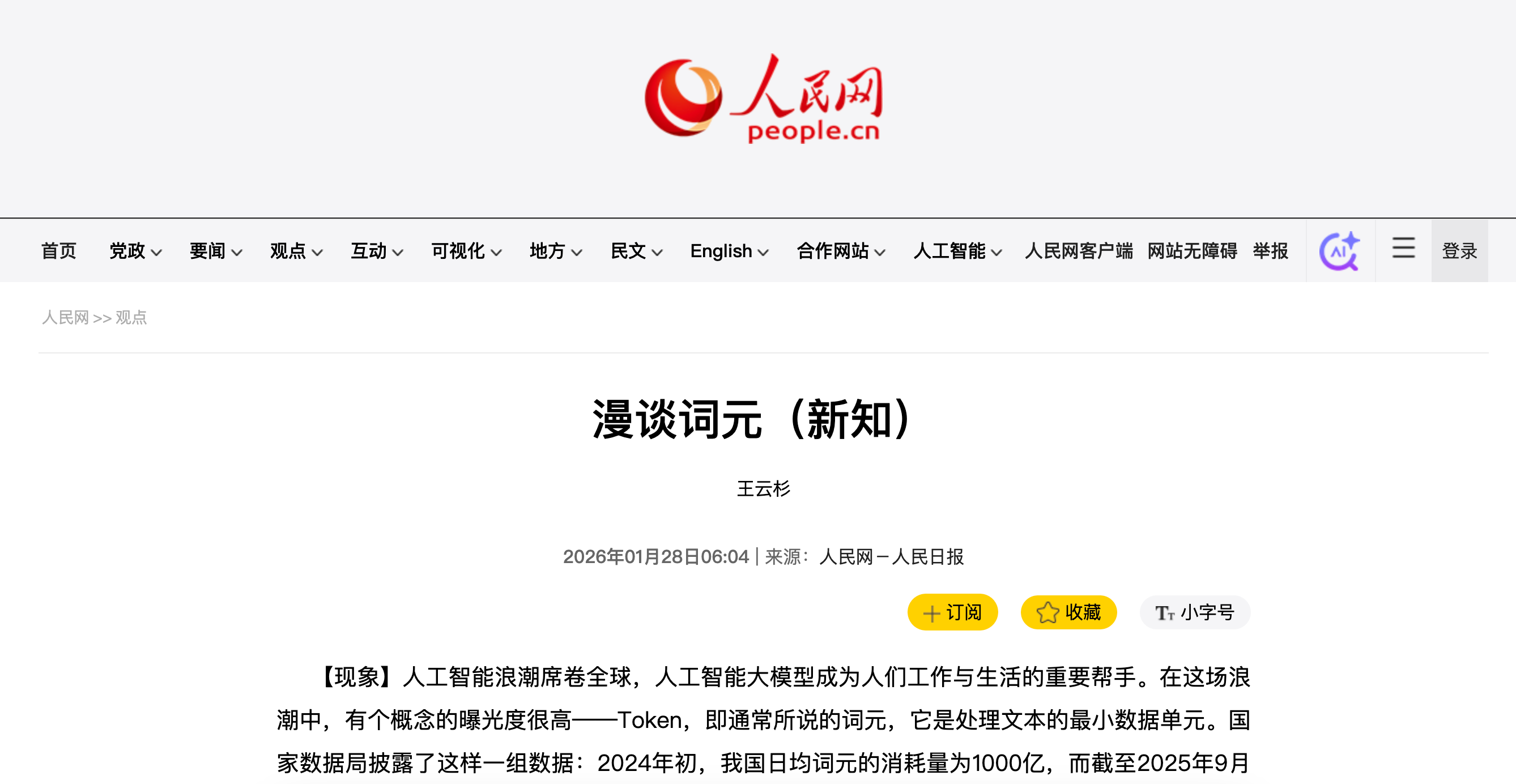
Once a technical term enters cloud service invoices, hiring compensation packages, and official statistical frameworks, it can no longer remain untranslated.
But the question remains: What should it be called?
If this were merely a translation issue, the answer would already exist. As early as 2021, China’s academic community formally named “Token” cíyuán (“word unit”).
Yet nobody paid attention—because at that time, Token was still just an internal jargon term within technical circles.
Now things are different.
“Token” itself is a universal container. Previously, crypto enthusiasts called it “digital tokens,” security professionals referred to it as “tokens” (or “authentication tokens”), and AI practitioners dubbed it “cíyuán.” The Chinese translation’s direction determines which domain claims ownership of the term.
Thus, a naming contest for “Token” has begun.
Business Demands Discursive Power
How a word is translated is usually linguists’ domain—but virtually no linguists are involved in this naming effort.
The most prominent candidate so far is “zhìyuán” (“intelligence unit”).
The AI media outlet “Xin Zhìyuán” (“New Intelligence Unit”) is pushing hardest for this term. If “Token” becomes officially known as “zhìyuán,” the outlet’s brand name would align perfectly with the industry’s foundational terminology—meaning every article discussing Tokens would effectively serve as free advertising for them.
In their own promotional article, they candidly wrote: “We propose adopting ‘zhìyuán’ as the industry’s new consensus term—and leaving the character ‘xīn’ (‘new’) to us.”
According to the same article, Wang Xiaochuan, founder of Baichuan Intelligence, commented: “‘Zhìyuán’ is quite fitting.”
That makes sense—he builds large language models, and calling Tokens “zhìyuán” transforms each model output from a billing unit into “a fundamental unit of intelligence.”
Selling Tokens means selling traffic; selling “zhìyuán” means selling intelligence—a completely different valuation narrative.
Professor Yang Bin of Tsinghua University proposed “móyuán” (“model unit”), with “mó” standing for “model.” Whoever owns large models controls the production rights to “móyuán.” Leaning the name toward “models” shifts pricing power toward model companies.
Others advocate “fúyuán” (“symbol unit”), returning to computer science’s foundational definition: a Token is simply a symbol-processing unit—unrelated to intelligence or models.
Technically the cleanest option, yet its proponent—an independent tech writer—lacks corporate backing or capital support, rendering this proposal nearly invisible in the current debate.
Where the name leans, the industry narrative follows—and so does the money.
A distant example: the day Facebook rebranded as Meta, “metaverse” evolved from a sci-fi concept into a company’s valuation story. A recent example: China consumes 180 trillion Tokens daily—the world’s highest—but the term’s Chinese name, definition, and authority to define it remain unsettled…
The world’s largest Token consumer hasn’t yet decided what to call the very thing it consumes.
Yet, a Chinese name already exists.
In 2021, Professor Qiu Xipeng of Fudan University’s School of Computer Science translated “Token” as “cíyuán” (“word unit”). Academia accepted it, and it entered textbooks. Back then, no one discussed it—because Tokens weren’t valuable.
Now Tokens are valuable.
They’re the billing unit for cloud services, the revenue source for large-model companies, and the core metric used nationally to gauge AI industry scale. So media arrived, industry leaders arrived, professors arrived—each bringing their preferred name and underlying rationale.
Translation was never the problem. The real issue is when this word began to carry monetary value.
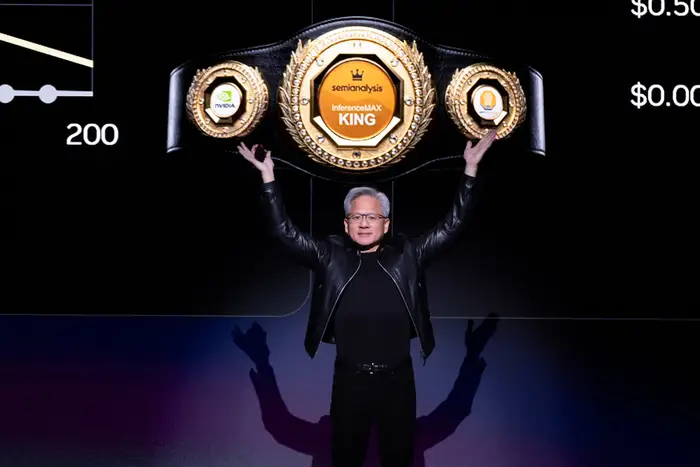
Jensen Huang didn’t join the Chinese naming discussion at GTC. Instead, he did something simpler: he raised a championship belt emblazoned with “Token King” and declared data centers are Token factories.
Who produces Tokens defines Tokens. What it’s called? He doesn’t care.
Tokens, Land-Grabbing, and Coinage
So the real question worth pondering isn’t which translation is better.
Once “calorie” was established as a term, the entire food industry’s pricing, labeling, and regulatory systems coalesced around it. Once “data traffic” was defined in China’s telecom sector, operators billed by traffic, competed on traffic, and designed plans around traffic—shaping the industry’s business model for over a decade.
“Token” is now walking the same path.
It’s already the billing unit for cloud services, the revenue metric for large-model companies, and the key national indicator for measuring AI industry scale. Even venture capitalists are debating whether investment disbursements could be made directly in Tokens.
Once a word becomes a monetary measure, naming it ceases to be translation—it becomes coinage.
Call it “zhìyuán,” and the minting power belongs to the AI narrative—those who tell intelligent stories benefit. Call it “móyuán,” and minting power goes to model companies—whoever owns large models prints the money. Call it “fúyuán,” and minting power returns to technology itself—but technology doesn’t speak for itself.
The academic community’s 2021 designation of “cíyuán” was ignored—not because the translation was poor, but because this “coin” had no value yet.
Now it does—and everyone wants their name engraved upon it.
Join TechFlow official community to stay tuned
Telegram:https://t.me/TechFlowDaily
X (Twitter):https://x.com/TechFlowPost
X (Twitter) EN:https://x.com/BlockFlow_News
 深潮TechFlow