Stock Tokenization Revolution: A Comprehensive Report on Market Dynamics, Product Architecture, and Regulatory Moats
TechFlow Selected TechFlow Selected
Stock Tokenization Revolution: A Comprehensive Report on Market Dynamics, Product Architecture, and Regulatory Moats
The integration of the $150 trillion global stock market with blockchain infrastructure is no longer just a theoretical proposition—it is already happening.
 Navigating Web3 tides with focused insights
Author: Foresight Ventures
TL;DR
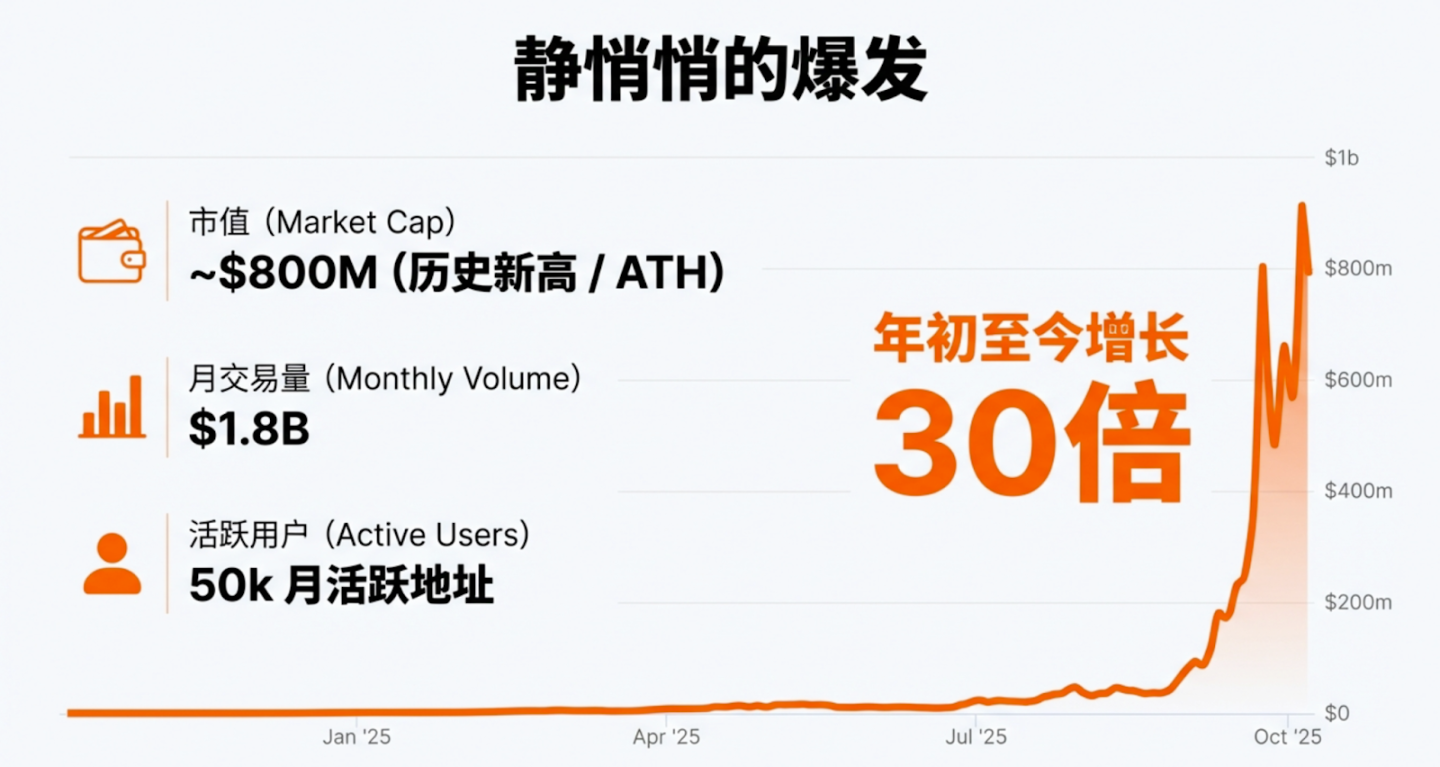
- Tokenized equities represent a breakthrough sector within the current real-world assets (RWA) cycle—market capitalization has hit an all-time high of $800 million, up 30x year-to-date, with monthly trading volume reaching $1.8 billion.
- Core value proposition: Bypass geographical restrictions and settlement delays imposed by traditional brokers to enable 24/7 global access to U.S. equities, with near-instant settlement.
- Three architectural models are vying for dominance:
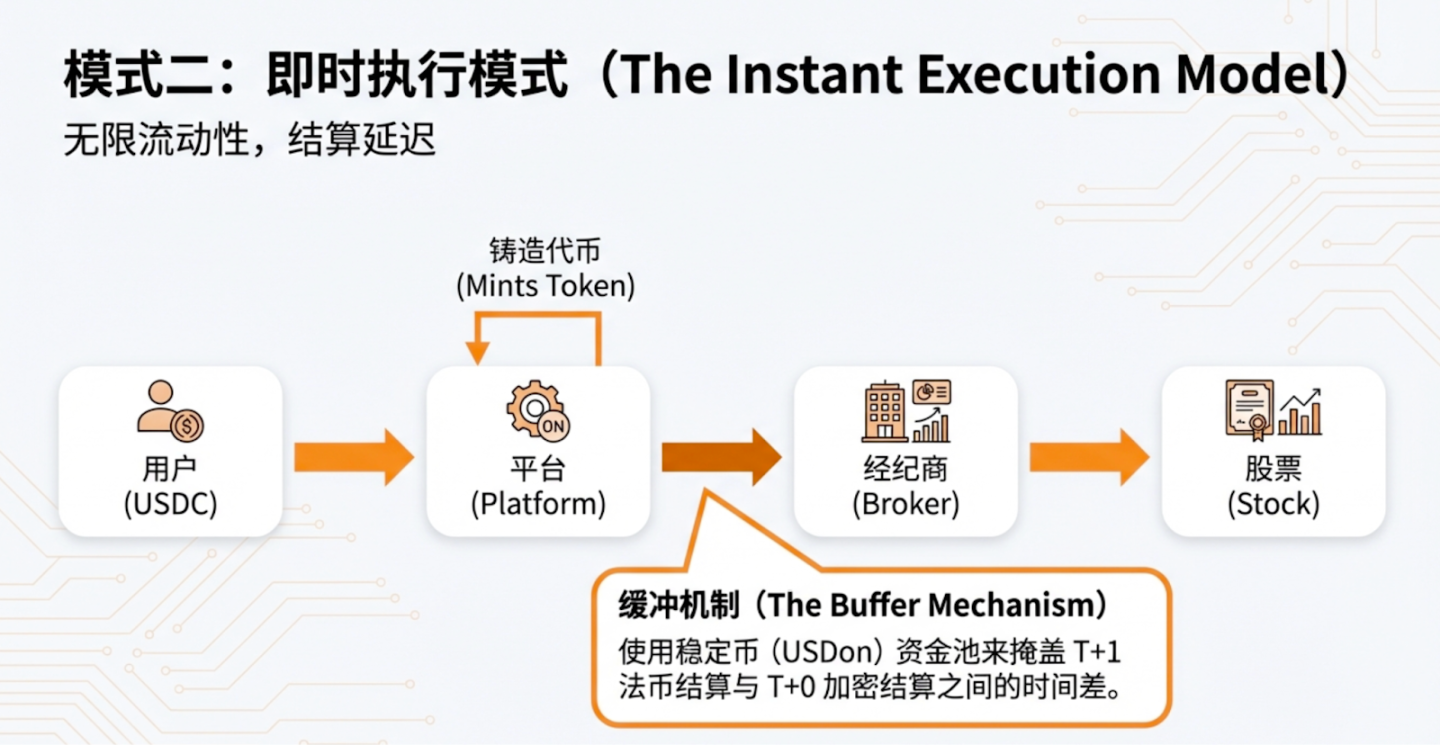
- Instant Execution Model (Ondo, CyberAlpha)—leading in capital efficiency.
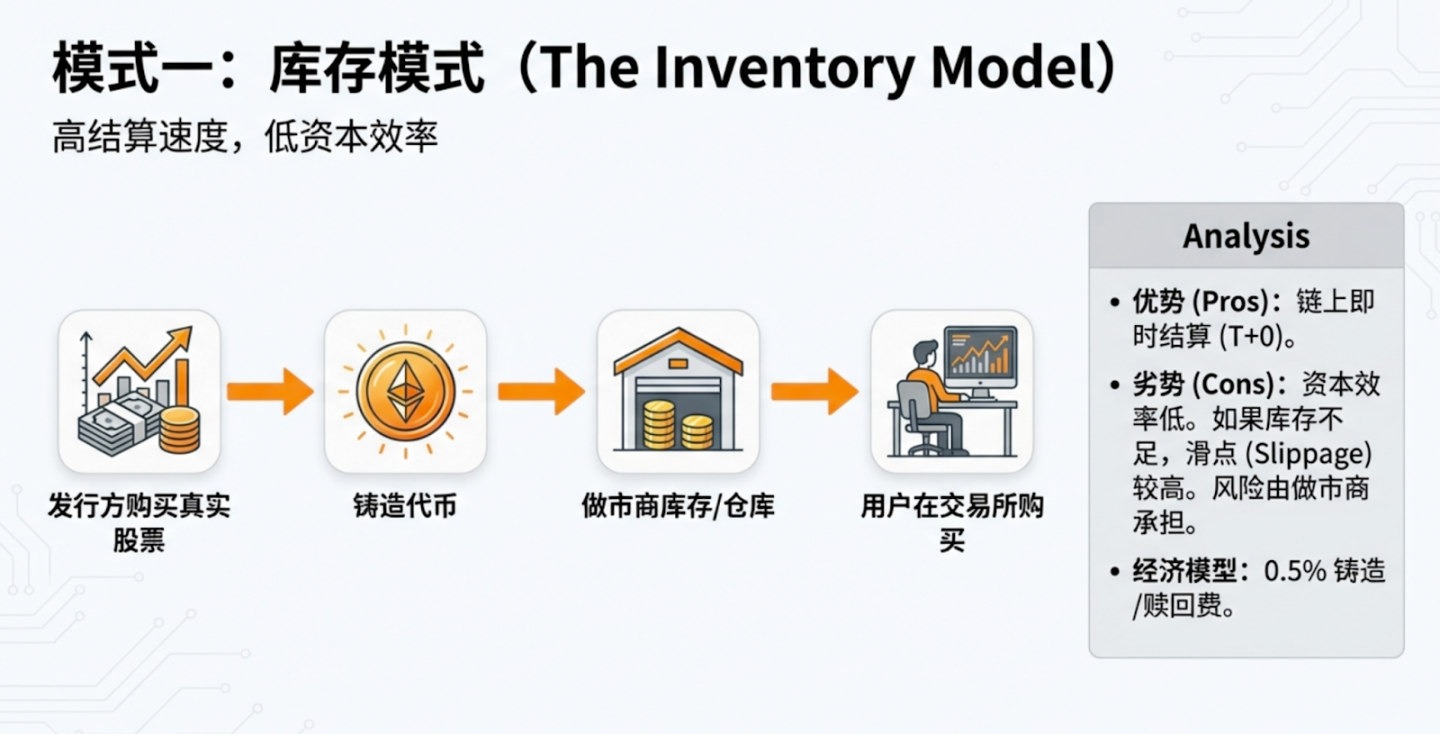
- Inventory Model (xStocks, Backed)—leveraging debt structures under Swiss law to maximize DeFi composability.
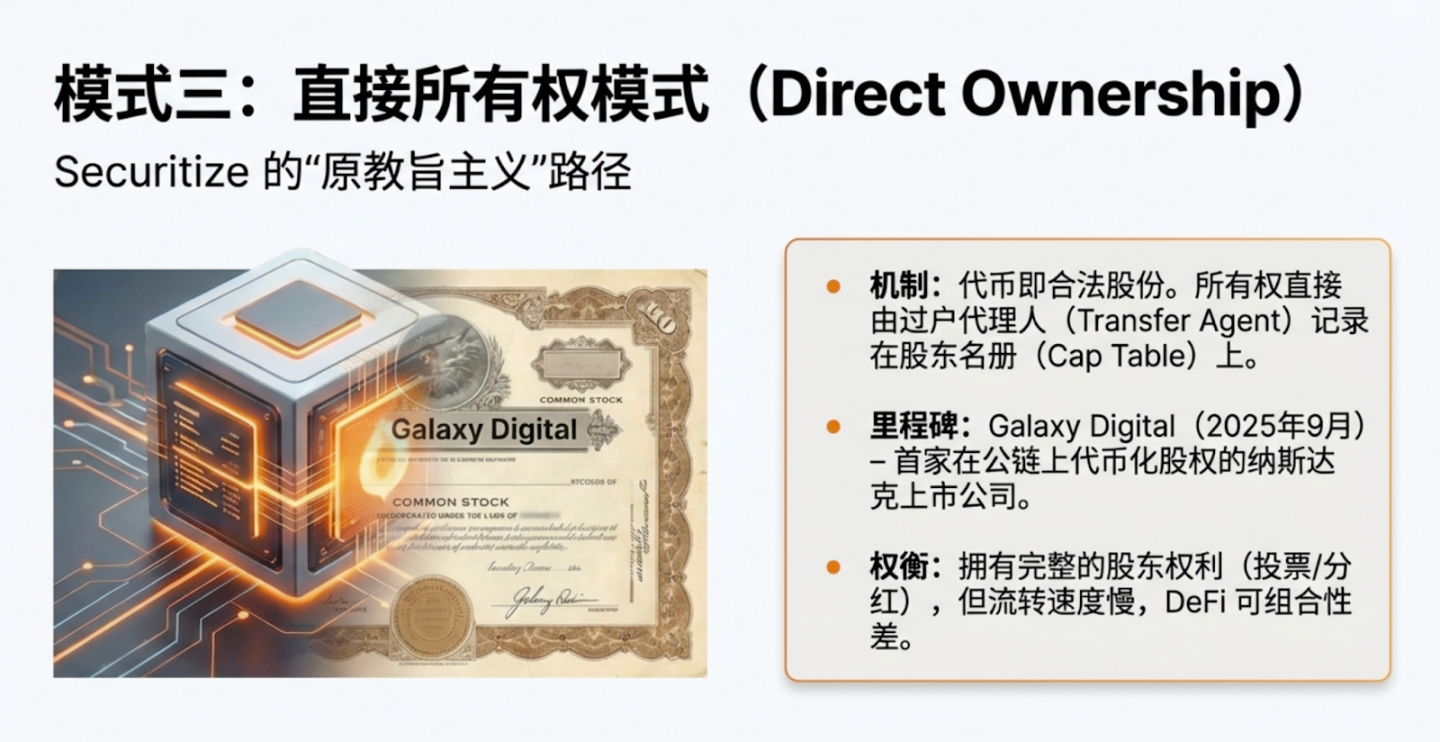
- Direct Ownership Model (Securitize)—providing the most complete legal rights but constrained by transfer restrictions and limited on-chain composability.
- The market has effectively evolved into a duopoly: Ondo leads with a 53% share, driven by liquidity engineering; Backed/xStocks holds 23%, powered by regulatory arbitrage.
- Technology is no longer the moat—regulation is. Building a cross-border licensing framework across the U.S., EU, and offshore jurisdictions represents the hardest-to-replicate competitive barrier today.
- Platforms face a fundamental trilemma: only two of the following three can be simultaneously optimized—liquidity/speed, regulatory safety/shareholder rights, and DeFi composability.
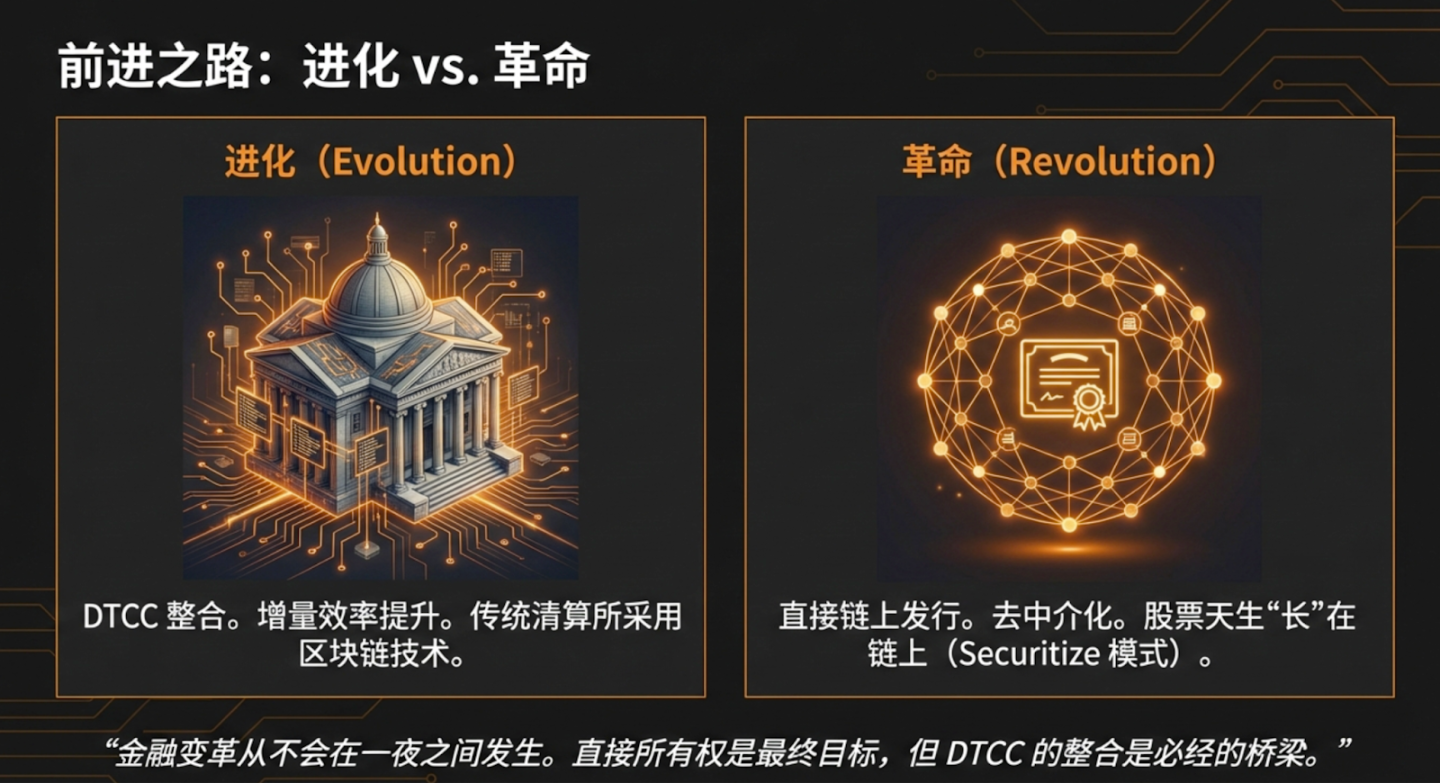
- The industry is bifurcating into two paths: evolutionary (DTCC integration, incremental efficiency gains) and revolutionary (native on-chain issuance, full disintermediation).
- Conclusion: The convergence of the $150 trillion global equity market with blockchain infrastructure is no longer merely a thesis—it is underway.
1. Market Snapshot: Decoding the “Quiet Boom”
The real-world assets (RWA) space is undergoing structural transformation, with tokenized equities emerging as the breakout sector of this cycle. The overall RWA ecosystem’s market capitalization has surpassed $800 million, surging 30x year-to-date. The fusion of traditional equity assets with blockchain infrastructure signals a fundamental redesign of capital markets. This “quiet boom” is not just about asset migration—it is a modernization of global liquidity, replacing fragmented legacy systems with a unified, programmable financial layer.
The following key metrics confirm this shift from experimental to institutional-grade adoption:
- Market Cap Milestone: As of December 2025, the sector’s market cap reached a record high of approximately $800 million.
- Liquidity Velocity: Monthly trading volume has surged to $1.8 billion, reflecting robust secondary-market activity.
- Adoption Density: The network currently supports 50,000 monthly active addresses and 130,000 total holder addresses.
This growth trajectory is fundamentally enabled by blockchain’s elimination of long-standing settlement friction and access barriers inherent in traditional finance (TradFi).
As demand for settlement efficiency intensifies across capital markets, how tokenization technically resolves TradFi’s chronic pain points has become the core strategic battleground.
2. Strategic Value Drivers: Solving TradFi’s Friction Points
Traditional equity markets have long been constrained by physical boundaries embedded in legacy systems: geographic silos, limited trading hours, and protracted settlement cycles. The 2021 Robinhood/GME episode—where the T+2 settlement system failed, forcing brokers to restrict trading due to margin shortfalls—stands as a canonical negative case study of TradFi’s “efficiency deficit.”
Tokenization delivers strategic premium via the “Efficiency Triple-Threat”:
- 24/7 Trading: Traditional markets offer only a 6.5-hour daily window; tokenization eliminates “opening price gap” risk and enables investors to respond instantly to global macro events.
- Global Accessibility: Fully dismantles geographic and broker-based barriers, granting non-U.S. retail investors seamless exposure to high-demand U.S. equities—achieving “borderless capital.”
- Capital Efficiency: Digital infrastructure enables T+0 settlement, reducing collateral lock-up and operational costs caused by settlement delays.
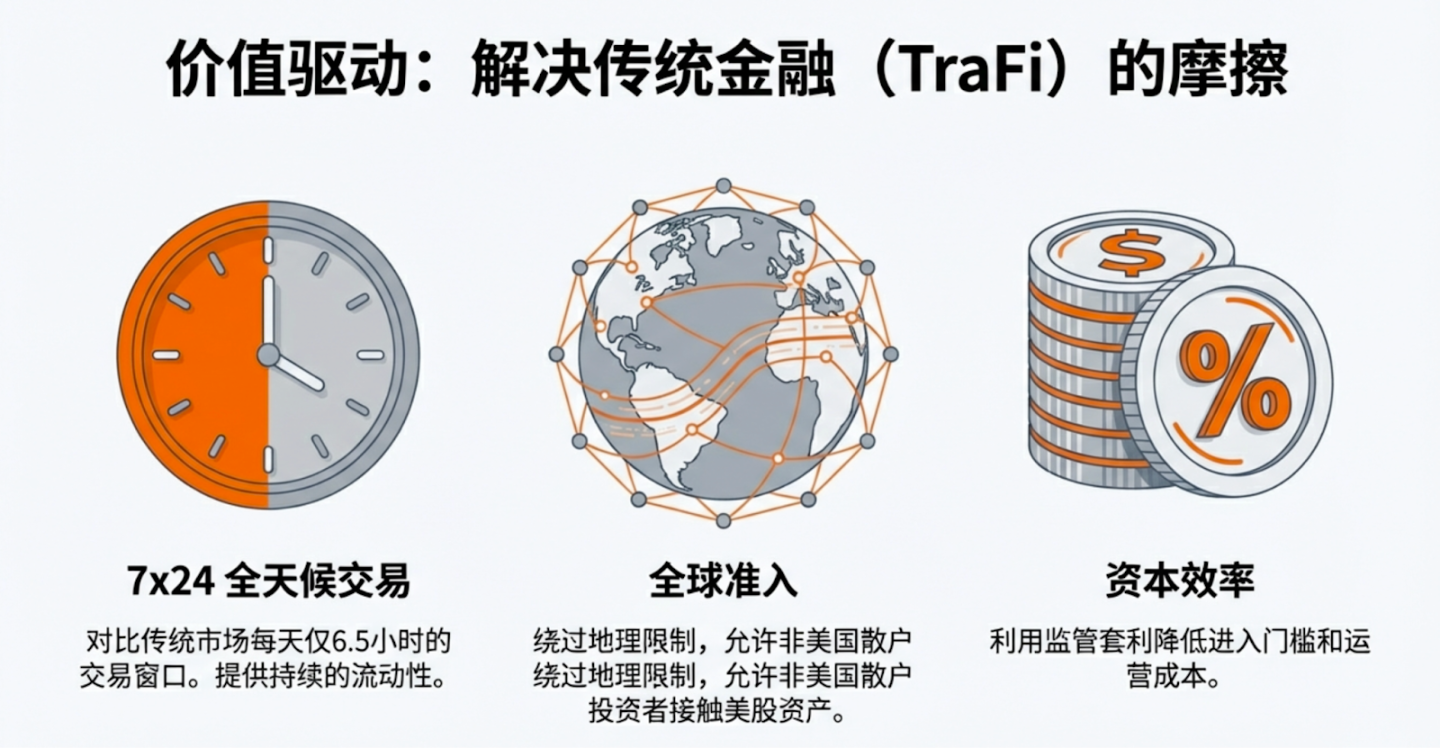
Tokenization is not just optimization—it is circumvention: delivering a global, always-on liquidity layer that bypasses administrative bottlenecks of traditional securities businesses. In an era of “capital efficiency scarcity,” platforms enabling instant settlement and cross-border distribution will command pricing power.
However, the path to delivering this value is not singular—different product architectures determine long-term moats and risk profiles.
3. Tokenization Architecture Comparison: Three Core Models
Architectural choice is the strategic fulcrum determining scalability, DeFi composability, and systemic risk profile.
Architectural choice is the platform’s most critical strategic decision—it defines scalability, DeFi composability, and systemic risk characteristics.
Three-Model Framework
- Inventory Model (e.g., xStocks, Backed): A “pre-funded liquidity” solution. Issuers or market makers purchase underlying shares upfront and mint tokens, storing them in a vault for immediate sale.
- Instant Execution Model (e.g., Ondo, CyberAlpha): An “on-demand liquidity” solution. Shares are purchased and tokens minted only upon confirmed user order execution.
- Direct Ownership Model (e.g., Securitize, Galaxy Digital): A “purist” solution where tokens represent legally recognized shares. Ownership is recorded directly on the company’s share register by the transfer agent, conferring full shareholder rights—including voting and dividends—but subject to strict transfer restrictions.
Architectural Trade-off Comparison
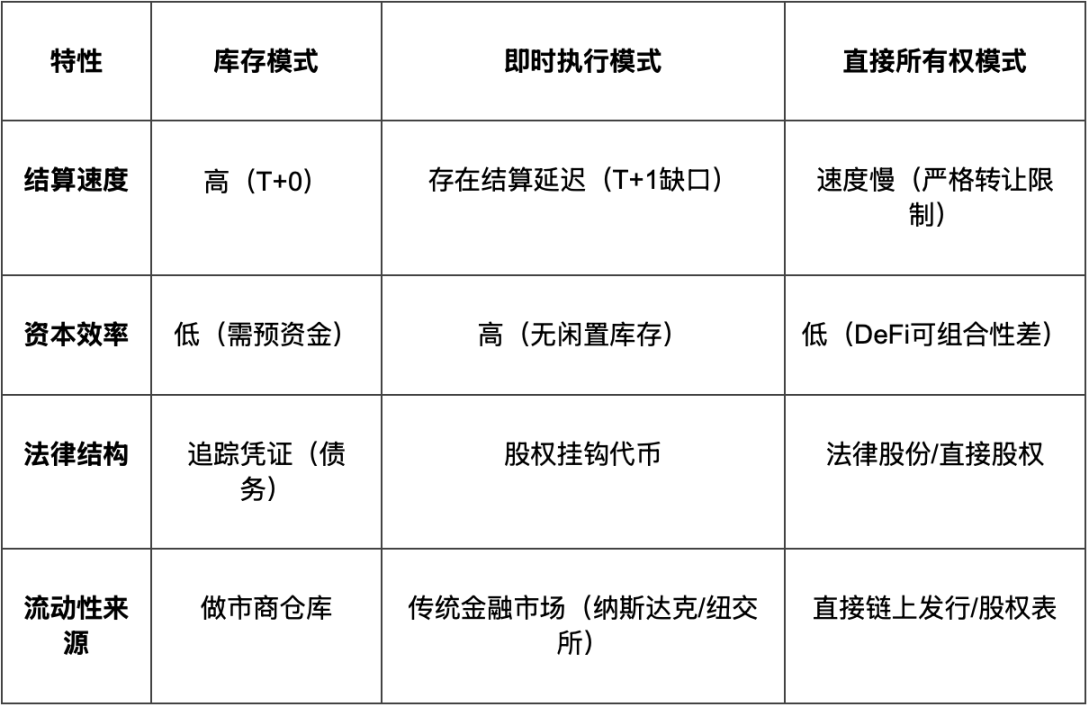
As trading volumes scale upward, technical challenges will pivot toward effectively bridging the gap between traditional and digital settlement cycles.
4. Competitive Landscape: Market Leaders and Challengers
The current competitive landscape reflects a clear “duopoly” and “strategic divergence.”
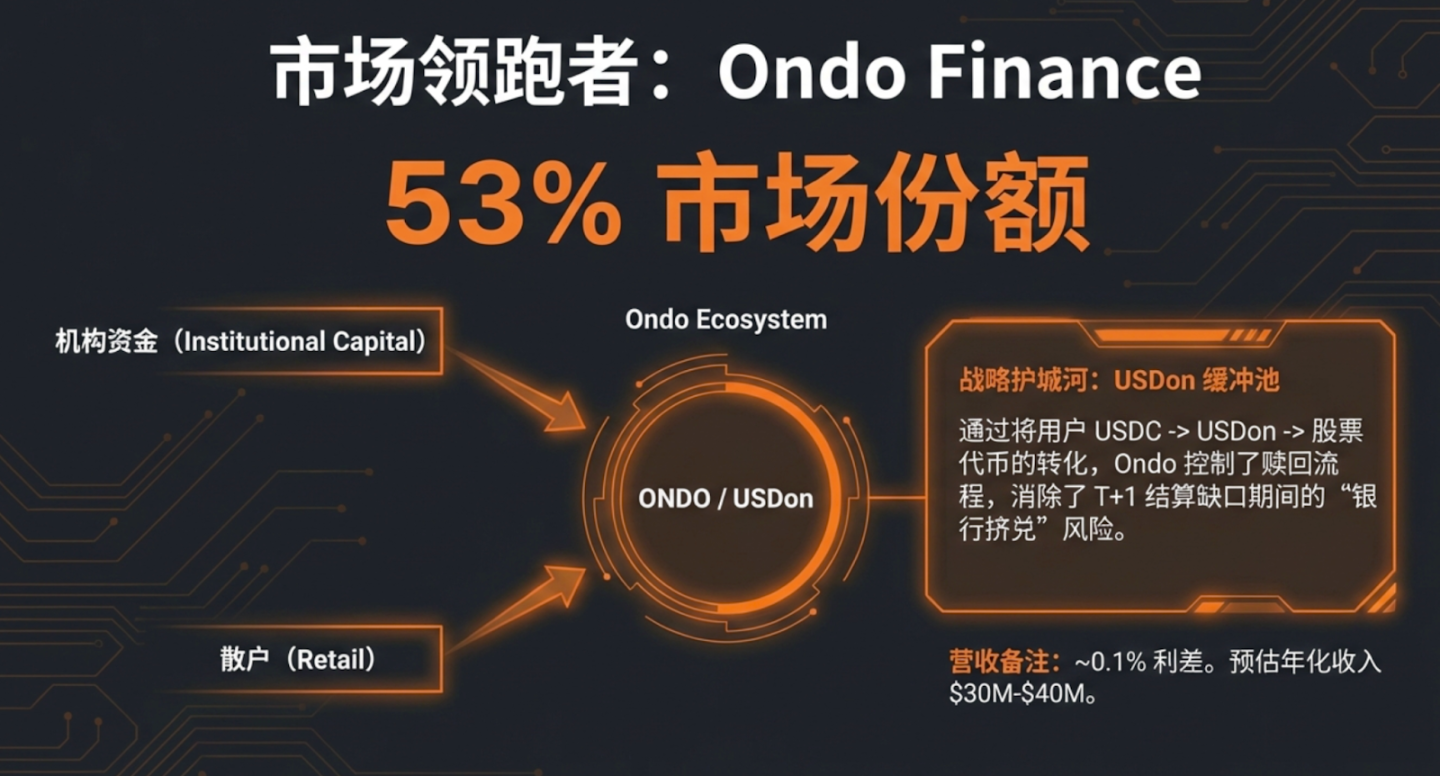
- Ondo Finance (53% share): Undisputed leader. Its revenue engine relies on ~0.1% trading spreads, with annualized revenue projected at $30M–$40M. Its core moat lies in its highly mature USDon liquidity buffer and extensive network of licensed institutional partners.
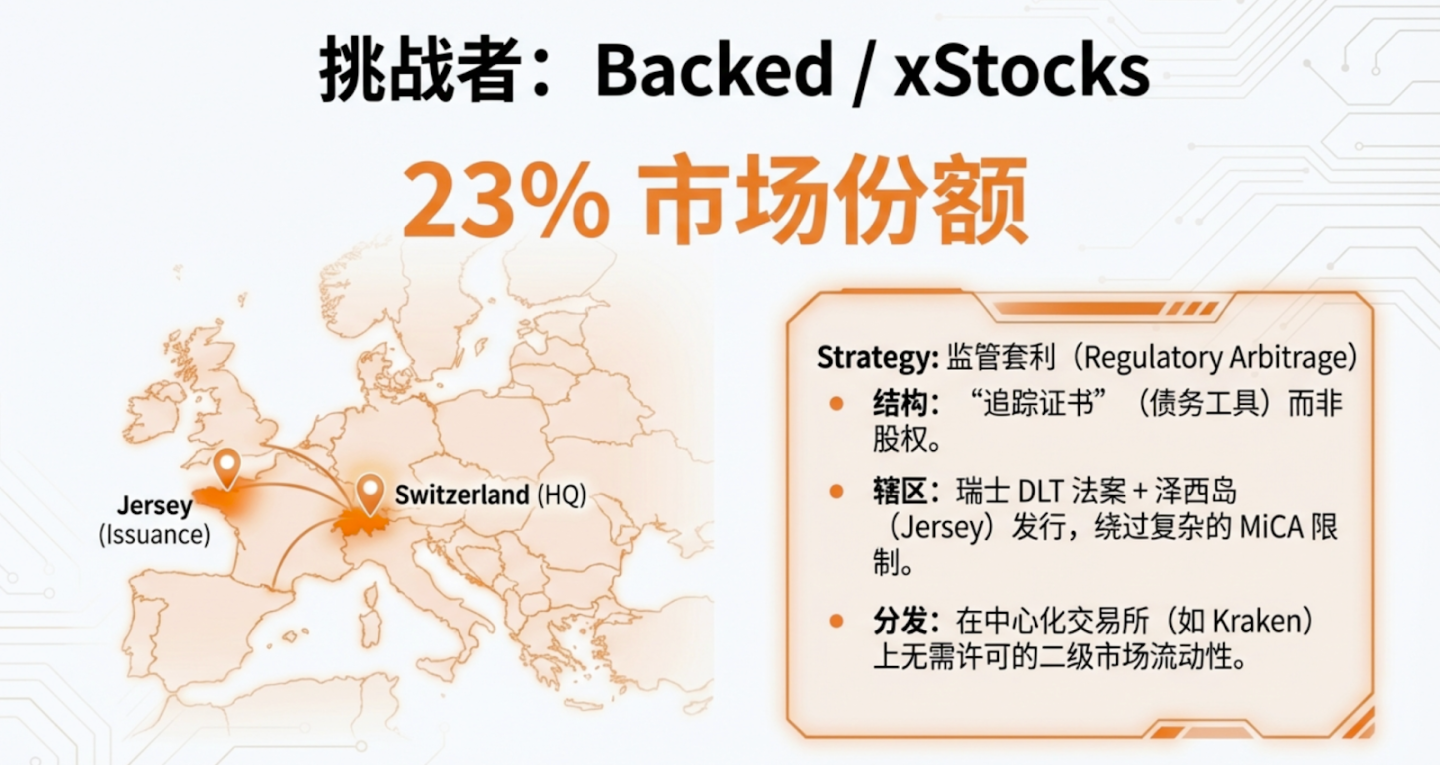
- Backed / xStocks (23% share): Breaks through via “legal alpha.” By structuring products as tracking securities (debt instruments) under Switzerland’s DLT Act, it cleverly sidesteps MiCA’s restrictions on direct equity token transfers—enabling free circulation and composability within DeFi ecosystems.
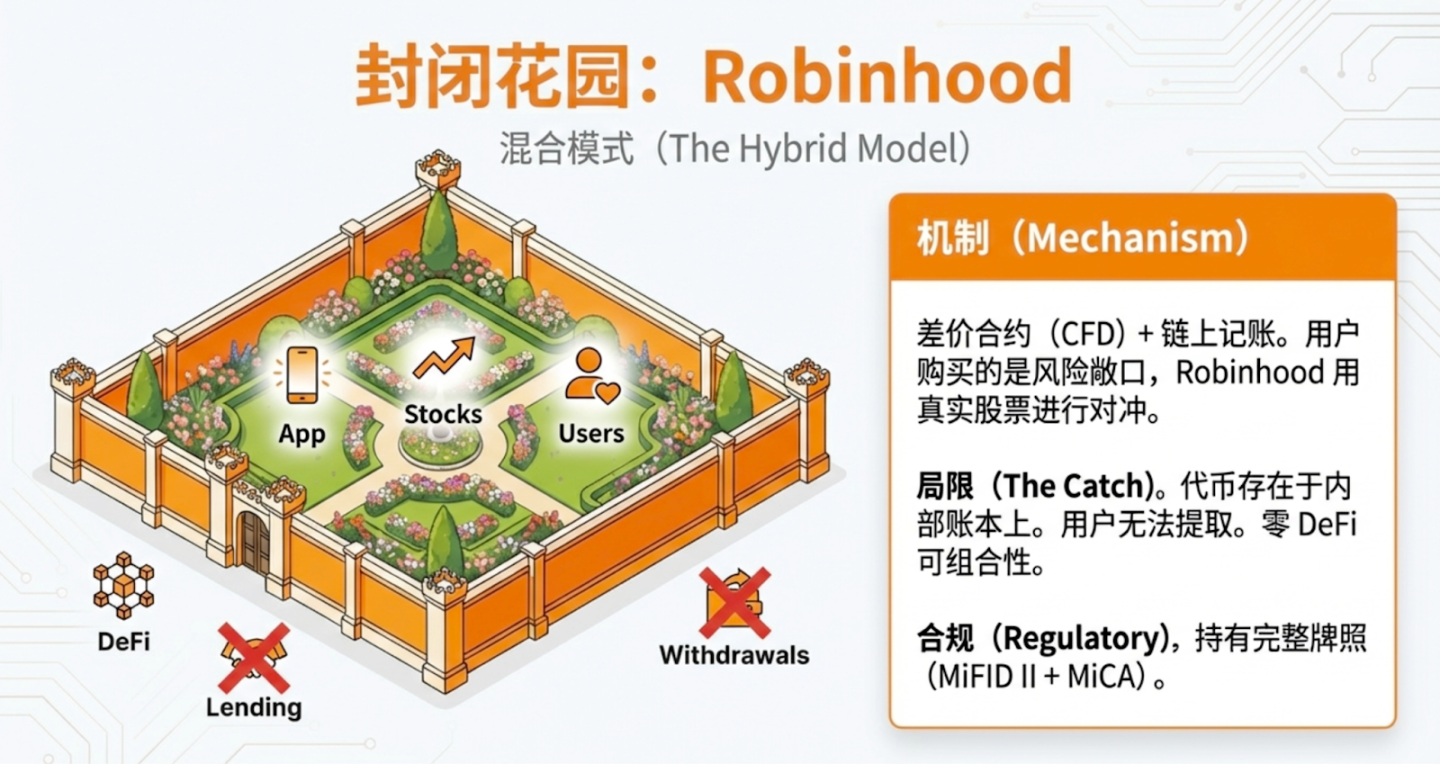
- Robinhood (“Walled Garden”): Though holding the strongest combination of MiFID II and MiCA licenses, its lack of token withdrawability creates an isolated ecosystem—missing out on DeFi’s open-network premium.
“So what?” level: Competition has shifted from “user count” to a battle over “regulatory arbitrage” and “capital efficiency.” Backed sacrifices direct equity rights via its debt structure to gain infinite interoperability in DeFi—a precise strategic trade-off.
5. Global Regulatory Matrix: Building the Compliance Moat
In the RWA space, “license aggregation” is a higher barrier than technology itself.
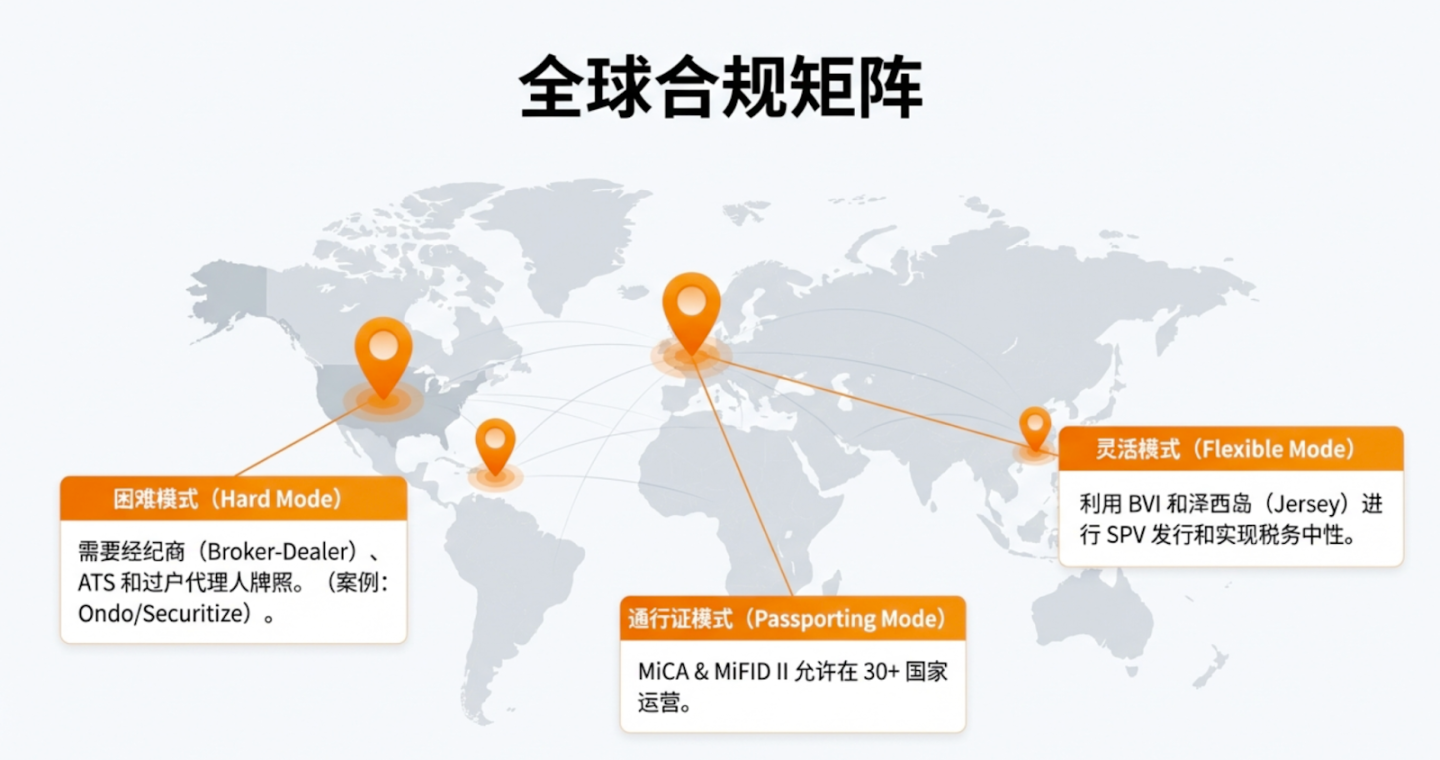
- U.S. Model (“Hard Mode”): Success rests on securing the “trident” of Broker-Dealer, Alternative Trading System (ATS), and Transfer Agent licenses. Ondo achieved this full-stack capability via its acquisition of Oasis Pro, gaining end-to-end control—from onboarding to secondary-market matching.
- EU Model (“Passporting Mode”): Leveraging MiCA and MiFID II’s “passporting” regime, firms licensed in Liechtenstein (e.g., Ondo, approved by FMA) or Cyprus (e.g., xStocks, approved by CySEC) may operate across 30 countries.
- Special-Purpose Pilot: Securitize obtained a DLT pilot license from Spain’s CNMV, authorizing it to operate as a trading and clearing system—directly challenging the role of traditional CSDs (Central Securities Depositories).
“So what?” level: Ondo’s compliance architecture is a masterclass in “financial engineering”: establishing its issuer in the BVI for tax neutrality, accessing underlying assets via U.S.-licensed entities, using Ankura Trust to provide daily position attestations for bankruptcy remoteness, and distributing globally via **BX Digital (Switzerland)**.
6. Strategic Outlook: Resolving the Tokenized Equity “Impossible Triangle”
The industry must balance the following three elements as it scales:
- Liquidity / Speed: Represented by Ondo, optimized via buffering mechanisms.
- Regulatory Safety / Direct Rights: Represented by Securitize, pursuing SEC-compliant, direct underlying ownership.
- DeFi Composability: Represented by Backed, achieving on-chain transferability through debt structures.
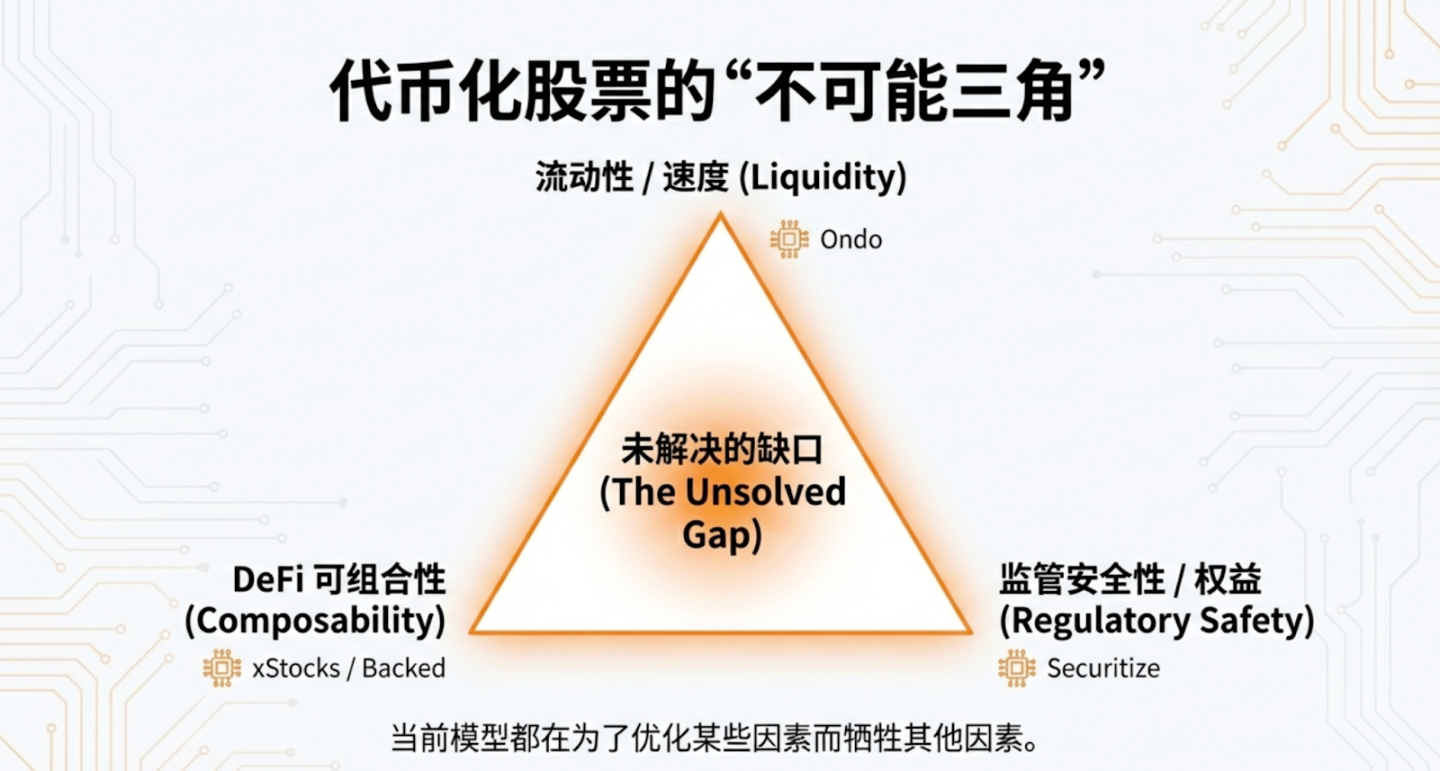
The market is now splitting into two distinct trajectories:
- Evolutionary Path: Centered on DTCC integration, delivering T+0 efficiency upgrades to incumbent financial institutions.
- Revolutionary Path: Led by native on-chain issuers like Securitize/Galaxy Digital, aiming for full disintermediation.
7. Summary & Key Insights
The migration of the $150 trillion global equity market onto blockchain infrastructure is irreversible.
- Institutional Maturity: 30x growth and milestones like Galaxy Digital’s entry signal the industry has moved beyond conceptual phase into deep-water, license-driven competition.
- Model Superiority: The Instant Execution model, with its exceptional capital efficiency, has seized early advantage in the current liquidity war.
- Licenses as Moat: Platforms capable of simultaneously accessing U.S. underlying assets (via ATS/BD licenses) and executing compliant global distribution (under EU MiCA/offshore BVI regimes) will build an insurmountable long-term moat.
“Financial transformation is never instantaneous. Direct ownership remains the ultimate goal—but DTCC integration and optimization are the necessary bridge to the future.”
Join TechFlow official community to stay tuned
Telegram:https://t.me/TechFlowDaily
X (Twitter):https://x.com/TechFlowPost
X (Twitter) EN:https://x.com/BlockFlow_News
 Foresight Ventures