

PolyFlow PID: Redefining Your Crypto Wallet
TechFlow Selected TechFlow Selected
PolyFlow PID: Redefining Your Crypto Wallet
PID is a DID customized for payment scenarios, bridging real-world identities with crypto wallets, enabling users to store, verify, and manage real-world data in the form of digital credentials, meeting compliance requirements while safeguarding privacy, and truly achieving "data self-control".
 Navigating Web3 tides with focused insights
Author: PolyFlow
The call for mass adoption of cryptocurrency has persisted for years, yet blockchain remains an isolated island, struggling to integrate into everyday digital life. Despite Web3 having built powerful tools and infrastructure, most users remain on centralized Web2 platforms, passively subjected to data control, forming fragmented information silos. The Web3 promise of "user-controlled data" remains unfulfilled because it has yet to reasonably leverage real-world data while ensuring privacy and without relying on new intermediaries.
Now, PolyFlow's PID, powered by zero-knowledge proofs (ZKP) and attestation services, enables data from Web2 centralized platforms to be used on-chain, while also providing a bridge for Web3 applications to "go off-chain."
As a one-stop consumer crypto payment infrastructure, PolyFlow aims to connect on-chain assets with off-chain life using blockchain technology—starting with seamless crypto payments and expanding in the future to more scenarios like on-chain finance. PID is the core infrastructure along this path.
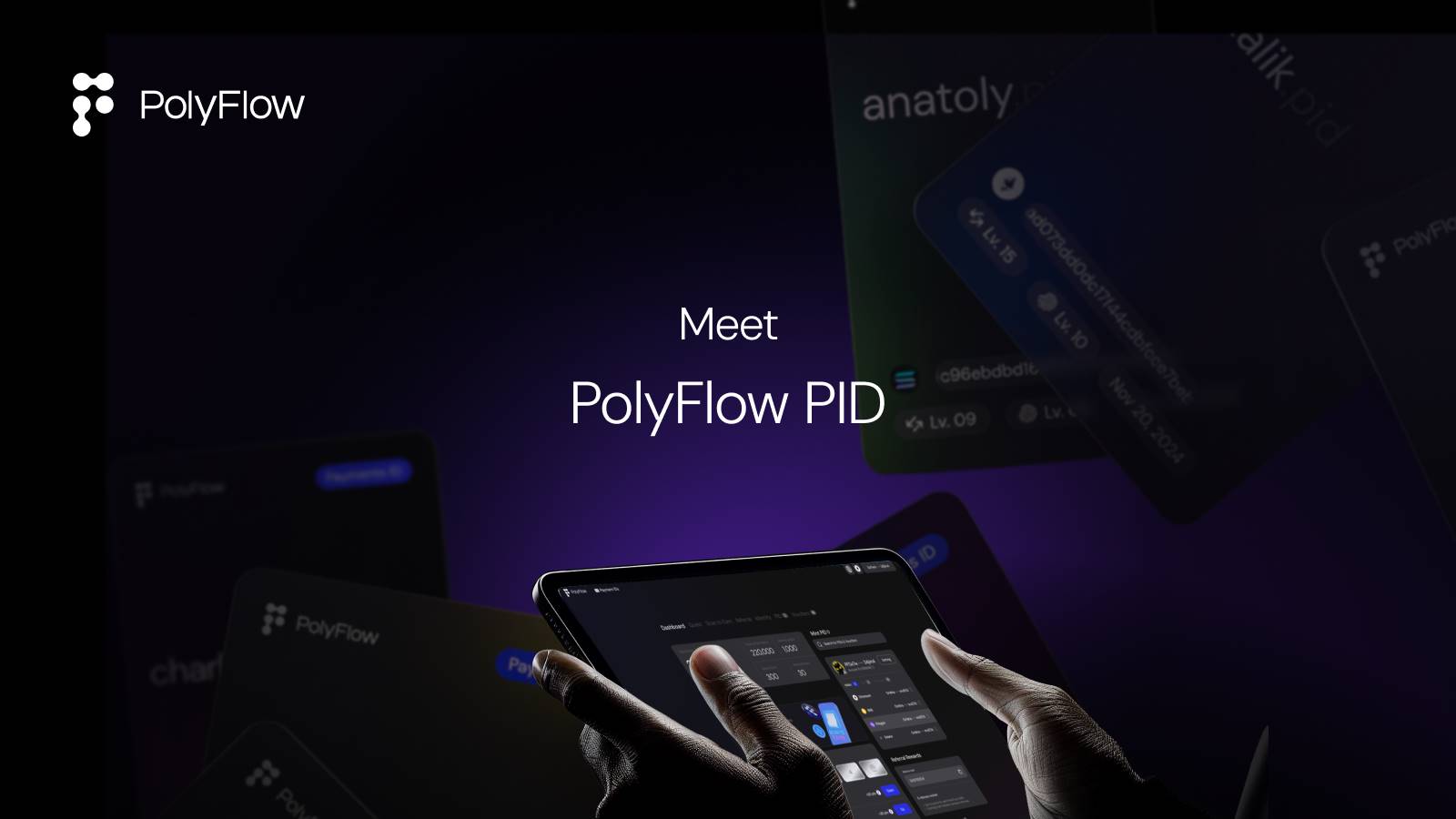
Why PID Matters?
Decentralized identity (DID) is a revolutionary model where users generate public-private key pairs, create DID documents, and store them on decentralized networks like blockchain, returning control of identity from platforms back to users, enabling "self-sovereign identity."
In PolyFlow's PID system, users bind various credentials to their DID and store them as Verifiable Credentials (VCs), ensuring privacy-preserving verification while guaranteeing that assets and identity data remain under user ownership.
PID is a DID customized for payment scenarios, bridging real-world identities with crypto wallets, helping users store, verify, and manage real-world data in digital credential form—meeting compliance requirements while protecting privacy, truly achieving "data self-control."
PolyFlow co-founder Raymond said: "PID is like your physical wallet, holding cash, IDs, cards, and various credentials."
Based on this concept, PID has broad application prospects and will become a key infrastructure in digital life.

Redefining the Crypto Wallet
Most crypto wallets today are only used to store assets, but as stablecoins and crypto payments gain popularity, this is no longer sufficient. For example, boarding a flight to attend Token2049 requires identity proof, and buying drinks at a bar requires age verification—these credentials typically reside in your physical wallet, not your crypto wallet.
PID leverages zero-knowledge proofs (ZKP) and attestation services (AS) to give wallets "evidence storage + verification" capabilities, transforming them from mere asset containers into digital identity carriers that meet diverse real-life needs.
Leveraging PID, wallets will have the following core features:
-
Verifiable Credentials (VCs)
Digital credentials issued by trusted entities that users can hold and selectively present to verify identity, credit score, SIM binding, etc., without exposing unnecessary information, enabling on-chain identity management.
-
Privacy-Preserving Data Verification
Using ZKP technology, users can prove they meet KYC requirements, have good credit, or possess verified SIM registration—without revealing specific data, reducing privacy risks.
-
Cross-Scenario Payments and Access Control
Permission credentials can be integrated within the wallet to support payments, identity authentication, reward redemption, device authorization, and more across different scenarios, truly unifying identity and payment functions.
-
Real-World Functionality Enhancement
As the VC ecosystem matures, wallets will gradually match—and even surpass—all functions of a physical wallet, becoming the primary digital identity gateway for Web3 users.
At its core, PID upgrades the crypto wallet from a simple asset storage tool into a trusted, privacy-friendly carrier of identity credentials, meeting daily needs such as payments, identity verification, and access authorization—paving the way for mainstream crypto adoption.

Use Case—SIM Real-Name Verification
Traditional eSIM or credit card applications often require separate KYC processes. PID uses verifiable credentials to enable cross-platform identity verification, lowering compliance costs.
At PolyFlow, we integrate Solana Attestation Service (SAS), placing transaction records and user identities on-chain, ensuring every payment and identity verification is traceable, verifiable, and tamper-proof.
Combining PID and SAS, PolyFlow supports ROAM (an OpenRoaming and eSIM-based DePIN open wireless network) in issuing and verifying on-chain SIM real-name credentials.
After completing one KYC process, users applying for a ROAM SIM card only need to verify their on-chain credential to complete issuance—eliminating repeated verification, reducing fraud risk, and enabling decentralized, privacy-friendly real-name authentication.
In the future, PID + SAS can support more use cases:
-
DeFi Lending and Credit Scoring
User on-chain credit behaviors (repayments, collateral, etc.) can be recorded in PID credentials, allowing lending protocols to directly access real-time, trustworthy credit scores.
-
Supply Chain Finance Credentials
Authenticity proofs such as invoices, warehouse receipts, and bills of lading can be placed on-chain via SAS, accelerating loan disbursement and reducing trade finance fraud risks.
In addition, leveraging ZKP technology, PID enables privacy-preserving verification—such as confirming "over 18" without revealing full ID documents—achieving both compliance and privacy protection.

Call to Action
To bring cryptocurrency into mainstream life, we must solve its integration within the existing internet ecosystem. PID is that bridge—leveraging real-world data, protecting privacy, and enabling decentralized, intermediary-free verification—to build composable identity infrastructure for Web3.
PID not only reshapes the crypto wallet but redefines the boundary between Web2 and Web3. In the future, new applications based on verifiable interactions will emerge, empowering users, reducing friction, and accelerating value creation.
PID is more than just a protocol—it’s a digital infrastructure that restructures how information flows and trust is established. PolyFlow will soon launch multiple PID-related tasks on its DAPP, inviting everyone to explore PID use cases—stay tuned.
About PolyFlow
PolyFlow is the first modular PayFi infrastructure, dedicated to connecting real-world assets (RWA) with decentralized finance (DeFi). As the infrastructure layer of the PayFi network, PolyFlow integrates traditional payments, crypto payments, and DeFi, enabling decentralized processing of real-world payment scenarios. PolyFlow provides the foundational infrastructure needed to build PayFi applications, ensuring compliance, security, and seamless integration of real-world assets, helping shape the next generation of financial paradigms and industry standards.
Learn more: X|Telegram|Medium| DAPP| Website
Media Contact: [email protected]
Join TechFlow official community to stay tuned
Telegram:https://t.me/TechFlowDaily
X (Twitter):https://x.com/TechFlowPost
X (Twitter) EN:https://x.com/BlockFlow_News
 @Polyflow_PayFi















