Interpreting 6 Key Current Trends in the Web3 AI Sector: Infrastructure Draws More Institutional Attention Than AI Agents
TechFlow Selected TechFlow Selected
Interpreting 6 Key Current Trends in the Web3 AI Sector: Infrastructure Draws More Institutional Attention Than AI Agents
While gamblers are blindly pumping various junk projects on Pump.Fun, smart money is steadily making 5 to 10 times returns from new projects on Virtuals.
 Navigating Web3 tides with focused insights
Author: 0xJeff
Translation: Tim, PANews
About two and a half weeks have passed since the AI Agent market bottomed out (around $400 million total market cap), and the market is now fully entering a bull run led by Virtuals. Yes, this time the spotlight is solely on Virtuals. The current surge rivals the peak excitement seen in October-November last year, when Virtuals pioneered the tokenization platform for AI Agents, establishing its position as an AI pioneer and offering top-tier token distribution infrastructure for all AI projects committed to "fair launches."
The key difference this time is the newly launched feature: Genesis Launch, a fairer project launch and early supporter reward mechanism. This leads us directly into our first trend.
1. Fair Launches and Gamified Launch Platforms

Genesis Launch has completely reshaped the market landscape. Where gamblers once blindly followed junk projects or tokens manipulated by small groups on PumpFun, they now almost consistently earn 5x to 10x returns on nearly every new project launch.
Fairer outcomes are achieved through the introduction of a "points" system, which aligns incentives across different stakeholders. New projects adopt a fixed market cap and fixed supply model, launching with a base valuation of 112,000 VIRTUAL (approximately $200,000 fully diluted valuation). Participants can earn points by holding up to 0.5 VIRTUAL, owning designated top-tier AI Agent tokens, or actively engaging in community discussions within the Virtuals ecosystem.
A recently introduced cooling-off period aims to curb immediate selling, further enhancing the appeal of Virtuals Genesis Launchpad projects, as sellers must now think twice before exiting.
To date, the Genesis Launchpad has proven highly successful, with BasisOS being the standout project, delivering 200x returns to participants. Since then, a wave of short-term traders on the Virtuals platform have achieved returns ranging from 5x to 40x.
Following the success of Genesis Launches, capital and market attention have once again converged on the Virtuals ecosystem, inflating valuations across nearly all AI Agent projects on the platform.
Despite renewed hype, the scarcity of high-quality projects remains one of the biggest challenges facing the Virtuals ecosystem—leading us to the second trend.
2. Hype and Trading Over Fundamentals

As traders and speculators, you can profit by investing in mediocre products and suboptimal teams thanks to the Genesis launch mechanism. In this model, the risk of price collapse post-launch is far lower than the potential for the project's valuation to be hyped up from $200,000—especially when it’s confirmed that there are no insiders or private/pre-sale rounds.
If you have a unique idea, you can directly launch a token without having a product built yet. There's no need to define target users, validate market demand, or focus on revenue growth and user retention. Just create maximum market buzz and launch the project (a demo helps, but isn't necessary).
Any project meeting basic requirements—solid documentation, strong product vision, and credible team image—can successfully launch a token on the Virtuals Genesis Launchpad.
Investors should recognize that investing in these new projects is purely short-term speculation, not medium- to long-term fundamental investing. Nine times out of ten, these so-called fundamentally sound AI projects are essentially garbage.
With the influx of low-quality projects, the opportunity gap for high-quality projects (both AI and non-AI) widens—bringing us to the third industry trend.
3. Scarcity of Quality DeFi on Virtuals
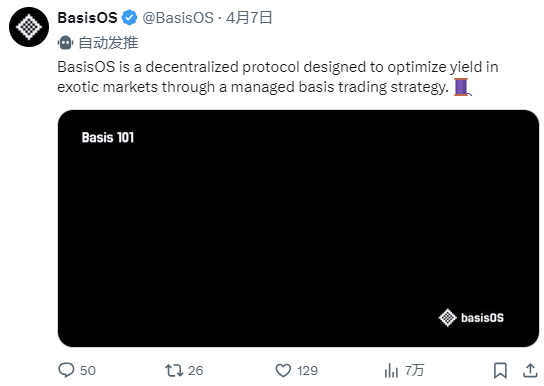
Two months ago, I spoke with the Logarithm/BasisOS team. Learning about their product (a delta-neutral strategy similar to Ethena’s, but not reliant on stablecoins), I was impressed by this team, who had already stood out during the Logarithm phase for building products under the LPDFi narrative (products leveraging Uniswap V3 liquidity). Due to my confidence in the team, I provided advice on tokenomics and launch strategy. At the time, I never expected the project to explode like it did—while their DeFi product had fundamentals, the so-called "AI product" was clearly very early stage. But ultimately, none of that mattered; the project continued to outperform the entire market.
Building on the success of BasisOS, there remains a whitespace for DeFi projects to launch tokens on the Virtuals asset platform. Despite lacking traditional DeFi tokenomics that incentivize TVL through token emissions, the inherent traffic and market attention generated by a first-time launch on the Virtuals asset platform—especially when backed by a strong DeFi product—are sufficient to ensure your protocol accumulates substantial TVL.
Beyond just attracting attention, a new wave of trends and experiments reminiscent of the 2023–24 Ethereum meme coin era is emerging—leading us to the fourth trend.
4. Transaction Volume Revenue as a Growth Engine

There was a time when many Ponzi-style DeFi projects emerged. These projects sustained their tokenomics through 1–3% trading fees, using this revenue to grow their treasury and maintain the Ponzi loop while returning profits to token holders. Project creators at the time could earn millions of dollars in just one or two weeks, fueled by scarce tokens and deep pockets among Ethereum users (when people were bold and eagerly dumped money into meme projects).
Now we’re seeing similar dynamics unfold in the AI Agent space.
Typically, the Virtuals platform charges a 1% fee on each transaction, with 70% returned to the project creator. Other launch platforms generally charge between 1% and 2% in trading fees, offering creators return rates between 70% and 100%.
The Squidllora project—intelligently powered by Allora Network and recently launched on auto.fun—is using creator fees to grow its treasury and execute trades on major cryptocurrencies via Allora’s prediction models (if you're unfamiliar with Allora, it's essentially a Bittensor variant focused on finance, where numerous scientists compete to build optimal forecasting models for crypto assets across different time horizons). The team will use a portion of trading profits to buy back its native token.
This holds significant potential for well-funded teams who don’t rely on trading fees to survive. Such teams can now issue AI Agent tokens as marketing tools and user acquisition funnels, leveraging market attention and fee income to fuel entirely new AI experiments.
That said, stepping back from the frontlines of AI Agents, despite many teams publicly launching products, little real progress has been made outside the Virtuals ecosystem. This brings us to the fifth trend.
5. Virtuals’ Dominance and the Weakness of Other Ecosystems

The持续 rise in Virtuals' ecosystem valuation is driven by Genesis Launches. This wave of new project launches doesn’t necessarily reflect meaningful improvements in fundamentals or technology, but rather stems from significant optimizations in trading structures—essentially, more participants are flooding into the Virtuals ecosystem because they believe they can profit. This trend may continue until current project prices reach local peaks.
Once that happens, attention will naturally shift toward other ecosystems such as Creator.Bid, Arc.fun, and auto.fun—especially low-market-cap projects showing clear fundamental improvements (e.g., new features, product releases, or partnerships).
Creator.Bid and Arc are likely the two highest-quality ecosystems today, alongside several undervalued gems yet to break out (such as 3–4 projects deeply integrated with subnets or focused on Bittensor products within the Creator.Bid ecosystem, or handshake projects contributing to Arc’s Ryzome network).
Of course, the best investment strategy is accumulating these tokens before most others realize their value.
6. Limited Institutional Investment Opportunities in AI

Despite soaring prices of key AI Agent ecosystem tokens like Virtuals and AI16Z, many institutional investors remain sidelined. These rapidly appreciating assets are better suited for small retail players or high-risk speculators. Liquidity in related markets is extremely thin, and LP mechanisms suffer from structural fragility—particularly evident on the Virtuals platform.
The lack of proper liquidity infrastructure, combined with growing interest in decentralized artificial intelligence, is pushing institutions to allocate capital toward decentralized infrastructure, autonomous intelligent L1 blockchains, and decentralized AI labs—rather than current AI Agent tokens.
What tokens are you curious about?
They include GRASS, TAO (and its subnets), VANA, FLOCK, PROMPT, and a series of yet-to-be-launched tokens such as Nous Research, Pluralis, and Prime Intellect. These teams are building genuine Web3-native AI moats, democratizing ownership of high-performance models (as opposed to centralized AI labs). In short, these projects focus on truly complex AI technologies that ordinary people struggle to understand or know how to invest in—they represent the cutting edge of innovation in decentralized AI.
How to develop the best investment strategy based on these trends?
My strategy is to gradually reinvest profits from short-term small AI Agent trades—especially those involving Genesis projects with average teams—into decentralized artificial intelligence. Fundamentally sound AI projects take time to mature, as most are infrastructure-focused and lack consumer-facing products. As we’ve seen, models like ChatGPT, Grok, and Anthropic suddenly became powerful in handling daily tasks, real-time research, and programming. Similarly, decentralized Web3 models will eventually become strong at executing certain Web2-native and Web3-native tasks.
Does this mean you should heavily invest in decentralized AI infrastructure?
Not necessarily. Success in crypto is primarily driven by market hype and marketing. A project’s long-term success depends 90% on marketing and 10% on model design. The key lies in building products that meet market needs, delivering smooth UI/UX, executing well-planned launches, designing sustainable tokenomics, and implementing effective user growth and retention strategies—all forming a winning marketing framework.
My core investment thesis remains betting on teams that master the integration of marketing channels with technology. This logic mirrors how Web2 VCs invest in vertical SaaS companies—firms solving niche problems, often using general foundation models but enhanced with proprietary data.
I believe this perspective will remain highly resilient in the medium term, especially in Web3, where everything is driven by hype and community, and easily understandable concepts spread faster.
Crypto market structures are also evolving in this direction, with fair launches becoming the norm. Meanwhile, more teams across other ecosystems are deeply integrating technology and market strategy—investing more time in technical collaborations with infrastructure projects while focusing on marketing and go-to-market tactics to convert market buzz into real attention for actual AI technology.
Quick Summary
-
Virtuals' Genesis Launch model delivers both high visibility and strong returns.
-
Hype outweighs fundamentals; most activity is short-term speculation.
-
DeFi projects with solid fundamentals are discovering growth potential through the Virtuals ecosystem.
-
Revenue from trading volume for creators is sparking a new wave of experimentation.
-
The Virtuals ecosystem currently leads, but alternative ecosystems may soon capture market attention and investment.
-
Institutional investors remain cautious, preferring investments in decentralized AI infrastructure over AI Agent tokens.
Join TechFlow official community to stay tuned
Telegram:https://t.me/TechFlowDaily
X (Twitter):https://x.com/TechFlowPost
X (Twitter) EN:https://x.com/BlockFlow_News