Robots of 2024: The Next ChatGPT
TechFlow Selected TechFlow Selected
Robots of 2024: The Next ChatGPT
The Year of the预定 Robot.
 Navigating Web3 tides with focused insights
Text: Wang Wang
Editor: Manman Zhou
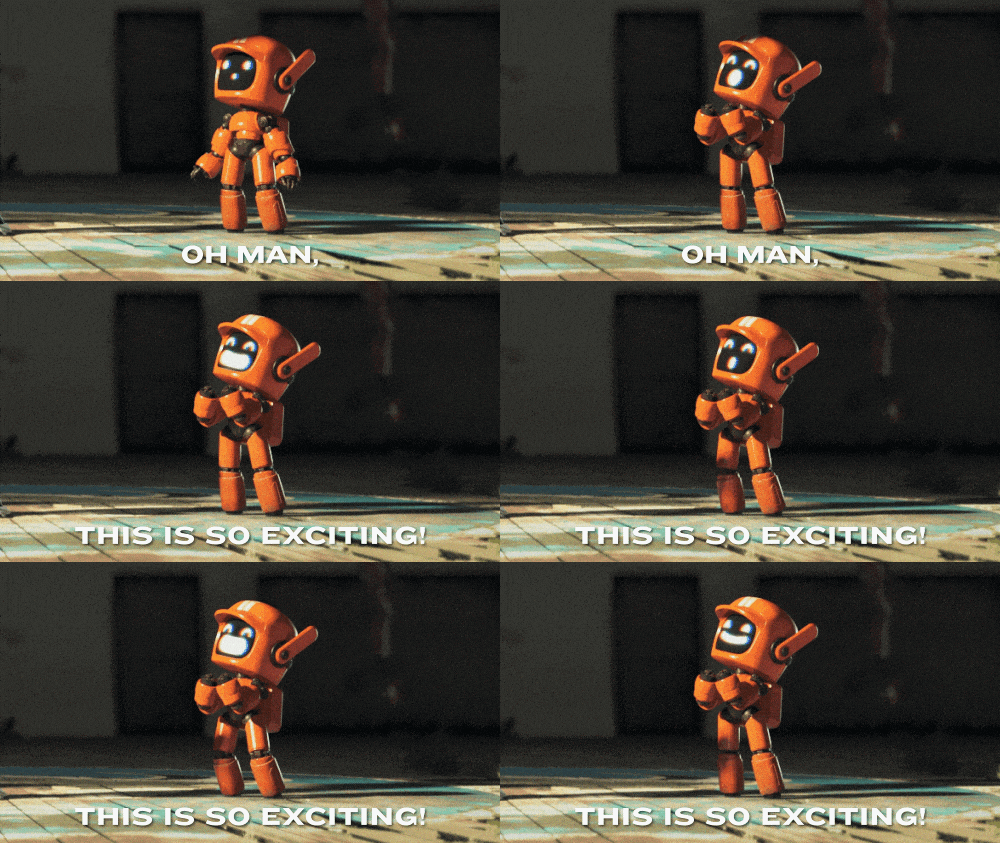
2024 is once again being called the year of robotics. It seems we say that every year.
In December 2023, as the year drew to a close, human-sized robot company UBTech went public—the first company of its kind globally—making “robots” appear as the next big frontier following large language models, and setting an inspiring tone for 2024.
Beyond this first IPO, there have been frequent headlines in robotics lately. For instance, Musk unexpectedly posted on his X account a video of Tesla’s second-generation humanoid robot Optimus, demonstrating walking, squatting, and handling eggs with ease. Stanford's Mobile ALOHA has advanced even further, now capable of independently cooking, wiping tables, and pressing elevator buttons, achieving success rates as high as 90%.
Let’s take this opportunity to revisit some of the most popular stories from the robotics world in 2023 that you might have missed.
01 Humanoid robots finally go to work
In 2015, at the DARPA Robotics Challenge—often dubbed the "Olympics of robots"—the DRC Hubo humanoid robot developed by South Korea's KAIST team completed a simulated disaster rescue mission in 44 minutes and 28 seconds, claiming first place.
Yet, to spectators, the intense competition seemed somewhat “embarrassingly clumsy”: tasks that took robots nearly an hour could be done by humans in just five minutes. Not to mention the numerous competitors who dropped out due to comical failures—falling flat on level ground, tripping while walking, collapsing while opening doors, or even toppling over from a gust of wind.
At the time, people couldn’t help but wonder: when will humanoid robots truly enter the market? Perhaps we’ll see the answer in 2024.
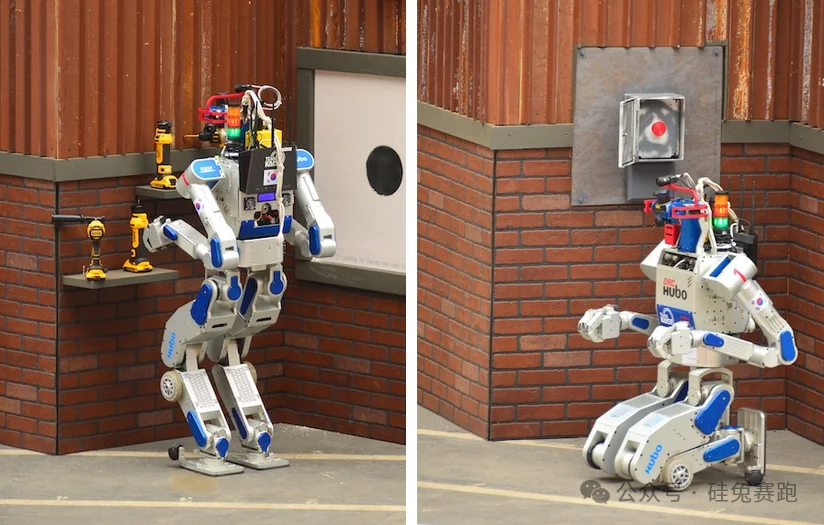
DRC Hubo humanoid robot | IEEE Spectrum
Today, we’re seeing many robots capable of performing complex movements—even precise, fast operations like catching falling objects. More and more robotics companies are no longer satisfied with simple tasks like moving boxes or delivering packages; they’re aiming instead to develop general-purpose robots.
Sanctuary AI’s control system mimics human brain functions such as memory, vision, hearing, and touch, combining symbolic reasoning with neural networks to give robots human-like intelligence. Norwegian robotics firm 1X has partnered with OpenAI, bringing the power of large models to robotics and enabling deeper “thinking.” These companies all plan to commercialize their technologies in 2024.
Musk predicts that within the next 20 years, Earth will host one billion humanoid robots. Still, standing at the beginning of 2024, it’s worth cooling expectations a bit.
Despite massive influxes of capital and talent into commercial humanoid robotics over the past two years, there hasn’t yet been any breakthrough technology that fundamentally changes the game. Actuators remain complex and expensive; battery life remains a challenge. On the software side, safety and stability require continuous investment and optimization. From a manufacturing standpoint, large-scale deployment demands flexible supply chains and infrastructure development—both of which take time and resources.
02 Robotic vacuums dominate the globe
At the Amundsen–Scott South Pole Station, where the average annual temperature is -28°C and can plunge to -80°C, extreme conditions mean the station survives without resupply for eight months each year. Amidst the rotating crew, four permanent residents remain: Bert, Ernie, Sam, and Frodo—four robotic vacuum cleaners.
The daily lives of these robots are filled with dramatic episodes.
Bert, the earliest arrival, spent over a year as the loneliest vacuum robot on Earth. When Ernie joined, they split cleaning duties across two floors—but separated by a staircase they couldn’t cross, becoming soulmates who were closest yet farthest apart. Only when the buddy pair Sam and Frodo arrived could Bert and Ernie finally reunite on the same floor. At one point, Ernie was even kidnapped—his captors demanding cookies as ransom. Fortunately, Ernie returned safely and resumed his sweeping duties.
The X account South Pole Telescope documents the gripping everyday adventures of these four robotic vacuums, along with the (frosty) humor of the researchers enduring the harsh climate.
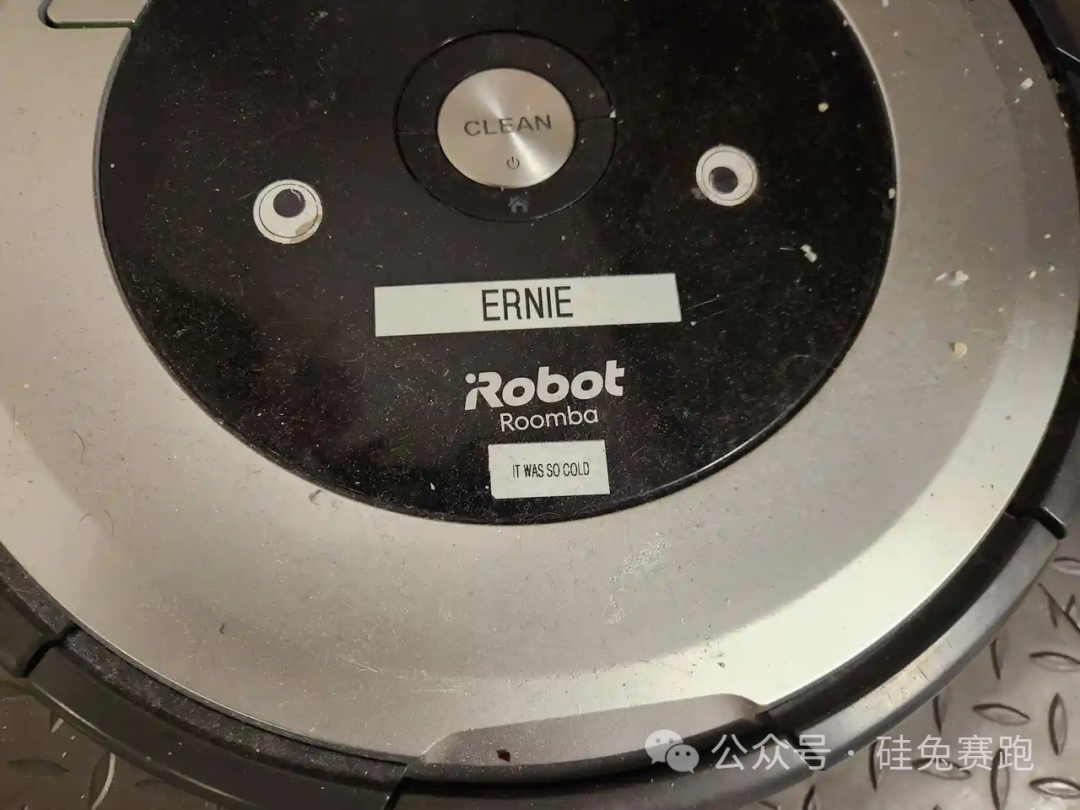
“It’s too cold,” said Ernie
Here’s a little-known fact: robotic vacuums originated from military research.
In 1990, researchers from MIT founded iRobot (the brand behind the vacuums shown above), initially developing mine-clearing robots for the U.S. military. In doing so, they created an algorithm allowing robots to cover every part of a designated space. During development, they realized the same technology could control vacuum cleaners. Thus, in 2002, the first robotic vacuum launched in the U.S., selling over a million units within two years. Today, for just over a thousand RMB, you can own a descendant of those mine-clearing machines.
03 Henry Evans’ 13th year coexisting with robots
Henry Evans, paralyzed by a stroke, retains only slight movement in his eyes, head, neck, and left thumb. In 2010, he came across a PR2 robot developed by robotics company Willow Garage. Sensing it could change his life, he reached out to the team and initiated the “Robots for Humanity” project—a collaboration aimed at helping people with disabilities gain independence while giving caregivers more freedom.
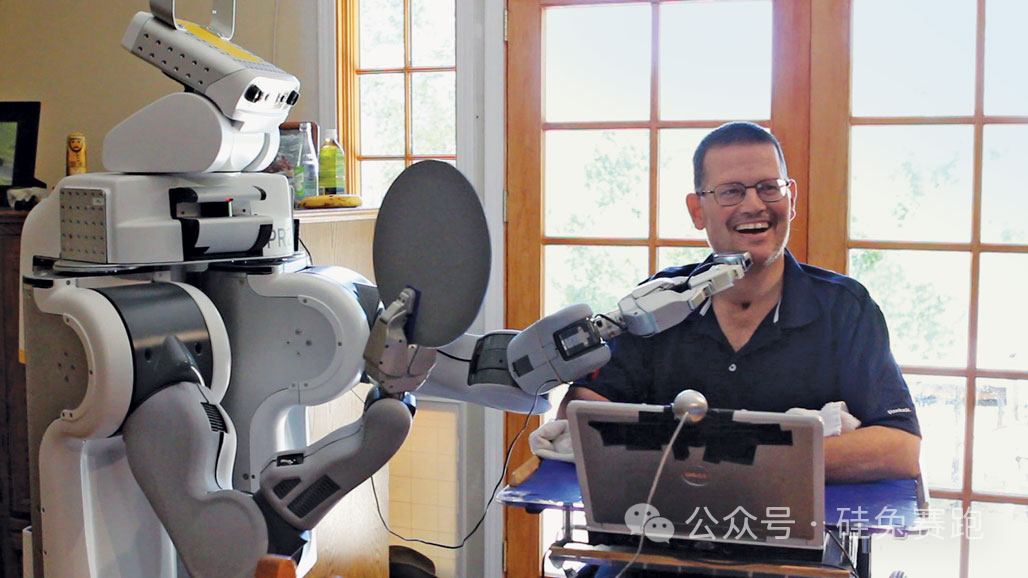
Henry Evans and PR2, image source | Stanford Magazine
However, the PR2 weighed 181 kg and cost $400,000—too expensive and bulky for mainstream use. In 2017, after years of collaboration with Henry’s family, the PR2 team founded a new company, Hello Robot, to develop a simpler, lighter, and more affordable robot. Their creation, Stretch, abandoned the human form entirely, retaining only a single arm, and cut costs down to $20,000. It enables Henry to shave, play cards, and even wash dishes for others.
2023 marks the 13th year Henry and his family have lived under the same roof as robots. While most daily tasks still rely on his wife and caregivers, Henry frequently uses the robot to independently complete small chores. When he picks a rose and gives it to his wife, he feels, deeply and genuinely, that he is not entirely helpless.
04 Mars helicopter Ingenuity’s 70th flight
On December 22, 2023, Ingenuity completed its 70th takeoff and landing on the Martian surface—more than two years since its first historic flight in 2021. Originally, the launch team planned for Ingenuity to fly no more than five times and survive just 30 days on Mars.
Mars is extremely cold and dry, with a thin atmosphere. Despite lower gravity, generating lift remains a major challenge, imposing severe constraints on helicopters. Additionally, communication delays between Mars and Earth make every flight operation more complex. Yet, Ingenuity’s flight record has brought revolutionary insights to Mars exploration. As a pioneering aircraft on Mars, it has provided invaluable lessons for future designs. Based on this data, scientists are planning to incorporate rotorcraft into Mars sample return missions and design a scientific helicopter capable of carrying heavier payloads to explore regions inaccessible to rovers.
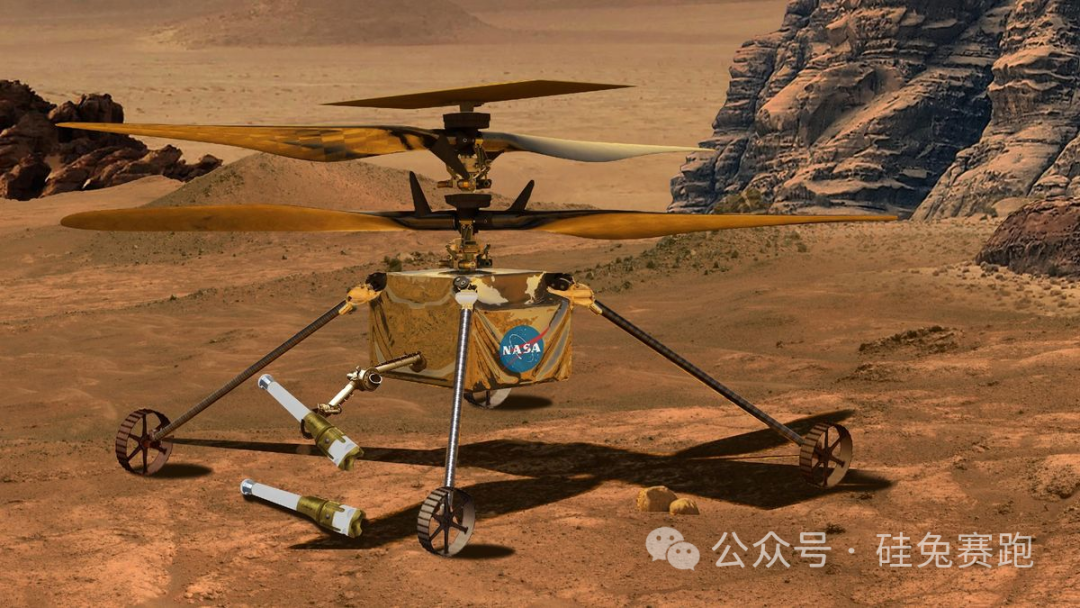
Image source | Space.com
05 Playing with robots at Disneyland
Currently, you can interact with human actors portraying Mickey Mouse or Lina Bell at Disneyland. But soon, a new generation of robot companions may join them.
At Disney’s research center in Zurich, engineers are developing a new breed of robotic entertainment. These aren’t just machines that walk and talk—they employ specially designed gaits to mimic Disney characters and express emotions through exaggerated, endearing motions. Animators and robotics experts collaborate closely, ensuring stable locomotion while making every gesture expressive—even charming moves like the “head tilt.”
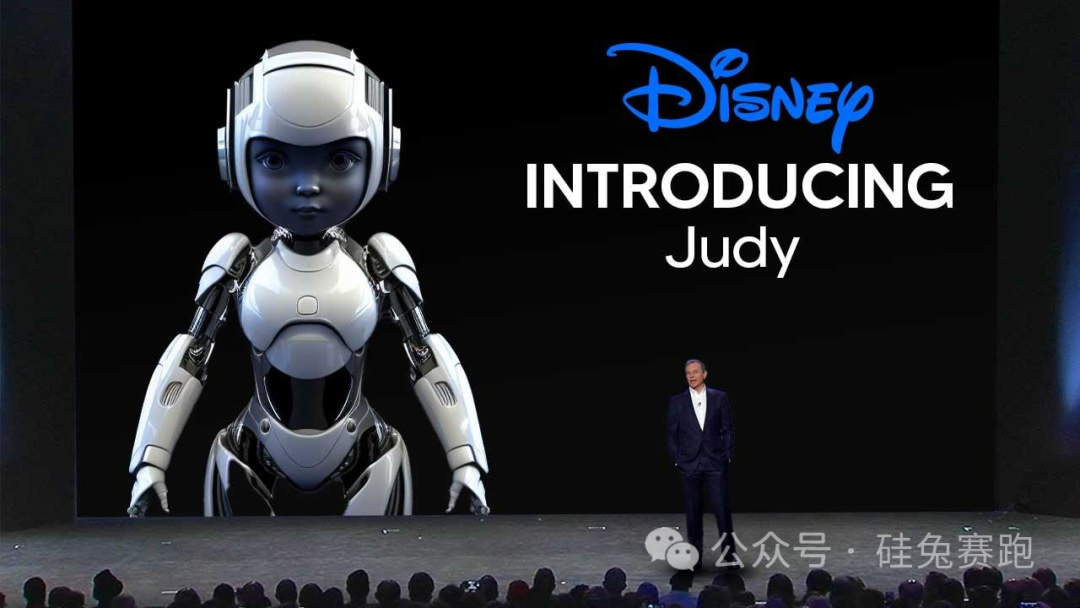
Image source | Youtube
From a production standpoint, because this new robotic platform isn't hardware-dependent, prototypes can be rapidly adapted to different characters. Combined with 3D-printed components, Disney can produce new character robots within just a few months.
Such robots are likely to meet visitors very soon.
06 Drone racing: autonomous robots surpass humans
In a race between an autonomous drone and a human world champion pilot, two drones had to pass through seven gates oriented in different directions and heights—requiring highly precise micro-maneuvers. Over a 7.5-meter complex course, the fully autonomous drone finished in just 5.3 seconds.
To beat humans, drones must be faster and more stable. This required solving several challenges. First, calculating the optimal flight trajectory. During pre-race training in a 3D simulation environment, the drone team computed mathematically optimal paths while continuously incorporating real-world noise data—such as airflow in the arena and the drone’s own vibrations. With the flight path set, the drone also needed to compute its position and orientation in real time. Due to the drone’s high speed, onboard cameras suffered motion blur, causing temporary “blindness.” The robotics team had to strike a balance between shortest path and crash avoidance.
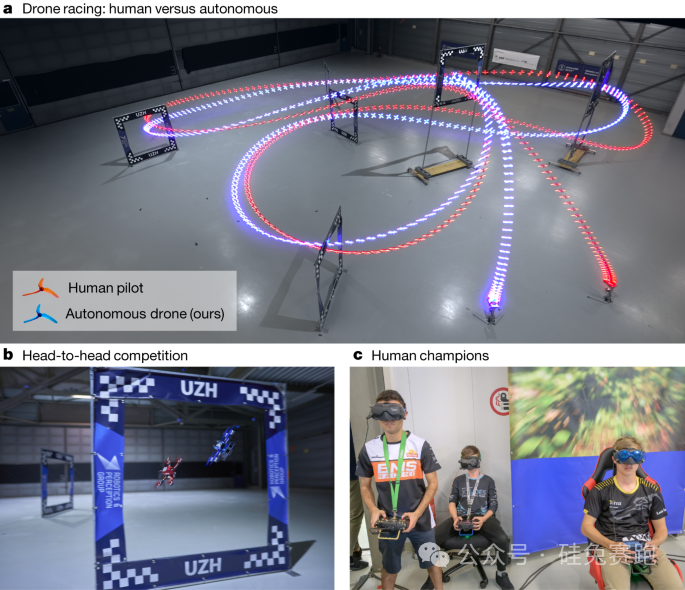
Image source | Nature
Ultimately, the drone was equipped with an infrared tracking system using 36 cameras, capable of locating the drone within millimeters up to 400 times per second. By combining positional data with the flight map, an external computer guided the drone along the optimal trajectory—a feat even the best human pilots struggle to match.
Despite this machine’s overwhelming victory, the robotics team still believes autonomous drones won’t replace humans for decades. Humans continue to outperform machines in handling corrupted data, adapting to environments, and making real-time adjustments.
2024: Will we see a robotics boom?
According to Jim Fan, senior research scientist and head of AI Agents at Nvidia, robotics is the most important technology of 2024. In a post on X, he stated: “We’re about three years away from the ChatGPT moment for physical AI agents.”
Historically, robotics research has faced the “Moravec’s paradox.”
Back in the 1980s, researcher Hans Moravec observed that sensing and perception require enormous computational resources, whereas logical reasoning requires relatively little. This leads to a counterintuitive phenomenon in robotics: tasks that seem trivial to humans—like catching a flying baseball—are extremely difficult for robots. Conversely, tasks that are hard for humans can be relatively easy for machines.
Today, advances in multimodal large models, simulated datasets, and hardware are accelerating robot evolution at an exponential pace. Robots are not only gaining powerful language understanding and interaction skills, but also poised for significant leaps in perception.
Perhaps the singularity isn’t arriving immediately, but one thing is certain: the future of robotics is too significant to ignore. We are already walking the path toward that inflection point.
Join TechFlow official community to stay tuned
Telegram:https://t.me/TechFlowDaily
X (Twitter):https://x.com/TechFlowPost
X (Twitter) EN:https://x.com/BlockFlow_News