Filecoin Investor Confession: I Admit There's an Element of Gambling
TechFlow Selected TechFlow Selected
Filecoin Investor Confession: I Admit There's an Element of Gambling
TechFlow interviewed five Filecoin investors to understand their investment rationale and perspectives on Filecoin.
 Navigating Web3 tides with focused insights
In 2020, controversies surrounding Filecoin never ceased. Some claimed that Filecoin’s market cap had already reached $30 billion before its mainnet even launched, calling it the biggest bubble scam in the crypto world, while others believed it represented an investment opportunity on par with Ethereum.
After repeated delays in launching both the testnet and mainnet, debates and disputes over Filecoin have only intensified.
At the end of September, Filecoin announced its official launch around October 15. But until the very last moment, no one knows whether this so-called "serial postponer" will actually go live as scheduled.
TechFlow interviewed five Filecoin investors to understand their investment rationale and perspectives. Their investment products varied—some invested in cloud computing power, others in mining rigs or futures contracts.
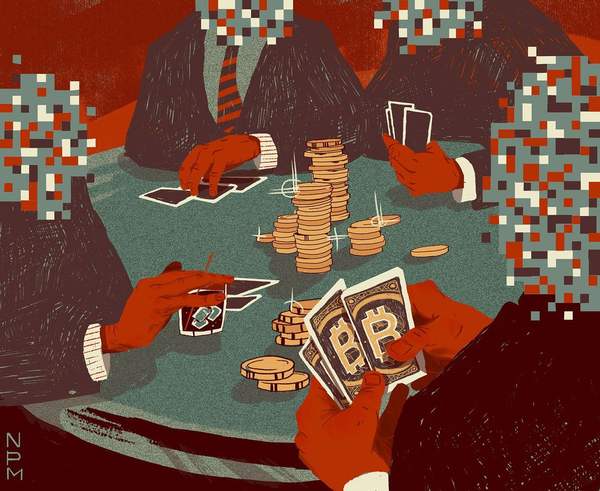
For some Filecoin investors, this is a long-awaited event after two years of waiting, finally reaching a decisive moment. Others admit the outlook is split—half optimistic, half skeptical—and acknowledge there's an element of gambling in their investments.
What does Filecoin represent? A scam or an opportunity? Everyone has a different answer.
Filecoin is like internet real estate—Lin Bo | Technology Lecturer at Tianhe Guoyun
I was an early Ethereum miner. I first heard about Filecoin back in 2017. I didn't get access to the private sale because my whitelist application failed (in 2017, Filecoin conducted public and private sales limited to accredited U.S. investors). A friend tried buying foreign passport information but got rejected after logging in from a Chinese IP—turns out their verification process was stricter than expected.
Why did I invest in Filecoin? I wanted to invest in IPFS, but there's no direct way since it's an infrastructure project. FIL is a company within that ecosystem, and relatively credible.
I spent over 30,000 RMB to buy 420 FIL futures and invested in 400T worth of mining machines. I expect to break even in as fast as six months, or at most one year.
I didn’t invest in cloud computing power—it's essentially a massive pitfall. Not that it's useless, but its cost is nearly zero. Fundamentally, FIL servers don’t have “computing power” per se; this concept has been artificially created and sold. FIL mining works by rewarding coins based on work done—i.e., how much data you store. Suppose a server has 96T capacity—the actual workload could be several times or even tenfold higher. Yet many companies divide this multiplier and sell it to investors at inflated prices.
Based on our estimates, each terabyte (T) of effective work earns approximately 0.39 FIL. At today’s market price of 500 RMB per FIL, that’s about 200 RMB per T. But many companies are selling it for 900 RMB/T—that’s a trap.
Let me put it this way: the total cost for one T—including hardware, rack rental, bandwidth, electricity, software, and maintenance—won’t exceed 1,000 RMB. Yet in the market, prices start at 3,000 RMB. As for cloud computing power, costs are less than 100 RMB yet sold for hundreds—that kind of bubble will eventually burst.
I attended a Filecoin offline promotion event in Xiamen last September. It felt quite low-end, almost brainwashing attendees with basic education. But I think it's good—markets need everyday people, including "aunties." All finance is ultimately a money-distribution game, and investment logic usually starts with speculation before evolving into investment.
People around me recognize Filecoin highly. In my view, Filecoin’s model is simple: clients store data on your server and pay monthly rent—it’s internet real estate.
“Retail investors? Forget about it”—Liu Qin | Bitcoin Miner, Invested 5 million RMB in Mining Equipment
Just setting up a basic Filecoin mining rig now costs around 100,000 RMB. A friend preparing a Filecoin cluster raised 3 million RMB. From what I know, there are several investors who’ve poured over 10 million RMB into it. Retail investors? Forget about it.
Filecoin mining demands high capital and technical expertise. Currently, there’s a serious mismatch in the industry: those with funds lack technical skills, and those with technical skills lack funding. The initial phase requires substantial technical preparation, which even experienced Bitcoin miners struggle with.
From my observation, most people entering Filecoin come from other industries. They’ve watched crypto profits with envy, regretted missing earlier opportunities, and possess some technical capability.
Selling computing power in Filecoin could lead to many disputes. Recently, I met an investor from a top-tier mining company who told me several firms received far less coin than their investment warranted. Some may run away after mainnet launch—but if the coin price remains strong, they might stay.
“I admit there’s gambling involved”—Bao Lele | Nutrition Products Professional
I bought my mining rigs early—back in July last year—for 30,000 RMB, purchasing two 8T miners. Aside from these machines, I haven’t invested in Filecoin or any other cryptocurrency. I don’t understand them well—too many traps.
Why did I choose to invest in Filecoin? I believe the technology holds promise and could benefit humanity. But now that Filecoin is so hyped, I can’t say for sure whether I’m bullish or bearish—it’s 50/50. I admit there’s an element of gambling.
You ask about my machine specs—I only know they’re 8T; I’m not clear on internal configurations.
The current cost of FIL mining machines is too high. I'm worried that if we follow official requirements, building a single mining rig would cost no less than 100,000 RMB. Yet in actual data centers, storage server configurations are much lower—50,000 RMB per unit is already considered expensive.
Now I’ve fully entrusted my miners to the manufacturer, who charges a 25%托管 fee. I heard they ranked among the top three during the second test phase—they probably won’t cause any trouble.
Not bullish on Filecoin’s tech, but bullish on the concept—Zhu Zhiyong | Cryptocurrency Investor
I bought 20,000 FIL futures at around 50 RMB each and sold all of them at about 170 RMB.
I bought it knowing it would rise—the FIL concept is easy to grasp and hype. I also knew there’d be plenty of latecomers, so I entered early. It’s bound to drop later, holding it carries risk, so I exited completely recently.
Later, I’ll wait for the right market sentiment to short it, then once things stabilize, consider buying some mining equipment.
I started following Filecoin around 2017 but never invested until now. I’m not really bullish on Filecoin. I’m just a miner—technology quality doesn’t matter to me. What I care about is the project’s concept.
FIL has real application value, more worthy of investment than most cryptocurrencies—William | Chief Researcher at OKEx Research
Filecoin has practical real-world applications, giving FIL genuine utility—a rare trait in the crypto space. Unlike the “air coins” of years past, or even this year’s popular DeFi yield farming tokens—most of which lack real use cases—FIL plays a tangible role in Filecoin’s economic system. Despite claims that DeFi tokens enable community governance, most tokens are concentrated in just a few addresses, rendering governance votes meaningless. Filecoin is different: FIL is used practically within its ecosystem—for mining collateral, paying storage and retrieval fees. Just this alone makes it more worthwhile than most other cryptocurrencies.
Filecoin’s biggest risk lies in legal compliance. Most Filecoin network nodes are currently concentrated in East Asia. After launch, issues such as content copyright infringement and whether stored data complies with local laws could arise. Cross-border data flows and sensitive data storage pose significant risks.
I recommend developers, miners, and users of Filecoin proactively comply with local regulations.
OKEx has recently added a dedicated showcase section for storage projects. The first tokens featured include well-known leaders like BTT, SC, and STORJ. With this new storage project zone, OKEx will leverage its strong traffic and brand advantages to bring more high-quality decentralized storage projects into mainstream trading markets, effectively advancing the development of blockchain-based decentralized storage.
(Note: Bao Lele, Liu Qin, and Zhu Zhiyong are pseudonyms.)
*TechFlow reminds all investors to beware of high-price risks. The views expressed in this article do not constitute any investment advice.
Join TechFlow official community to stay tuned
Telegram:https://t.me/TechFlowDaily
X (Twitter):https://x.com/TechFlowPost
X (Twitter) EN:https://x.com/BlockFlow_News