
Loop Takes Off! Chinese Team Turns the Tide in AI Architecture
Author: Xinzhiyuan
The technological trajectory of global large models is shifting rapidly, with the battle now reaching the most foundational layers of AI architecture. In September, OpenAI unveiled GPT-6 Astra, sending shockwaves through the AI community with its Recurrent Depth technology; on November 23, Zhipu made a major announcement by releasing GLM-5.4, directly implementing the Loop Transformer into its flagship model. Two leading AI companies have successively bet on the same technological direction.
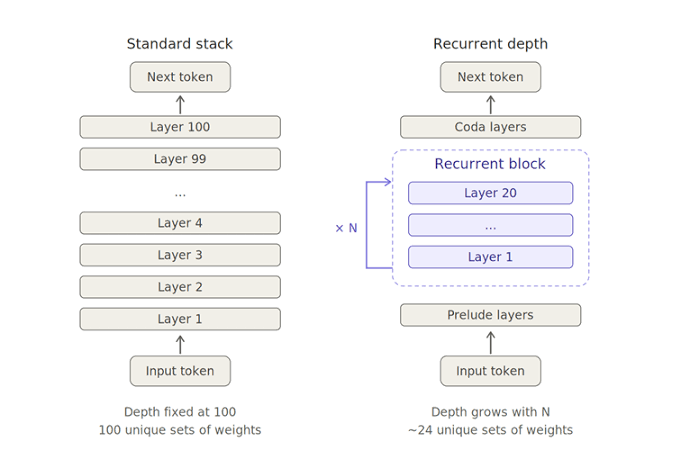
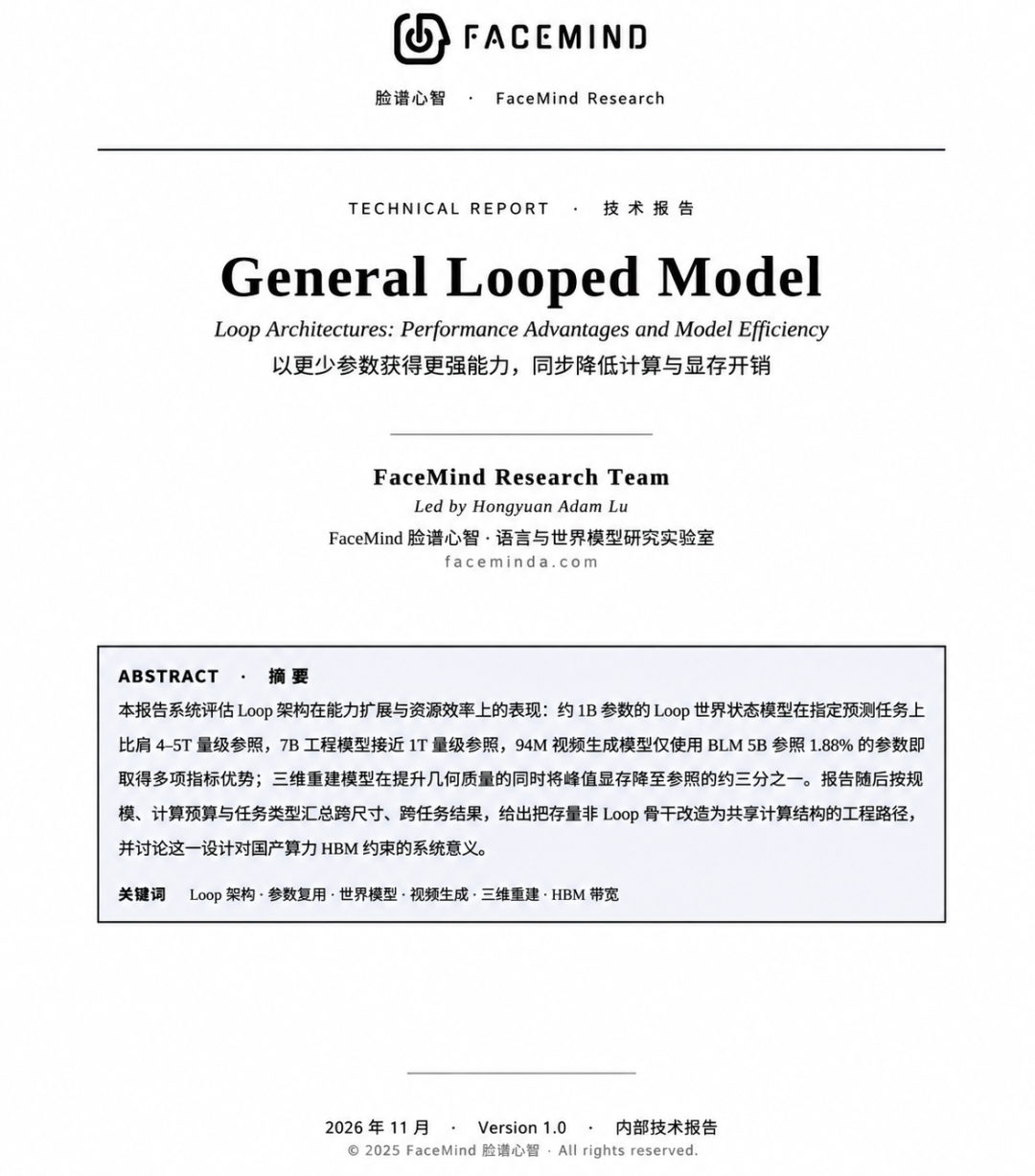
With merely 750 billion parameters, the Zhipu model achieves an intelligence level comparable to models with 2 to 3 trillion parameters. Meanwhile, over the past few days, a technical report titled "General Looped Model" briefly appeared in public channels before being temporarily withdrawn. The report comes from a Chinese AI startup: FaceMind.
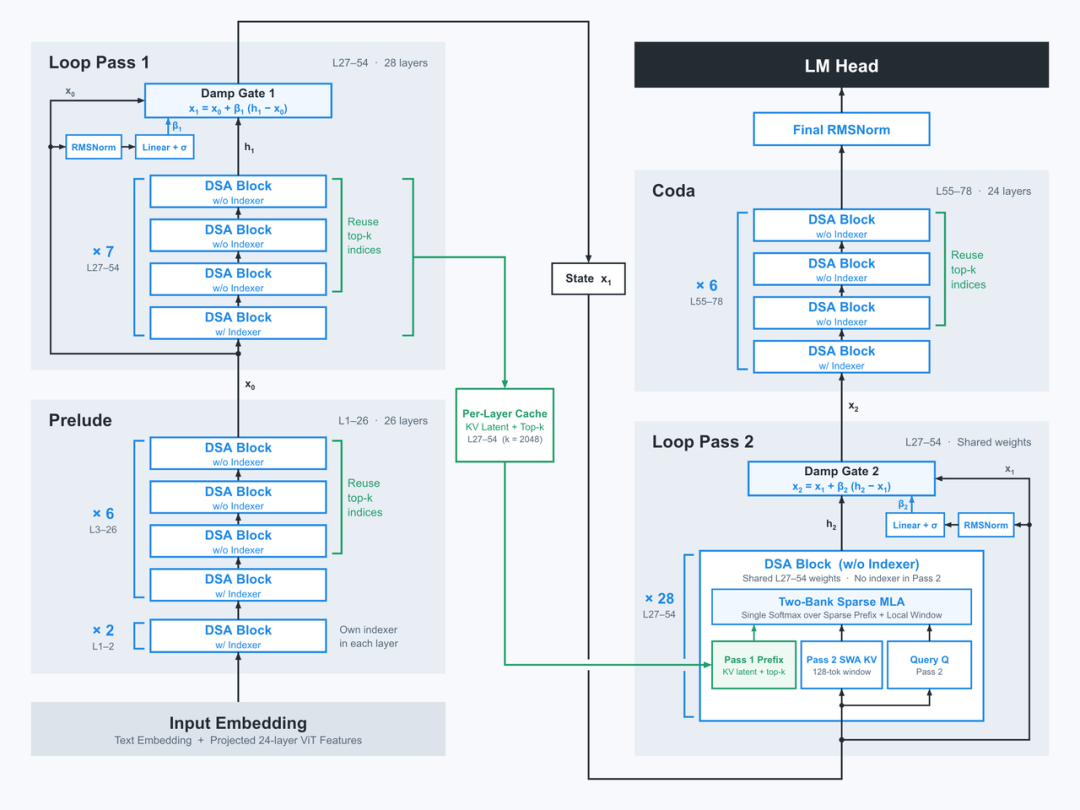
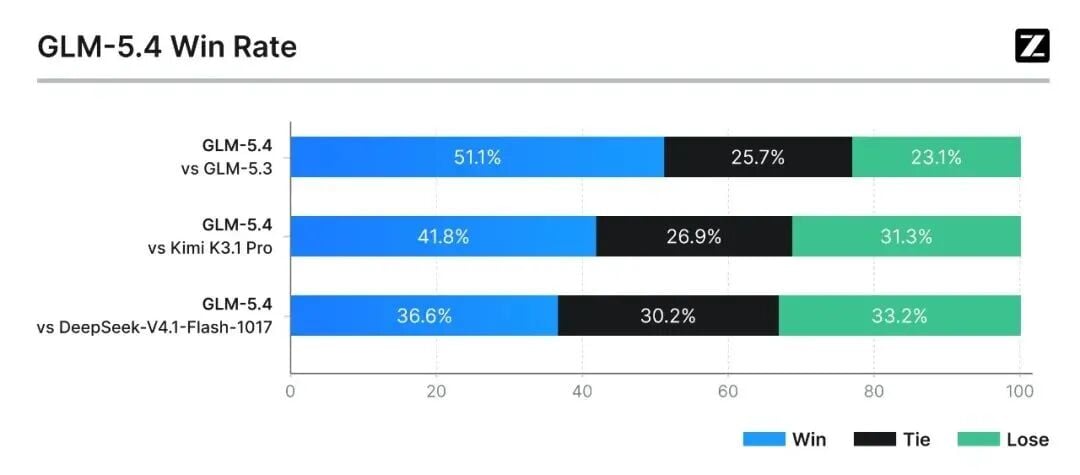
The specific reasons for its removal have not been officially detailed. However, based on the disclosed information, the team's ambitions far exceed language modeling: world models, diffusion models, and even 3D reconstruction have all entered their research scope.
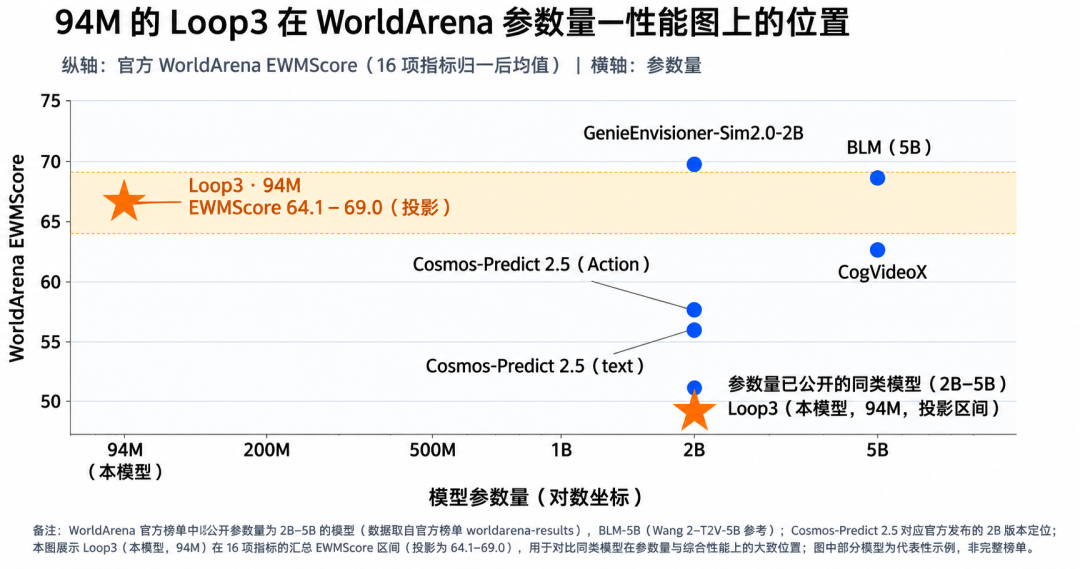
One set of experiments was particularly astonishing: with a base model containing only 94 million parameters, it outperformed an open-source model with a base model of up to 5 billion parameters across seven video generation metrics—a parameter difference of exactly 53 times! Three months before the OpenAI Astra architecture was publicly reported, this Chinese team had already published a research paper on looped world models. As major tech giants place heavy investments into Loop, a group of researchers who have patiently endured years in obscurity have finally secured their chance for a turnaround.
Piling on Parameters, Hitting the Ceiling
In recent years, virtually every major AI player worldwide has been doing the exact same thing: piling on parameters, data, and computing power. From GPT-3's 175 billion parameters to today's flagship models boasting trillions upon trillions of parameters, the entire industry has been locked in an unprecedented arms race. But what if AI intelligence could grow in a completely different way?
The recently released GLM-5.4 by Zhipu provides a stunning answer: the company applied two rounds of looping to 28 layers within its 750B foundation model. While each layer in a traditional Transformer typically computes only once before passing results to the next layer, Loop feeds processed information back into the same set of network layers for continued computation, correction, and deduction. Zero additional parameters were added, yet computational depth significantly increased.
In Zhipu's previous control experiments with its 30B model, increasing training compute by only about 10% enabled the looped version to achieve significant improvements in tasks such as mathematics and scientific reasoning. Remarkably, the chain-of-thought generated by the model actually became shorter.
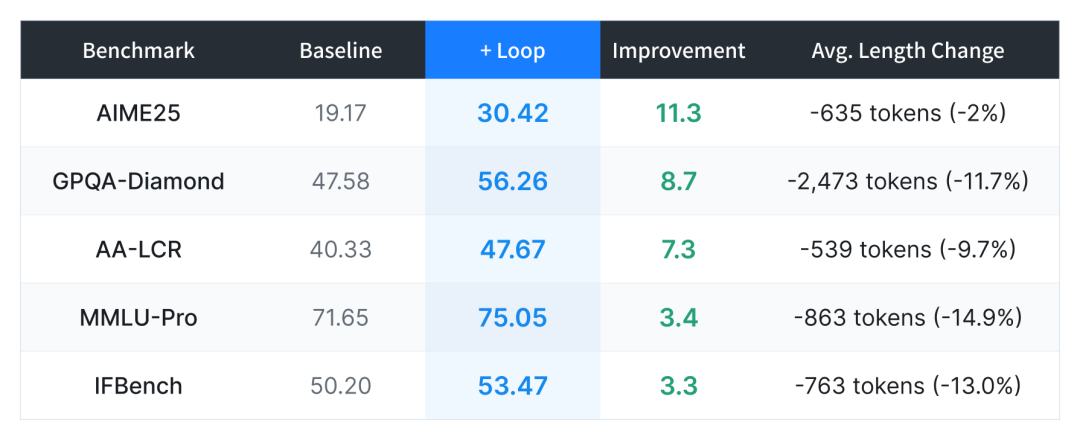
In the past, getting an AI to "think longer" often required it to generate more tokens; now, models can retain more of that processing within their own "brain." This is precisely what makes Loop so exciting: AI intelligence growth has the potential to break free from its tight coupling with parameter scale.
Of course, Loop did not emerge overnight. Back in 2018, the Universal Transformer already explored similar cyclic computation mechanisms, and academia has made sporadic attempts since. But today, as both OpenAI and Zhipu progressively integrate cyclic computation into their flagship models, this once-niche technical pathway has finally stepped onto the central stage of large model competition. Zhipu has also explicitly stated it will simultaneously advance model scale and loop depth, suggesting that other AI companies may have very little time left.
Years on the Bench, A Turnaround Battle
One of the most fascinating phenomena in the AI circle in recent years is that previously non-consensus technologies are continuously staging "comeback matches." Turing Award winner Yann LeCun has steadfastly researched world models for years. While the globe went crazy chasing large language models, he consistently maintained that machines need to build internal representations of the world, possessing predictive, planning, and deductive capabilities.
FaceMind aligns with LeCun's technological vision but is exploring a more concrete architectural question: Can AI repeatedly use the same set of parameters to self-loop within hidden states? World models represent a domain where this architecture holds tremendous promise, and its potential can extend to linguistic reasoning and diffusion generation. According to founder Lu Hongyuan, he began exploring cyclic architectures around 2022, later extending his research into spatial intelligence and world models.

At that time, the wave ignited by ChatGPT swept across the globe, and very few anticipated that cyclic architectures would eventually play such a pivotal role in flagship large models. On June 16, 2026, FaceMind submitted the paper "Looped World Models," proposing the LoopWM cyclic architecture for world modeling, which quickly topped Hugging Face Papers' daily rankings.
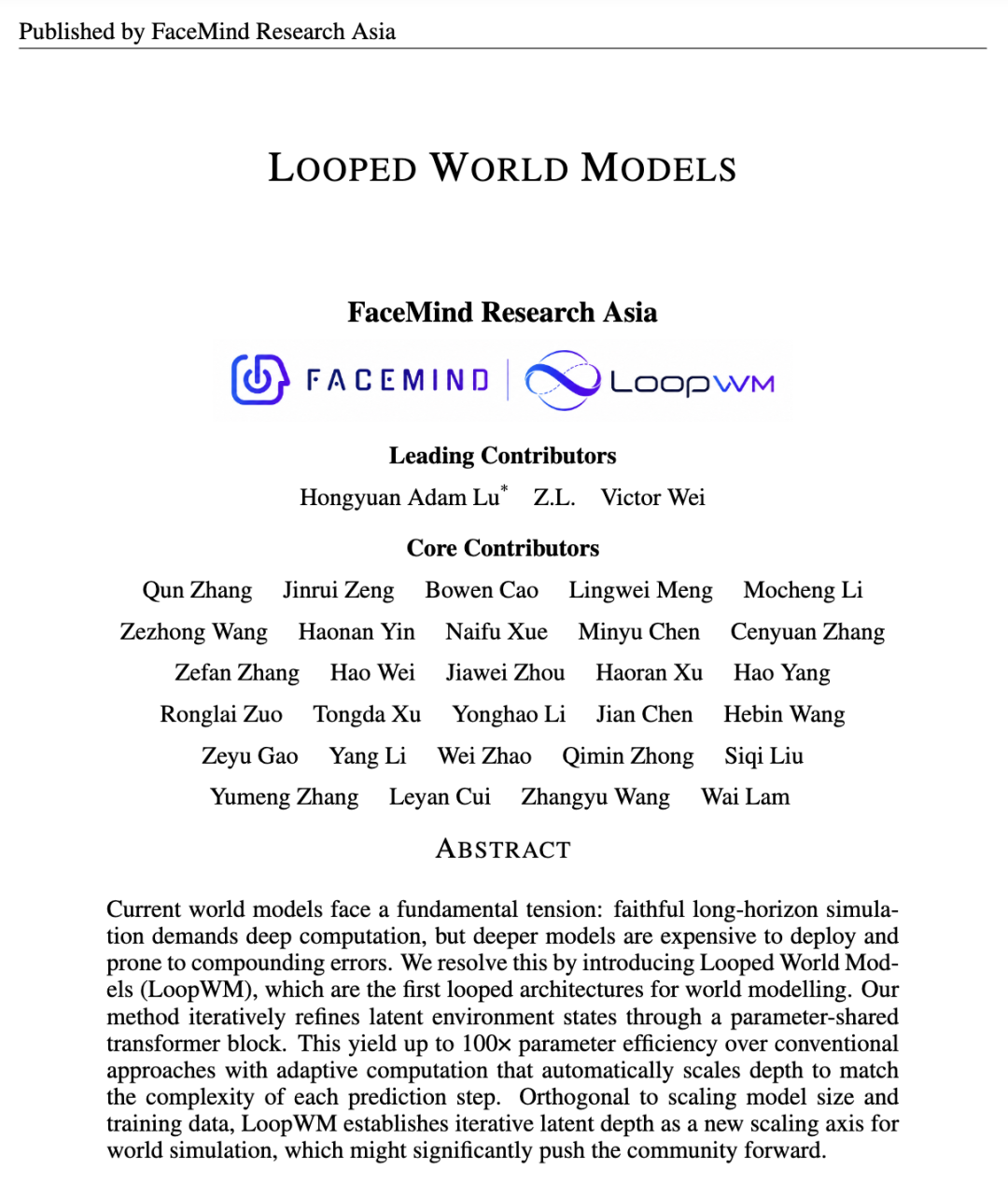
This paper directly targets one of the most thorny issues in world modeling: error accumulation. Imagine asking a robot to preemptively simulate cleaning a room; if the initial prediction deviates slightly, after dozens of sequential deductions, the mental image of the room could become completely unrecognizable. FaceMind's solution involves having the model perform several extra internal deductions before each step. For simple actions, fewer calculations are needed, while complex scenarios involving collisions or occlusions trigger repeated corrections. The team also incorporated stability constraints, enabling continuous deduction in latent space and decoding on demand, achieving parameter efficiency gains of up to 100x.
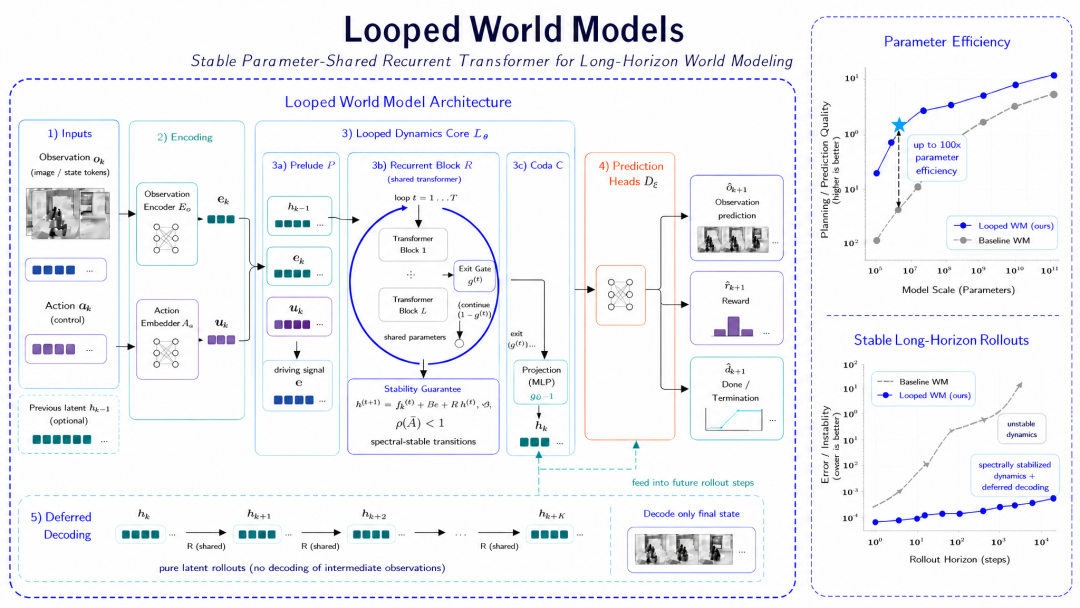
This paper predates the public reporting of the OpenAI Astra architecture by approximately three months and precedes the official release of Zhipu's GLM-5.4 by over five months. Although OpenAI has not yet publicly adopted LeCun's advocated world modeling route within Astra, Loop has already breached the core competition of large language models, and FaceMind still holds another ace up its sleeve.
94 Million vs. 5 Billion!
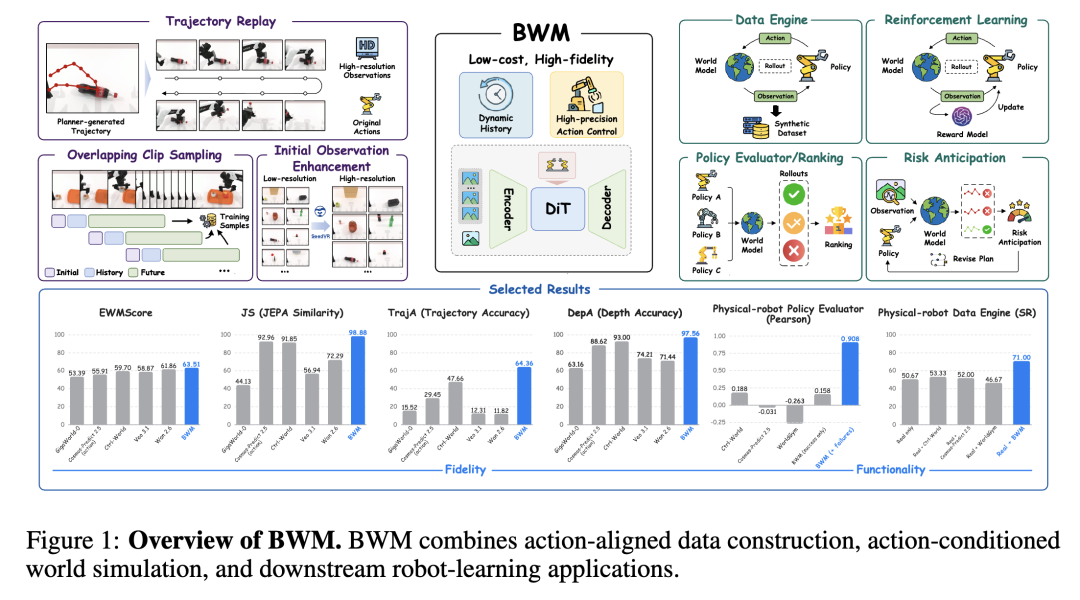
If Loop enables language models to think deeper and world models to deduce further, what about diffusion models? In October this year, FaceMind integrated Loop into video generation models. Keeping the base parameter count unchanged, they allocated more computational load to hidden state looping. The resulting Loop3 model features a base parameter count of just 94 million, competing against the open-source video world model BWM, which uses Alibaba's Wan2.2-TI2V-5B as its backbone and boasts a base parameter count of up to 5 billion.
Under unified evaluation pipelines, Loop3 won in 7 out of 16 metrics, including core indicators such as motion smoothness, trajectory accuracy, depth accuracy, and instruction following. It performed slightly worse in 3 metrics, showed gaps in 5, and 1 metric proved indistinguishable. These results come from controlled experiments conducted by both parties at 128×128 resolution, 57 frames, and FP16 precision.
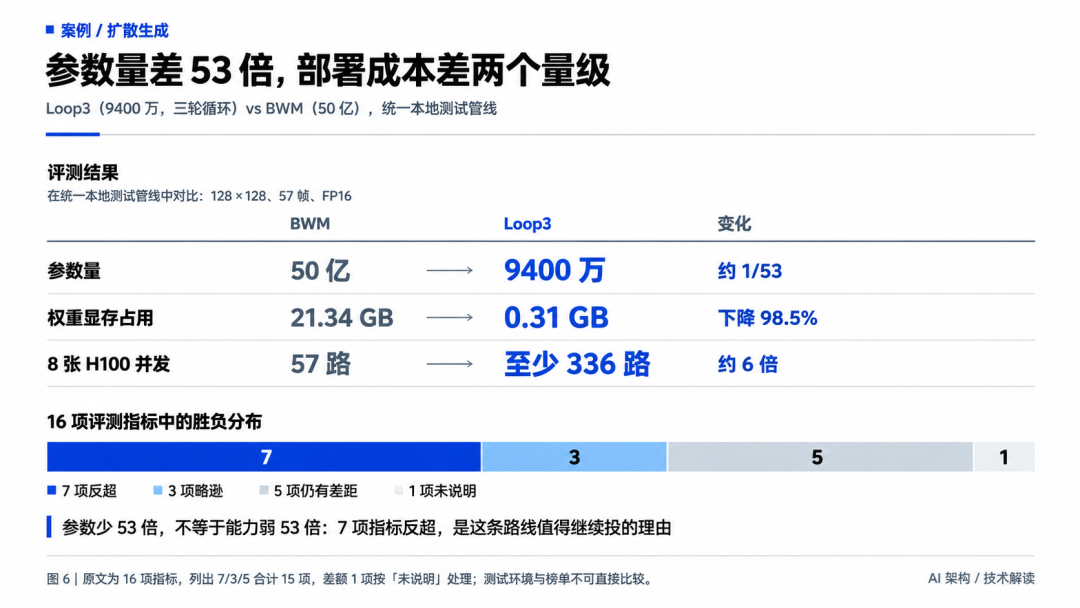
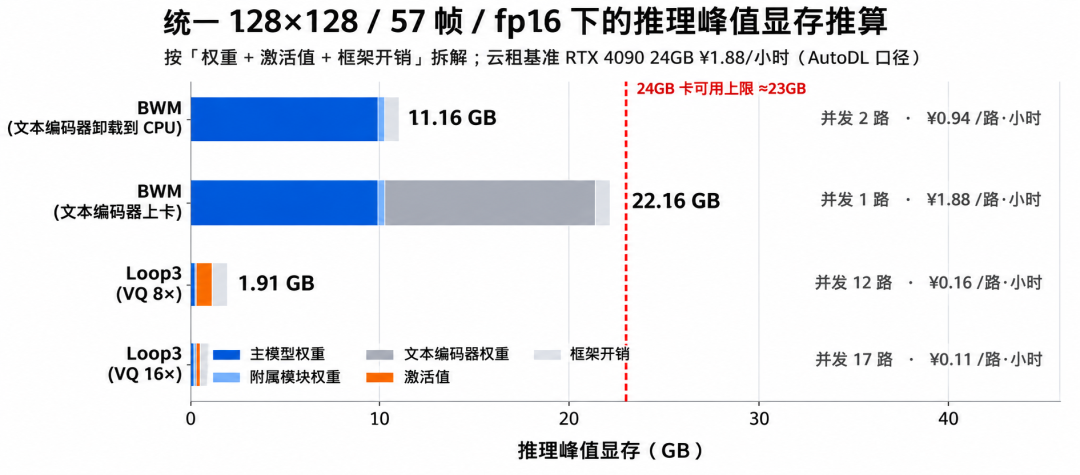
What makes the most striking impact is memory consumption: calculated at FP16 precision, BWM's base weights require 10 GB of VRAM, whereas Loop3 needs only 0.188 GB. Accounting for their respective supporting components, weight VRAM usage stands at 21.34 GB versus 0.31 GB. On a single server equipped with eight H100 GPUs, theoretical concurrency can increase from 57 streams to at least 336 streams, representing nearly a sixfold improvement.
The temporarily withdrawn "General Looped Model" technical report attempts to unify these research strands: language, vision, and physical world simulation, connected through a single underlying computational philosophy—weight reuse, continuous iteration in latent space, and extracting greater intelligence from computational depth. Once its universality is validated on a larger scale, its impact will reach into the foundational architecture of generative AI as a whole.
The Next AI Arms Race
While tech giants frantically purchase graphics cards, another crisis looms urgently: HBM (High Bandwidth Memory) is becoming increasingly expensive and difficult to procure. TrendForce predicts that the year-over-year price increase for HBM's blended average selling price could soar to 121% in 2027. For AI companies accustomed to piling on parameters, once VRAM cannot accommodate a model, they are forced to continue expanding hardware resources.

Loop offers a new solution: as long as weights can fit into VRAM, there is a chance to enable the same set of parameters to participate in computation repeatedly. Although looping presents engineering hurdles such as training stability, parallel efficiency, and inference latency, once gradually overcome, the competitive landscape will shift dramatically. Teams that achieve comparable intelligence levels with fewer parameters can channel remaining compute into larger-scale training or deeper reasoning, building sustained cumulative advantages. This is particularly crucial for Chinese AI teams whose computing resources are relatively constrained.
Today, FaceMind, founded by two young PhDs Lu Hongyuan and Wei Yiran, is attempting to converge multi-domain explorations through the General Looped Model. The birth of the Transformer in 2017 ushered in the era of large models; now, the Transformer itself has reached a critical evolutionary inflection point. As both parameter scale and computational depth simultaneously drive intelligence growth, aside from continuing to pile on parameters, where else can models Scale? This time, whoever finds the answer first will have the opportunity to seize the commanding heights of the next round of AI competition.
References: https://arxiv.org/abs/2606.18208