Capital Expenditures Surge 226%, AI Devours Tens of Billions in Profit: Tencent’s AI Story Enters a Capital-Intensive Phase
Author: Lian Ran, GeekPark
Tencent’s AI story is entering a somewhat heavy phase.
On November 18, Tencent released its Q3 2026 financial report. Revenue for the quarter reached RMB 207.34 billion, up 8% year-on-year; Non-IFRS operating profit was RMB 68.1 billion, down 6% year-on-year; Non-IFRS net profit attributable to shareholders was RMB 66.5 billion, also down 6% year-on-year.
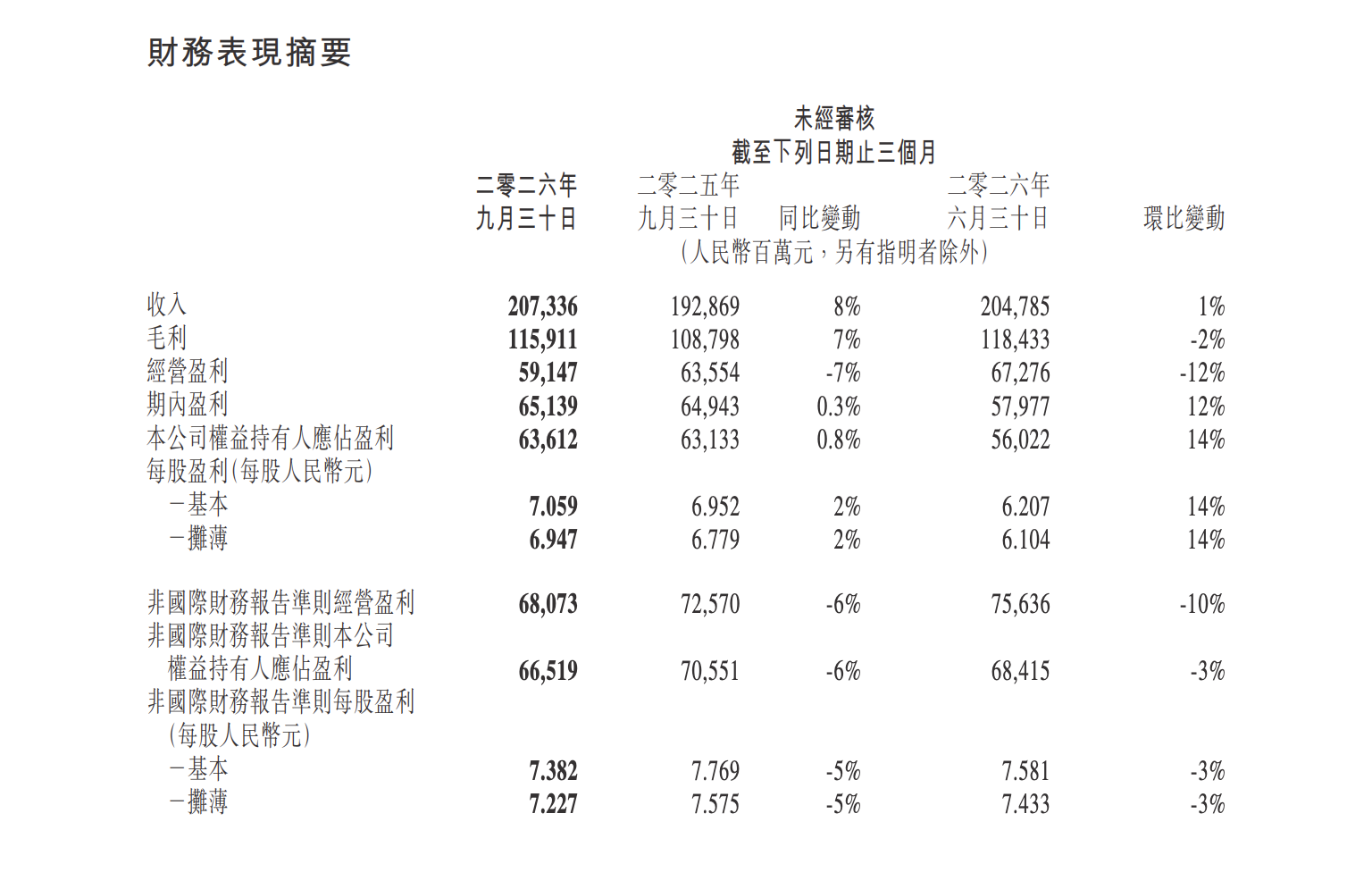
Chart: Core data from Tencent’s earnings report (Source: Tencent)
This quarter, Tencent’s capital expenditure reached RMB 81.4 billion, surging 527% year-on-year, with single-quarter spending already exceeding the entire year of 2025; R&D investment stood at RMB 32.36 billion, up 42% year-on-year. Under massive computing power procurement and prepayments, free cash flow turned negative at RMB 69.1 billion; excluding prepayments for computing power, free cash flow remains positive at RMB 16.9 billion.
Looking solely at revenue, this remains a solid earnings report. But breaking out AI, the divergence in the curve is more pronounced than last quarter: excluding revenue, costs, and expenses from new AI products such as Hunyuan, Yuanbao, CodeBuddy, WorkBuddy, and Xiaowei, Tencent’s Non-IFRS operating profit for the quarter was RMB 83.3 billion, up 8% year-on-year, with an operating margin of 40%, flat compared to the same period last year.
In other words, the profitability of legacy businesses remains intact, but the new AI business had a net impact of approximately RMB 15.2 billion on Non-IFRS operating profit this quarter, up from RMB 10.5 billion last quarter.
Tencent is increasingly swapping current cash for GPUs, models, agents, and next-generation entry points.
"AI Discount": The RMB 15.2 Billion Gap and RMB 81.4 Billion Resolve
Let's start with overall operations.
In Q3, Tencent's revenue was RMB 207.336 billion, up 8% year-on-year and up 1% quarter-on-quarter. Among the three major segments, marketing services revenue reached RMB 40.6 billion, up 17% year-on-year, driven by continuous AI-powered improvements in ad technology; China region games revenue hit RMB 42.8 billion, up 15% year-on-year, with VALORANT and several evergreen titles showing steady scaling; fintech and enterprise services revenue totaled RMB 58.2 billion, up 3% year-on-year. Payments slowed due to external factors, while cloud services regained momentum, boosted by AI.
The profit figures are less favorable. On a non-IFRS basis, Tencent's Q3 operating profit was RMB 68.1 billion, down 6% year-on-year; net profit attributable to shareholders was RMB 66.5 billion, also down 6%. This marks the first time in two years that Tencent has seen negative growth in Non-IFRS net profit.
Excluding the contribution of new AI products, Q3 Non-IFRS operating profit stood at RMB 83.3 billion, up 8% year-on-year, with an operating margin of 40%, completely flat with the same period last year.
That is to say, what dragged down profits is the AI business currently in its investment phase.
The scale of investment can be gauged by a few numbers.
In Q3, Tencent's total capital expenditure reached RMB 81.4 billion, up 527% year-on-year, with quarterly spending surpassing the full year of 2025; cumulative capex for the first three quarters hit RMB 146 billion, a surge of 226% year-on-year. R&D expenses also set a new record at RMB 32.36 billion for a single quarter, rising to 15.6% of revenue.
Cash flow took the heaviest hit.
Free cash flow for Q3 was negative RMB 69.1 billion. Net cash generated from operating activities was only RMB 2.6 billion, while capex, media content, and lease liability outflows totaled RMB 71.7 billion. Excluding large-scale computing power procurement prepayments, free cash flow still held at a positive RMB 16.9 billion.
The capital position shifted accordingly, moving from RMB 58.2 billion in net cash at the end of June to RMB 13.7 billion in net debt by the end of September. The official explanation attributes this mainly to the payment of large computing power procurement prepayments this quarter.
Regarding shareholder returns, Tencent repurchased approximately 15.87 million shares in Q3 at a cost of roughly HKD 7 billion, which have since been canceled.
The market has shown significant divergence, with multiple brokerages lowering price targets ahead of the earnings release, and firms like Nomura and UBS signaling early on the risk of AI spending compressing margins. Yet during the conference call, Tencent management remained exceptionally resolute: computing investment is uncapped, and strategic value will never cause them to slow down for short-term earnings metrics.
WorkBuddy's $500 Million Annual Run Rate and Yuanbao's Spending Cuts
During the call, Martin Lau disclosed WorkBuddy's revenue data. Annualized Run Rate (ARR), based on the past seven days' performance, has already broken through $500 million. In less than a year, WorkBuddy went from zero to $500 million, becoming one of the fastest-growing products in enterprise software history globally.
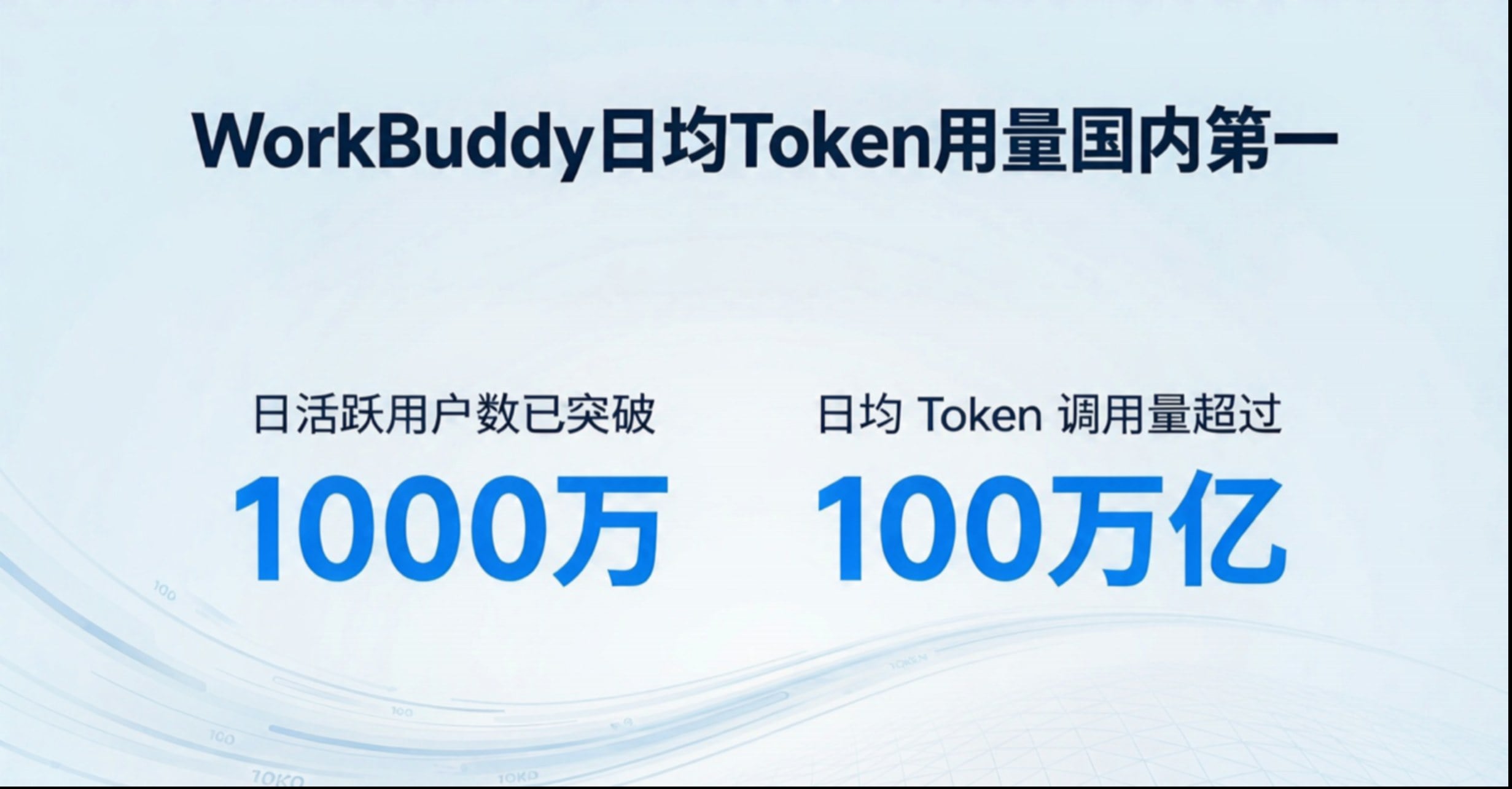
Chart: WorkBuddy Business Development Overview (Source: Tencent)
On the consumer side, WorkBuddy's daily active users surpassed 10 million, consuming over 100 trillion tokens daily. By actual LLM API call volume, it ranks among the top globally.
In enterprise penetration, the Enterprise edition launched in June this year. Among China's Top 100 enterprises, 60% are now clients, with a coverage rate exceeding 45% among China's Top 500 companies, achieving rapid penetration across heavy office scenarios such as finance, manufacturing, internet, and education.
On monetization, Martin Lau compares WorkBuddy's evolution to online games: a hybrid model combining subscriptions with token usage. Basic features are billed monthly or annually, while deep collaboration and advanced reasoning charge based on actual compute consumption, ensuring a stable cash flow base while preserving upside potential from usage spikes.
On the model foundation, Hunyuan has maintained a major version iteration roughly every two months this year. The Hy4 released on November 4 ranked first domestically in the comprehensive AgentBench evaluation at launch, with multimodal reasoning capabilities benchmarked against GPT-4o.
Launched this Monday, Hy4 Flash features 224B total parameters but only 12B activated parameters, with per-task costs roughly 1/20th of Hy4. Its ultra-low latency and calling prices offer a new choice for high-concurrency scenarios.
In cloud services, Q3 cloud revenue YoY growth jumped from 21% last quarter to 35%, with Model-as-a-Service revenue growing over 100% quarter-on-quarter, emerging as the core engine driving Tencent Cloud back into double-digit growth.
The C-end imagination space lies within WeChat. Martin Lau disclosed that Xiaowei, the AI assistant embedded in WeChat, has reached 30 million daily active users, and will soon begin larger-scale gray-scale testing.
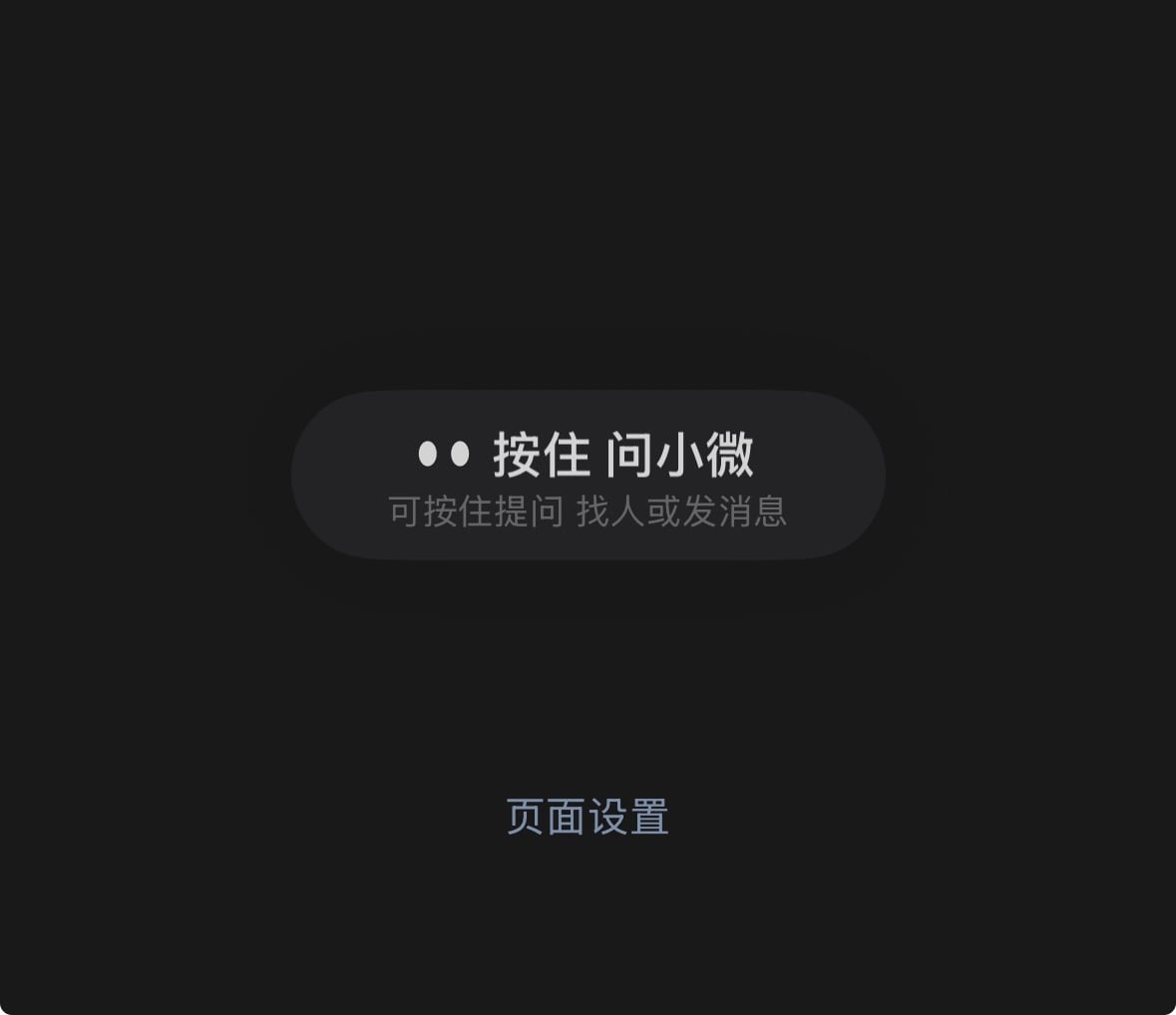
Chart: WeChat AI Assistant Xiaowei Interface (Source: GeekPark)
He provided a cost metric: even if Xiaowei were opened to all 1.4 billion WeChat users, its single-quarter operational cost would still be lower than Yuanbao's quarterly marketing spend earlier this year.
Meanwhile, considering compute efficiency doubles yearly, Xiaowei's capabilities are expected to leap significantly within a year to 18 months, ultimately reaching the interaction level of Meta's products.
On commercialization, Xiaowei will act as a multiplier for WeChat's existing revenue, accelerating income growth, with "an increase of 10% to 20% on WeChat's current revenue being well within expectations."
As for Yuanbao, Martin Lau remarked, "Yuanbao hasn't been as successful as we anticipated." With investment falling short of expectations, spending has been drastically cut, shifting focus to capability building and specific vertical scenarios.
Of course, the $500 million figure is an annualized conversion of seven days' revenue. Compared to Tencent's overall scale, it's still small, and the AI segment as a whole remains in the investment phase. These numbers prove not how much has already been earned, but that the monetization channel has been validated.
Compute Constraints and Organizational Reform
Beyond the earnings figures, the most difficult part of this transition was not avoided by Tencent management during the conference call and internal speeches.
First is the hard constraint of compute. Facing analyst follow-ups, Martin Lau admitted that both leasing and self-built compute face bottlenecks, meaning model training will inevitably be impacted to some extent.
He distinguished between two stages: inference is currently unaffected, with computing efficiency improving rapidly year-over-year; long-term, domestic supply chains will gradually enter the inference stage, but gaps remain substantial in advanced node processing and ten-thousand-card cluster training.
A deeper variable is organizational structure.
On the evening of November 11, Tencent's 28th anniversary celebration, Pony Ma's speech on the internal platform LinkTime quickly leaked, using severe language: some teams suffer from bloat, corporate disease, and headcount expansion preceding actual business needs.
Viewed on a longer timeline, Pony Ma's keyword for AI in 2023 was still "no rush," with Hunyuan launching later than peers and Yuanbao slightly behind schedule. But as technological iteration speed exceeded everyone's expectations, the founder's sense of crisis was fully activated.
During the call, Ma highlighted two samples he was most satisfied with: the model team was completely rebuilt from scratch, pushing Hunyuan to China's top tier within a year; WorkBuddy achieved astonishing iteration speed with a small team.
This was also the core logic of Tencent's internal address a week prior. Unlike the previous round of passive cost-cutting, this time it is defined as "active efficiency improvement": flattening the organization to counter corporate bloat with small teams and rapid execution.
As AI dramatically lowers development thresholds, a small team equipped with digital employees can accomplish work that once required an entire collaboration chain, rapidly breaking down traditional pyramid-style tech giant structures.
On the day of the earnings release, Tencent's stock closed at HKD 372.8, marking an intra-year decline of approximately 37%. The earnings did not halt the downward trend, with the stock opening lower and probing bottoms the following morning session.
Judging by this quarter's numbers, Tencent's AI narrative has moved away from the light R&D and rapid iteration familiar to internet companies, heading toward heavy compute, long cycles, and asset-intensive operations. In this no-retreat competition, who can stabilize the core business amidst the pain of devouring current profits, and help new businesses cross the inflection point to scaled profitability sooner, will determine the industrial landscape of the next decade.
Join TechFlow official community to stay tuned
Telegram:https://t.me/TechFlowDaily
X (Twitter):https://x.com/TechFlowPost
X (Twitter) EN:https://x.com/BlockFlow_News
 极客公园