Crypto Morning Brief: Solana Officially Enters Version 1.0, Li Lin's New Platform UMX Internal Memo Leaks
Author: TechFlow
Yesterday's Market Dynamics
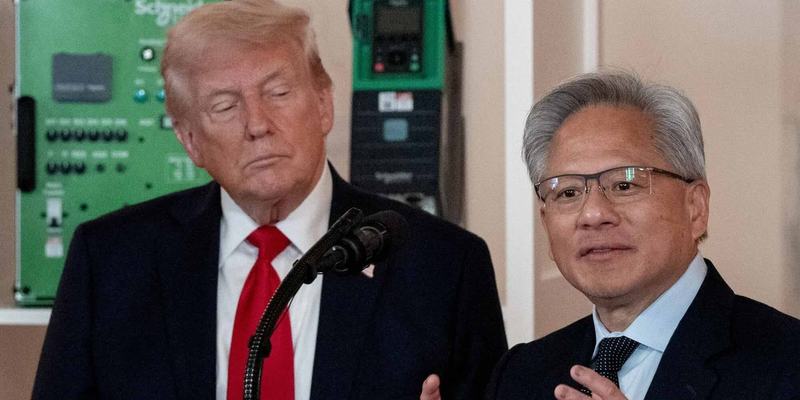
FT: Jensen Huang Discusses Return to NVIDIA CEO Role with Close Associates, Allies Form "War Room" to Lobby Board
According to Reuters citing the UK's Financial Times (FT), former NVIDIA CEO Jensen Huang is considering returning to the CEO position and has discussed the possibility of his return with close associates.
An ally of Jensen Huang told FT that they are forming a "war room" composed of Silicon Valley executives to lobby the NVIDIA board for Huang's return and seek support from the White House. The individual stated that this effort is backed by Huang himself.
However, some individuals involved in promoting his return admitted to FT: "Having an extramarital affair with a subordinate is a dismissible offense." Spokespersons for NVIDIA and Jensen Huang declined to comment.
Huang resigned as CEO on November 12 amid an extramarital affair scandal, with currently CFO Colette Kress serving as interim CEO. Previously, US Treasury Secretary Scott Bessent called on the NVIDIA board to find the next CEO from outside.
BitMine Increases Holdings by 7,653 ETH Last Week, Total Position Rises to Approximately 6.078 Million
BitMine acquired an additional 7,653 Ethereum last week. As of November 15, the company holds 6,077,745 ETH, representing approximately 4.97% of the total ETH supply, nearing its strategic goal of holding 5% of the ETH supply.
Currently, BitMine has staked approximately 5.227 million ETH, valued at roughly $9.5 billion based on a price of $1,823 per coin. The company also holds 216 BTC, along with approximately $448 million in cash and securities, bringing its total assets including crypto holdings and other investments to around $11.8 billion.
BitMine Chairman Tom Lee stated that despite ETH falling about 28% over the past two weeks, the company continues to accumulate positions and believes recent price action resembles the market performance prior to SpaceX's IPO.
ICE Clearing President: NYSE ATS Ready to Accept Tokens Minted on Solana
In a video released by Solana's official channel, ICE Clear Europe President Hester Serafini stated that the New York Stock Exchange's Alternative Trading System (ATS) is ready to accept tokens minted on Solana.
She noted that ICE Digital Trust already supports Solana, and ICE is considering becoming a validator node for the network.
Lighter Suspected Under Attack: Approx. 10.39 Million USDC Flows Out of Contract, LIT Plunges Short-term
Prompted by on-chain analyst MLM and several other community users, perpetual contract DEX Lighter (@Lighter_xyz) appears to be under attack. A suspected attacker address was provided: 0xb3fffca23d4444eE73349825ACD84f7b5020e387.
On-chain data shows this address received approx. 10.39 million USDC from the Lighter main contract (ZkLighter) at 18:11 Beijing Time, then gradually swapped USDC for ETH via CoW Swap, currently holding approx. 5,111 ETH.
Following the news, LIT plummeted sharply in the short term. As of press time, Lighter officials have not yet commented on the matter, and the nature of the incident remains to be confirmed.
Lighter Confirms Security Incident Caused by Trader API Key Leak, Protocol and Smart Contracts Unaffected
Lighter officially posted an update on the security incident investigation on X, confirming that this event was triggered by a leak of an API key belonging to a specific trader account, while the Lighter protocol and smart contracts themselves remain unaffected.
Lighter stated that for security reasons, it has enabled Guardian protection mode within the smart contracts, and related contract upgrades will be executed by the Lighter Security Committee. Currently, the team's top priority is to recover funds involved in another withdrawal attempt by the attacker, and they have identified wallet addresses suspected to be linked to the attacker.
Additionally, platform withdrawal functions remain suspended. Lighter plans to complete contract upgrades and resume withdrawal services before the end of the day, with the exact recovery time depending on subsequent handling progress.
Binance Co-founder He Yi Shares 30-Day Account Loss Exceeding $100 Million: Drawdowns Are Temporary, Spot Markets Are Fearless
Binance co-founder He Yi posted a short thread on Binance Square, sharing her account's asset changes over the past 30 days (October 17 to November 16), captioning it: "Drawdowns are temporary, spot markets need not fear."
Screenshots show the account's 30-day total change was approx. -$101 million, comprising trading P&L of approx. -$97.32 million, and transfers/other expenses of approx. -$3.99 million.
Li Lin's New Platform UMX Internal Letter Leaks: User Funds Approach $2 Billion One Month After Launch, Former Huobi Employees Eligible for Lifetime VIP7
Crypto KOL "Jiami Wuwei" published an internal UMX letter on X. UMX is a new trading platform incubated by Huobi founder Li Lin, fully named Unified Market Exchange.
The letter states that UMX's user funds exceeded $1 billion two weeks after launch and approached $2 billion one month later.
The letter also mentions that UMX has launched a "coin-backed credit line" feature: users can directly trade US stocks, HK stocks, and US stock options without selling their crypto, with personal credit lines reaching up to $10 million.
Furthermore, former employees who worked at Huobi between 2013 and 2022 and meet the account opening criteria will receive lifetime VIP7 status, 5,000 UMI points, and an exclusive ID starting with "2013".
The letter is signed "Your old comrade-in-arms, Lao Du," without a full name. The publisher suspects the author is Huobi co-founder Du Jun. As of press time, neither UMX officials nor Du Jun have publicly confirmed the letter.
Data: Bitcoin Down 22% Year-to-Date in 2026, May Face First Consecutive Annual Decline
According to Bitcoin historical performance data compiled by TechFlow, among the 15 full years from 2011 to 2025, Bitcoin saw gains in 11 years and declines in 4 years.
The four declining years were: 2014 (-58%, Mt. Gox halts withdrawals and bankruptcy), 2018 (-73%, token fundraising bubble burst and regulatory tightening), 2022 (-65%, Fed rate hikes plus collapses of UST and FTX), and 2025 (-6%, tariff shocks and October liquidation wave).
The year with the largest gain was 2013, up 5,507%; followed by 2011 (1,473%) and 2017 (1,331%).
As of November 13, 2026, Bitcoin fell from $87,509 to $68,249, down 22.0% year-to-date, primarily driven by rate hikes, capital outflows, and tech stock pullbacks, continuing last year's negative returns. An annual close in the red would mark Bitcoin's first consecutive full-year declines.
Solana Officially Enters Version 1.0, Removes Mainnet Beta Label
Solana's official channel announced the launch of Solana 1.0, formally discontinuing the "Mainnet Beta" label used since the network's inception and unifying the designation to "Mainnet," signaling a new phase of development for the network.
This adjustment, coordinated by the Solana Foundation alongside Anza and the Firedancer development teams, aims to establish a unified protocol versioning system independent of validator client software versions like Agave and Firedancer.
Solana stated that the Alpenglow consensus upgrade has reduced transaction finality to approximately 150 milliseconds, while the deployment of the Firedancer client has further enhanced network software diversity and resilience.
This rename will not affect users' held SOL, accounts, assets, applications, or historical transaction records; regular users do not need to take any action. Subsequent network feature upgrades will continue according to their respective deployment and activation schedules.
Amber Group Denies Anonymous Allegations: Operations Normal, Will Pursue Legal Liability
Amber Group issued a statement noting awareness of recent false allegations against the company and management circulated via anonymous letters and online platforms, stating, "We firmly deny these claims. Currently, company operations are fully normal, and all businesses are proceeding in an orderly manner."
The statement also pointed out that the content involves the dissemination of personal identification documents and other private information, seriously infringing on privacy rights, and that such behavior "has crossed an unacceptable bottom line." The company expressed respect for legitimate public discussion but stressed that it must be grounded in facts and respect personal privacy.
Amber Group stated it is preserving relevant evidence and reserves all rights to take legal action and hold responsible parties accountable for defamation, unauthorized disclosure of company confidential information, and invasion of privacy. The statement concluded that the company will continue to focus on serving clients and growing its business, thanking clients, partners, and all sectors for their long-standing trust.
Today's Market Overview
Recommended Reading
Apple Waited 12 Years for Him, But NVIDIA Can't Survive Day 4 of Huang's Departure
https://www.techflowpost.com/article/35412
This article compares Jensen Huang's departure with Steve Jobs', discussing why strong calls for the founder's reinstatement emerged at NVIDIA just 100 hours after Huang stepped down.
The piece reviews Jobs being ousted from Apple in 1985 and returning 12 years later, noting that NVIDIA faces a completely different situation: Huang has led the company for 33 years, maintaining a flat management structure where dozens of core vice presidents report directly to him. From CUDA technology roadmaps and Blackwell chip capacity allocation to coordinating advanced packaging resources with TSMC, many critical decisions heavily rely on his personal judgment and business relationships. Following Huang's departure, tech giants, investment firms, and Silicon Valley allies moved quickly, with Elon Musk and others publicly voicing support, urging the board to consider his return.
However, reinstatement does not mean the crisis is over. US regulators continue to scrutinize NVIDIA's supply chain and Southeast Asian computing power corridors, while the board also needs to rebalance corporate governance with the founder's personal authority.
The article's core argument is: NVIDIA's truly irreplaceable assets may extend beyond GPUs, CUDA, and the technological ecosystem to include the supply chain relationships, commercial credibility, and organizational control Huang has built over years. This reinstatement controversy also highlights a problem: when a trillion-dollar enterprise becomes overly reliant on its founder, the founder's personal risks can escalate into systemic risks across the entire industry chain.
Breaking Below the 200-Week Hard Floor, Fear Index Hits 10: Has BTC Truly Bottomed This Time?
https://www.techflowpost.com/article/35403
Strategy founder Michael Saylor focused on four key indicators measuring the current market via the official Bitcoin dashboard. Data shows Bitcoin's current price is approx. $64,947, having broken below the 200-week moving average ($67,906), a condition historically seen only 5.6% of the time; spot ETFs recorded cumulative net outflows of $2.919 billion over the past 30 days, and the Fear & Greed Index dropped to 10, entering extreme fear territory. Meanwhile, Bitcoin's market cap dominance rose to 66.9%, indicating that during the downturn, capital is further concentrating from altcoins into BTC. Notably, global futures open interest remains as high as $73.34 billion, with bulls and bears still engaged in fierce battles around the $64,000 mark.
The article's core viewpoint is: Bitcoin is simultaneously displaying three signals of long-term undervaluation, institutional capital outflow, and extremely pessimistic market sentiment, but this does not confirm a bottom. The 200-week moving average tracks long-term cyclical positioning, ETF flows reflect institutional stances, the fear index gauges market sentiment, and BTC dominance reveals capital divergence within the crypto market.
Crypto Exchanges No Longer Need Cryptocurrency
https://www.techflowpost.com/article/35398
This article points out that crypto exchanges are undergoing a "de-cryptoification" transition: as altcoin liquidity continuously dries up, platforms like Binance, OKX, Bybit, and Hyperliquid are shifting their core trading interfaces toward US stocks, gold, commodities, and indices, attempting to break dependence on the crypto bull-bear cycles.
Data already reflects this shift. From November 9 to 13, 2026, Binance's total futures trading volume reached $335.83 billion, with US stocks and commodities accounting for $130.18 billion (38.77%); BTC and ETH comprised 40.28%, while the remaining 561 altcoins totaled only 20.95%. Hyperliquid's non-crypto asset trading ratio has also reached approx. 30%, peaking above 50% in July 2026.
The article argues that traditional assets benefit from more mature markets, sustained macro-driven catalysts, and steadier trading demand, whereas numerous altcoins suffer from dull volume, accompanied by maker exodus, project team runaways, and compliance risks. Consequently, exchanges are motivated to retain existing capital like USDT on-platform and pivot to trading US stocks and commodities.
The core viewpoint is: Crypto exchanges are evolving from "cryptocurrency trading platforms" into all-weather global asset trading platforms. While Bitcoin and Ethereum retain central importance, the vast majority of altcoins are losing exchange traffic, liquidity, and funding. For altcoins, the greatest competitors may no longer be other tokens, but rather NVIDIA, Tesla, and gold.
Year-to-Date Performance Across Asset Classes: Bitcoin's -22% Returns Hit Rock Bottom
https://www.techflowpost.com/article/35390
This article contrasts the year-to-date performance (through November 13, 2026) of various major assets, revealing Bitcoin as one of the worst-performing assets of the year with a cumulative decline of 22%. In sharp contrast, even after pulling back more than 60 percentage points from its mid-year peak, the Philadelphia Semiconductor Index retains a cumulative gain of 43.2%; the NASDAQ Composite rose 8.2%, the S&P 500 gained 10.5%, the CSI 300 fell 13.3%, and the Gold ETF (GLD) declined 10.3%.
The article suggests that while the semiconductor sector has experienced valuation corrections, it is still supported by tech giants' ongoing hundreds-of-billions in AI capital expenditures and real chip orders. Bitcoin, conversely, lacks sustained incremental capital: institutional buying from spot ETFs has shifted from early massive inflows to seasonal fluctuations, and the crypto industry lacks compelling narratives to attract fresh funds. Once the market transitions to competing for existing liquidity, Bitcoin's high liquidity instead makes it the asset institutions prioritize for closing positions and taking profits.
The article's core judgment is: Bitcoin is experiencing an awkward period regarding its asset positioning, failing to exhibit digital gold's safe-haven properties or keeping pace with tech stock rallies. Institutionalization does not necessarily guarantee stable buy-side pressure; rather, it may render BTC the most readily sell-off asset when global market liquidity contracts.
Join TechFlow official community to stay tuned
Telegram:https://t.me/TechFlowDaily
X (Twitter):https://x.com/TechFlowPost
X (Twitter) EN:https://x.com/BlockFlow_News
 深潮TechFlow