Spot ETFs Lose Nearly $1 Billion in Two Weeks as Crypto "Uptober" Bows to Macro Gravity
Author: Gemini, TechFlow
In past Octobers, the crypto market has always welcomed liquidity frenzies amid the seasonal expectations of "Uptober." But this October, marginal capital from Wall Street did not follow suit, instead choosing to retreat for two consecutive weeks.
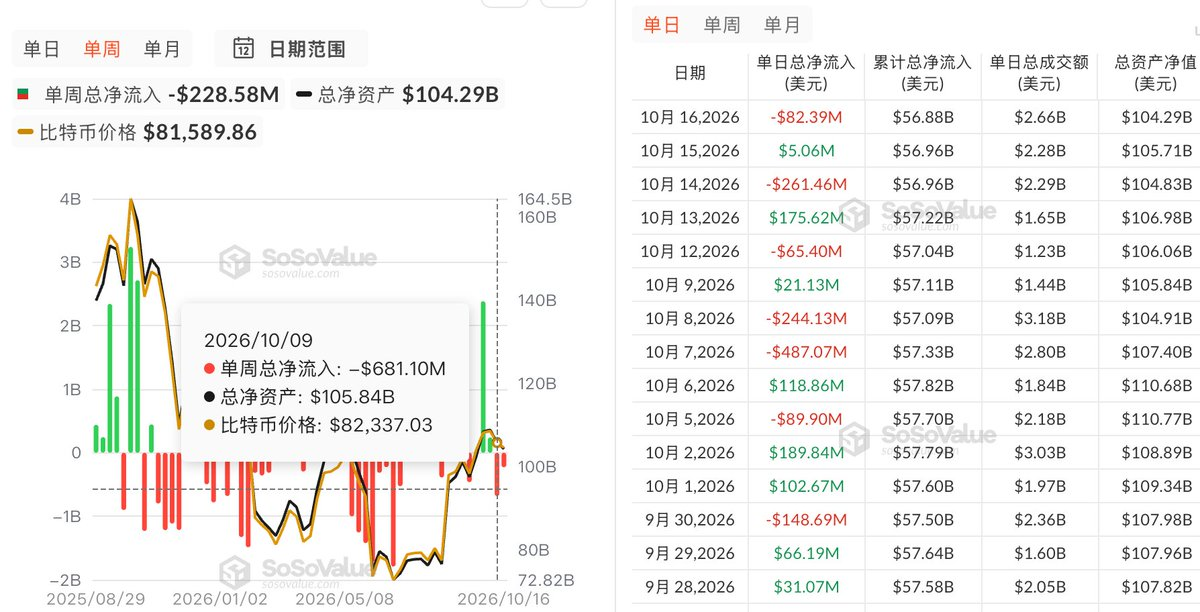
According to the latest data from Sosovalue, US spot Bitcoin ETFs experienced net outflows of approximately $910 million over the past two weeks. Outflows totaled around $230 million this week and about $680 million last week, pushing the cumulative flow for October so far to -$615 million.
In a month widely anticipated to be strong, the market has already begun bowing to macroeconomic data.
Tactical Rebalancing, Not a Structural Collapse
Although $910 million in outflows over two weeks appears massive in absolute terms, placing it within the broader context of spot ETF flows reveals this more akin to a defensive tactical rebalancing by institutional investors.
Since their launch, US spot Bitcoin ETFs have still seen cumulative net inflows reach approximately $57.3 billion, with total assets under management firmly holding above the $100 billion mark. The nearly $900 million in redemptions accounts for less than 2% of total inflows and roughly 1% of total assets under management.
The foundation of institutional buying remains solid; what truly shakes investor confidence is short-term risk pricing.
The withdrawal of capital has triggered direct chain reactions in market trading. Bitcoin's price once broke below the $80,000 threshold and is currently oscillating weakly in the $81,000 to $82,000 range. Notably, this level has slightly dipped below the average cost basis for ETF holders (approximately $82,300), leaving some positions in an unrealized loss state.
Compounded by nearly $1 billion in leveraged long positions being liquidated during the same period, short-term selling pressure and volatility have been further amplified.
Inflation Rebound and Risk-Free Rate Create a Siphon Effect
The core trigger for this round of fund outflows was hotter-than-expected inflation data in September. US CPI year-on-year rebounded to approximately 3.7%, directly shattering the market's linear expectations for further Federal Reserve easing and rate cuts.
The rebound in inflation data has reshaped market pricing regarding the path toward higher interest rates.
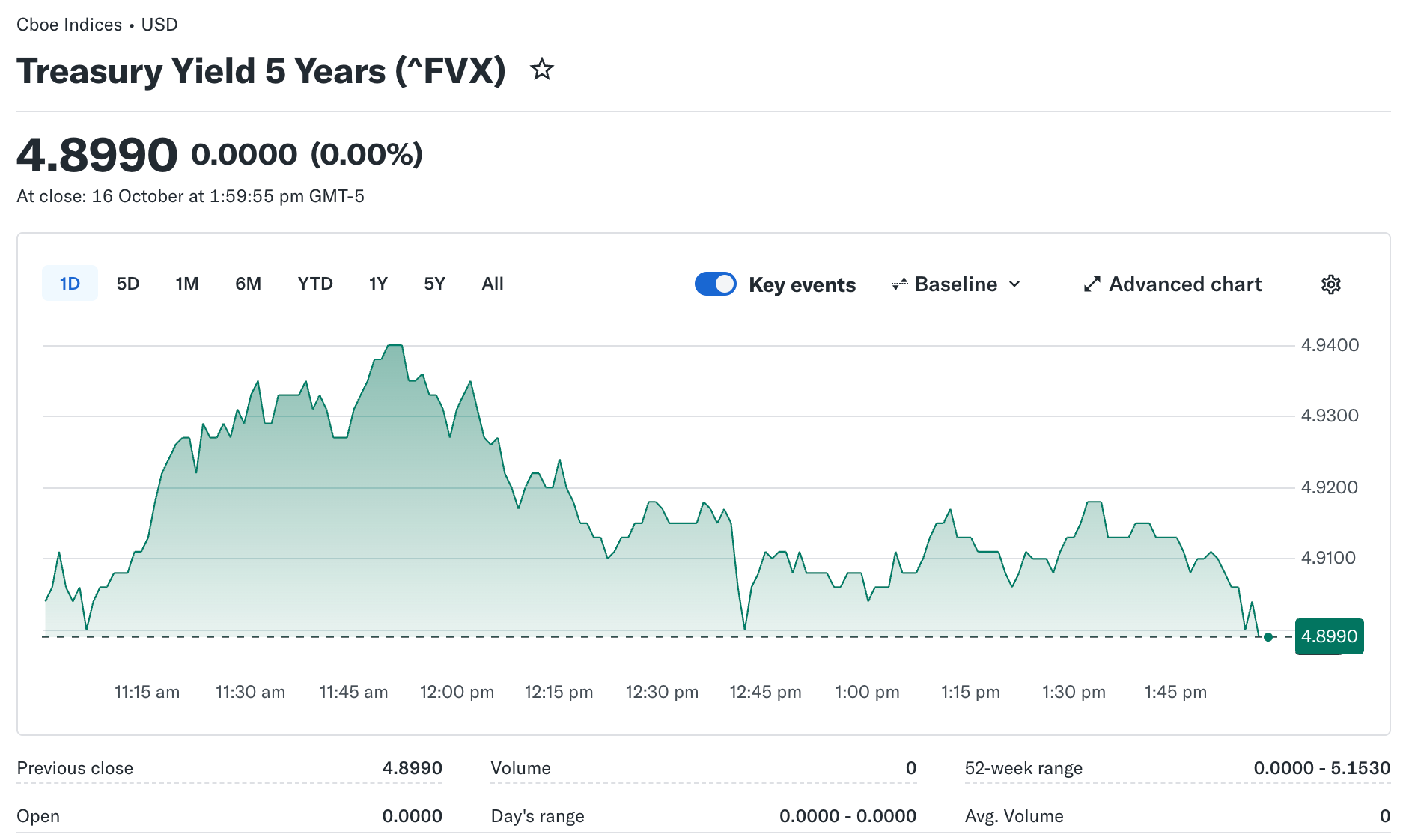
As Treasury yields reapproach high levels near 5% and the dollar continues its strength, traditional institutions are calculating very coldly: between a 5% risk-free rate and highly volatile crypto assets, capital instinctively retreats to the defensive side, leading to a significant decline in risk appetite.
This is actually an inevitable outcome following the ETF-ification of Bitcoin. It has been deeply embedded into the liquidity framework of traditional finance, making it highly sensitive to macroeconomic interest rates. Current daily ETF flows have largely become a real-time barometer on Wall Street for expectations regarding Federal Reserve monetary policy.
Seasonal Lore Loses Effectiveness as Market Enters Period of Macro-Driven Trading
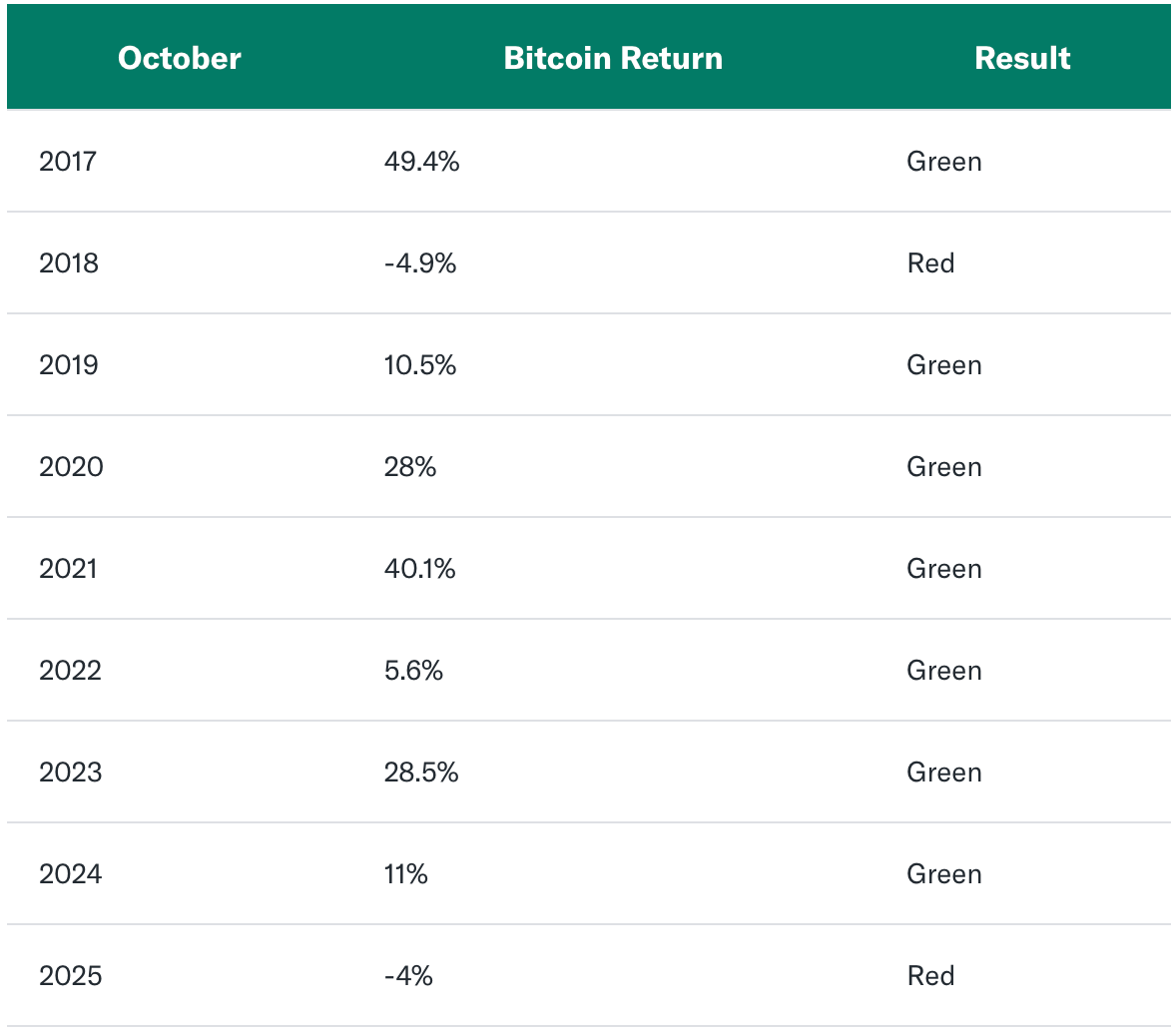
From backtesting data, among the 13 complete Octobers since 2013, Bitcoin registered gains in 10 of those years, yielding a win rate of nearly 77% and an average return of around 19%.
This track record has cemented "Uptober" as a deeply ingrained popular narrative within the crypto community. However, historical data also shows that when the macro environment is dominated by sticky inflation and hiking expectations, seasonal advantages are easily overshadowed, as evidenced by the October 2025 downturn.
Under current macroeconomic gravity, relying solely on calendar-based "seasonal lore" to trade no longer has sufficient capital support.
The coming two weeks will be the true stress test for the market. On October 27-28, the Federal Reserve will hold its interest rate decision meeting, and markets currently remain divided on whether further rate hikes are warranted.
Following closely is the US midterm election on November 3. Rising political uncertainty around election periods typically amplifies volatility in risk assets, making off-exchange capital more cautious. Until macro expectations materially ease and ETF flows turn positive again, the market will likely need to continue digesting the pricing pressure brought by the high-rate environment within its current range.
Join TechFlow official community to stay tuned
Telegram:https://t.me/TechFlowDaily
X (Twitter):https://x.com/TechFlowPost
X (Twitter) EN:https://x.com/BlockFlow_News
 深潮TechFlow