300 Mining Rigs Deep in the Jungle: A "Zero-Cost" Hidden Business
Author: Heart of Computing Power
In early September 2026, a search team led by federal law enforcement emerged in the Sierra region of Puebla State, Mexico.
Leading the operation were personnel from Mexico's Federal Attorney General's Office (FGR), followed by naval forces and state public security officers.
They pushed through the dense jungle until they eventually surrounded an inconspicuous old house deep in the woods.
Once the door was forced open, the commotion inside left everyone momentarily stunned.
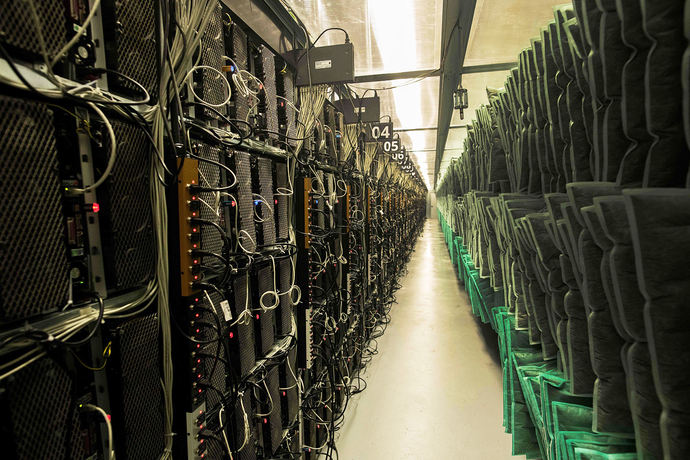
The room lacked any signs of domestic life; instead, it housed roughly 300 specialized devices running continuously at high frequency, emitting a deafening hum. Local media referred to them as GPUs, indicating they were likely used to mine graphics-card-compatible cryptocurrencies rather than Bitcoin.
Transformers and 80 medium-voltage connection terminals were neatly aligned nearby, while eight satellite antennas were mounted on the roof.
Given the extreme isolation of the site, operators relied solely on satellite signals for external network connectivity.
Local authorities subsequently confirmed that the remote property was being used as a suspected illegal cryptocurrency mining farm, noting that "mining" itself is not a standalone criminal offense in Mexico.
I. How This Group Was Exposed
The logic behind concealing a mining operation in remote mountains is straightforward.
Mining hardware generates substantial heat and noise; urban placement would trigger immediate complaints from neighbors, making secluded locations inherently preferable.
Puebla state security officials also noted that such operations demand massive power consumption and generate significant noise, prompting operators to target remote areas distant from residential communities.
However, there was a more fundamental reason the group selected the Sierra region:
It borders the Nuevo Necaxa hydroelectric infrastructure, offering abundant hydropower resources. Close proximity to the power plant made tapping into the grid comparatively easy.
Investigators reported that the syndicate exploited its location near the hydroelectric facility to divert vast quantities of energy.
The critical clue that ultimately led to their downfall was investigators' detection of large-scale unauthorized power connections, with one improperly installed transformer serving as a key entry point.
Policemen traced this anomaly in power distribution forward, eventually locating the mining site.
Prosecutors have currently opened a case along the lines of stealing national energy.
Forensic accountants, however, continue to follow this investigative trail.
Questions regarding which accounts funded the acquisition of this expensive high-end equipment remain under review, with active money laundering investigations ongoing.
II. Why Risk Detection to Steal Electricity
The primary motivation for risking raids to mine in remote wilderness comes down to one concept: exorbitant profits.
A Reuters-related report quoted projections stating that:
Based on estimates from the Cambridge Bitcoin Electricity Consumption Index, producing a single Bitcoin costs nearly $45,000.
Meanwhile, Bitcoin's market price hovered around $77,000–$78,000 in early September.
While this spread suggests profit, law-abiding miners find their livelihoods far from secure.
Within the mining sector, electricity expenses typically constitute the largest cost center, accounting for approximately 60%–80%.
Even a marginal cent increase in power rates can slash profit margins significantly.
But what if electricity requires no payment?
As Samuel Leon of Mexico's Universidad Iberoamericana, who researches electricity theft, explained, if power is stolen, the primary cost of this enterprise "nearly drops to zero."
A miner exempt from electricity bills sees operational risks dramatically suppressed and book profits artificially inflated.
Due to such steep margins, local law enforcement suspects that electricity theft for mining has evolved into an organized network here, rather than remaining sporadic individual activities.
As early as early 2025, authorities dismantled several dens in the Nuevo Necaxa vicinity.
Investigations implicated properties associated with the Mexican Electrical Workers' Union (SME), alleging they were utilized for illicit grid tap-ins to support mining.
By 2025, two additional concealed mining sites were confiscated at the boundary between Puebla and neighboring Tlaxcala states.
Officials subsequently declared this had escalated beyond isolated incidents, forming a coordinated network deliberately targeting areas near hydroplants to systematically wire up and pilfer electricity.
III. Who Ultimately Pays Behind the Zero-Cost Model
No gains materialize from nothing; the colossal costs bypassed by these mining farms directly translate into systemic deficits for the public sector.
Official disclosures from Mexico's National Electric Power Company reveal:
Between January and July 2024, "non-technical losses" stemming from electricity theft, unauthorized line connections, and meter tampering totaled approximately 6,346 gigawatt-hours, valued at roughly 13.8 billion pesos, or about $817 million.
This figure represents merely the half-year ledger shortfall of a single utility provider.
Complicating matters further is the regulatory landscape.
In Mexico, individual mining carries no dedicated criminal statute and faces no outright prohibition.
While cryptocurrencies lack legal tender status, possession, trading, and mining are legally permissible in principle.
The industry exists in a "permitted yet constrained, fragmented regulatory" framework, naturally attracting illicit operations.
Chainalysis's 2026 report indicates that global illicit address inflows tied to cryptocurrency reached at least $154 billion in 2025, marking a 162% year-over-year increase—more than double.
Approximately $104 billion flowed to sanctioned entities, with stablecoins comprising roughly 84% of illicit transaction volume.
This surge was primarily fueled by sanctions circumvention, state/quasi-state capital movements, and money laundering syndicates.
This dynamic explains why investigators immediately traced the genuine origins of equipment purchase funds alongside discovering unauthorized power tap-ins.
Fundamentally, Bitcoin's design aimed to create transparent ledgers, ensuring every coin's blockchain trajectory remains openly auditable.
In practice, however, the physical energy harnessed to generate these digital assets frequently devolves into unrecoverable systemic waste.
Hardware may operate undetected in mountainous terrain, and computational power may shift effortlessly across virtual networks, but consumed electricity never vanishes into thin air.
Those defrayed expenses inevitably reappear as public utility losses, effectively shifted onto consumers billing utilities honestly and the broader electrical infrastructure.
Though these 300 units in the jungle have been deactivated, as long as lucrative incentives for stealing power persist, analogous episodes will almost certainly relocate and repeat themselves.