Goldman Sachs Research Report Analysis: 30-Year US Treasury Yield at 5.3%, Bull Market to Continue
By Rita
The yield on the 30-year US Treasury bond rose to 5.3%, reaching a nearly 20-year high. The 10-year US Treasury yield climbed to nearly 5% this week, marking a new high since October 2023. In its US Weekly Outlook Report released on September 11, 2026, Goldman Sachs noted that rising interest rates are pressuring stock valuations, with earnings remaining the most critical driver for equities. The S&P 500's forward P/E ratio has declined from 22x at the beginning of the year to 19x, though the index remains within 2% of its historical peak.
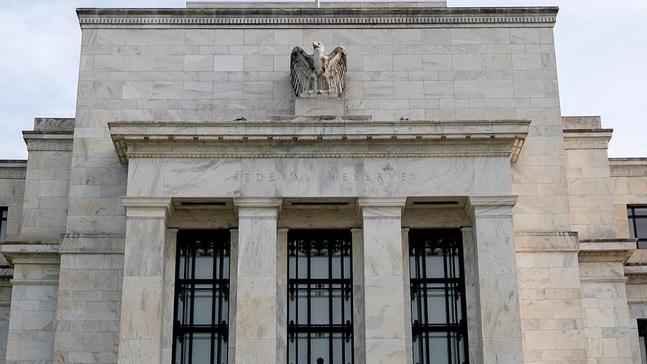
Goldman Sachs economists expect the Federal Reserve to raise rates by 25 basis points next week. Recent communications highlighted in the report regarding businesses and portfolio managers focused on the impact of high interest rates on equities. Goldman Sachs analyst Ben Snider outlined seven key takeaways in the report, covering valuations, the rate-hike cycle, interest rate sensitivity, balance sheets, and sector divergence.
P/E Ratio Drops, but Relative Bond Valuation Unchanged
The S&P 500's forward P/E ratio has fallen from 22x at the start of the year to 19x, driven partly by uncertainties surrounding AI and concerns over the sustainability of earnings, alongside rising interest rates. The gap between the S&P 500 earnings yield of 5.2% and the real 10-year US Treasury yield of 2.6% stands at 270 basis points. Goldman Sachs pointed out that this yield spread has remained broadly stable over the past two years, with the market-implied equity risk premium holding steady at 3%.
The equity risk premium reflects the additional return investors demand for holding stocks instead of bonds. Goldman Sachs believes that heightened interest rate volatility poses challenges to equities regardless of the absolute rate levels.
Stocks Face Pressure at the Start of Rate-Hike Cycle, but Subsequent Returns Are Solid
Analyzing seven rate-hiking cycles over the past few decades, Goldman Sachs found that the S&P 500 averaged a negative 2% return three months after the initial rate hike. Over the same set of cycles, the average 12-month return following the first hike was positive 9%, yielding positive returns every time except in 2022. In 1997, the S&P 500 fell 10% during the Fed's 25-basis-point rate hiking cycle; once the market stopped pricing in further tightening, stocks bottomed and reached new highs within three months.
Current rates already price in more than three 25-basis-point hikes by mid-2027. Goldman Sachs argues that this raises the bar for policy to surprise to the hawkish side. The mid-term impact of Fed tightening on stocks depends on how tighter monetary conditions affect earnings growth.
Equities Are More Sensitive to Long-Term Interest Rates
Goldman Sachs' Dividend Discount Model indicates that roughly 75% of the S&P 500's present value reflects cash flows occurring more than a decade from now. The correlation between equity returns and interest rate changes is strongest with long-duration bonds. Inflation boosts the nominal value of future cash flows, making stock valuations more sensitive to increases in real interest rates.

Interest rate volatility is equally important. Over the past several decades, stocks generally still delivered positive returns during periods of rising rates, unless the pace of increases exceeded two standard deviations. Currently, a two-standard-deviation monthly move in the 10-year US Treasury yield is approximately 50 basis points, or about 30 basis points over two weeks. The rapid pace of rate changes over recent weeks explains why equities have struggled to digest the news.
Corporate Balance Sheet Risks Remain Limited
Borrowing costs for the S&P 500 have risen moderately in recent years. Since most corporate debt is fixed-rate and longer-dated, interest expenses remain relatively small compared to robust earnings.
The interest coverage ratios for the overall S&P 500 and its median stock stand at the 99th and 68th percentiles, respectively, over the past 20 years. Smaller companies possess weaker balance sheets with a higher proportion of floating-rate debt, making them more vulnerable to shocks.
Significant Divergence in Sector Interest Rate Sensitivity
Homebuilder stocks are among the most sensitive sectors in the equity market to long-term interest rates. Since June, homebuilder stocks have underperformed the equal-weighted S&P 500 by 16 percentage points. Financial stocks typically outperform when rates rise. AI-related stocks exhibit a modest negative correlation with real yields.
Goldman Sachs noted that companies can maintain valuations by lowering their risk premium or increasing their growth rate. To fully offset a one-percentage-point increase in the cost of equity, a company's expected long-term growth rate would need to rise by 2 percentage points. Capital expenditures and R&D investments serve as pathways to boost growth, while M&A activity and spin-offs offer alternative routes. M&A deals announced in the US year-to-date total $1.4 trillion, with global transaction volume up 36% year-over-year.
Regarding S&P 500 earnings forecasts, Goldman Sachs expects 2026 earnings per share to reach $340, up 24% year-over-year, and $385 in 2027, up 13% year-over-year. The firm sets a year-end target of 8,000 and a 12-month target of 8,300.

Disclaimer
This article compiles and interprets a third-party brokerage research report (Goldman Sachs Group, September 11, 2026), integrating publicly available market data. The ratings, target prices, earnings projections, and related assessments cited are solely those of the brokerage's analysts, representing only their affiliated institution's viewpoint and not that of Chaoxiang Research, nor do they constitute investment advice.
Markets carry risk; investment decisions must be independent. This content should not be used as a basis for trading any securities.
Join TechFlow official community to stay tuned
Telegram:https://t.me/TechFlowDaily
X (Twitter):https://x.com/TechFlowPost
X (Twitter) EN:https://x.com/BlockFlow_News
 @chaoxiangooo