AI Is Killing the Internet Economy: When Machine Traffic Exceeds Human Traffic, Paid Content Models Are Forced to Restart
Author: Shoal Research
Compiled by: TechFlow
TechFlow Summary: According to Cloudflare's latest data, AI bot traffic now accounts for 60% of all HTML requests globally, surpassing human traffic for the first time. This signals the collapse of the "content-for-traffic" barter system that sustained the open internet for two decades, while new pay-per-use infrastructure remains unready. For content creators, advertisers, and all professionals relying on search-driven traffic, this is a more fundamental survival issue than algorithm updates.
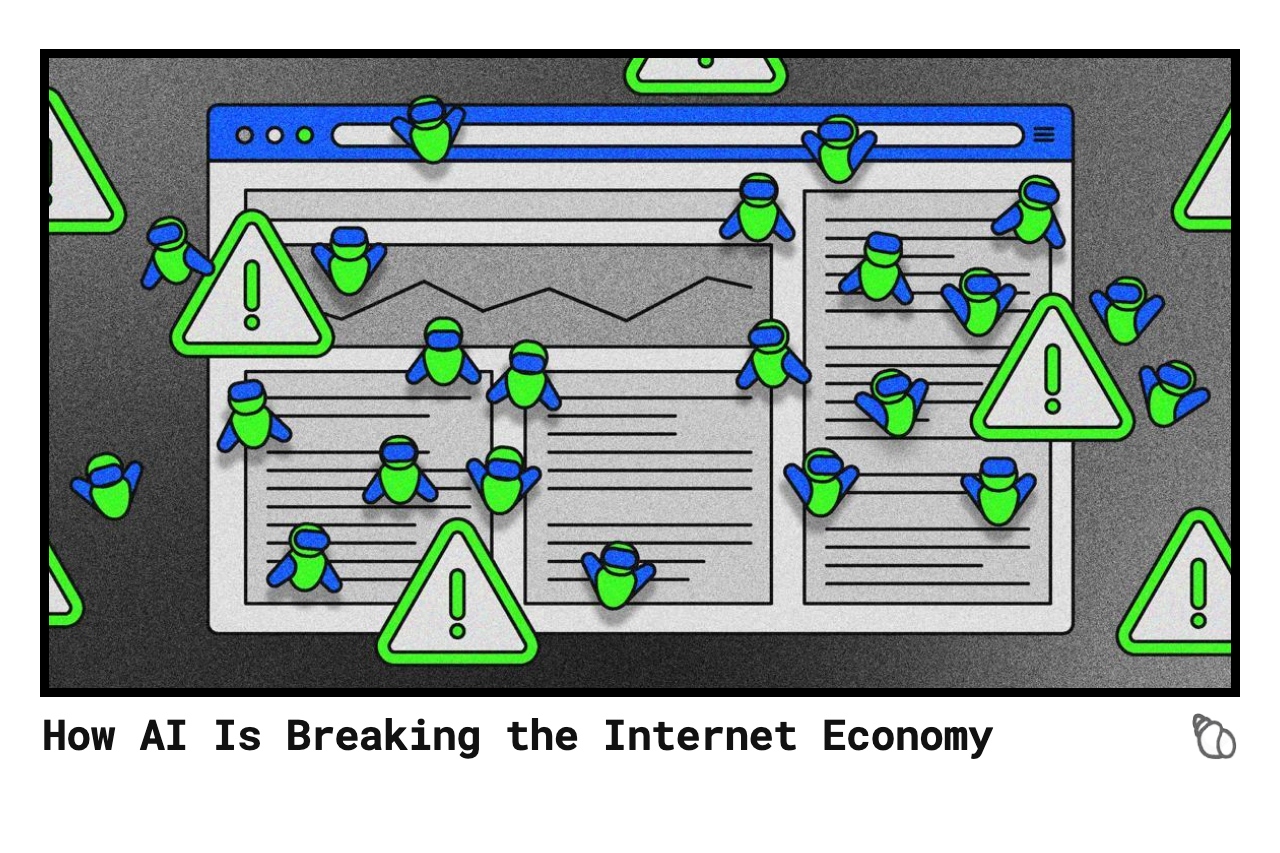
On March 19, 2026, Cloudflare CEO Matthew Prince predicted that driven by generative AI, bot traffic would surpass human traffic in 2027. Cloudflare operates the world's largest CDN, covering roughly 20% of the internet. Just months later, Prince announced that agent-led traffic has grown so rapidly that bots now exceed human traffic. On the Cloudflare network, bots account for approximately 60% of HTTP requests for HTML content, while humans represent only 38.2%. As automated systems generate an increasing share of HTML page requests, with AI agents making up a growing proportion, the business model upon which the internet relies is crumbling.

The Deal That Fed the Open Internet
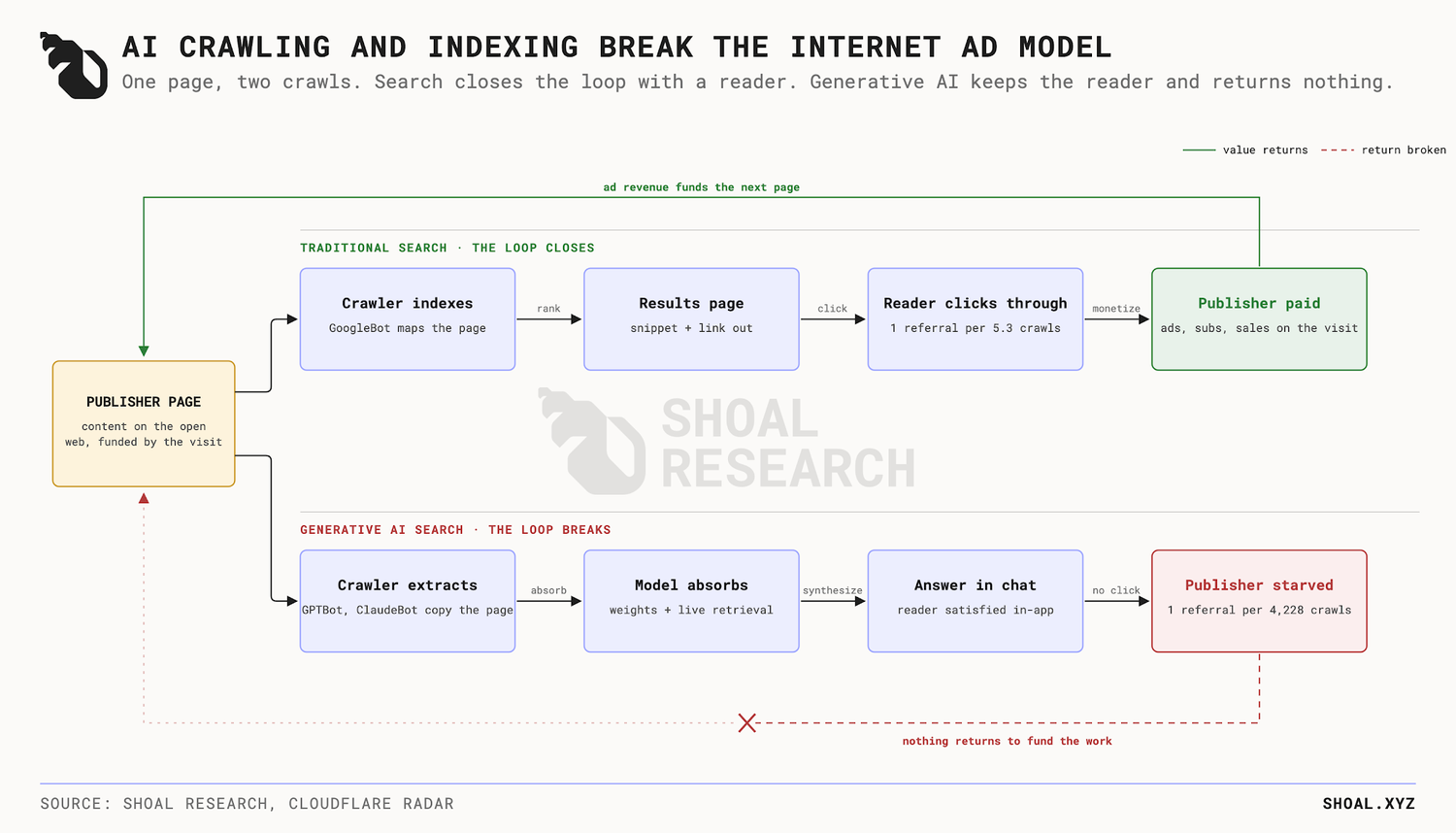
The World Wide Web achieved unprecedented global democratization of information, backed by a straightforward barter mechanism of "content for traffic": publishers post content online, and search engines direct readers to their websites during queries. Publishers supply the web with information or entertainment in exchange for content; search engines help route readers to relevant pages; advertisers monetize each visit by displaying targeted ads on those pages. This synchronized loop collectively built a multi-billion-dollar advertising engine that sustains an open, paywall-free internet.
This deal sustains vast amounts of freely accessible information while centralizing distribution power in the hands of search and advertising platforms. It rewards behavioral advertising, SEO-optimized content volume, and traffic-chasing production, leaving publishers deeply dependent on recommended and attention-based traffic. AI is eroding the "recommendation" pillar of this already fragile deal, and viable alternatives remain unprepared.
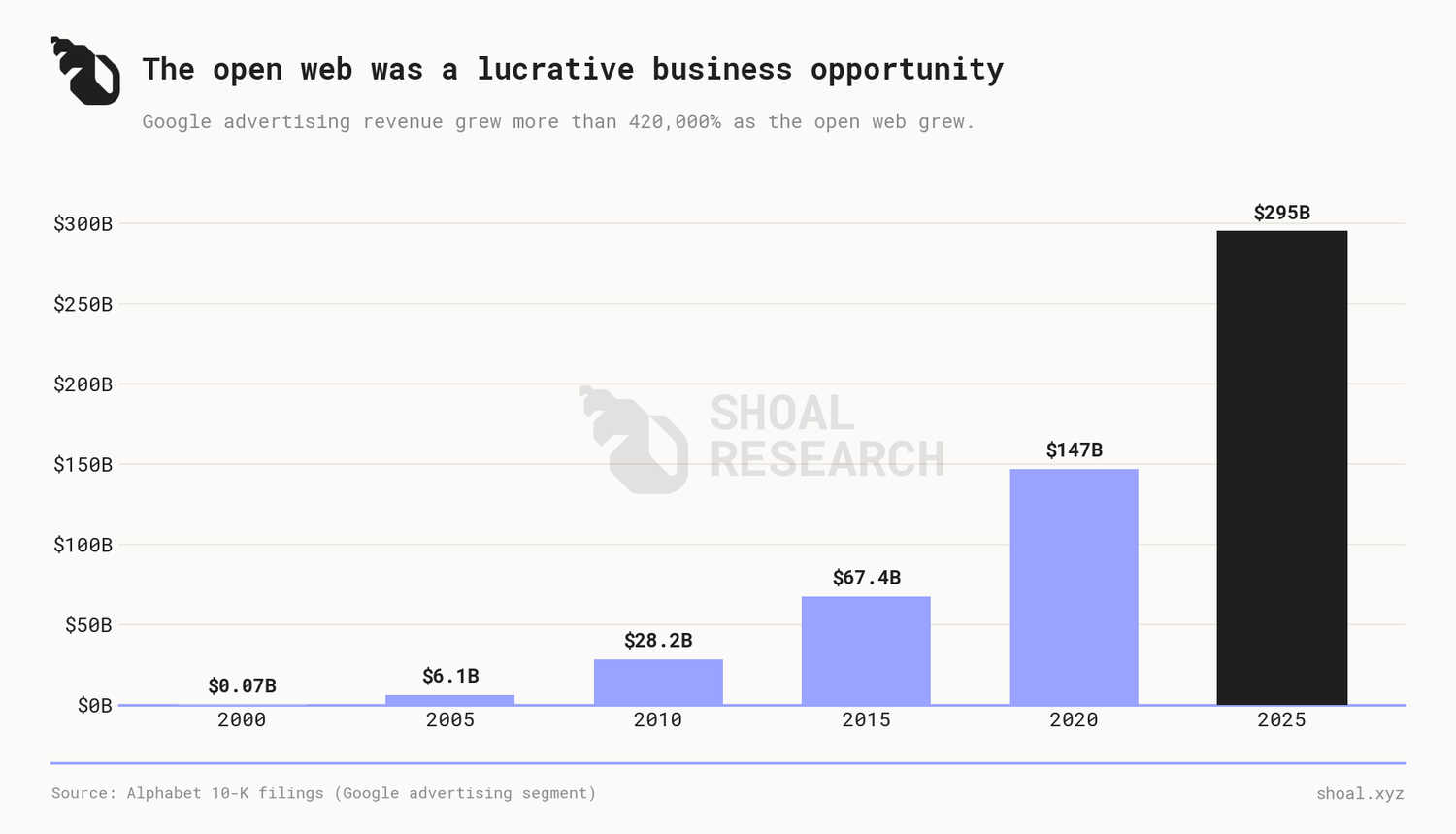
Google's advertising revenue grew from $66.9 million in 2001 (the first year it fully disclosed ad revenue) to $294.7 billion in 2025, a roughly 4,400-fold increase.
However, the explosive growth of AI chatbot applications in recent years has introduced a completely new paradigm for web information discovery. By design, these AI apps prioritize user convenience, keeping audiences within the chat interface. This is convenient for users but particularly fatal for publishers. Search engines direct readers to the source websites, whereas AI apps compress and summarize information, presenting it directly as part of the final answer to a query. Publishers find it increasingly difficult to monetize website traffic because they lose direct relationships with users, and human visit volumes are declining.
An emerging solution involves introducing entirely new "pay-per-request" payment infrastructure for content and search across the internet. In this article, we will explore how AI is "breaking the internet," the two divergent paths toward this solution, and the current state of this nascent pay-per-request network.
AI Crawlers and the Death of the Barter Model
Search engines use crawlers (automated programs that index web pages) to build a "map" of the web. Under the traditional content-for-traffic model, publishers allowed these crawlers to freely copy their text because search engines reciprocated by directing human readers back to their sites. To manage this access, the industry relied on a plaintext file called robots.txt, an unencrypted, voluntarily compliant honor system. robots.txt functioned smoothly for decades because ignoring it meant losing access to publisher content, directly damaging a search engine's ability to index the web effectively.
Generative AI apps have transformed crawlers from indexing tools into active consumers, dismantling the web's content-for-traffic trade, most notably in training and real-time retrieval. During training, large language models like GPT or Claude learn from massive corpora scraped from the open internet, including books, articles, code, and artworks. After training on the sum of human knowledge, these models feed information back to users without linking sources or paying creators. During real-time retrieval, models index the live web at the moment of answering queries, scraping relevant passages and reformatting them. Instead of handing the original page to readers, models restate information as a brand-new, inline reply that fully answers the prompt. A crawler only needs to index a page once, yet the model can distribute its findings to millions of readers, none of whom are sent back to the original source.
Impacts
When examining extraction mechanisms alongside behavioral data, federal litigation, and artistic exploitation, it becomes clear that the foundations of the open web are undergoing structural collapse, with repercussions already manifesting across multiple interconnected domains.
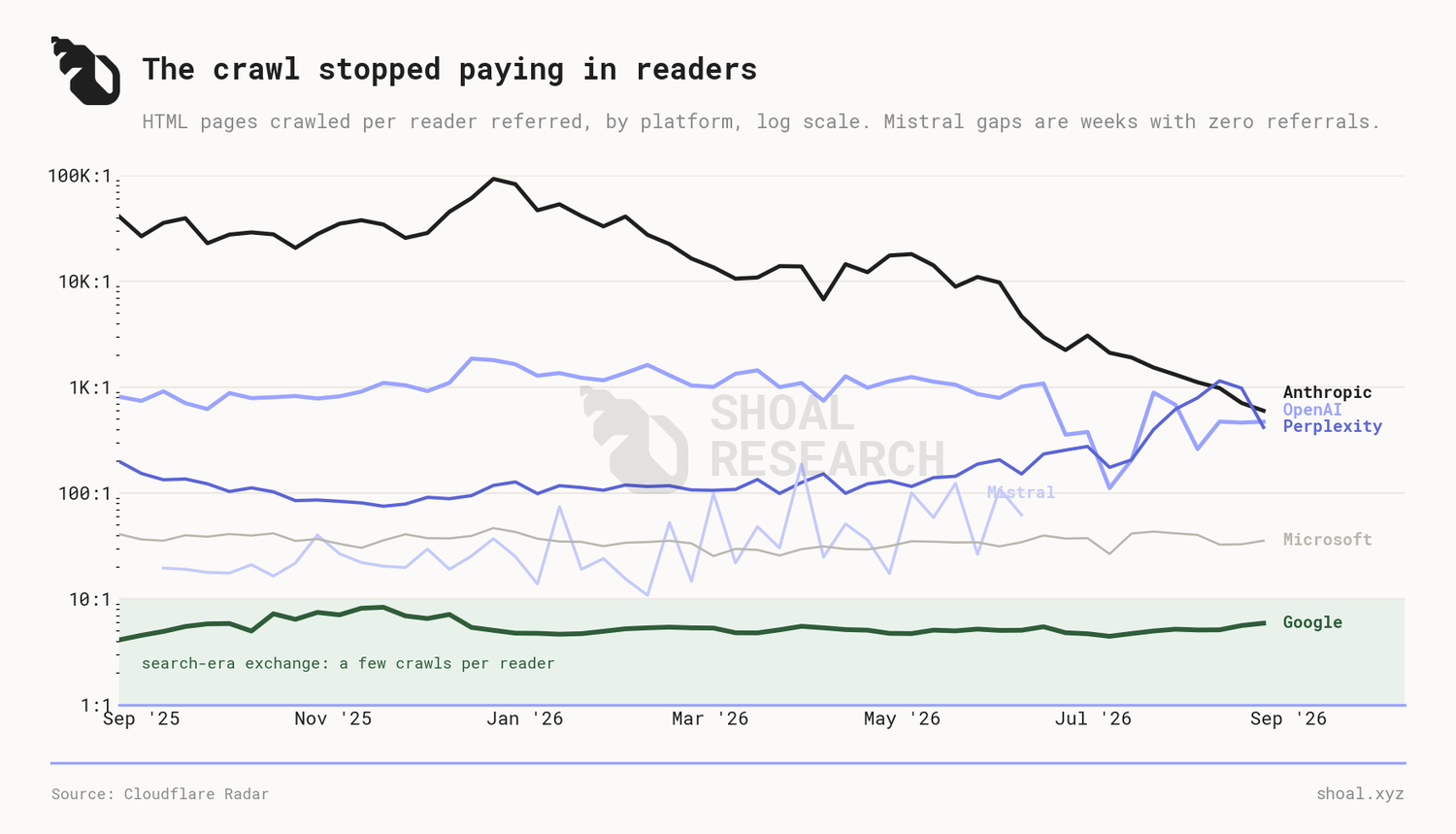
The behavioral impact of AI crawlers can be measured by the "crawl-to-referral ratio": the number of pages crawled versus actual users returned. Cloudflare data shows that over the past six months alone, training-class (43.9%) and training-plus-search-class (41.5%) crawlers accounted for over 85% of recognized AI crawler requests observed on Cloudflare's network. Googlebot still crawls nearly five pages for every visitor it returns—5.3 over the past year—which aligns closer to historical barter levels, whereas each major AI platform exceeds this by one to three orders of magnitude. Over the past year, Anthropic's ClaudeBot crawled an average of 4,200 pages per visitor returned to source sites, Mistral 884, OpenAI 731, and Perplexity 147. Cloudflare notes that referral traffic from native apps lacks referrer headers, meaning these ratios may exaggerate the imbalance. A Pew Research Center study found that when AI summaries intercept search queries, human click-through rates drop from 15% to 8%, direct click attribution from summaries falls to 1%, and users abandon browsing sessions entirely 26% of the time.
AI crawlers have also sparked legal battles. In Bartz v. Anthropic, Judge William Alsup ruled that training on lawfully obtained books constitutes fair use due to its transformative nature, creating something new rather than substituting the originals, while allegations regarding Anthropic's downloaded pirated library moved to trial. Anthropic later privately settled the claim for $1.5 billion, averaging roughly $3,000 per work across ~500,000 titles. This outcome was widely interpreted as a victory for Anthropic, as the fair use ruling for training stood, and the settlement avoided potentially higher statutory damages. With the case settled, no court has determined the actual cost of training on pirated content. Meanwhile, The New York Times v. OpenAI and Microsoft continues, forcing OpenAI to hand over 20 million ChatGPT conversation logs as part of an investigation into how extensively the model reproduces articles to replace paid subscriptions.
These cases highlight that the costs of un-metered AI crawling fall disproportionately on independent creators and visual artists. When OpenAI launched its Studio Ghibli-style rendering capabilities in early 2025, it exposed just how weak existing copyright protections truly are. Because US law protects specific expressions of a work rather than overall styles, AI models can systematically clone an aesthetic built on decades of human labor without crediting or compensating creators. OpenAI's policy bans using living artists like Hayao Miyazaki's name as prompts but fully permits "Studio Ghibli." Specific characters like Totoro are protected, but general Ghibli style is not, leaving artists with virtually no legal recourse despite the model generating such imagery precisely because it trained on the studio's films. Pay-per-request infrastructure cannot remedy all these harms. It can meter and compensate for future access to works, but cannot retroactively compensate artists for materials used in training, nor prevent models from reproducing styles they have already learned. Those damages require separate licensing, copyright, and enforcement remedies.
In short, the two primary responses to the collapse of the content-for-traffic deal (litigation and private licensing) are merely stopgap measures, not scalable business models. To date, litigation has priced past crawling while leaving ongoing and future scraping untouched, whereas private bilateral licensing agreements allow major media conglomerates to sell direct archive access to AI labs (e.g., OpenAI's $250 million contract with NewsCorp, or Google's reportedly $60 million annual deal with Reddit). While lucrative, market research reveals these private deals often amount to less than 1% of the licensee's projected AI revenue. However, negotiating such agreements requires substantial financial and legal resources, meaning the internet's independent long tail (millions of solo creators) still lacks a scalable way to handle AI crawlers.
Consequently, the picture becomes clear: an unencrypted credit system based on robots.txt, along with the content-for-traffic deal that sustained the open internet for thirty years, cannot withstand an internet where bots act as primary consumers economically prioritizing data consumption over referral traffic. Historically, publishers willingly bore 100% of content production costs because they captured 100% of consumer traffic and attention; generative AI consumes content entirely while providing almost zero attribution, effectively severing the source of human web traffic that publishers rely on for ad or subscription revenue, all while publishers still pay expensive hosting bills for machine scraping with no traffic return. This squeeze happens from both directions. Serving a bot's bandwidth and compute costs the same as serving a reader, but bots don't view ads or start subscriptions. At crawl-to-referral ratios reaching hundreds or thousands, publishers pay to serve thousands of requests for every single monetizable visit. Since publishers cannot afford server fees just to let bots freely copy text, the internet needs a new way to ensure creators are compensated for their output. Since people read AI summaries instead of visiting sites, publishers can no longer monetize solely on human attention. Thus, the moment of monetization shifts to when AI bots actually scrape data, and the logical next step is introducing a new network-native pay-per-request payment infrastructure.
The Pay-Per-Request Network
Expanding the pay-per-request model across the internet requires an efficient method to meter content and server access. Although a growing portion of this activity is driven by AI crawlers, the framework applies to any non-human interaction, including data sources and automated APIs. Simply put, to access paid content, one software must programmatically pay another, a process formally known as machine-to-machine (M2M) payment.
To support M2M payments at scale, infrastructure companies are building automated billing checkpoints at the network routing layer, charging bots at the millisecond level when requests occur. Execution largely falls into two distinct methods: a closed-market model requiring crawlers to register accounts and obtain unique digital keys, accessing sites through intermediary routing proxies; and an open-protocol model designed around standardized public software rules, machine-readable headers, and support for payment settlement across broader digital rails.
Closed Markets
The gated market model treats webpage content as private assets managed by corporate intermediaries. Within this framework, M2M payments must first complete authentication and access licensing. Publishers configure their networks to redirect incoming AI crawlers from public human-facing sites to dedicated secondary URLs managed by market providers. At this gateway, platforms verify crawler credentials against databases, evaluate publisher-set custom access rules, log usage, and format pages into machine-readable text. Financial transactions occur outside the internet protocol layer. When a bot initiates a request, the market logs the usage and deducts it from a pre-funded credit balance charged to the AI company. Settlement occurs periodically in fiat currency through merchant platforms like Stripe Connect, since swiping a card per request would incur fees higher than the request's value. Placing an intermediary directly between AI crawlers and publisher origin servers maximizes security, shields servers from aggressive traffic spikes, and ensures only verified enterprise partners gain entry. However, scaling this framework could transform the open web into a network of licensed storefronts, further degrading the experience for human users.
Early network-focused programmatic pay-per-use payment infrastructure has been gated markets, with TollBit and Cloudflare's first version of Pay-Per-Crawl being the most prominent. TollBit is a platform for managing, monitoring, and monetizing AI agent network traffic. To deploy it, publishers set up a dedicated subdomain (e.g., https://tollbit.thedailydispatching.com/), where servers automatically redirect detected AI crawlers attempting to access the main site to TollBit's subdomain, granting access only after payment. TollBit verifies if the AI company holds a registered billing account, logs page requests delivered in clean text format, processes payments in USD, and requires API keys. Thus, discovering content costs is not self-serve today: AI developers must first register with TollBit.
On July 1, 2025, Cloudflare launched its inaugural pay-per-crawl model. Operating at the DNS and CDN level, Cloudflare processes traffic before it reaches the content publisher's physical origin servers. In Pay-Per-Crawl V1, Cloudflare integrated its edge-level Web Application Firewall (WAF) to automatically detect and block known AI crawlers on its network by default. When an AI crawler requests access to a pay-per-crawl-protected domain, Cloudflare intercepts the request before it reaches the publisher's webpage, facilitating payment if the site owner opts to monetize their content.
Challenges of Gated Markets
TollBit relies on developer API setups, proprietary keys, and traditional banking channels for payments. Routing pay-per-request transactions through merchant networks like Stripe introduces fixed transaction processing fees (typically ~$0.30 plus a percentage), making sub-cent microtransactions economically unviable. To bypass this hurdle, human developers must manually register accounts with gated market intermediaries, generate unique API keys, and pre-fund balances via credit card or bank transfer, from which the platform deducts gradually. Consequently, agents and other autonomous software cannot currently independently discover and purchase data on demand; instead, human administrators must manually establish commercial accounts, monitor fluctuating balances across disparate providers, and coordinate secure keys.
While human intervention remains essential in many AI-centric workflows, using gated markets to manage web content access at scale defaults to predictable, linear traffic patterns, directly clashing with modern software realities. AI agents and crawlers use reasoning loops to dynamically select navigation paths based on user prompts, meaning they frequently encounter unfamiliar domains containing the precise data required for tasks. Pausing mid-task to request manual human integration quickly creates execution bottlenecks, destroying user experience. Fixed-rate subscriptions here are also suboptimal; AI agents run on-demand when instructed, often manifesting as unpredictable bursts of concentration (e.g., someone might engage in a research-intensive project for three days straight, then rest for two weeks).
Between upfront deposit requirements and the custom software integrations needed to access protected content and data, gated markets are inherently highly licensed systems. While publishers receive controlled, verified traffic from mature tech companies, the administrative and financial burden of managing pre-funded accounts across multiple independent platforms restricts non-anonymous access, hinders spontaneous scraping by independent developers, and reduces monetization opportunities for mid-sized publishers lacking enterprise-scale traffic. By contrast, direct machine-to-machine financial handshakes allow publishers to attach microfees to the text and data crawlers are about to request; this design philosophy underpins the open-protocol approach.
Open Alternatives: x402 and MPP
Open protocols are network architectures built on public, standardized communication rules. Much of the modern web runs on open protocols like HTTP, SMTP, and TCP/IP, still in use today. Recently, HTTP status code 402 (reserved for over three decades but largely dormant) has emerged as a core web-native infrastructure component for supporting machine payments on open protocols utilizing blockchain rails.
Experiments using HTTP 402 for Bitcoin payments trace back to 2015, with pioneer projects including the 21co Bitcoin Computer and L402 on the Lightning Network. In May 2025, the x402 protocol first introduced stablecoins into the HTTP 402 flow, while efforts like Stripe and Tempo's Machine Payment Protocol (MPP) support Bitcoin and credit cards alongside stablecoins. Credit card options are designed for macro-transactions rather than micropayments, as fixed swipe fees would devour sub-cent requests. Stablecoins remain the rail enabling pay-per-request pricing to be viable.
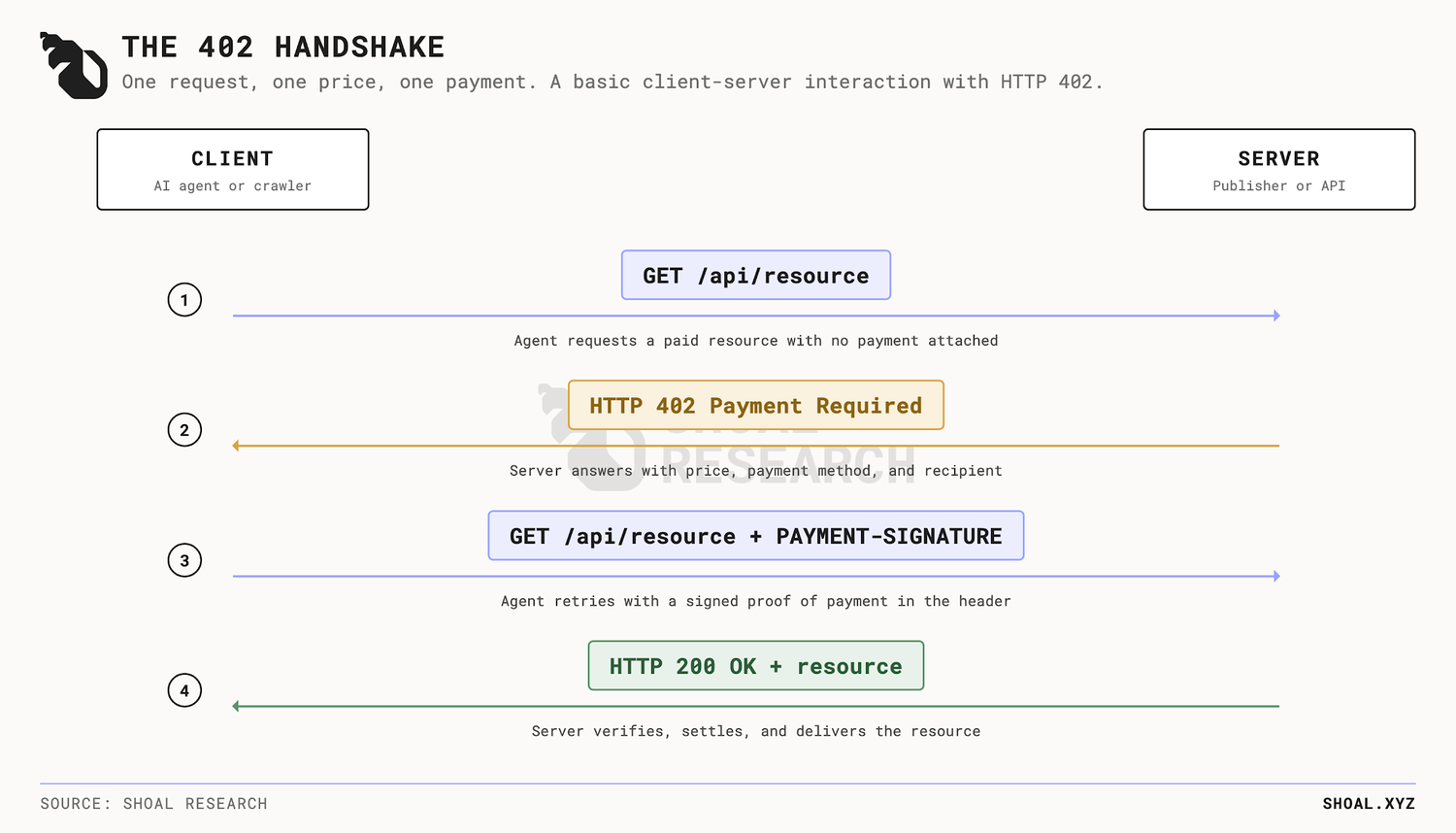
x402 embeds payment instructions directly into data exchange payloads, eliminating the need for third-party account registration or proprietary clearinghouses. When an AI crawler requests a webpage, the host server directly embeds machine-readable responses (payload headers) into the connection metadata. These headers provide the exact price per request, the designated payment network, and the recipient's digital billing address.
Blockchain plays an increasingly prominent role in facilitating machine payments, offering an immutable, programmable financial layer whose native speed and automation align with software logic. Crypto-assets like stablecoins sit structurally close to AI agents in the network, as they operate on network-native infrastructure identical to AI agents and crawlers, existing as software code integrable via simple API endpoints and cryptographic signatures. Transaction costs and fees on blockchain rails remain significantly lower, typically costing fractions of a cent per transfer on leading high-throughput chains, far below credit cards and fintechs (though numerous fintechs are actively closing this gap, e.g., Wise).
Blockchain rails are also designed to provide cryptographic receipts and verification for every payment. Each pay-per-request cycle yields a permanently stored receipt containing the buyer's digital signature, the requested URL, and a precise timestamp. Because these instructions reside on public chains, any automated agent can parse incoming metadata, execute micropayments using compatible assets like stablecoins, and download content within a single continuous HTTP handshake. Traditional banking settlements require reconciliation between commercial banks' ledgers via clearinghouses, often taking days, whereas blockchain settlement completes immediately after network nodes verify digital signatures and update global chain state, typically taking just seconds on leading chains. Crucially, the open-protocol approach standardizes web data access, allowing publishers of any size to monetize assets, while developers with well-funded automated accounts can scrape without prior administrative approval.
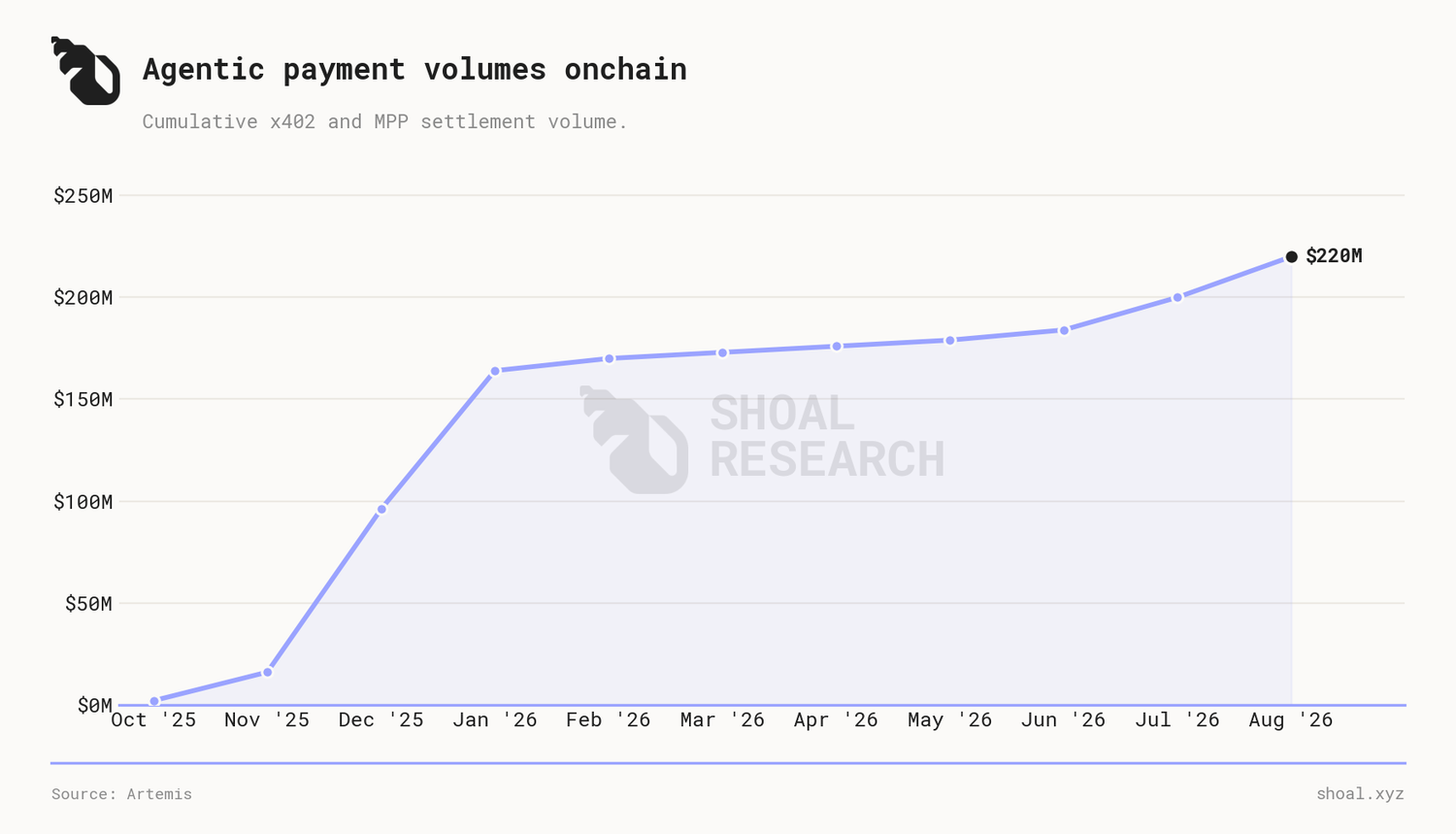
On June 15, 2026, Amazon Web Services (AWS) natively integrated the x402 protocol into CloudFront and its Web Application Firewall. This configuration enables roughly a quarter of the internet to activate automated agent billing directly from existing cloud consoles, delivering content to paying bots. Cloudflare followed suit: its initial Pay-Per-Crawl V1 required Cloudflare to act as a record merchant processing payments via Stripe, while the new Cloudflare Monetization Gateway completely removes Cloudflare from the payment loop, routing payments peer-to-peer directly to the seller's wallet.
The primary distinction between closed markets and open protocols lies in who is permitted to purchase access to web content. Under closed markets, access is restricted to curated whitelists; AI bots must sign corporate contracts manually with parent companies and pass background checks on intermediary platforms before purchasing content. In open protocol modes, access is fully automated and permissionless; any software program on the internet can instantly purchase and download data, provided its auto-billing account can settle the requested microfee on the spot. As these systems propagate through internet routing networks, publishers face a choice between two infrastructural options. Closed markets serve enterprises prioritizing strict security compliance, legal indemnification, and curated enterprise partnerships. Conversely, open protocols serve automated workflows requiring frictionless micropayments, enabling diverse independent developers and publisher ecosystems to exchange data programmatically without administrative barriers.
What AI Crawlers Actually Encounter Today
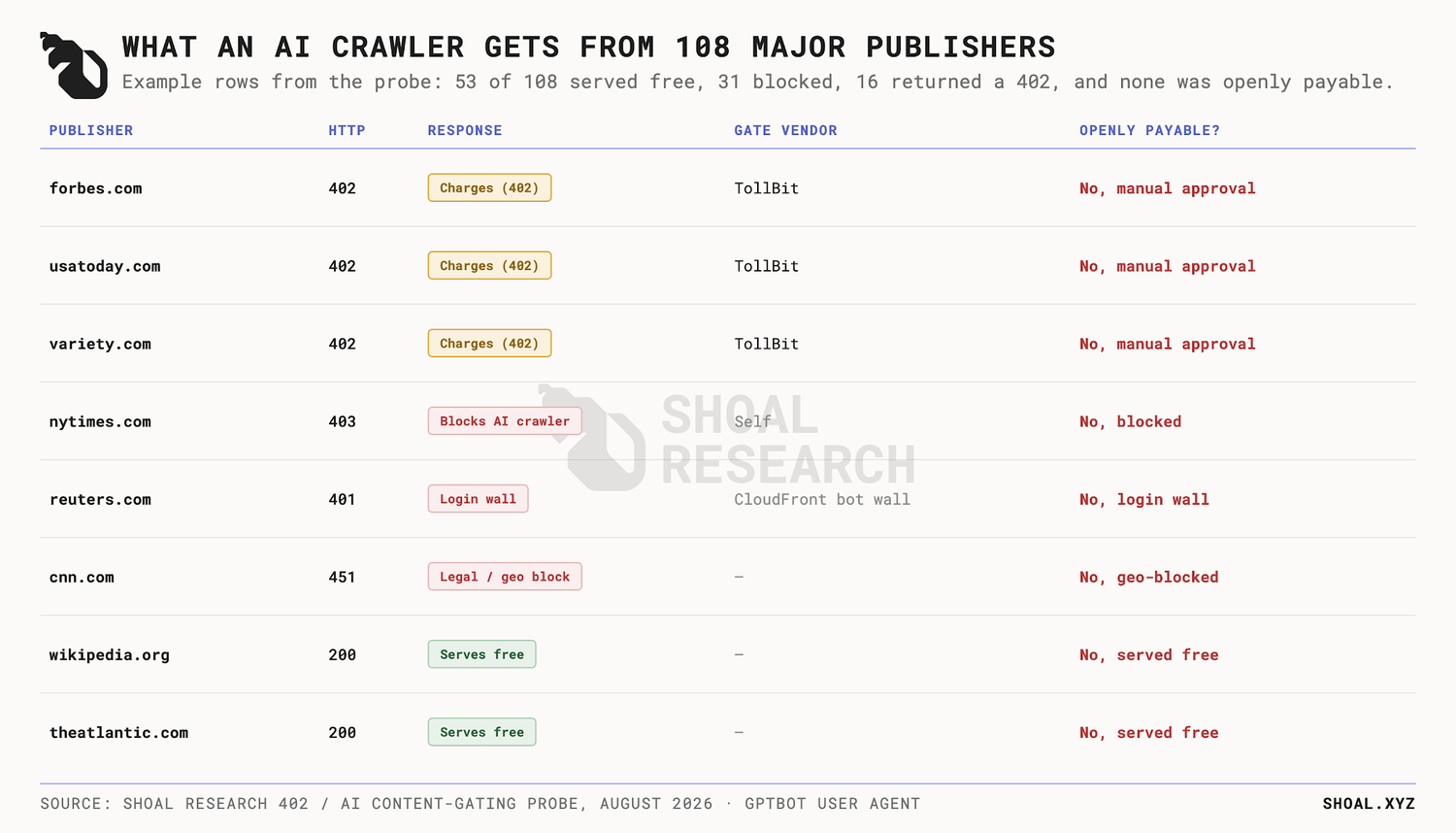
To measure the actual coverage of the pay-per-request network, Shoal Research probed 108 major publisher and consumer websites posing as an AI crawler (GPTBot) on August 19, 2026. The sample has since expanded from 108 to 500 domains. The following results describe the initial August operation. For each request, we logged status codes, redirect chains, response headers, and challenge bodies, computing SHA-256 hashes to ensure data integrity throughout the crawl run. Endpoints were classified as x402-payable or agent-payable if and only if their HTTP 402 responses returned parseable payment parameters in the Payment-Required / X-Payment-Required header or a valid x402 JSON challenge payload.
Among the 108 publishers, the network adopted three primary stances:
Free-to-access (49.1%, n=53): 53 domains openly served their homepages with HTTP 200 OK, allowing unrestricted extraction.
Boundary-blocked (33.3%, n=36 total): 31 domains returned HTTP 403 Forbidden, two required authentication (HTTP 401), two rejected content negotiation (HTTP 406), one returned a legal block (HTTP 451). Additionally, 3 publishers timed out after multiple attempts.
Returned HTTP 402 (14.8%, n=16): Exactly 16 publishers returned the HTTP 402 Payment Required status code.
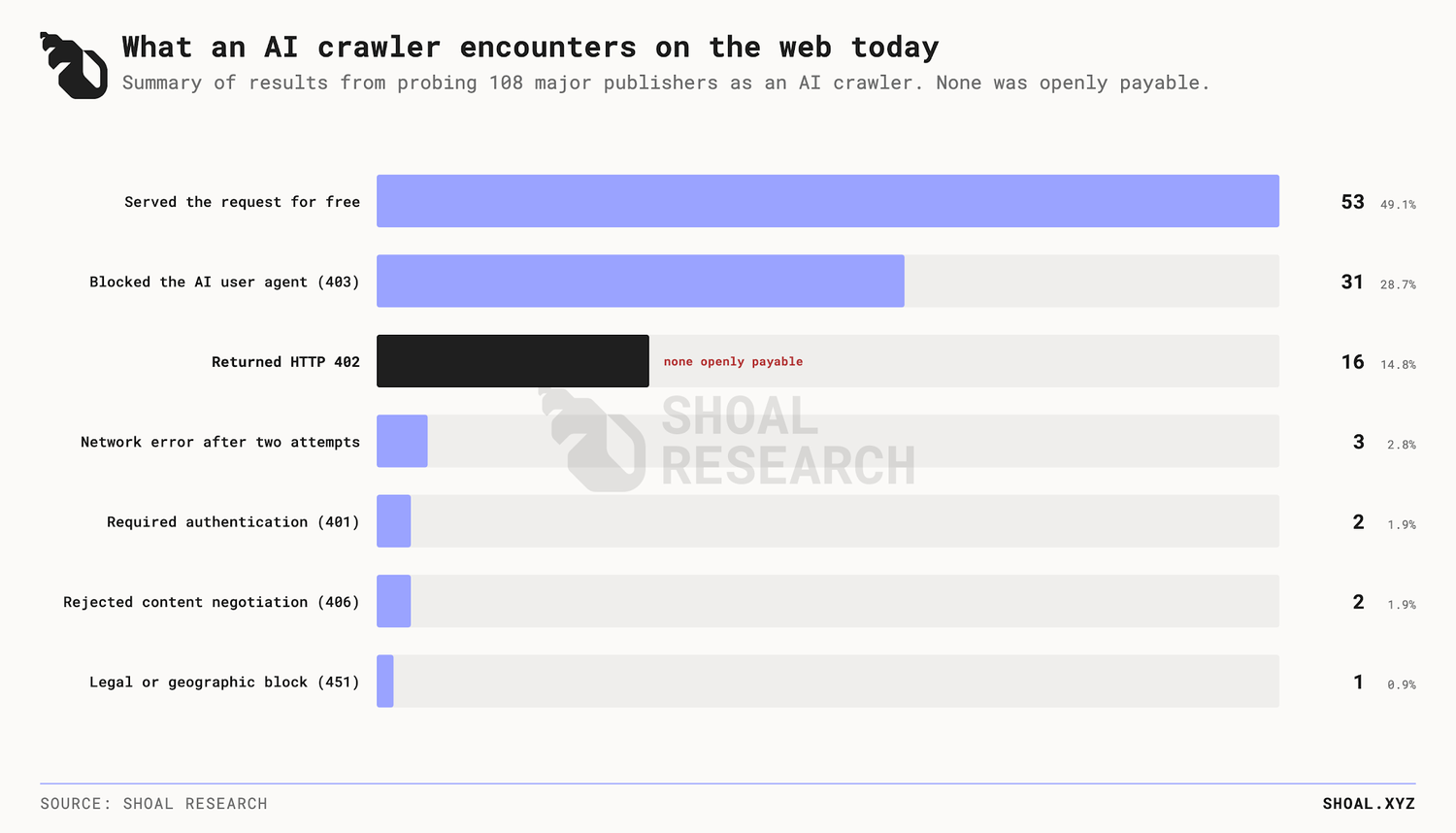
Critically, not a single publisher in the dataset returned an open, machine-payable challenge.
Of the 16 HTTP 402 responses, 10 redirected to the TollBit Bot Paywall, while 6 returned static HTML licensing contact forms. A secondary check using authenticated developer keys on all 13 TollBit-managed publishers in the baseline dataset returned HTTP 403 across every rate query. API payloads explicitly indicated content providers had disabled programmatic access and were not returning per-crawl rate fees.
One interpretation of these results is that TollBit acts as an early AI partner for traditional publishers, helping them test and understand usage-based billing for content while still providing the control and security associated with gated agent access. A system requiring manual developer registration, proprietary API keys, and enterprise whitelisting struggles to scale to the unprecedented volume of autonomous agents navigating dynamic network paths; instead, it functions as a transitional measure aimed at protecting traditional revenue streams while waiting for permanent machine-native settlement standards to crystallize. We are still in the early stages, and providers like TollBit are likely trying to figure out how to balance access, licensing, and autonomy inherent to such services.
We also pulled the full Coinbase CDP registry on August 19 to understand who is actually using x402 and which services are running on the network. Claiming over 15,000 endpoints, with hundreds in active use,
Mainstream content publishers have yet to adopt x402, but beneath this absence, an active supply-side market has formed. While consumer media hasn't aggressively integrated, developer tools, specialized data vendors, and agent networks have rapidly deployed open machine-payment endpoints. Recognizable names in the x402 ecosystem include data APIs like Tavily, Nansen, CoinGecko, Chainlink, Apify, and Browserbase, plus recently Ramp. Top service providers on x402 include ChatGPT, Claude, TripAdvisor, and Perplexity, though no major content publishers are present.
15,073 active endpoints indicate that software is actively pricing and selling programmatic access to other software on open public rails. Some tracking entities report endpoint counts reaching 50,000 when bundled marketplaces are included. However, these endpoints remain strictly concentrated on scraping, AI tool invocations, and real-time data feeds; cross-referencing the entire registry with mainstream consumer media and publisher domains (The New York Times, Reuters, ESPN, Wikipedia) yielded zero matches. We anticipate this will change slowly but surely, as market adoption typically requires a prominent institution to kickstart the momentum. Historical shifts in network monetization often follow single incumbents breaking the status quo: The New York Times launched metered paywalls in 2011; the Associated Press pioneered commercial AI data deals in 2023, triggering chain reactions from News Corp to Time Inc. to Condé Nast. Therefore, we expect rapid market-wide follow-on adoption once the first tier-one publisher prices access on open protocols like x402 or MPP.
Challenges of the Open Protocol Approach
Infrastructure for open pay-per-request protocols is operational, but the market itself remains nascent. The technical pipelines for open payments are actively deploying: publishers possess machine-readable rights frameworks like RSL, hosting and routing gateways in AWS CloudFront and Cloudflare can bill at the millisecond level during requests, settlement rails span credit cards to digital assets and stablecoins, all universally accessible via protocols like x402 and MPP. The largest remaining barrier to active adoption sits entirely on the demand side.
First, no major AI lab routes production crawler traffic to consumer-grade web content through open machine-payment rails. We identify three primary reasons. One, crawlers lack integrated wallets, automated procurement budgets, and crucially: commercial obligations to actually pay for requested content. As our crawler probes revealed, much of the web remains entirely permissionless, meaning agents blocked by HTTP 402 can simply discard that URL and extract nearly identical content at zero cost from open, unconstrained competitors. Legal environments reinforce this dynamic: under federal rulings like Judge William Alsup's decision in Bartz v. Anthropic, courts have determined ingesting lawfully accessible works to train AI models constitutes transformative fair use. While Alsup penalized hoarding illegally acquired pirated datasets, training on content accessible on the open web carries no copyright liability. Because extracting public web text is legally free, AI labs lack commercial incentives to voluntarily pay open microfees.
How AI Search Providers Handle Compensation
Production adoption remains limited, but AI search providers are beginning to treat compensation as integral to product design.
In an unpublished Shoal Signal interview, Parallel's lead deployment engineer Son Do described Index, a program that directly partners with publishers to measure each source's contribution to an agent's final answer and shares revenue accordingly. Do expects publishers and other data providers to shift toward usage-based models, with agent payment rails supporting a high volume of microtransactions. Index indicates compensation is entering the design phase of AI search and retrieval products, though it hasn't yet become standard procurement behavior for major AI labs.
Beyond the lack of legal and economic obligation, existing open payment protocols suffer a structural flaw: they meter the wrong part of the pay-per-request cycle. They charge for the initial HTTP fetch rather than downstream inference—the moment the model synthesizes ingested knowledge to answer the user prompt. Charging less than a cent for fetching raw HTML fails to compensate creators if the AI model absorbs that reporting once and reproduces it across millions of user answers. While frameworks like RSL define options for pay-per-inference, network-level gateways like Cloudflare or AWS cannot inspect underlying neural network weights to cryptographically verify which training documents generated specific output tokens. Cloudflare's July 2026 pilot with Ceramic.ai and You.com precisely highlights this technical bottleneck. The initiative attempted to move away from pay-per-fetch models, testing a "pay-per-query" approach that compensates publishers only when their text is actually cited in a user-facing AI response. While correctly targeting the moment of value creation, network-edge providers like Cloudflare sit outside AI servers, meaning Cloudflare cannot independently verify which sources a model references during generation, forcing the system to rely on AI companies to self-report citations and owed amounts, regressing to an honor system.
Another fundamental challenge facing open protocols is that you cannot truly prevent AI crawlers from paying a one-off microfee for content, writing the text into their internal cache or memory, and then serving that data indefinitely. Nor can you stop AI crawlers from doing this repeatedly across thousands of different sites and publishers. As Brendan Ryan, co-author of Tempo's MPP, argued in our conducted Shoal Signal interview, a seller's ability to charge depends heavily on whether their information is unique, timely, and resistant to caching.
This limitation hits static creative works and reporting hardest. Static text loses economic value almost immediately after publication, even when collected via AI retrieval mechanisms. Once an AI model reads an investigative piece, historical article, or press release, that information is absorbed into the model's memory. The model can forever answer questions using those facts without revisiting the original site. Therefore, software tools simply packaging public web text with AI interfaces will see profits vanish rapidly, as competitors will build identical crawlers atop the same free information.
The underlying rule is therefore simple: static data loses pricing power almost instantly, while dynamic and non-scrapable information retains payability. Since AI models can read an unpaid article or historical report once and permanently store that knowledge in weights, pay-per-request microfees cannot sustain businesses relying on static text; continuous payment only works for information requiring perpetual production and verification. We categorize this into three primary content types:
First, real-time, ephemeral states, including live order books, sub-second financial pricing, breaking news telemetry, and IoT sensor data streams. AI models cannot answer queries about the world's current state from training weights months old or outdated caches; they must make a new, paid API request to the source server at that precise moment to fetch current reality.
Second, proprietary offline data that never touches the open network. Take private market intelligence, for example: historical funding rounds and executive changes published in press releases are swiftly scraped and commoditized by low-cost competitors. True pricing power belongs to providers conducting firsthand human research, such as directly collecting non-public cap table terms, private transaction valuations, and verified LP allocations through confidential relationships with fund managers. Because this data is never indexed on public URLs, automated crawlers cannot bypass paywalls or extract it for free.
Third, distinct human voice and brand reputation. As media strategist Ashni Christ noted on Shoal Signal, a censored or taken-down generic news aggregation feed will instantly be replaced by an identical automated scraper, leaving audiences unaffected. But when a genuine analyst, investigative journalist, or creator with established viewpoints stops publishing, readers notice immediately and seek replacements. Live interviews, subjective analysis, and direct engagement cannot be pre-computed by LLMs, cached, or replicated from static training sets, making real-time information flows, private offline records, and personal perspectives the only reliably pricable assets.
Conclusion
The internet is crumbling, or at least it appears so.
Humans built and interconnected the world's computer and software networks to accelerate communication and coordination among themselves. Decades ago, each subsequent technological layer aimed to make this exchange faster and more efficient, eventually giving rise to software built for large-scale automation. Generative AI handed this automation capability directly to hundreds of millions of people overnight. But as automated software takes over the web, it is fundamentally altering how information is discovered, synthesized, and consumed. The most severe consequence of this shift is economic: monetizing web traffic through ad impressions and human-curated recommendations that sustained the open internet for the past three decades is no longer viable; hence, we are now witnessing the emergence of a pay-per-request internet.
The two distinct paths forward tell an old story in the net world: centralized, closed-source intermediaries offering fiat billing, turnkey compliance, and familiar enterprise onboarding, but bringing platform lock-in and licensed gatekeeping; versus open protocols providing permissionless access and programmatic micropayments via stablecoins, though they still feature gaps in enterprise distribution, inference attribution, and, most critically, practical publisher adoption.
After personally testing the state of the pay-per-request internet, we find the infrastructure and supply-side of open payment protocols are ready. Open protocols like x402 are already actively driving functional markets for data collection, tool invocations, AI inference, and real-time data feeds, yet remain unsupported by mainstream online publishers. Platforms like TollBit are currently marketed as programmatic monetization markets, but data shows publishers are merely using them as temporary shields to block scrapers and funnel AI labs into private offline deals.
This tells us that declaring either closed markets or open protocols the ultimate "winner" is premature. In fact, why must it favor one side? The future very likely encompasses both paths, serving different clients and use cases. Stablecoins will be actively used alongside prepaid credits, subscriptions, and traditional invoices. This contest is far from the zero-sum game some believe or at least claim. Not for now, anyway.
Nevertheless, although the internet sits at an inflection point, it's easy to make forward-looking predictions about its trajectory. It's important to zoom out and remember the web has only existed for 30 years, continuously evolving throughout. Whether the emerging pay-per-request internet converges on closed markets or open protocols in payment infrastructure, one possibility always remains: further developments in this active, well-funded AI sector could render both paths obsolete, paving the way for an entirely new, unexplored path. For now, we believe it's more probable to see wider simultaneous adoption of both open protocols and closed markets, each serving distinct segments and use cases. However, like any forward-looking judgment, only time will tell.
The collapse of old contracts may ultimately forge a healthier web, yet simultaneously raise global information acquisition costs for those who never had funds to pay per-use fees or utilize agents. Direct machine payments, however, could offer publishers a monetization path for machine usage independent of ad reliance or platform-controlled recommendations. The outcome will depend on whether these new rails remain open to independent publishers or become yet another layer of gatekeepers.
Join TechFlow official community to stay tuned
Telegram:https://t.me/TechFlowDaily
X (Twitter):https://x.com/TechFlowPost
X (Twitter) EN:https://x.com/BlockFlow_News
 @Shoalresearch