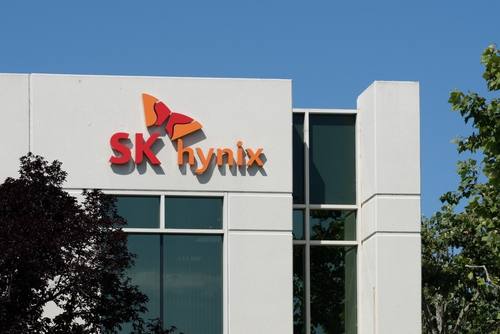
Goldman Sachs Research Report Analysis: SK Hynix's 40 Trillion Won Buyback Is Just the Beginning, the Next 70 Trillion Is on the Way
By: Rita
SK Hynix believes its stock price is severely undervalued.
After hours on August 19, the company announced a stock buyback and cancellation plan of 40 trillion won (approximately $28.3 billion), equivalent to canceling about 3.3% of outstanding shares. The buyback will commence on August 20 and be completed within three months. In a subsequent research report, Goldman Sachs maintained a Buy rating and a target price of 3.5 million won, indicating 133% upside potential compared to the current 1.5 million won.
Goldman Sachs believes this is just the beginning. The company hinted that this is not a one-time event; there will be more shareholder return measures to follow, including buybacks and dividends. Detailed plans will be announced at the Q3 earnings conference at the end of October. Goldman Sachs calculates that within the framework of cumulative free cash flow of 252 trillion won from 2025 to 2027, SK Hynix may ultimately return about 140 trillion won to shareholders. After deducting the current 40 trillion won buyback and approximately 30 trillion won in dividends, there remains about 70 trillion won of additional buyback capacity.
40 Trillion Won Buyback Is Just the First Move
SK Hynix stated bluntly in the announcement: the current stock price fails to accurately reflect the company's value.
The 40 trillion won buyback scale, based on the closing price on August 18, can cancel about 24 million shares, far exceeding the 17.7 million share dilution effect brought by the recent ADR listing. The net number of circulating shares will be substantially reduced. The buyback window is only three months, with no upper limit on daily purchase volume. This "fast-strike" mode itself carries strong signal significance.
More critical is the management's timing statement. Goldman Sachs pointed out that the market previously expected the company to announce a new shareholder return plan between late August and early September. This August 19 announcement came earlier than expected. Early action usually means management has a strong consensus on the degree of undervaluation of the current valuation.
Shareholder Return Rate Will Double
The upgrade magnitude of the shareholder return policy also exceeded expectations.
The company's previous shareholder return policy was to use 50% of the cumulative free cash flow from 2025 to 2027 for returns. The new policy raises the target to "minimum 50%", which means actual execution may be higher than 50%. Goldman Sachs assumes about 55% of free cash flow will be used for shareholder returns, corresponding to about 140 trillion won.
Breaking down the use of this 140 trillion: 40 trillion is for this buyback, about 30 trillion is for cumulative dividends in Goldman Sachs' model, and the remaining about 70 trillion will continue to be executed in the form of additional buyback cancellations during the current policy period. Calculated based on current market cap, this means shareholder return rates for 2026 and 2027 will be approximately 3.5% and 8% respectively.
SK Hynix is also considering expanding dividends, including fixed dividends and special dividends. Specific plans will be announced at the end of October.
Memory Upside Cycle Provides Cash Flow Support for Buyback
The premise for buybacks and dividends is that the company has sufficient free cash flow.
Goldman Sachs predicts SK Hynix's cumulative free cash flow from 2025 to 2027 will be about 252 trillion won. This figure is built on the basis of a strong upside cycle for memory chips. Goldman Sachs' forecast for the company's operating profit in 2026 is 265.5 trillion won, rising further to 391.7 trillion won in 2027.
The tight supply and demand pattern of DRAM and NAND provides the profit foundation. Goldman Sachs expects the company's operating profit margin to reach as high as 76.8% in 2026 and 78.4% in 2027. At such profit levels, the 40 trillion won buyback is equivalent to only about two months of free cash flow. Goldman Sachs has raised its earnings per share forecasts for 2026 to 2028 by 4%, 10%, and 10% respectively, to reflect the share reduction brought by buyback cancellations.
Buybacks are positive, but the intensity of the positive impact depends on the sustainability of the cycle. If the market interprets the large-scale buyback as "the final signal before the cycle peaks," it may instead trigger opposite trading behavior. Goldman Sachs' target price of 3.5 million won corresponds to an average P/E ratio of about 8 times for 2026 to 2027. The current stock price of 1.5 million won corresponds to a 2026 P/E ratio of about 3.8 times and about 3.0 times for 2027. Even if the buyback-driven EPS upward revision has been partially priced in, this valuation level remains at the lower limit of the historical range.
On the premise that the memory chip upside cycle has not yet been falsified, SK Hynix's fundamental logic is clear. Goldman Sachs' core judgment is: if free cash flow is realized as expected, this 40 trillion won buyback is the beginning of a long cycle of shareholder returns, not the end.
Disclaimer
This article is a compilation and interpretation by TechFlow Research of a third-party broker research report (Goldman Sachs, August 19, 2026), combined with organized public market information. The ratings, target prices, earnings forecasts, and related judgments cited in the text are the views of the broker's analysts, representing only their affiliated institution's stance, not representing the views of TechFlow Research, nor constituting any investment advice.
The market carries risks; decisions must be independent. This article should not be used as a basis for buying or selling any securities.
Join TechFlow official community to stay tuned
Telegram:https://t.me/TechFlowDaily
X (Twitter):https://x.com/TechFlowPost
X (Twitter) EN:https://x.com/BlockFlow_News
 @chaoxiangooo