
Bitcoin Falls Back to Key $60,000 Support Level, Where Does the Selling Pressure Come From?
TechFlow Selected TechFlow Selected
Bitcoin Falls Back to Key $60,000 Support Level, Where Does the Selling Pressure Come From?
US-Iran conflict drives up oil prices, Japanese government bond yields surge to 30-year highs, Strategy sells Bitcoin again... Under multiple pressures, BTC's 60K support level is in peril.
 Navigating Web3 tides with focused insights
Author: Marcel Pechman
Translation: TechFlow
TechFlow Editor's Note: On July 8, Bitcoin fell 3.5% intraday. The collapse of the US-Iran ceasefire agreement pushed Brent crude to $74, Japanese government bond yields touched a 30-year high, and Strategy reduced BTC holdings by another $216 million outside its core sell-off plan, with multiple bearish factors combining. Traders are already preparing for a break below $60,000.
On Wednesday, July 8, Bitcoin fell 3.5%. New developments in US-Iran hostilities pushed oil prices higher, and the Japanese bond market came under pressure again—these two factors combined triggered collective de-risking operations across markets. At the same time, concerns intensified that Strategy might continue selling Bitcoin, and traders are now preparing for the possibility of a break below $60,000.
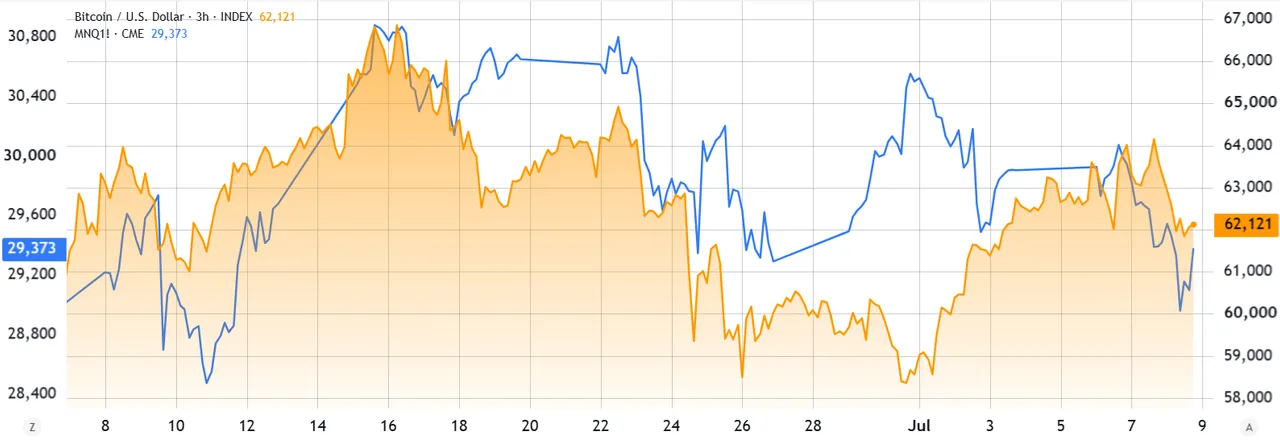
Bitcoin failed to break through $64,500 on Monday, coinciding with the downward trend of the tech-heavy Nasdaq index. However, when stocks partially recovered losses on Wednesday, Bitcoin failed to rebound from the $62,000 level. This relative weakness suggests that other factors may be independently suppressing the crypto market.
Brent crude surged from $68 the previous week to $74, catalyzed by the formal collapse of the US-Iran memorandum of understanding and rising risks of energy supply disruption. After the US launched strikes on Iranian targets citing ship attacks, President Trump declared the agreement "over".
Rising energy costs directly translate into broader inflationary pressure, reducing the likelihood of a Fed rate cut in the near term and compressing the room for economic stimulus plans.
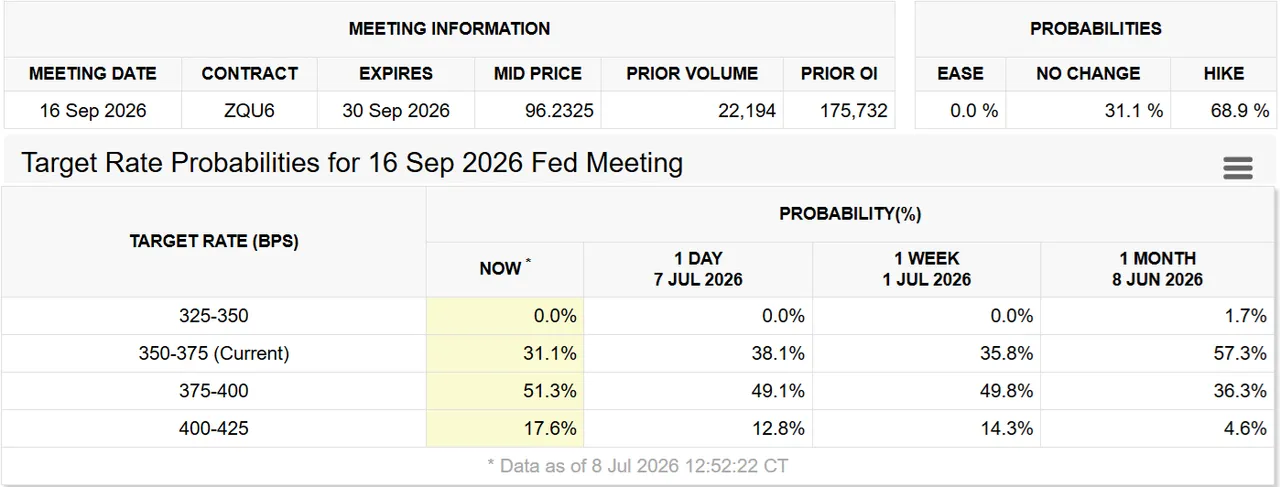
Traders are currently pricing a 69% probability of a rate hike in September, compared to only 42% a month ago. This environment puts heavy pressure on risk assets, and Bitcoin has not yet been widely recognized as an effective hedge tool.
Global Economic Uncertainty Rises Again, Strategy Sell Pressure Adds Fuel to the Fire
Adding to market caution, Trump demanded the termination of US-Spain trade at the NATO summit, calling this key ally "a wasted cause", citing Spain's failure to meet new defense spending targets. Such trade friction could slow down global economic activity and amplify concerns of economic contraction.
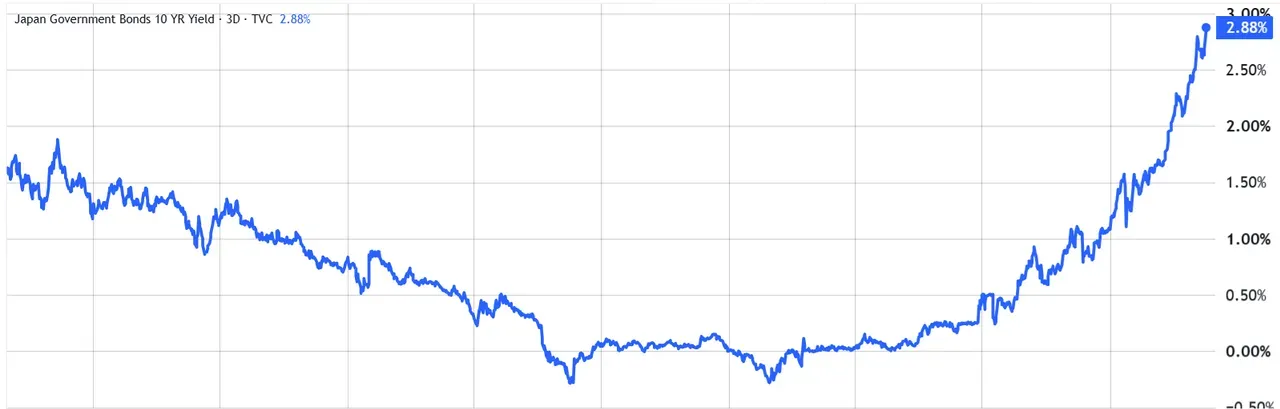
Japan 10-Year Government Bond Yield. Source: TradingView
In Japan, government bond yields surged to a 30-year high, reflecting market concerns over the loss of central bank independence—the Japanese government is attempting to adjust the central bank's policy goals to "achieve a stronger economy". Japan is the largest overseas holder of US Treasury bonds, which further amplifies global contagion risk.
The latest round of Bitcoin sales announced by Strategy (MSTR US) on Monday, totaling $216 million, further surprised the market. The nature of this sale is very subtle: it occurred outside the company's core $1.25 billion "Monetization Program". According to the company's 8-K filing, funds raised from this program are only used to replenish cash reserves, and this sale is not included in this.
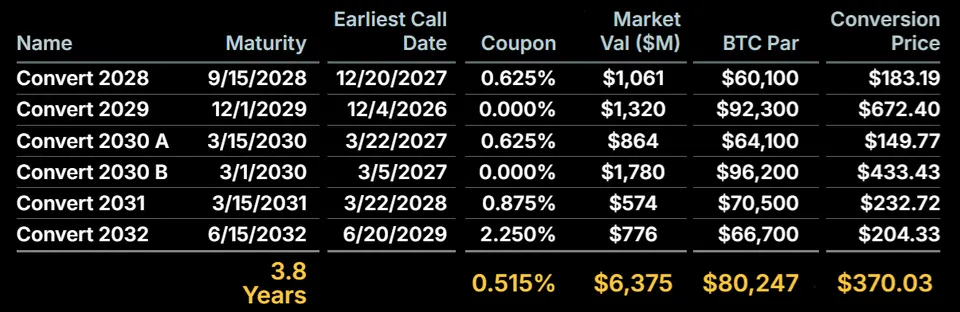
Investors are now worried that Strategy will face continuous sell pressure in the process of managing its capital structure and debt obligations, with annual dividends alone amounting to as high as $1.76 billion. Strategy also holds over $3.8 billion in convertible bonds, with the earliest redemption date before April 2027.
At the regulatory level, documents show the Indian Central Bank strongly supports policy directions tending towards banning crypto activities, including prohibiting banks from having any exposure to virtual assets to maintain financial stability. Indian tax authorities also additionally emphasized tax evasion risks.
Signals of tightening global regulation add another layer of pressure to Bitcoin price and market sentiment. Bears still control the situation, and risk appetite continues to shrink due to geopolitical turmoil, the Fed's possible shift to a tighter monetary policy stance, and Strategy's continuous cash flow needs.
Market sentiment is highly likely to remain fragile in the short term, and a retest of the $60,000 support level seems increasingly unavoidable in the near term.
Join TechFlow official community to stay tuned
Telegram:https://t.me/TechFlowDaily
X (Twitter):https://x.com/TechFlowPost
X (Twitter) EN:https://x.com/BlockFlow_News
 @Cointelegraph