








The Art of Arbitrage: The Ultimate Skill of Crypto Founders
TechFlow Selected TechFlow Selected
The Art of Arbitrage: The Ultimate Skill of Crypto Founders
Tether and Circle’s enduring success conceals a covert arbitrage strategy.
 Navigating Web3 tides with focused insights
Author: Yuan Han Li, Partner at Blockchain Capital
Translated by: Luffy, Foresight News
Tether’s current daily settlement volume exceeds that of most traditional payment networks. Its success stems from fulfilling a demand that banks universally avoid: an on-chain, 24/7 operational, fully unpermissioned U.S. dollar-pegged stablecoin.
When Bitfinex launched USDT in 2014, its original purpose was strictly inter-exchange fund transfers—bypassing banking channels altogether. This model proved highly successful: USDT became the core trading pair for spot and perpetual contracts across all major centralized exchanges, deeply embedded into their underlying infrastructure. Even Binance once attempted to develop its own stablecoin to replace USDT—but ultimately failed.
The emergence of TRON later reshaped the landscape. Low transaction fees enabled USDT to become the de facto U.S. dollar asset for everyday users across Latin America, Sub-Saharan Africa, and Southeast Asia. Initially designed for exchange liquidity flows, USDT unexpectedly attracted another core user base: ordinary citizens in high-inflation economies urgently seeking dollar-denominated assets for wealth preservation. Tether built a financial infrastructure—but ended up serving a demographic it never anticipated. Today, it ranks among the world’s largest institutional holders of physical gold.
Technology itself is secondary; what truly matters is the massive gap between market demand and traditional banks’ service capabilities. None of the industry’s leading crypto-native enterprises succeeded without first seizing such supply-demand mismatches, building self-reinforcing growth flywheels, and establishing dominance before traditional incumbents could fill the void.
This business model has a more precise definition: arbitrage—not narrow financial price arbitrage, but rather identifying large-scale, persistent, and structurally entrenched gaps across markets and regulatory regimes—gaps too complex or slow for traditional giants to close immediately—and then leveraging those gaps to build growth flywheels. The final step is converting short-term gains into durable, long-term competitive moats before the window closes.
A complete arbitrage path comprises three stages: identifying supply-demand gaps, constructing growth flywheels, and achieving mature business transformation. Most teams in the crypto space successfully execute the first two stages—but the third remains the hardest.
Stages one and two require deep fluency in crypto-native capital markets—understanding capital flows and how various products attract liquidity. Stage three demands mastery of an entirely different system: compliance frameworks, institutional trust, consumer-grade product standards, and collaboration with banks and fintech partners. Founders who successfully navigate all three phases are “bilingual”: equally fluent in crypto capital markets and adept at interpreting traditional finance and mass-market rules. Such individuals are exceedingly rare—but they alone can build enduring, cyclical-resilient enterprises.
Cold Start: Leveraging Crypto-Native Momentum to Build Growth Flywheels
The first two stages of arbitrage—gap identification and flywheel construction—hinge on deep crypto-market understanding; this is simply how the industry operates. Between 2022 and 2023, 76.9% of North American crypto transaction volume came from single transfers exceeding $1 million; on Polymarket, users with cumulative trading volumes above $50,000 ranked within the global top 5%. Crypto users cannot be equated with ordinary consumers—the ecosystem is fundamentally a capital market where whales, market makers, and professional trading firms treat platforms as core financial infrastructure. As a result, moats form later and erode faster in crypto; truly durable barriers take years to solidify—even if underlying code is replicable, the moat itself is not.

Market share of leading enterprises across crypto sectors. Source: decentralised.co
Projects launch with no long-term moats whatsoever—initial traction relies solely on community awareness and accurate anticipation of capital flows. Cold-start dynamics frequently intertwine three core drivers, each testing founders’ understanding across distinct dimensions of the crypto market.
Speculative Demand: The Industry’s Most Prevalent Cold-Start Engine
Industry discourse often swings between two extremes: uncritical hype around speculation, or moralistic condemnation thereof—both views are flawed, with the latter proving especially damaging. Objectively, speculation has been crypto’s most consistent cold-start engine to date.
Tether’s origins were entirely rooted in servicing speculative capital flows among exchanges.
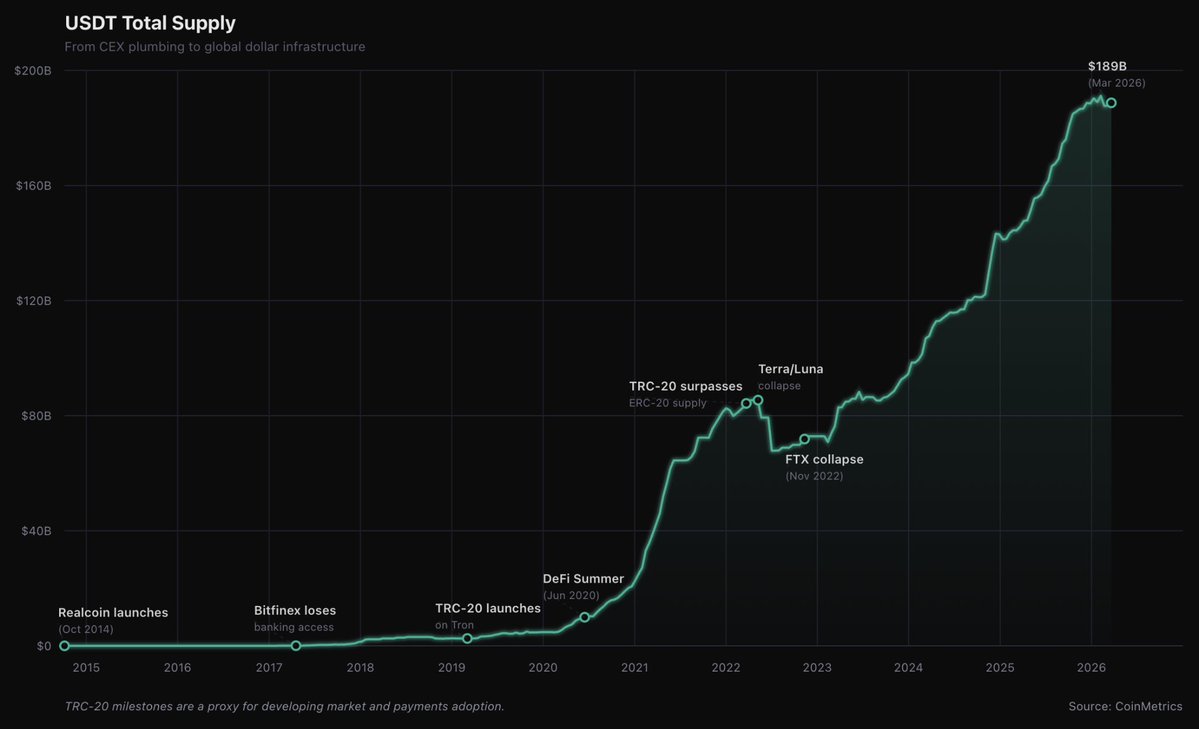
Circle capitalized on the DeFi summer boom, when liquidity mining users desperately needed a trusted stablecoin to swap for governance tokens. Though everyone knew most mining tokens would eventually collapse to zero, demand for a compliant, on-chain U.S. dollar stablecoin surged unprecedentedly. Circle didn’t forecast the DeFi wave—it simply launched a compliant, transparent, and comparatively “conservative” product early. When the wave hit, it was perfectly positioned to absorb market trust.
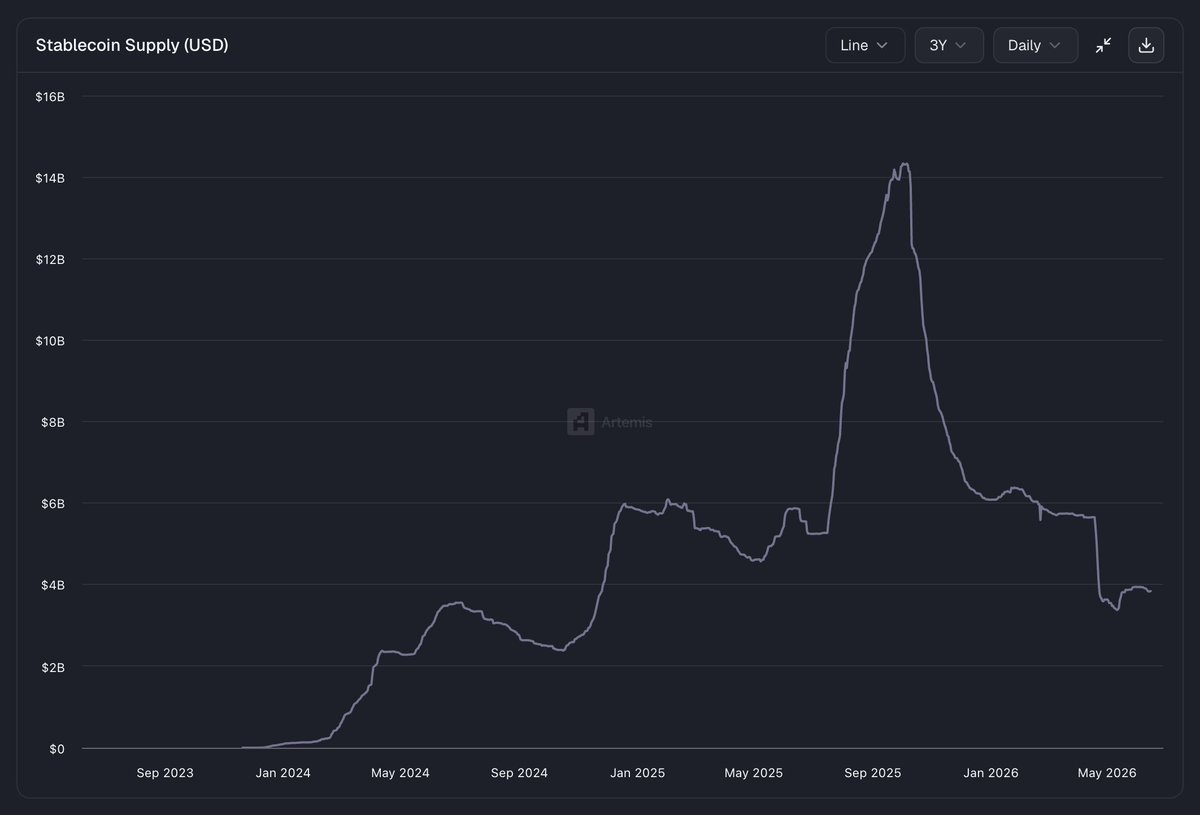
Ethena carved out yet another user segment: yield-seeking capital. Its synthetic dollar, USDe, generates returns via basis arbitrage between spot and perpetual futures contracts. At its peak, USDe’s locked value reached $14.5 billion—making it the world’s third-largest stablecoin—and it has generated over $480 million in cumulative fee revenue. This cold start relied entirely on crypto-native financial engineering—its expansion speed stands nearly unmatched in DeFi history.
Yet not every project launches on speculation alone.
Essential Demand: Cryptographic Products Spreading Where Traditional Finance Fails
When existing financial systems impose prohibitive costs or exclude broad populations, essential demand directly drives adoption: hyperinflationary economies, expensive cross-border remittance corridors, or populations unable to open U.S. dollar savings accounts. When pain points are visceral enough, no market education is required—only a functional transfer and savings channel. RedotPay exemplifies this: founded mid-2023, this crypto payments card company surpassed $150 million in annualized revenue by end-2025, offering a digital-banking-like interface enabling users to hold and spend stablecoins.
Such models cannot be conjured abstractly from Manhattan or London offices—they demand on-the-ground immersion to uncover real needs. The same product may be a novelty to Manhattan residents, yet a lifeline for ordinary people unable to access dollars or obtain usable bank cards. That disparity defines the arbitrage opportunity.
RedotPay’s core advantage lies in its team’s dual fluency: crypto on-chain rails and emerging-market offline distribution channels. Its user retention is higher because users aren’t chasing short-term yields—they’re solving persistent, inescapable financial pain points.
Subsidy Incentives: Token Rewards and Airdrops for User Acquisition
Subsidies can sustain early trading volume before organic demand materializes; activity driven purely by subsidies can appear indistinguishable from genuine market demand—until subsidies end. Yet well-designed, quantifiable incentive mechanisms accelerate authentic demand discovery—not just artificial froth.
Hyperliquid stands as a recent benchmark in subsidy-driven operations. Large-scale point campaigns and token airdrops attracted massive trader participation—but its underlying product delivers industry-leading performance: ultra-low latency, deep liquidity, and a trading experience rivaling centralized exchanges. Subsidies served merely as the entry ticket; superior product quality retained users. Post-incentive trading volume didn’t decline—it continued rising steadily.
All three drivers initially attract crypto-native participants. Even essential-demand products targeting emerging markets route funds through exchanges, wallets, and on-chain protocols before reaching end users. Virtually every successful crypto enterprise’s early growth depends on understanding crypto capital markets’ operational logic; without that knowledge, cold starts amount to blind groping.
But crypto-market fluency alone is insufficient for mature business transformation.
Mature Transformation: From Crypto Natives to Mass Markets
Executing a cold start is already difficult—and most companies fail here, unable to transcend crypto-native traffic and achieve sustainable, mass-market profitability. Every enterprise referenced in this article has confronted the same ultimate question: When core users extend beyond crypto professionals, does the product retain meaningful value?
Many teams triumphantly complete cold starts—yet still falter.
Cold-start operating principles—rapid iteration, community-centric development, and lightning-fast launches—become liabilities during transformation. New user segments expect standardized customer support, minimalist UIs, and compliance as baseline requirements; growth channels shift from token airdrops and community marketing toward bank partnerships, fintech integrations, and merchant alliances; revenue quality outweighs raw trading volume; and overall operations demand stable, predictable workflows—none of which matter in early-stage startups.
Circle exemplifies successful transformation. Years before the full federal stablecoin regulatory framework materialized, Circle invested heavily in building robust compliance infrastructure and mastering institutional finance language—while the broader crypto industry remained inwardly focused. With the July 2025 enactment of the GENIUS Act—the U.S.’s first comprehensive federal stablecoin framework—Circle’s earlier “conservatism” revealed itself as visionary foresight. It completed an IPO on the NYSE, posted $2.7 billion in annual revenue, and achieved $75 billion in USDC circulation. Speculative capital remains—but it’s no longer the entire business.
Ethena now sits in an uncertain transitional phase. By end-2025, basis yield narrowed sharply, causing its total value locked (TVL) to nearly halve. Its cold start relied entirely on one mechanism: spot-perpetual basis arbitrage. Its core transformation challenge is diversifying away from singular yield sources. Ethena is concurrently launching multiple initiatives: compliant packaged products for institutional yield distribution; USDtb—a stablecoin issued via BlackRock’s BUIDL Fund; HyENA—a perpetual futures exchange built atop Hyperliquid; and Stablecoin-as-a-Service, enabling other ecosystems to issue tokens. Its reserve composition has dramatically shifted: perpetual contract collateral’s share of USDe reserves fell from 93% to under 5% by mid-2026. Whether these new lines can scale sufficiently to replace the original growth engine remains unproven—but the direction is unmistakable: Ethena is actively internalizing traditional finance rules, even as its window narrows.
“Monolingual” failure (note: in this article, “monolingual” means exclusively crypto-focused while ignoring traditional finance; “bilingual” means fluent in both) is foreseeable—and many teams fall into these traps:
- 1. Mistaking subsidy-fueled transaction volume for genuine product-market fit;
- 2. Founders unable to simplify product logic for mainstream users;
- 3. Compliance efforts perpetually deferred—until regulatory subpoenas arrive;
- 4. Persistent user attrition, while hiring, performance evaluation, and product roadmaps remain unchanged.
A subtler monolingual mindset exists: founders skipping crypto cold starts entirely and launching crypto products directly to mass audiences—then wondering why nobody uses them. Cold starts are the ignition phase—non-negotiable. Yet continuing to optimize solely for ignition mechanics after successful ignition leads equally to stagnation. Both types of teams are “monolingual”—just fluent in different systems.
Not every sector offers arbitrage opportunities. Repeated attempts to tokenize Manhattan commercial real estate have failed across cycles: neither crypto capital nor traditional investors bite. Such projects lack genuine supply-demand gaps—merely straddling two markets without authentic demand in either.
The core reason transformation-stage risk escalates is that the arbitrage gap itself shifts. During cold starts, you exploit the mismatch between crypto demand and underserved markets. During transformation, you must identify a new gap: the misalignment between your accumulated infrastructure and user trust, and mass-market distribution channels. As the gap migrates, only bilingual founders—who master both systems—can position themselves on the opportunity’s favorable side.
Leaders Who Speak Both Crypto and Traditional Finance Fluently
In the 1790s, Mayer Amschel Rothschild dispatched his five sons to five pivotal European cities: London, Paris, Vienna, Naples, and Frankfurt. Each son mastered local languages and financial customs; they communicated via unbreakable ciphers and maintained private courier networks faster than any national government’s channels. While European banking capital was abundant, only the Rothschilds could simultaneously perceive market dynamics across borders—leveraging their granular grasp of every cross-border supply-demand gap to seize first-mover advantage.
This logic applies equally to crypto. Bilingual founders fall into three categories.
The first category comprises native bilinguals—those with hands-on experience in crypto capital markets *and* prior exposure to institutional or mass-market rules, either through past roles or sustained immersion. Circle belonged to this group from inception—making it a rare, investor-coveted asset.
The second category consists of acquired bilinguals. They cut their teeth in crypto, building products inherently suited for cross-market appeal; learning traditional finance rules represents natural expansion—not identity overhaul. RedotPay typifies this: bridging crypto payment rails with emerging-market offline channels, its team understood both sides of the gap from day one. Continuous learning and adaptation are required—but fundamental repositioning isn’t.
The third category includes founders who refuse transformation, clinging rigidly to a single ecosystem.
Sometimes, founders who achieve extraordinary early success assume market rules are immutable—and see no need to learn a second system. When the window closes, they’re still optimizing for a stage long since completed, missing the transformation opportunity entirely.
Conversely, some founders possess deep traditional finance expertise but lack crypto-native intuition. Everything appears perfect—yet launch fails utterly, because they’ve never learned how to speak the market’s language—the very skill essential to surviving Phase One.
Categorizing founders isn’t about fixed frameworks—it relies more on market intuition forged across cycles, akin to the Rothschilds’ multi-generational refinement of judgment. Each cycle sharpens recognition of viable business models.
All founders confront the same central question—the essence of arbitrage logic: Which supply-demand gap are you exploiting? How does your growth flywheel compound sustainably? What is your full path to mature transformation?
As crypto matures, arbitrage opportunities won’t vanish—they’ll grow more concealed and operationally demanding. Without fluency in both systems, they’ll remain invisible.
This bidirectional fluency—spanning crypto and traditional finance—is the industry’s most defensible, enduring, and irreplaceable competitive moat.
Join TechFlow official community to stay tuned
Telegram:https://t.me/TechFlowDaily
X (Twitter):https://x.com/TechFlowPost
X (Twitter) EN:https://x.com/BlockFlow_News
 @yuan_han_li


