When AI Learns to Spend Money on Its Own, USD1 Is Already in the Second Half
TechFlow Selected TechFlow Selected
When AI Learns to Spend Money on Its Own, USD1 Is Already in the Second Half
WLFI may be betting that, as the machine economy grows from $8 billion to trillions of dollars, USD1 will already reside in enough Agent wallets.
 Navigating Web3 tides with focused insights
Author: TechFlow|June 2026
The unwritten rule in the stablecoin race is simple: whoever commands the largest market cap gets to call the shots. USDT spent a decade cementing itself as the industry’s default choice—leaving latecomers scrambling for seats at the table.
But USD1 might be the exception.
Launched in March 2025, it’s reportedly the fastest-growing stablecoin in crypto history, according to CoinDesk. Its circulating supply briefly surpassed $5 billion in February this year. Per DefiLlama data, it currently circulates at approximately $4.35 billion—ranking fifth among all stablecoins.
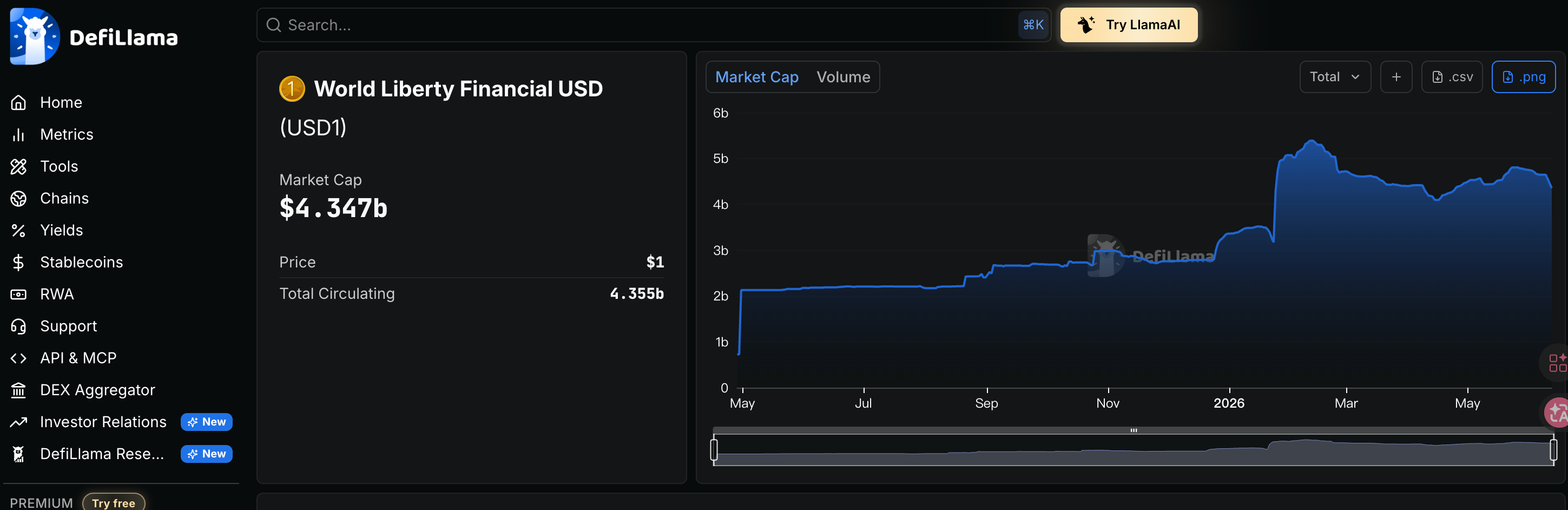
Reaching $4.5 billion in circulation is no small feat—but the conventional next step would be deepening human-market penetration: listing on more exchanges, integrating additional payment rails. Yet over the past six months, USD1 has taken three distinct moves pointing elsewhere entirely.
In March, WLFI released the AgentPay SDK—a fully open-source toolkit enabling AI agents to hold and spend USD1 autonomously. In May, Binance launched Binance x402, a machine-to-machine (M2M) payment protocol—and USD1 was one of only four stablecoins natively supported on BNB Chain. That same month, WorldRouter emerged within the ecosystem: a developer-facing platform serving as a unified gateway to dozens of AI models, with settlements exclusively denominated in USD1…
The tools are built in-house. The protocols are adopted via partnerships. The use cases organically emerge from the ecosystem. All three initiatives converge on a single strategic direction: selling dollars—and payment infrastructure—to machines.
So why do machines even need dollars? To answer that, we must rewind to an unprecedented wave of adoption over the past nine months.
Human wallets are welded shut. Machine wallets have just opened.
The origin of USD1’s $4.5 billion market cap is remarkably traceable—almost every dollar has a name attached.
Multiple outlets reported last year that Abu Dhabi’s sovereign wealth fund MGX invested $2 billion into Binance—and settled the transaction using USD1, marking the largest stablecoin settlement in crypto history.
Binance offers yield-bearing USD1 products. Gate.io and MEXC have alternated running promotional campaigns featuring USD1. Per official announcements, annualized yields reached as high as 20%.
Such events and promotions deliver real growth—but each requires negotiation. Every settlement needs a deal. Every product placement needs a meeting. Every campaign needs alignment.
USDT doesn’t need to negotiate. Its trading pairs are the default listing across global exchanges. Its ticker dominates forex quotes for off-chain swaps. Its tokens flow through cross-border remittance rails worldwide. According to CoinGecko, USDT’s circulating supply stands near $190 billion—while second-place USDC sits at roughly $76 billion. Reserve backing is replicable. What’s irreplaceable is the decade-long behavioral inertia built into the system. You can’t buy habits with money. Even USDC—backed by regulatory compliance and relentless execution—hasn’t cracked half of USDT’s scale.
This is the reality facing stablecoin newcomers in the human market.
Yet this moat of habit rests on one critical assumption: it guards *people*.
Machines have no habits. An agent’s choice of stablecoin depends solely on which token is specified in its configuration file. Swapping USDT for any other stablecoin takes exactly one line of code—zero migration cost, zero muscle memory. USDT’s first-mover advantage evaporates entirely in front of machines. Every stablecoin—old or new, large or small—starts anew on equal footing.
WLFI isn’t the only player spotting this starting line.
Over the past nine months, every major name in global payments has entered the field:
In October last year, Visa and Cloudflare jointly introduced the Trusted Agent Protocol—providing identity verification for machine-initiated payments. In January, Google published the Agent Commerce Protocol (UCP), with Visa and Mastercard among the inaugural participants. In March, Stripe integrated Agent payments directly into its core infrastructure. In April, Coinbase donated the x402 protocol to the Linux Foundation—establishing the first neutral, industry-wide standard for machine payments.
And on June 10, Mastercard unveiled “Agent Pay for Machines”—a dedicated framework enabling AI agents and connected devices to initiate autonomous payments. Per its official press release, over 30 launch partners joined—including Coinbase, Stripe, and the Solana Foundation.
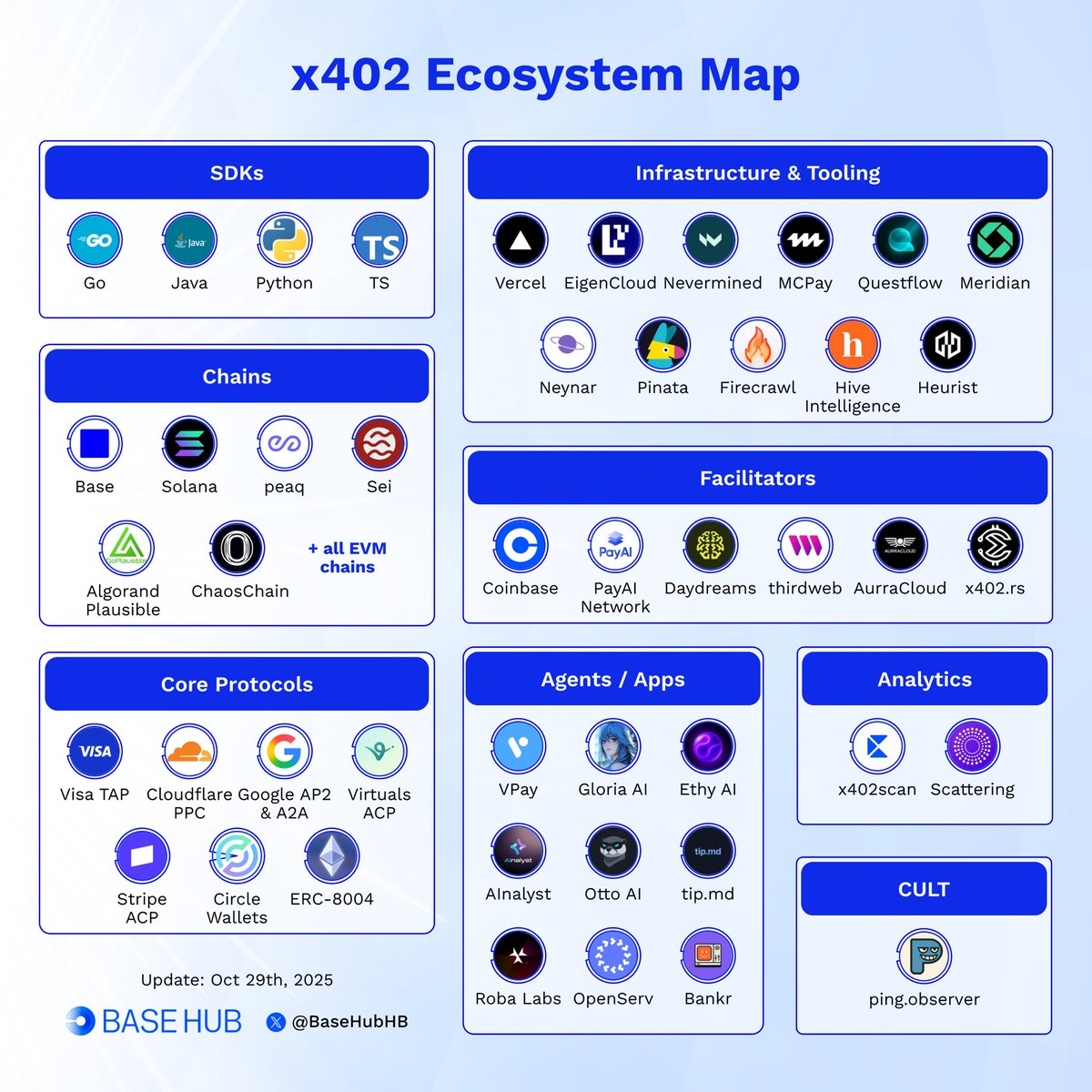
Nine months. Five milestones. No major player absent. Juniper Research projected in April this year that AI agent spending will reach ~$8 billion in 2026—and surge to $1.5 trillion by 2030.
Today’s AI agent payment market may seem trivial to most—but everyone is racing to secure their position before it scales.
The table is new. The chairs are level. The money hasn’t hit the table yet. So the next question becomes concrete: How does USD1 intend to play this hand?
USD1’s Three-Layer Bet on AI
For machines—or AI agents—to spend stablecoins fluidly in future applications, three fundamental problems must be solved.
First: Who opens a wallet for machines?
Agents lack legal identity—they can’t walk into banks. Someone must build tools enabling them to hold and transact assets.
Second: How does money flow from machines to merchants?
Human payment rails—from credit cards to acquiring institutions to bank clearing—evolved over six decades. Machines need their own stack.
Third—and most often overlooked—where do machines actually *spend* those stablecoins once they hold them in a wallet?
These questions form a logical progression: no wallet → no stablecoin payments; no payments → no real-world usage. WLFI’s recent moves appear independent when viewed separately—but taken together, they map precisely onto these three layers.
USD1’s on-chain growth reflects incremental expansion along existing dimensions. Its AI-focused initiatives, however, operate at a higher strategic layer—and only become visible when considered holistically.
Let’s start with wallets.
The AgentPay SDK, released in March, exists precisely to equip agents with wallets. But there are two ways to build such wallets.
One path is custodial: agents’ funds reside on a centralized platform, managed by the provider. It’s the fastest, lowest-friction approach—the instinctive choice for most Web2 payment firms.
WLFI chose the opposite: open source + self-custody. Private keys remain exclusively on users’ machines; WLFI’s servers never access them. Per official documentation, the toolkit collects no telemetry and uploads no usage data.
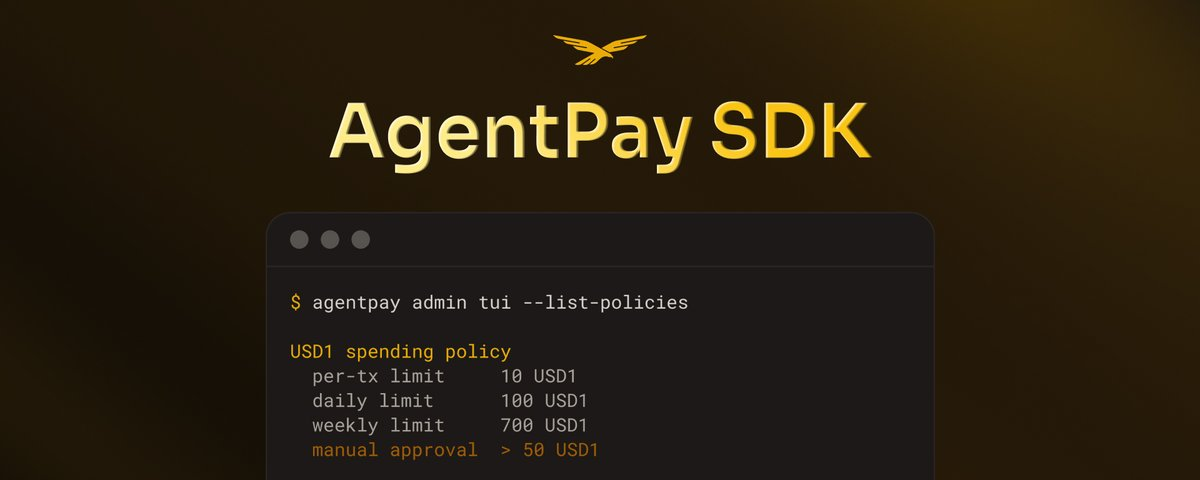
This decision wasn’t driven by technical purism—it was a deliberate trust-building maneuver.
Stablecoin issuers retain on-chain freeze authority—a well-known industry fact. If the same issuer also custodies agent wallets, developers inevitably ask: “Will you freeze my agent’s funds?”
Open-sourcing and enabling self-custody effectively surrenders that power. For a new issuer building developer trust, it may be the only viable path forward.
According to The Defiant, AgentPay has already been packaged as a plug-in compatible with leading AI coding tools—including Claude Code, Cursor, and Codex—requiring zero workflow changes for developers.
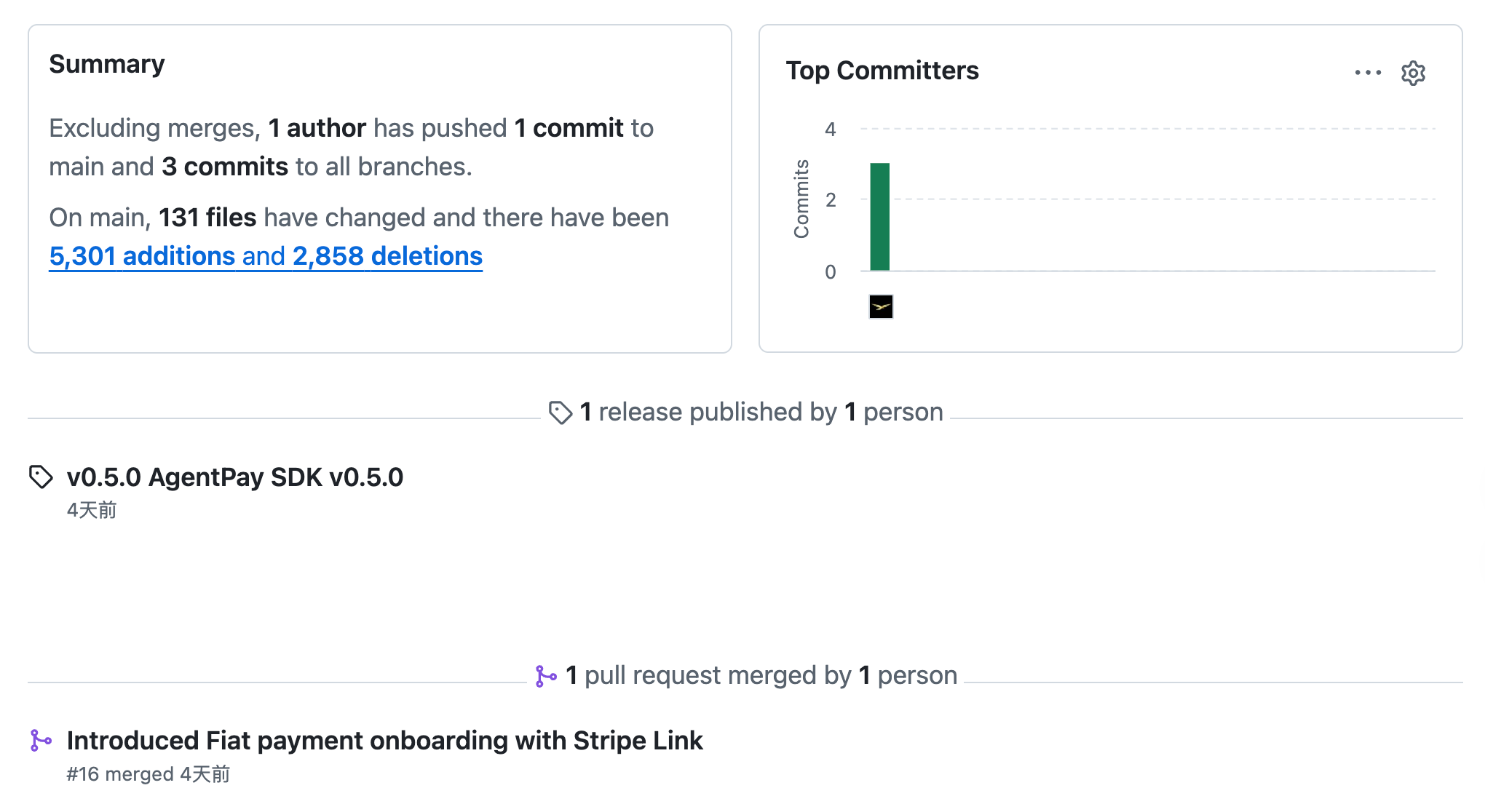
Though only live for three months, the Agent SDK has already garnered 550 stars on GitHub—and includes comprehensive onboarding tutorials and resources.
For many crypto projects, GitHub is often little more than a marketing prop—a performative gesture of technical credibility. We dug deeper: As of publication, the Agent SDK remains actively maintained—with recent integrations including Stripe Link and newly added fiat on-ramp functionality.
Under the hood, the SDK’s policy engine governs every transaction—enforcing per-transaction limits, daily caps, and payee whitelists. Payments exceeding thresholds pause automatically, awaiting manual approval.
We believe this design deserves special attention: giving machines a wallet is easy. Convincing humans to let machines spend autonomously is hard. These guardrails aren’t solving technical problems—they’re lowering psychological barriers.
With wallets established, the next challenge is moving money out.
In May, Binance launched Binance x402—a protocol enabling agents to obtain off-chain authorization and execute on-chain settlement, eliminating the need for human oversight per transaction. USD1 is one of only four stablecoins natively supported on BNB Chain.
When an AI agent—or automated workflow—requests a paid API, dataset, or digital service and receives an HTTP 402 (Payment Required) response, USD1 serves as the direct, legal-tender-aligned settlement asset paid directly to the merchant.
Trust Wallet’s AgentKit simultaneously integrated support—keeping private keys strictly on user devices. For USD1, inclusion in x402 signifies far more than adding another payment rail: it transitions USD1 from a siloed WLFI-native asset to a foundational component embedded directly into the world’s largest exchange’s machine-payment infrastructure.
No public data exists yet on USD1-specific x402 transaction volume in its first month. However, early chain analytics from Artemis and others indicate x402’s broader ecosystem once processed over 150,000 transactions per day. While early activity included significant synthetic arbitrage traffic, the protocol is now converging toward authentic AI commercial settlements following Binance’s official x402 API v2.0 rollout.
Wallets exist. Payment rails exist. The final challenge is hardest to engineer—because real-world usage isn’t built. It grows.
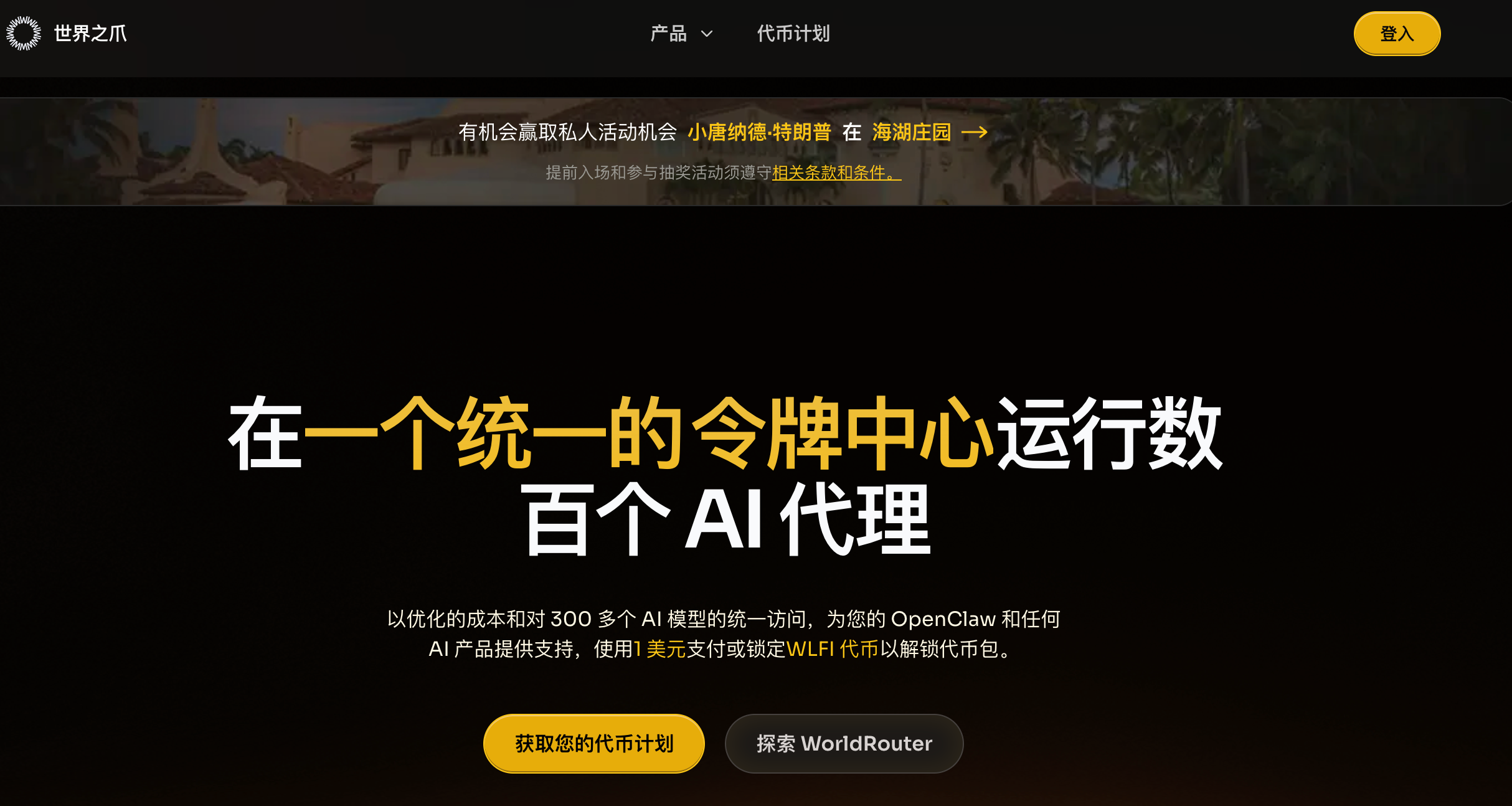
WorldRouter launched in May, independently developed by the ecosystem team. It aggregates hundreds of AI models under a single account interface—allowing developers to access all models via one API key, at pricing ~30% cheaper than direct integrations. Essentially, it functions as a WLFI-native routing hub.
Its underlying payment infrastructure runs on AgentPay SDK—and all settlements occur exclusively in USD1. This marks the first publicly verifiable, end-to-end implementation of the full "Agent invokes model → USD1 auto-settles" loop.
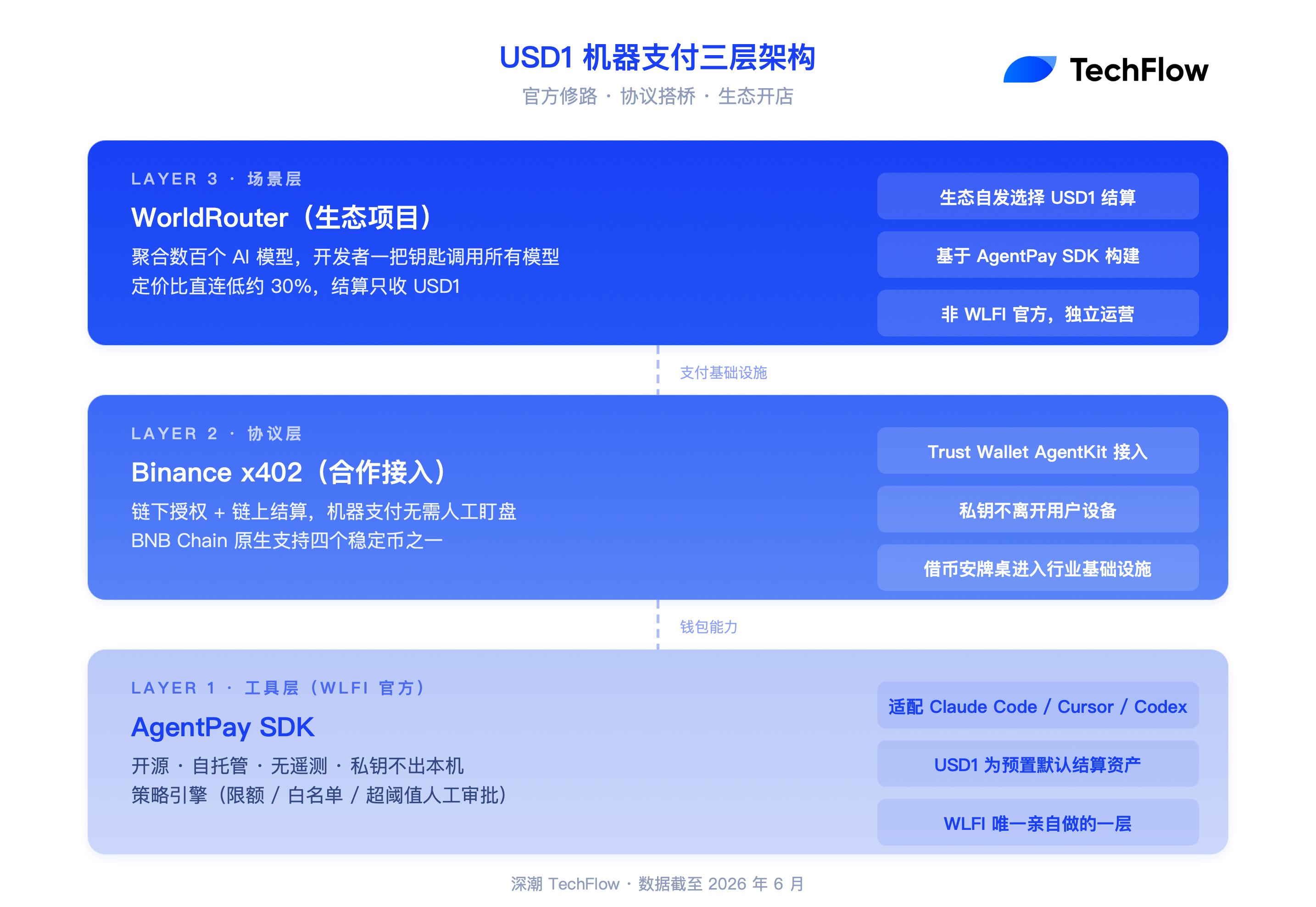
Looking back across these three layers, WLFI’s AI strategy reveals a clear tradeoff:
It tightly controls only the foundational tooling layer, leverages Binance’s protocol layer, and waits for the ecosystem to organically cultivate usage scenarios.
This means relinquishing full-stack control—in exchange for stronger developer and ecosystem-partner adoption incentives. Whether this tradeoff proves correct remains unproven—for now. Its success hinges on one condition alone: whether the ecosystem truly emerges. WorldRouter is the first sign—but one is nowhere near enough.
That brings us to the concrete question: With tools deployed, rails integrated, and early usage emerging—when will this chessboard translate into measurable USD1 growth?
Where Will USD1’s Next $4.5 Billion Come From?
Let’s be candid: the machine payment market remains tiny—and the numbers are even more sobering than most assume.
Per x402 Foundation data, the entire ecosystem processed 165 million cumulative transactions by end-April—impressive in volume, but totaling only ~$50 million in value. That’s less than $0.30 per average transaction.
Peak daily volume hit 730,000 transactions in December last year—driven by meme-based speculative activity. After that wave receded, February’s daily count dropped to just 57,000—a >90% decline.
Yet beneath that ebb lies a meaningful shift: per Chainalysis, the share of genuine, >$1 paid transactions rose from 49% to 95%. Speculators left. Real buyers stayed.
No one knows today’s true market size. Juniper Research forecasts AI agent spending at ~$8 billion in 2026—and $1.5 trillion by 2030. McKinsey estimates $3–5 trillion. eMarketer pegs it at $144 billion. The 35x spread between highest and lowest projections doesn’t reflect forecasting skill—it reflects vastly different definitions of what “machine payments” encompasses.
We won’t endorse any trillion-dollar narrative—but all forecasts agree on one thing: the leap from billions to trillions will happen within the next three to four years.
For USD1, the market’s most valuable asset isn’t transaction volume—it’s holding demand.
Agents must maintain standing balances to sustain continuous spending. More tasks run → larger required balances. This differs fundamentally from human stablecoin usage: humans deposit, transact, withdraw—and stablecoins rarely linger long in wallets. Machines are permanent residents: as long as an agent operates, its balance remains active.
USD1’s first $4.5 billion came primarily from institutional settlements and exchange partnerships—every dollar negotiated face-to-face. Growth was real—but its ceiling was equally visible. The machine market unlocks an alternative growth logic: not deal-by-deal, but product-driven holding demand.
Once installed, AgentPay defaults to USD1 as its settlement asset—meaning every agent wallet holds a baseline USD1 balance. Every WorldRouter model invocation settles back into USD1. If this flywheel gains traction, growth scales automatically with agent adoption—not through painstaking partnership negotiations.
Of course, USDC stands directly across the board.
Within the x402 protocol, USDC is the default settlement asset. Circle didn’t enter machine payments empty-handed: when Coinbase donated x402 to the Linux Foundation, USDC was already baked in. AgentPay defaults to USD1; x402 defaults to USDC. This “default war” is already underway.
Let’s reiterate: In the red-hot AI era, legacy stablecoins fought for exchange listings. The next generation battles for that single line of default configuration inside agent tooling.
WLFI may be betting that as the machine economy expands from $8 billion toward $1 trillion, USD1 will already reside—by default—in enough agent wallets to capture meaningful share.
Join TechFlow official community to stay tuned
Telegram:https://t.me/TechFlowDaily
X (Twitter):https://x.com/TechFlowPost
X (Twitter) EN:https://x.com/BlockFlow_News
 深潮TechFlow