Fed Officials: The Current Choice Is Between Maintaining Patience and Raising Rates; Inflation Is the Top Economic Risk, and AI Has Not Yet Had an Impact
TechFlow Selected TechFlow Selected
Fed Officials: The Current Choice Is Between Maintaining Patience and Raising Rates; Inflation Is the Top Economic Risk, and AI Has Not Yet Had an Impact
Three regional Federal Reserve presidents sent relatively hawkish signals regarding inflation and interest rate direction.
 Navigating Web3 tides with focused insights
By Li Dan
Source: WallStreetCN
On Thursday, April 4 (Eastern Time), Federal Reserve officials delivered a series of hawkish remarks on inflation and the path of interest rates. Three regional Fed presidents signaled a relatively hawkish stance, highlighting that the central bank’s core dilemma lies in choosing between maintaining patience—holding rates steady—or proactively raising rates to rein in persistently elevated inflation. One official explicitly stated that AI is currently neither driving inflation up nor down, and thus has limited implications for short-term monetary policy decisions.
Jeffrey Schmid, President of the Kansas City Fed, bluntly declared inflation the top risk facing the U.S. economy and, for the first time, publicly placed rate hikes on the policy agenda—omitting any mention of rate cuts.
Mary Daly, President of the San Francisco Fed, said monetary policy is currently in a “good place,” but stressed that economic uncertainty is too high to provide reliable forward guidance—which could mislead markets. The Fed, she added, stands ready for “two-way responses.” Interest-rate futures indicate investors now assign a significantly higher probability to a rate hike this year.
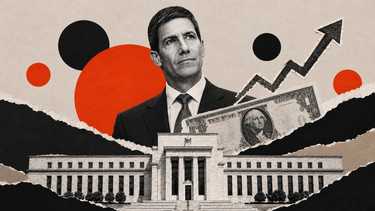
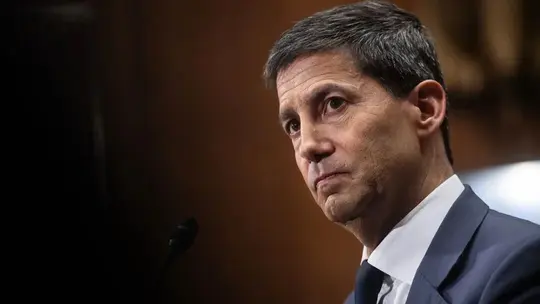
The Fed is scheduled to hold its next Federal Open Market Committee (FOMC) meeting on June 16–17—the first FOMC meeting chaired by new Fed Chair Kevin Warsh. Markets widely expect the target policy rate to remain unchanged at that meeting.
Daly and Thomas Barkin, President of the Richmond Fed—who also spoke on Thursday—both hold voting rights on the FOMC in 2025 and 2027. Schmid will serve as an FOMC voter in 2026 and 2028. Their comments have therefore drawn intense market attention.
Schmid: Rate Hikes Now on the Table; Temporary vs. Persistent Inflation Is Key
Speaking at an economic forum in Oklahoma on Thursday, Schmid used direct language and explicitly raised rate hikes as a viable option.
He said: “The biggest question right now is whether we should continue to be patient. Our inflation data may have climbed to around 3.5%—and nobody likes that number. Is it temporary… or should we act? Should we say, ‘Okay, it’s time to raise rates by 25 or 50 basis points and see if we can tamp it down?’”
Schmid’s remarks reflect deepening concerns within the Fed about the persistence of inflation. Previously, officials generally believed inflation driven by tariffs and oil prices would fade naturally over time—but that view is now being challenged. According to Reuters, the Fed’s policy rate has remained unchanged at 3.5%–3.75% since December last year, while inflation has exceeded the Fed’s 2% target for over five consecutive years.
Schmid made no mention whatsoever of rate cuts—a sharp departure from most officials’ earlier stance, which treated rate cuts as the baseline scenario. He emphasized that the 2% inflation target serves as a clear communication anchor, and the Fed must not blur its position on this point: “We shouldn’t make that message ambiguous.”
Daly: Two-Way Readiness; Forward Guidance Could Mislead
Speaking at Bloomberg’s Technology Conference in San Francisco on Thursday, Daly said monetary policy is currently in a “good place,” but noted that economic uncertainty is too great to issue clear guidance on the future path of interest rates.
She said: “We’re prepared for two-way responses—whatever the economy delivers. I think offering more forward guidance right now could ultimately mislead, because we need to wait and see how the economic situation evolves.”
On inflation, Daly pointed out that the Fed’s preferred inflation gauge rose 3.8% year-on-year in April—the largest increase since 2023. She attributed the current inflation surge primarily to tariffs and rising energy and food prices following the outbreak of war in Iran—surging oil prices having spilled over into fertilizer, equipment, and other goods. On the labor market, she noted unemployment stands at 4.3%, with signs of stabilization emerging.
Daly added that, as the economic outlook evolves, an increasing number of officials are inclined to state explicitly that all options—including both rate cuts and rate hikes—are under active consideration. Federal funds futures currently imply a relatively high probability of a rate hike before year-end.
Daly: AI May Lower Inflation in Five to Ten Years, But No Broad Productivity Gains Yet
Addressing the widespread market discussion around AI’s economic impact, Daly stated that AI is currently neither fueling inflation nor showing broad-based productivity gains in macroeconomic data.
She said, “We haven’t yet seen large-scale productivity gains,” and corporate returns on AI investment “remain to be realized”—though enthusiasm for the technology among businesses is “quite high.”
According to reports, Daly believes AI could become a deflationary force over a five- to ten-year horizon. Yet for monetary policy—operating on a 12-month cycle—this AI effect “is not an urgent issue.”
She also noted that generative AI is currently used mainly to augment workers—not replace them—and whether AI-driven productivity gains will eventually translate into disinflationary effects hinges critically on timing.
Daly expressed optimism about AI, forecasting that 2027 will serve as a “litmus test” for the AI industry.
Barkin: Labor Market Balanced, No Signs of Tightness
Speaking after an event in Loudoun County, Virginia, on Thursday, Thomas Barkin, President of the Richmond Fed, said the U.S. labor market is currently balanced, with no notable uptick in overall hiring demand.
He said, “I’m not seeing any changes in the labor market.” While demand is rising in skilled trades and healthcare, he added, the labor market overall is not tight.
Barkin said, in conversations with employers, “I’m not seeing the kind of concerns I’d call ‘bubbles’ or ‘tightness.’” This assessment aligns with Schmid’s view that the broader economy remains healthy and corroborates Daly’s observation of labor market stabilization—further supporting the Fed’s current stance of holding off on action and waiting for more data.
Join TechFlow official community to stay tuned
Telegram:https://t.me/TechFlowDaily
X (Twitter):https://x.com/TechFlowPost
X (Twitter) EN:https://x.com/BlockFlow_News