The Fed’s dovish camp collectively shifts to hawkish stance; Waller’s debut speech leaves him “caught between two stools”
TechFlow Selected TechFlow Selected
The Fed’s dovish camp collectively shifts to hawkish stance; Waller’s debut speech leaves him “caught between two stools”
The Fed’s next move could be a rate hike.
 Navigating Web3 tides with focused insights
By Long Yue
Source: WallStreetCN
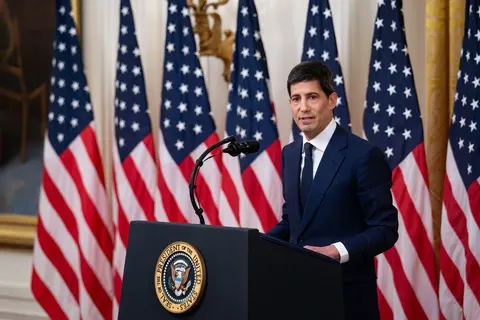
Federal Reserve officials who previously championed rate cuts—including Christopher Waller—have recently signaled they are open to hiking rates. Almost no one on the Federal Open Market Committee (FOMC) now advocates for rate cuts. The first interest-rate meeting chaired by newly appointed Fed Chair Kevin Warsh may thus signal that the Fed’s next move could be a rate hike.
Trump chose Warsh to deliver rate cuts—but shortly after taking office, Warsh’s colleagues began discussing hikes instead.
The Wall Street Journal recently published an in-depth report by veteran Fed reporter Nick Timiraos, timed just ahead of Warsh’s debut FOMC meeting. Timiraos has long covered the Fed and is widely regarded as its “megaphone” to markets.
Timiraos writes that Warsh walked into that meeting room at an especially awkward moment. Last year, Warsh publicly advocated for rate cuts—a stance that earned him Trump’s favor. Yet immediately after assuming office, internal Fed discussions had quietly pivoted—from “when to cut” to “whether to hike.”
This reversal was not sudden. U.S. inflation has risen—not fallen—this year, surpassing 3%. The labor market has rebounded strongly. Supply bottlenecks from the AI infrastructure boom and higher oil prices driven by the Iran war continue to stoke price pressures. One by one, the arguments underpinning expectations of rate cuts have evaporated.
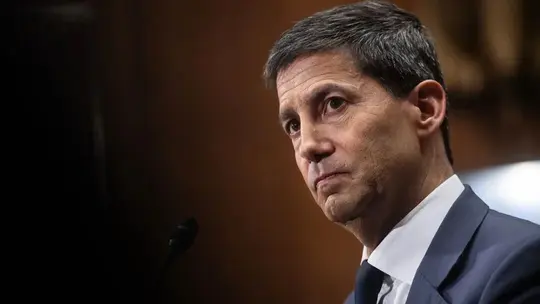
Warsh now faces a committee he did not assemble, forecasting tools he has long criticized, and a policy direction at odds with the president who appointed him. His debut will inevitably be difficult.
How Did the Doves Turn Hawkish?
The clearest illustration is the shift in stance by Fed Governor Christopher Waller.
Throughout last year, Waller worried about labor-market weakness—even voting in January for a rate cut against the majority of his colleagues. But last month, he stated publicly that recent data “pushed me in another direction.” He explicitly supported removing the phrase “accommodative bias” from the statement and declared: “I can no longer rule out the possibility of a rate hike at some point in the future.”
Regarding continued market speculation about a September cut, Waller responded bluntly: “As a serious central banker, you simply cannot seriously discuss that.”
Even the Moderates Are Wavering
If Waller represents the doves’ pivot, then Governor Lisa Cook’s shift signals that even the “middle ground” is eroding.
Cook is not a hawk. Last month she still deemed holding rates steady the right choice, with her baseline scenario remaining that inflation would recede on its own. Yet she added a caveat—one that would have been nearly unthinkable for her a year ago: She said that if inflation fails to decline “in a timely manner,” she is “prepared to hike rates.”
Underlying this concern is the risk that five years of inflation above target may already be reshaping how businesses and workers set prices and negotiate wages—creating self-reinforcing expectations.
Hawks Have Been Waiting for This Moment
The hawks on the committee have long been frustrated.
When the Fed cut rates last December, Cleveland Fed President Beth Hammack, Dallas Fed President Lorie Logan, and Minneapolis Fed President Neel Kashkari dissented—arguing the rationale for easing was never sound.
In April, the three joined forces again—not opposing the rate decision itself this time, but the statement’s phrasing implying the “next move is more likely to be a cut.” They demanded its removal to affirm that a hike remains equally possible.
Now, data increasingly supports their view. Hammack said this month that holding rates steady remains reasonable—but “if recent trends persist, action may soon be needed.” Logan went further: “I am growing increasingly concerned that a rate hike may be necessary later this year.”
Hawks also raised a notable point: As inflation rises, inflation-adjusted “real rates” are actually falling—meaning the restrictive effect of monetary policy on the economy may be weaker than headline numbers suggest. In other words, “holding steady” may effectively constitute easing.
Warsh’s Dilemma
This Wednesday, the Fed is expected to hold its benchmark rate steady at 3.5%–3.75%. But the real focus lies elsewhere.
First, the statement’s wording. The phrase “accommodative bias”—maintained for months to imply the next move is more likely a cut—is expected to be dropped, signaling that cuts and hikes are now viewed as equally probable.
Second, the quarterly “dot plot.” In March, over a dozen officials projected at least one cut this year. This time, most are expected to project no change—and some may even mark hikes on their dots.
Warsh has long criticized the Fed’s overreliance on forward guidance—including tools like the dot plot. He could choose not to submit his own projection or remove such language from the official statement. But Timiraos notes that, for investors, such procedural distinctions matter little—they’ll read straight through to substance. What truly cares about these nuances is the president who wants low rates.
A comment last month by Chicago Fed President Austan Goolsbee perhaps best captures the current situation: “We’re facing a fairly serious emerging inflation problem—but the labor market remains broadly stable.”
The result? Almost no one on the committee is advocating for rate cuts anymore. Warsh’s debut meeting may thus send a clear signal: the Fed’s next move could be a hike—delivered via tools he has long criticized, by a committee he did not handpick, and steering policy toward a direction his appointer does not want.
Join TechFlow official community to stay tuned
Telegram:https://t.me/TechFlowDaily
X (Twitter):https://x.com/TechFlowPost
X (Twitter) EN:https://x.com/BlockFlow_News