

Token’s monthly price surge exceeds 300%; can defi.app fill the gap left by Robinhood’s inability to enter this space?
TechFlow Selected TechFlow Selected
Token’s monthly price surge exceeds 300%; can defi.app fill the gap left by Robinhood’s inability to enter this space?
Why Has No “Ready Player One” Dominated the DeFi Execution Layer Yet?
 Navigating Web3 tides with focused insights
Author: Tiger Research
Translated by AididiaoJP, Foresight News
The DeFi ecosystem already possesses all core financial primitives—from trading and lending to yield generation and derivatives. What’s truly missing, however, is the “execution layer” that delivers these products to mainstream users. This article dives deep into why past attempts to eliminate wallet complexity and onchain friction have failed—and how defi.app introduces a structural breakthrough in this critical gap.
Note: defi.app is a DeFi application supporting cross-chain aggregated trading, onchain yield, and perpetual contracts. It adopts full gas abstraction design—users need neither manage gas nor switch networks, enabling one-click operation across EVM + Solana while remaining self-custodial. defi.app officially launched on Binance in June 2025; its native token HOME currently has a circulating market cap of approximately $170 million.
Key Takeaways
- DeFi infrastructure is mature, yet consumer-grade applications capable of retaining mainstream users remain absent. Regulated fintech platforms like Robinhood are legally prohibited from offering self-custodial or high-leverage products.
- Since its launch in February 2025, defi.app has achieved cumulative trading volume of $44 billion and registered 1.06 million users—validating the appeal of its gas abstraction and chain-agnostic interface.
- Rocket Perps charges significantly higher fees than standard DEXs, but 80% of the platform’s total revenue will be directed toward governance-approved HOME buybacks under proposal DIP-004.
- To achieve sustainable long-term growth, defi.app must move beyond short-term user acquisition and build habitual, trust-based daily usage patterns.
Why No One Has Captured the DeFi Execution Layer—Yet
It has been ten years since Ethereum’s 2015 launch. While DeFi products have continuously expanded, mainstream adoption remains stagnant. The core bottleneck isn’t product functionality—it’s user experience friction.
A 2023 Consensys/YouGov survey found that 93% of people globally had heard of cryptocurrency, yet only 8% identified as familiar with Web3 or DeFi. By 2025, the situation had not meaningfully improved.
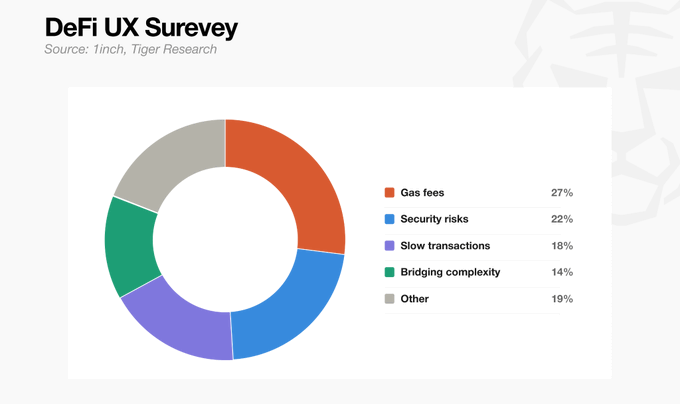
A 2025 1inch survey ranked DeFi’s top pain points as: gas fees (27%), security risks (22%), slow transaction speeds (18%), and cross-chain complexity (14%). These are all UX issues—not product deficiencies.
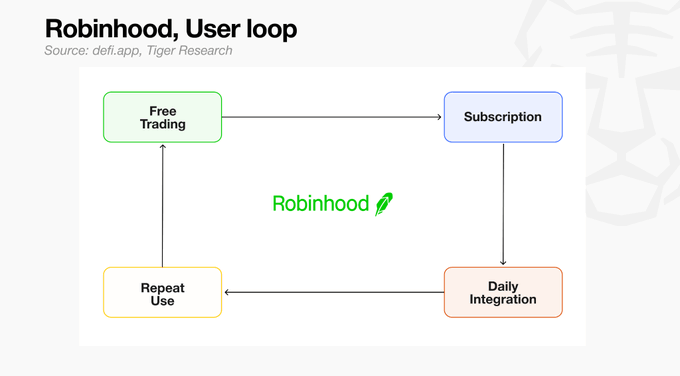
Robinhood succeeded in traditional finance by turning stock trading into “one tap on your phone, completely free”—shattering the barriers of high commissions and cumbersome account opening. It simplified low-barrier investing, enabling anyone to try it effortlessly.
But DeFi’s native demand is fundamentally different: high-leverage derivatives, onchain yield, and self-custody. Regulated fintech firms simply cannot legally offer these services. While Robinhood has begun offering some crypto spot products, self-custody and permissionless high-leverage offerings remain strictly outside its regulatory boundaries.
The goal of the DeFi execution layer is not to replicate Robinhood’s business model—but rather to deliver Robinhood-level UX in the very domains Robinhood cannot access.
Why Past Attempts Failed
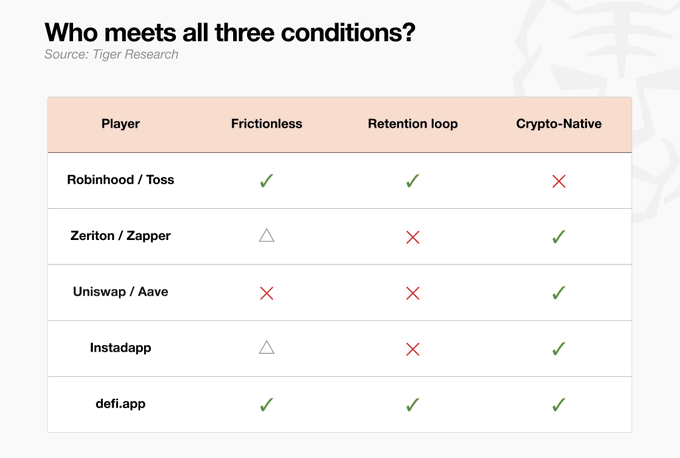
Zerion, Zapper, and Instadapp (now Avocado) all attempted to lower DeFi’s entry barrier via aggregated dashboards and smart accounts (Account Abstraction). Their direction was correct—but retention fell short.
Their structural failure lay in the absence of a sustainable retention loop. Once token or point-based incentives ended, users migrated to the next reward cycle. These platforms solved technical barriers but failed to retain users without incentives—falling far below traditional fintech’s 30-day retention benchmark of 9.2%.
Reducing friction and cultivating daily usage habits are two entirely distinct design challenges. Robinhood retains users not just because trades are free—but because push notifications, spending analytics, daily rewards, and other mechanisms create autonomous return loops. Previous DeFi apps lacked the product design capability to build such loops without external incentives.
Reviewing these failures reveals that capturing this market requires satisfying three conditions simultaneously:
- Frictionless onboarding: Users feel no separation between chains, no gas management, and no cross-chain complexity;
- Retention loops: Users voluntarily return even after incentives end;
- Crypto-native coverage: Full support for self-custody and high-leverage products—domains inaccessible to regulated fintech.
Only a platform that truly integrates all three can become an industry standard.
defi.app’s Approach: Let the Data Speak
defi.app unifies Swap, Earn, and Perps into a single interface. Leveraging EIP-4337 smart accounts, it implements full gas abstraction—eliminating the need for users to manage gas manually. Trades across EVM and Solana ecosystems automatically route through aggregators like 1inch and Jupiter to select optimal paths. Its design philosophy centers on making financial products instantly accessible—while fully hiding Web3’s underlying complexity.
Key metrics since launch:
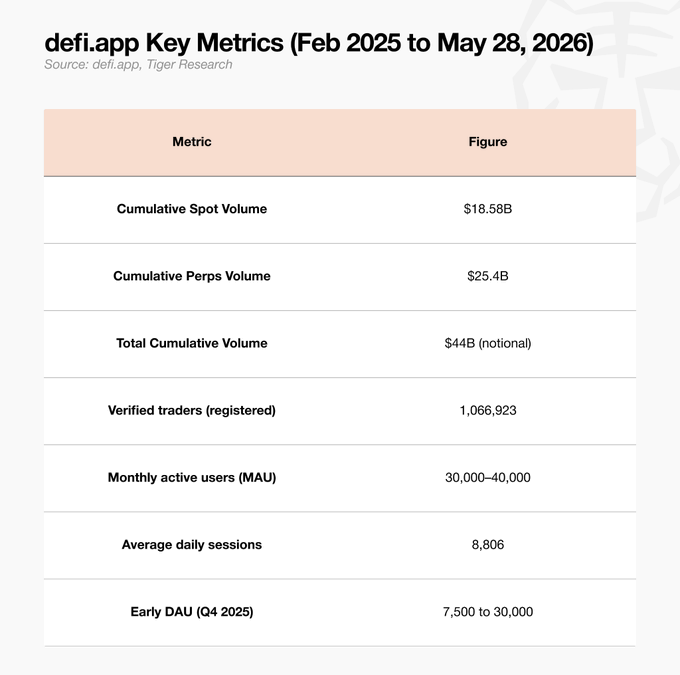
- 1.06 million registered users—demonstrating strong user acquisition;
- MAU consistently stabilized at 30,000–40,000; DAU increased ~3,000% from initial levels—indicating meaningful early retention even before Rocket Perps’ public beta.
June 4 marks the official public beta launch of Rocket Perps—the true test of that foundation.
Rocket Perps: Binding Usage Habits, Revenue, and Token Value
Until now, defi.app focused on eliminating friction and building retention loops—but remained locked in direct comparison with traditional fintech. It consolidated multiple services into one place, yet still hadn’t satisfied the third condition: crypto-native coverage.
Rocket Perps is its answer to that gap.
Rocket Perps is a 1000x-leverage perpetual contract product featuring a pixel-art arcade game UI. Built atop Aark Digital’s oracle infrastructure, it enables instant position opening and counterparty-free matching. Users accumulate XP by clicking falling asteroids, redeemable for HOME token rewards—creating a gamified loop that drives repeat usage.
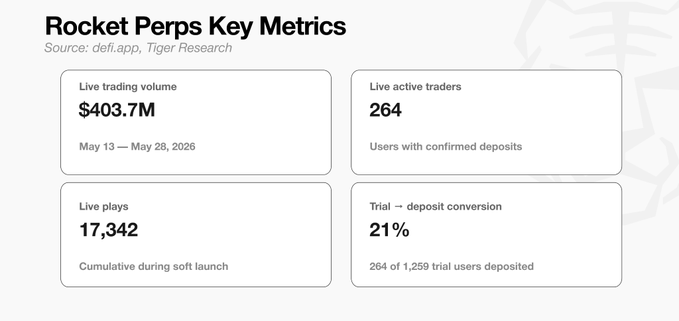
Soft-launch period (May 13–28, 2026) results:
- 264 users generated over $400 million in trading volume within two weeks—highlighting the capital efficiency and intensity characteristic of high-leverage products.
These early adopters represent a highly risk-tolerant cohort; scalability post-public beta remains to be validated.
1000x leverage may seem extreme at first glance—but it aligns precisely with crypto traders’ psychology: many willingly accept high risk for high returns. Rocket Perps transforms that demand into a product off-limits to regulated fintech.
Its fee structure merits attention: a 4% margin fee upon entry, and up to 50% of profits charged on exit (tiered). This dwarfs standard perpetual DEX fees of 0.02%–0.07%. Yet 80% of the platform’s total revenue—across spot, perpetuals, and Rocket Perps—is allocated to HOME buybacks per proposal DIP-004—a deliberate ecosystem design. As a premium trading product—not a hedging tool—this fee structure resonates well with its target audience.
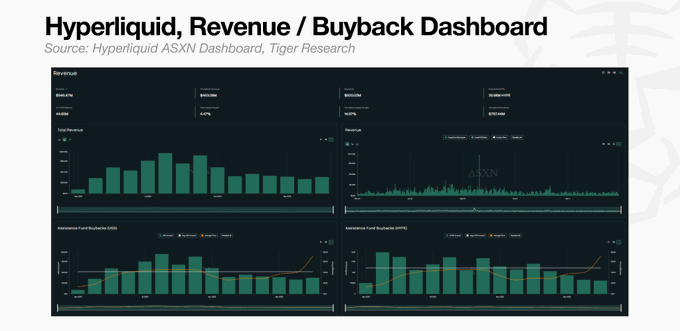
Hyperliquid offers the clearest precedent: the protocol directs 97% of fees directly toward HYPE buybacks, with every transaction publicly verifiable onchain. If defi.app achieves similarly transparent, onchain-executed positive flywheels, users’ premium payments will be effectively offset by powerful holding incentives.
Milestones defi.app Must Cross
Retention Validation & Trust Building
The 264 traders during the soft launch were self-selected high-risk participants. Rocket Perps’ public beta on June 4 represents the first real stress test for mainstream user retention—can the existing 30,000–40,000 MAU meaningfully expand?
Robinhood faced the same challenge. After the 2021 meme-stock frenzy faded, its MAU dropped sharply. Later, it added credit cards, banking services, and social features—giving users reasons to open the app daily, even when not trading. This proved that independent daily loops are essential to retain users regardless of market conditions.
defi.app faces the identical design challenge. Continuously launching features aligned with crypto-native traders’ instincts can drive acquisition—but retaining them demands positioning defi.app as a reliable “asset employment platform.” Both efforts must advance in parallel. Only when users treat defi.app as part of their daily asset management routine does it truly become the “do-it-all” app.
Onchain-Transparent Buyback Execution
For investors evaluating HOME today, the strongest argument is the commitment to allocate 80% of platform revenue toward governance-approved buybacks. But crypto investors have been burned too often by similar promises—so scrutiny is exceptionally high. Even the smallest gap between promise and onchain execution risks eroding trust faster than expected.
Hyperliquid solved this most comprehensively: buybacks execute automatically the moment fees are generated, with every transaction publicly verifiable onchain—no announcements needed, just data speaking for itself.
defi.app’s 80% commitment is inherently compelling. If it publishes the buyback wallet address and launches a real-time revenue dashboard concurrently with Rocket Perps’ public beta, it lays the groundwork for building a trust flywheel equal to Hyperliquid’s.
Conclusion
Robinhood reshaped financial experience—but operates strictly within regulatory boundaries. Self-custody, high-leverage, and permissionless yield remain off-limits. DeFi built finance beyond those boundaries—but failed to retain users. Infrastructure is ready; daily return loops remain unformed.
defi.app’s mission is precisely to fill this void: delivering the user experience DeFi has never achieved—in domains Robinhood cannot enter.
Its strategy rests on three pillars:
- Eliminating friction entirely via gas and cross-chain abstraction;
- Providing compelling reasons to return repeatedly—via features like Rocket Perps;
- Returning real revenue to the ecosystem through governance-approved $HOME buybacks.
defi.app’s team deeply understands what truly draws users into crypto. For users who embrace crypto’s volatility, Rocket Perps offers a highly attractive entry point and reason to return. Yet beyond short-term acquisition lies a deeper question: Can the platform cultivate genuine daily usage—where users earn yield via Earn, accumulate XP through gaming—not because of incentives, but because the app has become their default way to manage assets?
When that condition is met, defi.app ceases to be just another DeFi app—and becomes the first true industry standard within the domain Robinhood cannot enter.
Join TechFlow official community to stay tuned
Telegram:https://t.me/TechFlowDaily
X (Twitter):https://x.com/TechFlowPost
X (Twitter) EN:https://x.com/BlockFlow_News
 @tiger_research




![In-depth Analysis of Trade[XYZ]: How Were 92 Markets and 98% HIP-3 Trading Volume Established?](https://upload.techflowpost.com/upload/images/20260716/20260716061117965147.jpeg?x-oss-process=image/resize,p_50/quality,q_80)

















