Why Has Private Credit Become the First True Bridge from TradFi to DeFi?
TechFlow Selected TechFlow Selected
Why Has Private Credit Become the First True Bridge from TradFi to DeFi?
There’s a reason private credit adopted onchain earlier than most RWAs.
 Navigating Web3 tides with focused insights
By Yaroslav Writtle
Translated by Block Unicorn
There’s a Reason Private Credit Adopted On-Chain Earlier Than Most RWAs
It inherently possesses the element that on-chain markets can price: yield.
This makes its development path clearer than that of private equity, venture capital, or real estate.
Those categories primarily involve access, packaging, or long-term investment.
Private credit, by contrast, offers a more direct pathway.
Cash flows can be distributed, financed, and ultimately reused within crypto markets.
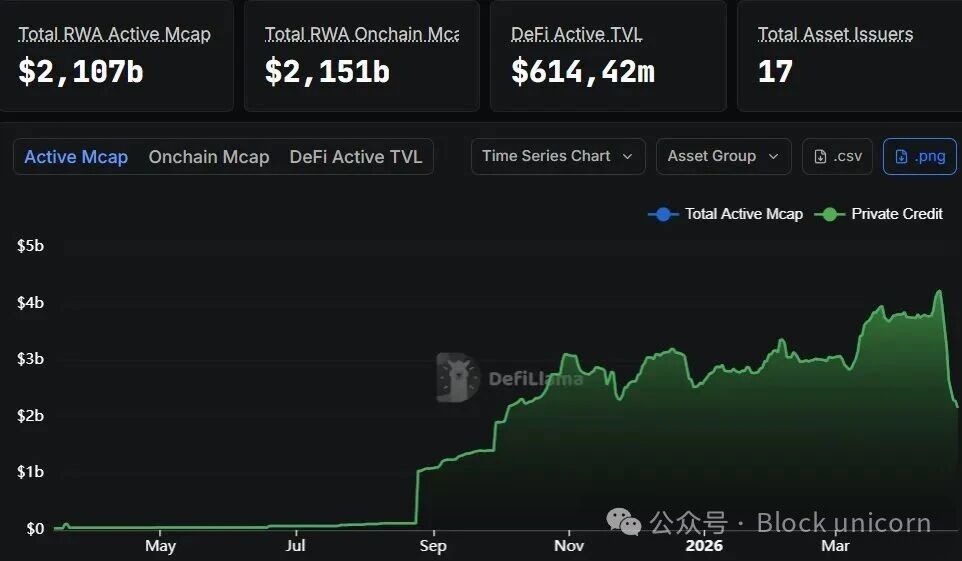
Source: DefiLlama
What Matters Is Not That Private Credit Has Been Tokenized
But that private credit has begun operating on-chain.
Many tokenized assets remain stuck at the issuance stage.
- They are packaged.
- They are distributed.
- They sit idle in wallets.
Private credit goes further.
It begins appearing as collateral in lending markets—and in strategies allowing users to borrow against this asset without fully exiting it.
This is far more significant than simple tokenization.
Markets Are Already Distinguishing Access from Utility
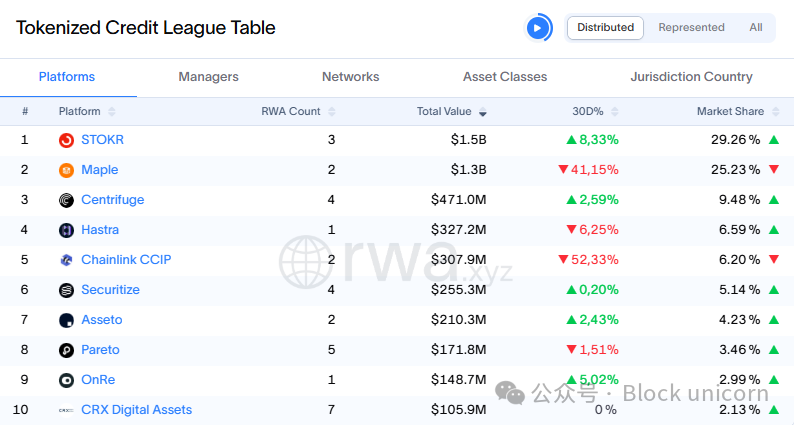
A strong signal in the report is that most of the active private credit market cap is concentrated in permissionless products.
Source: rwa.xyz
This reveals something important.
Users don’t just want exposure to private credit.
They want private credit that behaves more like crypto-native assets:
- Transferable
- Usable in decentralized finance (DeFi)
- Easier to finance
- Easier to move across venues
This stands in stark contrast to tokenized fund yields, which largely remain static.
The Fastest-Growing Products Are Built for Crypto Rails
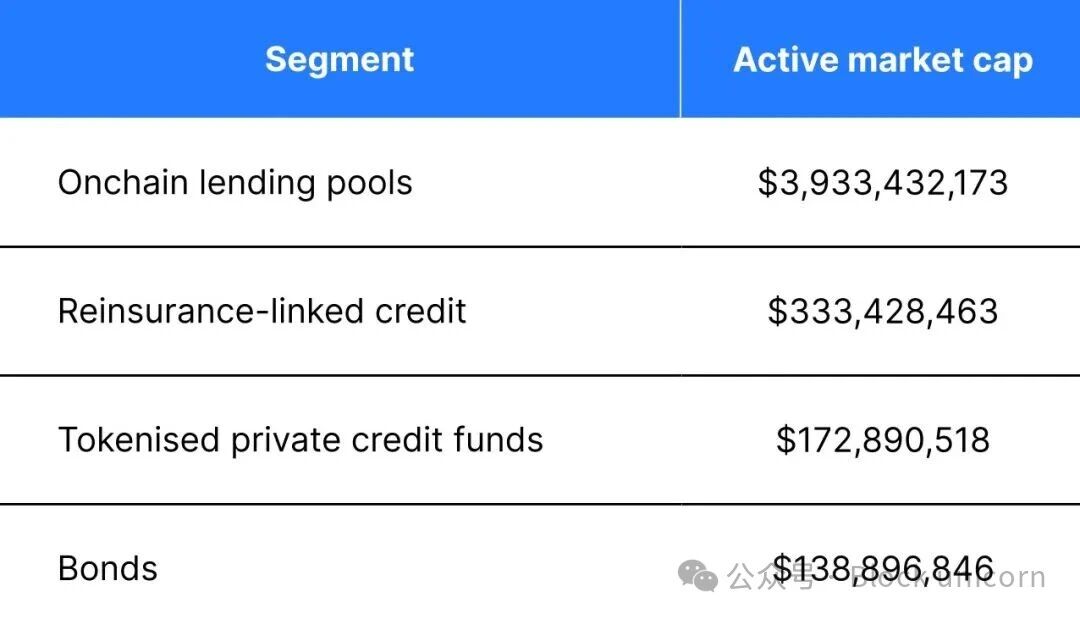
Another notable point is where capital actually resides.
Source: DLResearch
The largest share of on-chain private credit does not reside in tokenized fund wrappers.
Rather, it comes from on-chain lending pools.
This is critical because it signals that markets are rewarding structures purpose-built for on-chain utility—not merely repackaged traditional products adapted to new distribution channels.
The more functionally powerful a product is within crypto markets, the more demand it appears to attract.
Why Private Credit Led the Way
Private credit solves two problems simultaneously.
For traditional asset managers, tokenization improves distribution.
For on-chain markets, it introduces a new class of productive collateral.
This combination remains rare among RWAs.
Real estate can be tokenized—but liquidity and valuation remain challenging.
Private equity and venture capital can be tokenized—but most holdings remain passive.
Carbon credits benefit from improved tracking—but their utility in DeFi remains limited.
Private credit is among the first tokenized asset classes to improve both access and financial utility.
None of This Eliminates Underlying Risks
It remains private credit.
Underwriting still matters.
Borrower quality still matters.
Recovery value still matters.
Liquidity still matters.
Putting an asset on-chain solves none of these issues.
It only makes the product easier to distribute—and, in some cases, easier to finance.
That’s useful.
But it is not the same as reducing underlying risk.
The Real Insight from RWAs
Private credit matters because it reveals what markets reward.
Not just tokenized assets—
But assets that become more useful once they go on-chain.
This may be a clearer way to think about the next phase of RWAs.
Industry leaders won’t be the assets easiest to wrap.
They’ll be the assets that gain genuine utility from becoming part of the on-chain financial system.
Join TechFlow official community to stay tuned
Telegram:https://t.me/TechFlowDaily
X (Twitter):https://x.com/TechFlowPost
X (Twitter) EN:https://x.com/BlockFlow_News
 @yaroslavwr_