Silicon Valley Watch: Seeking Certainty Amid the AI Wave
TechFlow Selected TechFlow Selected
Silicon Valley Watch: Seeking Certainty Amid the AI Wave
In uncertainty, people are constantly learning how to adjust themselves.
 Navigating Web3 tides with focused insights
Author: Chichi Hong, Co-Founder of ScalingX Labs
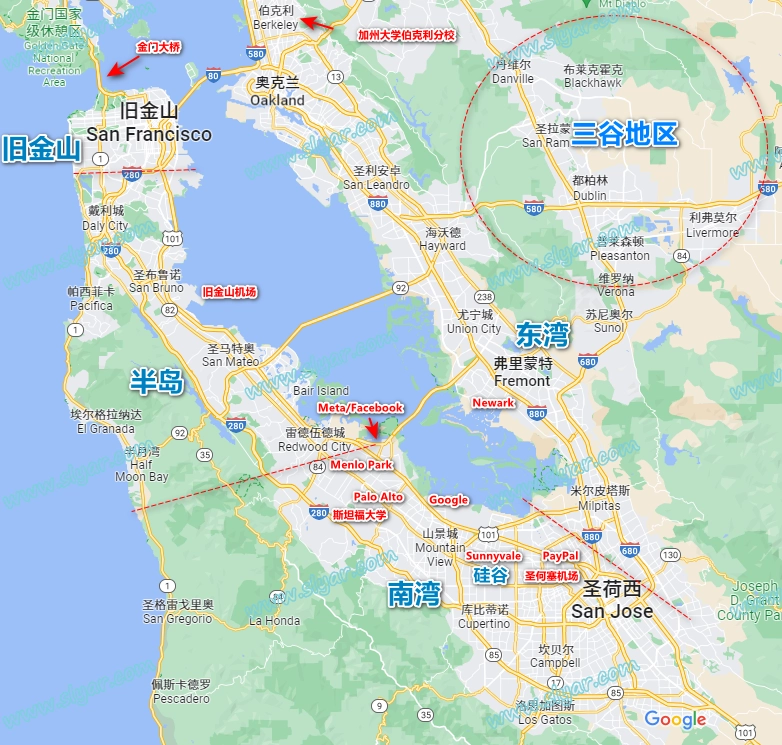
Between San Francisco’s hills and coastal fog, AI is visibly rewriting the rhythm of the Bay Area. For Chichi, Co-Founder of Web3-native ScalingX Labs—who has long operated in the Web3 space and recently relocated to North America—the most striking impression isn’t that any single location has pulled decisively ahead, but rather that the Bay Area is coalescing into a “multi-pole blossoming” ecosystem—one jointly shaped by San Francisco, South Bay, and surrounding cities.
In her daily routine, San Francisco concentrates large language model (LLM) companies and AI infrastructure startups; South Bay remains home to legacy tech giants and engineering communities; and nodes like Palo Alto brim with demo days, incubators, and startup events of all scales. As everything accelerates, evolves, and reorders itself, what she repeatedly contemplates isn’t “Where is the center?” but rather: In this decentralized AI wave, what relatively stable anchors remain—whether in geographic choice, sector selection, entrepreneurial trajectory, or one’s personal life and mindset.
I. Geographic Choice: Multi-Directional Growth
Over the past few years, San Francisco has been reshaped—by the headquarters and expansion of LLM firms such as OpenAI and Anthropic—into one of the world’s densest stages for generative AI companies. New narratives, new ventures, and fresh AI stories largely originate here.
Meanwhile, South Bay remains the stronghold of major tech firms—including Google and Meta—as well as numerous chipmakers and cloud infrastructure providers. It hosts a vast pool of seasoned engineers and foundational technical teams, continuously attracting and exporting global talent.
The stories one hears often juxtapose two contrasting scenes: someone sells their company and buys a multi-million-dollar home in San Francisco, betting everything on AI and its new wealth narrative; while elsewhere, even amid layoffs at major tech firms, engineers are swiftly scooped up by other teams or startups—South Bay’s housing market and community atmosphere have not noticeably cooled, despite AI “stealing the spotlight.”
For her, this state—where both the old and the new thrive simultaneously—is itself a form of geographic certainty:
- San Francisco symbolizes new narratives, new companies, and new opportunities—the most concentrated stage for AI storytelling;
- South Bay represents the established system, mature engineers, and stable infrastructure—still actively absorbing and channeling talent;
- Neither side is losing; they simply play different roles.
Within this configuration, the question is no longer “Should I leave South Bay for San Francisco?” but rather a finer-grained choice: Which set of resources do you need to be closer to—cutting-edge AI startups and capital networks, or legacy tech giants and engineering ecosystems? For those seeking firm footing in the AI wave, this reality—where both old and new burn brightly—offers a uniquely predictable geographic sense of security: whichever side you choose, meaningful connections await.
For her, the first layer of “certainty” is already clear:
- Geographic gravity is shifting toward San Francisco;
- South Bay continues to host major tech firms and experienced engineers—but influence and imagination are migrating northward.
For founders and investors aiming to stay close to AI’s frontier, “being physically present in San Francisco” has itself become the most fundamental geographic certainty.
II. Sector Selection: AI and Web3
As a founder from a Web3 accelerator, Chichi is inevitably asked: Is there truly a novel, sufficiently certain direction emerging at the intersection of AI and Web3? Her answer diverges from many optimistic narratives—over the past year, she has not observed a genuinely paradigm-shifting path. Most so-called “AI + Web3” projects still recycle stories told last year.
In her view, the most honest assessment right now is:
- AI offers far greater certainty than Web3. Virtually every industry is proactively seeking AI applications—from development and marketing to customer support—making AI an infrastructure-level utility;
- Web3 has a clear demand for AI: on-chain projects need AI for automated operations, content generation, user outreach—and AI also holds distinct advantages in risk control and data analytics;
- AI currently has no urgent need for Web3. To date, no compelling case exists proving that “AI cannot function without blockchain.”
She sums up this asymmetry memorably: “Everyone needs AI; Web3 needs AI—but AI doesn’t need Web3.”
This does not mean crypto is being fully marginalized. Over longer time horizons, many U.S.-based investors still believe crypto assets’ risk-return profile may rival—or even outperform—that of any single AI vertical. What’s truly intriguing is how stablecoins have quietly entered AI’s “back-end systems.”
According to Circle’s data, over the past nine months, roughly 400,000 AI agents completed 140 million payments totaling $43 million—with 98.6% settled in USDC and an average transaction value of just $0.31. This signals that micro-transactions between machines are already occurring continuously, using crypto-native mechanisms. In this sense, some AI practitioners aren’t merely “talking about believing in crypto”—they’re treating stablecoins as the default payment layer for agents, thereby linking the two sectors at the behavioral level.
Still, at this moment in time, if one seeks “sector-level certainty,” Chichi prefers viewing AI as foundational infrastructure across all industries—and Web3/stablecoins as highly suitable “infrastructure plug-ins” for specific use cases—not forcing them together under a single composite narrative meant to explain everything.
III. Entrepreneurial Pathways: Small Teams vs. VC—Not an Either/Or Choice
Chichi characterizes AI’s impact on entrepreneurship as “redefining entry barriers.”
What stands out most vividly for her is the recent viral case of Medvi—a remote healthcare service built around weight-loss drugs like GLP-1. Founder Matthew Gallagher, neither a top-tier university graduate nor a tech elite, launched the venture from his Los Angeles home. With roughly $20,000 and a dozen AI tools, he spent two months building the website, appointment flow, intake questionnaires, ad creatives, and customer-service responses—all layer by layer.

The emergence of such “solo founders” or “small-team ventures” introduces new certainties into entrepreneurial pathways:
- It’s certain that leveraging AI dramatically raises the ceiling for small teams—entrepreneurship no longer inherently requires assembling a 10+ person team upfront;
- It’s also certain that not all ventures have thus “outgrown VC.”
Chichi stresses that she observes two coexisting realities:
- On one hand, more and more cases show viable companies emerging without external funding—generating revenue with just tens of thousands of dollars, sustaining growth organically, and sidestepping traditional fundraising timelines;
- On the other, certain domains genuinely demand heavy resources and investment: compute power, hardware, complex infrastructure, and highly regulated scenarios—without VC capital and network access, it’s extremely difficult to enter these spaces within their narrow windows of opportunity.
This directly reshapes her understanding of “VC certainty.” Where it once was “secure funding first, then build product,” today it feels more like:
- Truly exceptional, AI-savvy founders see reduced early-stage dependence on capital—freeing them from excessive compromises just to “get off the ground”;
- To retain their own certainty, VCs must shift from “providing money” to “providing resources”—such as GPU access, talent networks, distribution channels, and brand credibility.
She describes today’s Silicon Valley as “Demo Days happening nearly every day.” Incubators and event spaces of all sizes offer founders and investors near-limitless connection opportunities; investors routinely comment directly on X (formerly Twitter) or Product Hunt posts saying “I’d like to invest”; some funds even deliberately scout “teenage prodigies” for early bets.
In such an intensely active, hyper-decentralized funding environment, her advice to founders is:
- Don’t rush to treat “Should I raise funding?” as a binary choice;
- First, use AI to launch and validate your product—then assess whether what you truly need is “capital,” or “resources + brand + ecosystem”;
- Treat VCs as amplifiers—not starting points.
IV. Conclusion: Amid Uncertainty, People Are Continuously Learning How to Adapt
Amid increasingly exhilarating technological progress and development, Chichi sees the same underlying force refracting across different surfaces: AI is rapidly rewriting existing orders—reshaping corporate maps, blurring sector boundaries, compressing entrepreneurial timelines, and renegotiating humanity’s relationship with the world.
A subtler layer lies beyond cities and valuations. The people she meets—in HK and Silicon Valley alike—reveal something deeper: middle-aged finance professionals fearing they’ll “fall behind AI and be finished,” big-tech engineers repeatedly jolted by layoff notices and visa deadlines. These encounters make her realize: insecurity has become the ambient noise of our era. It doesn’t vanish simply because you’re employed at a major tech firm or hold substantial stock—it intensifies precisely in high-information-density, accelerated environments.
Thus, “seeking certainty in the AI wave” ultimately cannot remain confined to discussions of geography, sectors, or capital. It inevitably collapses into a far more personal dimension: In such an environment, are people still willing—and still brave enough—to proactively adapt themselves?
Join TechFlow official community to stay tuned
Telegram:https://t.me/TechFlowDaily
X (Twitter):https://x.com/TechFlowPost
X (Twitter) EN:https://x.com/BlockFlow_News
 @ChichiHong5