Steve Blank, the “Godfather of Silicon Valley Startups”: In the AI Era, Startups Older Than Two Years Should Consider Starting Over
TechFlow Selected TechFlow Selected
Steve Blank, the “Godfather of Silicon Valley Startups”: In the AI Era, Startups Older Than Two Years Should Consider Starting Over
You must first assess what’s happening around you, or your company will die.
 Navigating Web3 tides with focused insights
Author: Steve Blank
Translated by TechFlow
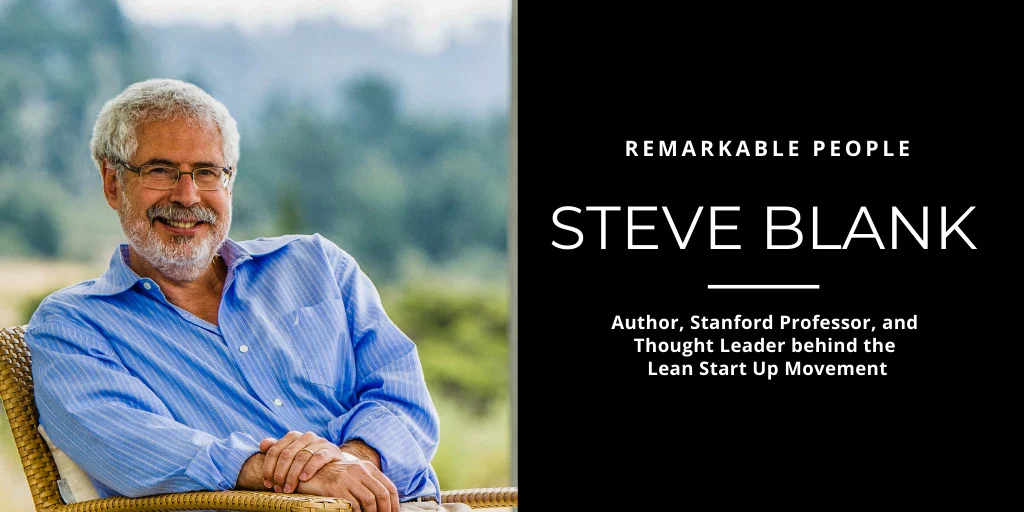
TechFlow Introduction: Steve Blank is a highly influential figure in Silicon Valley’s startup ecosystem—widely regarded as the “father of the Lean Startup.” He authored The Four Steps to the Epiphany and pioneered the Customer Development methodology.
Eric Ries’ The Lean Startup was built directly upon Blank’s foundational work. Blank has taught entrepreneurship courses at Stanford, UC Berkeley, and Columbia University, and the U.S. National Science Foundation’s I-Corps program is structured around his methodology.
Recently, Blank met for coffee with a founder he had invested in six years ago—and discovered that, while the founder had been heads-down building for half a decade, the external world had undergone a seismic shift.
This realization prompted Blank to write this article, whose core message is blunt and urgent:
If your company is over two years old, your business plan is almost certainly obsolete. AI is reshaping development speed, team size, pricing models, and competitive moats—and founders still running on a 2024 playbook are unlikely to make it to their next funding round.
For entrepreneurs—or anyone following tech and venture capital—these firsthand observations from across the Pacific are well worth reading.
Below is the full translation.
If your company is over two years old, many of your original assumptions have likely already collapsed.
You need to pause—whether you’re writing code, building product, hiring, or fundraising—and look up to see what’s happening around you. Otherwise, your company will die.
Anxiety Sparked by a Cup of Coffee
I just had coffee with Chris—a founder I invested in six years ago. Since then, he’s been heads-down building something that fits three criteria:
1) A complex autonomous systems problem,
2) In an existing market,
3) Using a distinctive business model.
Chris is now preparing to launch his first major funding round. When I reviewed his investor deck, I spotted a critical issue: While he’d been grinding away for years, the outside world had transformed completely.
The proprietary software moat he spent five years building for autonomous systems is rapidly losing its uniqueness. Ukraine’s autonomous drones and ground vehicles have catalyzed dozens—even hundreds—of new companies, many with larger teams and deeper pockets, all tackling the same problem.
Meanwhile, Chris has been pursuing customer adoption in a niche market (one that truly deserves disruption—but remains entrenched in the hands of incumbents), while demand for autonomous technologies has exploded in an adjacent market: defense.
Over the past five years, VC investment in defense startups has surged from near zero to $20 billion annually. His product is perfectly suited for logistics in contested environments and medical evacuation—but he’s entirely unaware of these opportunities in the defense sector.
Chris’s team did build an impressive system integration (deeply embedded into an existing flight platform—setting his solution apart from most competitors), and there’s still business to be had. But it’s no longer the business he originally envisioned.
After speaking with Chris, it hit me: Most startups older than two years are operating on obsolete business plans—and their technology stacks and team compositions are almost certainly outdated.
If you haven’t looked up recently, here’s what you’ve missed.
What Has Changed
VC money is flooding into AI. In 2025, AI-related projects captured two-thirds of total VC funding. That means if your startup isn’t AI-native, you’re competing for a shrinking pool of capital. Non-AI startups must now answer a tough question: Why can’t a better-funded, AI-native competitor simply eat your market?
For software founders, AI has completely rewritten the old equations of cost, speed, and labor. With tools like Claude Code or OpenAI Codex enabling Vibe Coding, an MVP (minimum viable product) can now be built in days—or even hours—not months. As a result, an MVP alone no longer proves your team’s capability.
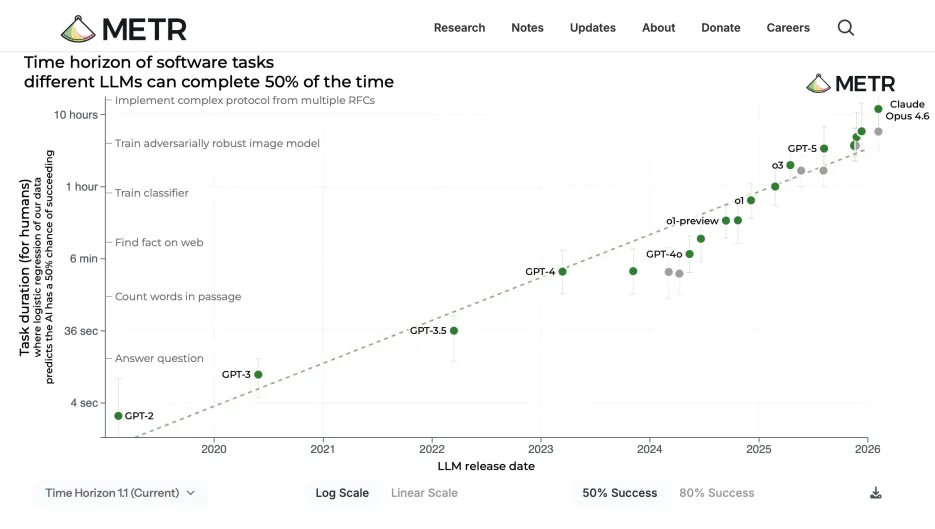
These tools are reshaping engineering teams: fewer engineers overall, and a growing specialization between “business process engineers” and “deep technical engineers.”
Tasks that once required entire development teams can now be handled by a handful of people—or sometimes just one. Data used to be a key differentiator and moat, but today’s foundation models (ChatGPT, Gemini, Claude) are commoditizing public data sources.

Caption: Model T vs. Ferrari
The very concept of Agile development needs rethinking.
The old bottleneck was: Can we afford to build and ship this product? Today’s bottleneck is: Do we know what to test? Can we reach users fast enough to learn? Agile is no longer a serial process. AI Agents can run multiple tasks in parallel—at the same or even lower cost. You can now test multiple versions of the same business simultaneously—or even test entirely different business directions. You can run five pricing models, ten marketing messages, and twenty UX flows—all at once. And the “user interface” may no longer be a screen—the real testing target may instead be finding the prompt that reliably delivers the desired outcome from an AI Agent.

Caption: The Shift from UI to AI Agent
The bottleneck is no longer engineering capacity—it’s shifted upward to judgment, deep insight into customer-desired outcomes, and distribution capability.
AI Agents Will Rewrite Every Software Category
AI Agents will transform every software category—including yours.
Today’s software applications operate like this: display information, then wait for users to act via dashboards, alerts, workflow tools, or reports. But customers buy software to get a job done—not to stare at more screens. Getting the job done—that’s what AI Agents (orchestrated via tools like OpenClaw) will autonomously deliver.
What does that mean?
If your product currently tells users “what to do next,” AI Agents will eventually do that step for them. If your competitor’s product automatically completes the task—and yours still waits for the user to click a mouse—you’re no longer competitive.
The next generation of applications won’t just display information on screens—they’ll act like employees: resolving support tickets, booking meetings, qualifying sales leads, and auto-replenishing inventory. As products shift from “software-as-interface” to “software-as-outcome,” pricing will evolve from per-seat licensing to outcome-based pricing: per resolved ticket, per booked meeting, per qualified lead closed.
(The pursuit of Product/Market Fit will become the pursuit of AI Agent/Customer Outcome Fit. The minimum viable product (MVP) will become the minimum producible outcome (MPO). I’ll explore this further in my next article.)
Hardware Isn’t Immune
For hardware founders, change is equally dramatic. Hardware remains bound by physics, capital requirements, supply chains, and manufacturing cycles—you still can’t skip metal cutting, prototyping, or chip tape-out. But AI lets you discard bad ideas faster. You can now simulate far more design variants, create digital twins, and pressure-test assumptions earlier and cheaper—before ever building a physical prototype. The result? Accelerated learning—and discovery (sometimes accelerated failure). In startups, failing faster is an advantage—not a liability.
Once AI is embedded as part of the system, the product itself changes. Add an AI backend to a camera, and it becomes a surveillance system, a vibration sensor, or a predictive maintenance tool. Robots become factory workers. Moats are no longer defined solely by hardware—they’re defined by what the hardware can sense *and* what AI can decide and act upon using that data.
The Sunk Cost Trap
Companies founded before 2025 typically optimized their tech stacks for a world where software development was expensive and highly customized. Agile and DevSecOps made us lean—but they operate serially, and teams were sized accordingly. Companies that spent years building “proprietary code and feature moats” are now discovering that AI is commoditizing much of their tech stack. This puts fundraising startups in an awkward position: Their business model may already be partially—or fully—obsolete.
While you’re heads-down building product and chasing Product/Market Fit, these shifts can easily go unnoticed.
Sunk costs—your tech stack, product features, UI, headcount—become reasons not to pivot: How can we throw away years of work? Our VCs invested in this direction. Customers still want a UI. Our team believes in this roadmap. Our customers aren’t ready yet.
(Chris is a classic case. He built something genuinely impressive—likely still competitive—but the business model built around it needs to change.)
Some sunk costs are actually assets: deep domain expertise, customer relationships, proprietary data, hard-won regulatory approvals, or physical integrations. These are worth preserving. Chris’s flight-platform integration falls into this category.
The sunk costs that are true liabilities are: large engineering teams built for slow software cycles, per-seat pricing models, and product roadmaps built around features—not outcomes. These are what’s known as the “Dead Moose on the Table” (Dead Moose on the table)—an obvious problem no one wants to name.
The founders who survive are those who can look at what they’ve built and ask: If I were starting over today—with today’s tools, in today’s market—what would I actually build?
That question feels deeply uncomfortable when you’ve already raised funding for a specific direction. But that discomfort pales in comparison to the alternative: Your investors telling you they won’t fund the next round—and you shutting down with an obsolete plan.
Summary
- You cannot run a 2026 race using a 2024 (or earlier) playbook. Fundraising, technology, and business models have all changed. Agile development is becoming parallel development.
- The pursuit of Product/Market Fit will become the pursuit of AI Agent/Customer Outcome Fit. The MVP will become the MPO (minimum producible outcome).
- A sunk-cost mindset will kill your company.
- Defensible moats may still reside in: proprietary data, deep understanding of customer outcomes, regulatory lock-in, or formal procurement status (Program of Record).
- If you’re sleeping soundly, you haven’t grasped what’s really happening.
- Founders who survive will step out of the office, assess reality, pivot, and course-correct.
Join TechFlow official community to stay tuned
Telegram:https://t.me/TechFlowDaily
X (Twitter):https://x.com/TechFlowPost
X (Twitter) EN:https://x.com/BlockFlow_News
 @sgblank