New Evidence in Argentina’s President Milei–LIBRA Scandal: Seven Call Records Revealed, $5 Million Payment Agreement Emerges
TechFlow Selected TechFlow Selected
New Evidence in Argentina’s President Milei–LIBRA Scandal: Seven Call Records Revealed, $5 Million Payment Agreement Emerges
Argentina’s Chamber of Deputies has reactivated its investigative committee and will begin summoning senior government officials starting April 8.
 Navigating Web3 tides with focused insights
By TechFlow
TechFlow Digest: According to call records obtained by Argentine federal prosecutors and cited by The New York Times, President Milei spoke with LIBRA token project core figure Novelli seven times on the evening of February 14, 2025—the same night Milei posted his promotional tweet for the LIBRA token. Investigators also discovered a draft agreement in Novelli’s phone outlining a $5 million promotional payment. After briefly surging to a market cap of $4.6 billion, the token crashed over 90%, resulting in losses for approximately 114,000 wallets, totaling $251 million. Argentina’s Chamber of Deputies has reactivated its investigative committee and will begin summoning senior government officials starting April 8.
Argentine President Javier Milei is facing the most severe political crisis of his administration.
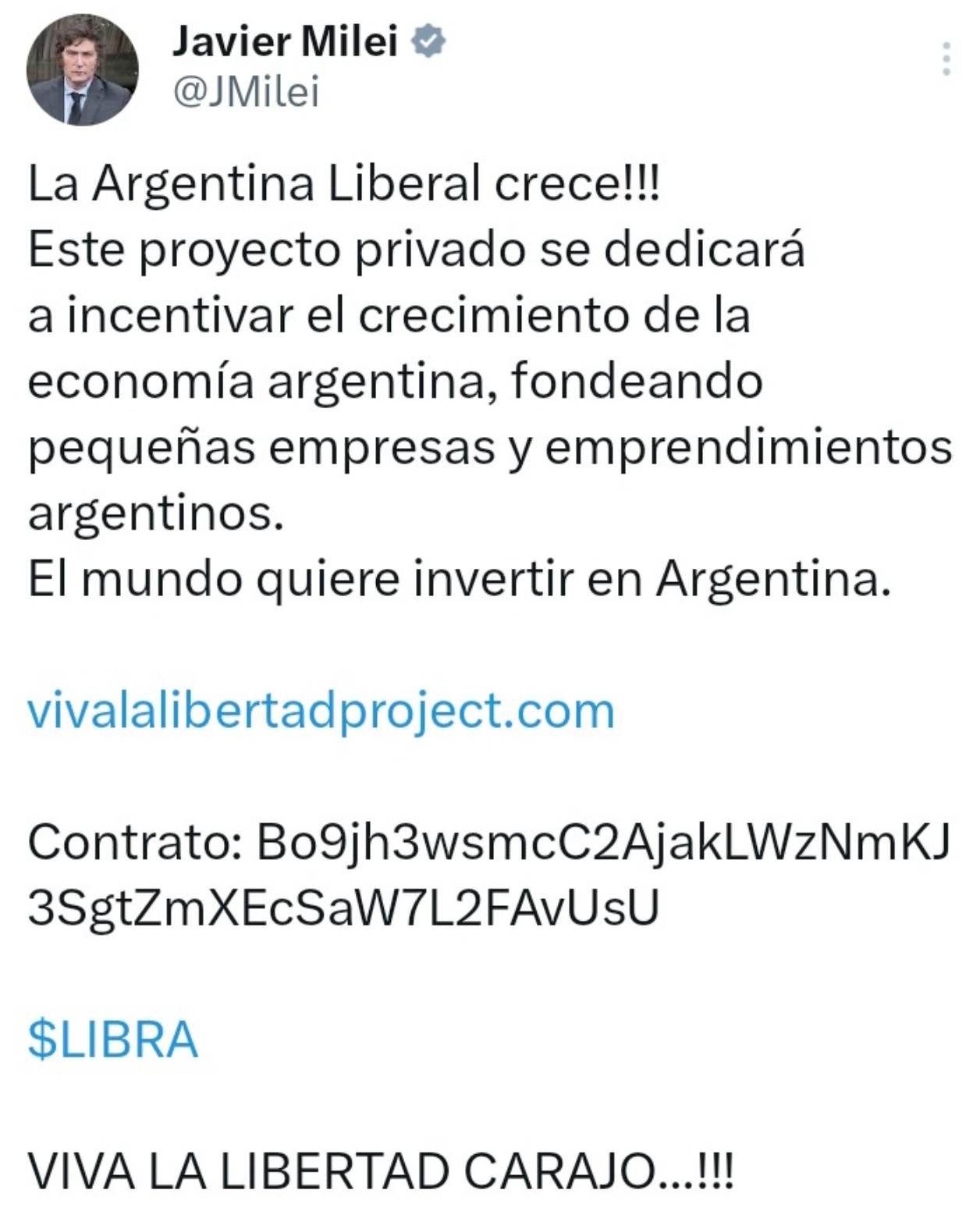
According to The Block, The New York Times published an investigative report on April 6 revealing that call records obtained by Argentine federal prosecutors show Milei spoke with Mauricio Novelli—central intermediary of the LIBRA token project—seven times on the evening of February 14, 2025 T. This was the very same night Milei posted the LIBRA token contract address on X (formerly Twitter), triggering this crypto scam. The calls occurred before and after the promotional post, directly contradicting Milei’s repeated prior claims that he had “no connection whatsoever” to the project.

The token was created by U.S. entrepreneur Hayden Mark Davis’s firm Kelsier Ventures, with insiders controlling approximately 70% of the supply. Shortly after Milei’s promotional post, LIBRA’s market cap surged from nearly zero to roughly $4.6 billion within minutes—only to plummet over 90% within hours. Nansen data shows that around 86% of traders incurred losses, with approximately 114,000 wallets collectively losing about $251 million.
$5 Million Agreement Draft Emerges, Undermining “Personal Act” Defense
Beyond call records, investigators extracted even more damning evidence from Novelli’s seized mobile phone.
According to crypto.news, a judicial update released in March disclosed that Novelli’s phone contained a draft agreement concerning a $5 million arrangement tied to LIBRA promotion, drafted just three days before Milei’s post. While the document does not prove Milei signed or actually received payment, it specifies a clear payment structure: part of the payment would be triggered by Milei’s public appointment of Davis as a cryptocurrency advisor.
Computer experts further confirmed that the 44-character LIBRA contract code included in Milei’s promotional post did not appear anywhere on public networks prior to his tweet—meaning Milei had access to internal technical information before the token’s public launch.
In addition, WhatsApp voice messages reviewed during the investigation reveal that Novelli regularly paid Milei while the latter was still a national congressman—and some payments were directed to Milei’s sister and Chief of Staff, Karina Milei. As previously reported by Argentine investigative outlet El Destape, such payments doubled in amount after Milei won the presidency in 2023.
From “Anti-Corruption Champion” to Investigative Target
This scandal inflicts far deeper political damage on Milei than typical crypto fraud controversies. Milei is currently listed as a “person of interest” in the ongoing federal prosecutor investigation but has not yet been formally charged.
In June 2025, Argentina’s Anti-Corruption Office ruled that Milei had not violated public ethics rules, deeming his promotional post a “personal act” rather than an official one. Yet this ruling now appears more like political cover than a legal conclusion. Milei then dissolved the investigative task force (UTI) probing the case via Decree No. 332/2025 in May 2025—shortly after the UTI had already submitted its insider trading investigation findings to prosecutors. Adding further intrigue, a judge had just ordered the unsealing of bank account records belonging to both Milei and his sister days before the dissolution decree was signed.
Fraud in Argentina carries penalties ranging from one month to six years’ imprisonment. Opposition lawmakers have filed impeachment motions, and lawyers have formally accused Milei of fraud.
Congress Reactivates Investigation, Begins Summoning Senior Officials April 8
The emergence of new evidence has rapidly triggered a political chain reaction.
Opposition lawmaker Maximiliano Ferraro announced the formation of a special committee to review the latest evidence. At a press conference, Ferraro stated that LIBRA’s launch and promotion were neither impromptu nor accidental—but rather a premeditated, coordinated operation.
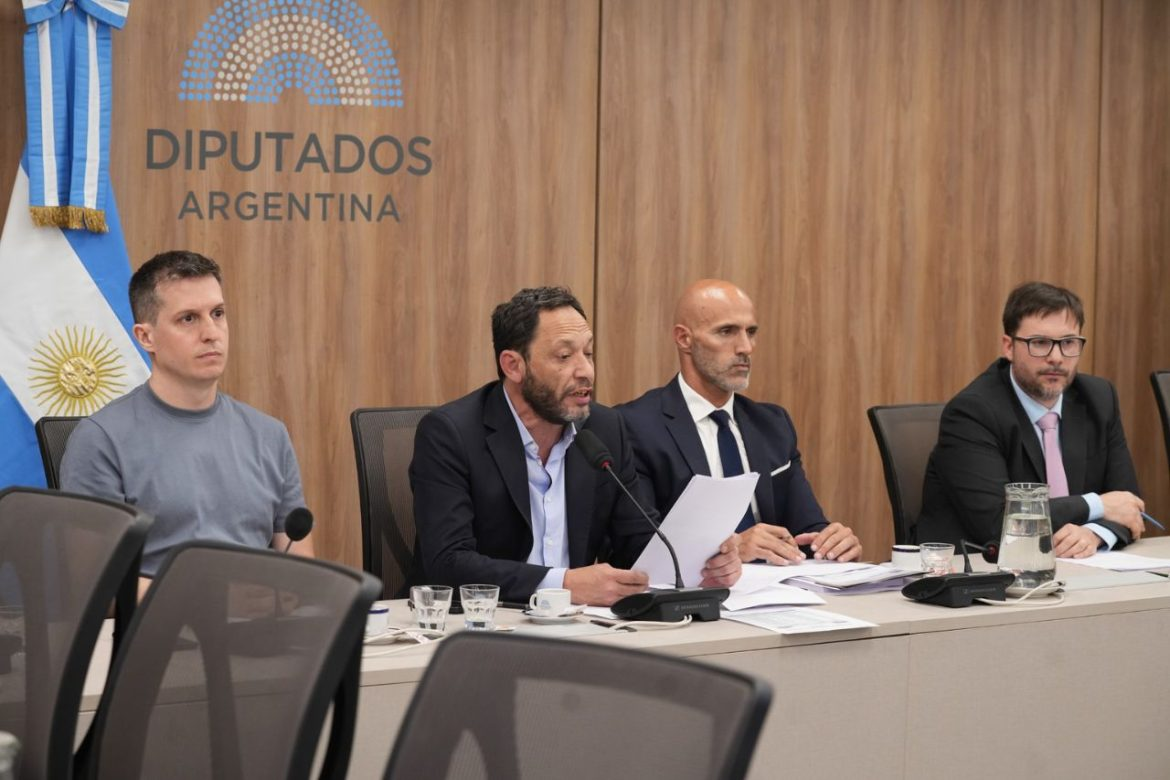
Argentina’s Chamber of Deputies began summoning government officials for questioning on April 8, with top officials—including Economy Minister Luis Caputo, Justice Minister Mariano Cúneo Libarona, and Cabinet Chief Guillermo Francos—expected to testify. However, Milei himself and Karina Milei are not on the initial list of summoned individuals; opposition parties have indicated they will continue pressing for both to appear.
On-Chain Data Retrospective: A Textbook Rug Pull
On-chain data provides a precise financial portrait of this scandal.
At 6:58 p.m. local time on February 14, 2025, Kelsier Ventures deployed the LIBRA token on the Solana blockchain. Three minutes later, at 7:01 p.m., Milei simultaneously promoted the token on X, Instagram, and Facebook, including the contract address. LIBRA’s price surged from $0.000001 to $5.20 within 40 minutes.
As previously reported by The Block, eight wallets associated with the project cashed out approximately $107 million during the collapse. Nansen data shows that just 36 wallets each earned over $1 million—with some earning as much as $70–100 million. The Economist described this distribution pattern as consistent with insiders having advance knowledge of Milei’s promotional post.
After the crash, Milei deleted his promotional post and claimed he “did not know the details of the project.” In November 2025, Argentina’s congressional investigative committee determined that Milei provided “essential collaboration” to the project.
LIBRA Scandal Timeline
Key milestones are summarized below:
- January 30, 2025: Davis met Milei at the Argentine Presidential Palace (Casa Rosada); Milei posted a selfie on X that day, introducing Davis as his cryptocurrency advisor
- February 11, 2025: Draft date of the $5 million agreement found on Novelli’s phone
- February 14, 2025: LIBRA token launched; Milei posted promotion; token surged then crashed; Milei and Novelli spoke seven times that evening
- May 2025: Milei dissolved the investigative task force (UTI) by decree
- June 2025: Anti-Corruption Office ruled Milei did not violate public ethics rules
- November 2025: Congressional investigative committee concluded Milei provided “essential collaboration”
- December 2025: According to Clarín, Davis had signed a confidential advisory agreement with the Argentine government
- March 2026: El Destape exposed the $5 million agreement draft and call records
- April 6, 2026: The New York Times published its investigative report, fully disclosing call record details
- April 8, 2026: Chamber of Deputies reactivated its investigation and began summoning government officials
Join TechFlow official community to stay tuned
Telegram:https://t.me/TechFlowDaily
X (Twitter):https://x.com/TechFlowPost
X (Twitter) EN:https://x.com/BlockFlow_News
 深潮TechFlow