Crypto Morning Brief: SEC’s Crypto Safe Harbor Proposal Enters White House Review Stage; Major Token Unlocks Expected This Week for APT, BABY, LINEA, and Others
TechFlow Selected TechFlow Selected
Crypto Morning Brief: SEC’s Crypto Safe Harbor Proposal Enters White House Review Stage; Major Token Unlocks Expected This Week for APT, BABY, LINEA, and Others
The central government has launched the “Sky Net 2026” campaign, with multiple departments working in concert to crack down on underground banks transferring illicit funds overseas.
 Navigating Web3 tides with focused insights
Author: TechFlow
Yesterday’s Market Highlights
Trump reiterates Tuesday as final deadline, calls Iran’s proposal “not good enough”
According to JIN10 Data, U.S. President Donald Trump reiterated on Monday local time that Tuesday is the final deadline he set for Iran to reach an agreement, adding that Iran’s proposed plan “is significant but still not good enough.”
Advisor to Iranian Parliament Speaker: Iran has clearly won the war and will accept only one endgame scenario
Mehdi Mohammadi, advisor to the Speaker of Iran’s Parliament, stated on social media on April 7 that Iran has clearly won the war and will accept only an endgame scenario that consolidates its gains and establishes a new regional security architecture. “President Trump now has roughly 20 hours left—either he capitulates to Iran, or his allies will be thrust back into the Stone Age,” he said. “We will never back down!”
SEC’s crypto “safe harbor” proposal enters White House review stage
According to The Block, SEC Chair Paul Atkins announced at the Vanderbilt University Digital Assets Summit that the SEC’s proposed crypto “safe harbor” framework has been submitted to the Office of Information and Regulatory Affairs (OIRA) under the White House Office of Management and Budget for review—the final step before formal issuance. The proposal includes a “startup exemption” clause, allowing crypto projects to raise funds for up to four years while providing specific disclosures to protect investors.
Atkins also revealed that the SEC is advancing an “innovation exemption” mechanism to establish a regulatory sandbox for on-chain assets—a move sparking debate between crypto advocates and traditional financial institutions. Atkins emphasized that relevant legislation remains essential to ensure the regulatory framework’s durability across successive administrations.
Central authorities launch “Sky Net 2026” operation to jointly combat illicit cross-border fund transfers via underground banks
According to Xinhua News Agency, the International Fugitive Repatriation and Asset Recovery Office of the Central Anti-Corruption Coordination Group convened a meeting to launch the “Sky Net 2026” operation. Under this initiative, the National Supervisory Commission will lead a special campaign targeting overseas asset recovery in official-duty-related corruption cases; the Ministry of Public Security (MPS) will conduct its “Fox Hunt” operation; the People’s Bank of China (PBOC), in coordination with the MPS, will implement a special campaign to prevent and crack down on illicit fund transfers overseas via offshore companies and underground banks; and the Organization Department of the CPC Central Committee, together with the MPS and the National Immigration Administration, will strengthen management of posts held by “naked officials” and address violations related to private overseas travel by public servants.
Drift: April 1 attack orchestrated by North Korea–backed hacker group UNC4736
Drift Protocol posted on X stating that preliminary findings from its investigation into the April 1, 2026 attack indicate the operation was orchestrated by UNC4736—a North Korea–backed hacking group also known as AppleJeus or Citrine Sleet. Since autumn 2025, the group has engaged Drift contributors face-to-face over six months—by sending intermediaries to crypto conferences and establishing fake quantitative trading firms—to lure them into downloading malicious code libraries or applications.
Drift has since frozen all protocol functions and removed compromised wallets from its multisig setup. Mandiant has been invited to conduct an in-depth forensic investigation. The investigation confirmed that on-chain funds used to test this operation are traceable to the attackers behind the Radiant Capital hack in October 2024.
Resolv Labs destroys 46 million USR tokens held by hackers via contract upgrade; actual loss reduced to $34 million
According to on-chain analyst Embers (@EmberCN), approximately one hour ago, stablecoin protocol Resolv Labs executed a contract upgrade to burn roughly 36.73 million $USR tokens (held as wstUSR) remaining in the attacker’s address.
Previously, on March 22, the attacker exploited a minting vulnerability to mint ~80 million USR tokens without collateral. Of these, ~34 million USR tokens were sold for 11,409 ETH (~$24.48 million), currently held at address 0x8ED...81C; the remaining ~46 million tokens were destroyed by the project team via the aforementioned contract upgrade. Taken together, the actual loss from this vulnerability exploit has been reduced to approximately $34 million.
Chaos Labs, top risk management firm for Aave, announces exit
According to The Block, Chaos Labs—the leading risk management firm for Aave—has officially announced its withdrawal from collaboration with Aave, ending three years of risk management services. Chaos Labs founder Omer Goldberg cited three primary reasons: persistent operational losses; the departures of core contributors BGD Labs and ACI; and fundamental disagreements with Aave Labs over risk management philosophy amid the rollout of Aave V4.
Aave Labs reportedly offered a $5 million budget retention package, yet Chaos Labs estimated a minimum of $8 million was required to operate both V3 and V4. Even if budget constraints were resolved, Goldberg noted, the divergent priorities on risk management would remain irreconcilable. He added that workload during the V4 transition period would double—not halve—and that existing infrastructure remains untested in live environments, posing nontrivial risks.
In response, Aave Labs CEO Stani Kulechov stated that the V4 migration has no mandatory timeline and that V3 remains fully operational.
Bloomberg: Binance Chief Compliance Officer Noah Perlman plans to depart this year or next
According to Bloomberg, Binance Chief Compliance Officer Noah Perlman is planning to leave the company this year or next, and has already begun discussions with management regarding his departure. Sources indicated Perlman has not yet finalized his departure date nor identified a successor. In response, Binance stated Perlman “has no departure date, no designated successor, and remains fully committed to his work ahead.”
Perlman joined Binance in early 2023 after serving as a U.S. federal assistant attorney. Earlier reports on Perlman’s potential departure have appeared in The New York Times and Fortune magazine.
Sharps Technology annual report: SOL holdings exceed 2 million tokens, ~95% actively staked
According to GlobeNewswire, Solana treasury firm Sharps Technology released its fiscal year-end financial results for the period ended December 31, 2025, disclosing that its SOL token holdings exceed 2 million tokens, with ~95% actively staked. Total revenue for FY2025 reached approximately $7 million—including $6.8 million in net staking income.
Sharps Technology also reported total assets of $269.1 million at FY2025 year-end, comprising $250.1 million in digital assets valued at fair value, $10.4 million in cash, and $14.2 million in positive working capital.
Market update: U.S. Treasury selects BNY Mellon (BK.N) and Robinhood (HOOD.O) to participate in Trump Account program
According to JIN10 Data, market sources indicate the U.S. Treasury has selected BNY Mellon (BK.N) and Robinhood (HOOD.O) to participate in the Trump Account program.
The “Trump Account”—also known as the Section 530A account—is a tax-deferred investment account plan proposed by U.S. President Trump on June 9, 2025, designed to establish government-funded savings accounts for children of U.S. citizens born between January 1, 2025 and January 1, 2029. Each account begins with $1,000 and invests in index funds tracking the U.S. stock market.
This week sees major token unlocks for APT, BABY, LINEA, and others—total value exceeds $36 million
Data from Token Unlocks shows major token unlocks for APT, BABY, LINEA, and others this week—total value exceeding $36 million.
APT: 11.31 million tokens unlock on April 12, valued at ~$9.65 million (0.68% of circulating supply);
BABY: 612.5 million tokens unlock on April 10, valued at ~$7.56 million (37.77% of circulating supply);
LINEA: 1.38 billion tokens unlock on April 10, valued at ~$4.68 million (5.32% of circulating supply);
RED: 40.85 million tokens unlock on April 6, valued at ~$4.25 million (13.89% of circulating supply);
CHEEL: 6.42 million tokens unlock on April 13, valued at ~$2.58 million (0.82% of circulating supply);
MOVE: 164.58 million tokens unlock on April 9, valued at ~$2.97 million (4.92% of circulating supply);
IO: 13.29 million tokens unlock on April 11, valued at ~$1.28 million (4.15% of circulating supply);
PEAQ: 84.84 million tokens unlock on April 12, valued at ~$1.20 million (4.23% of circulating supply);
ME: 10.73 million tokens unlock on April 10, valued at ~$1.09 million (2.21% of circulating supply);
AGI: 99.03 million tokens unlock on April 11, valued at ~$1.07 million (4.59% of circulating supply).
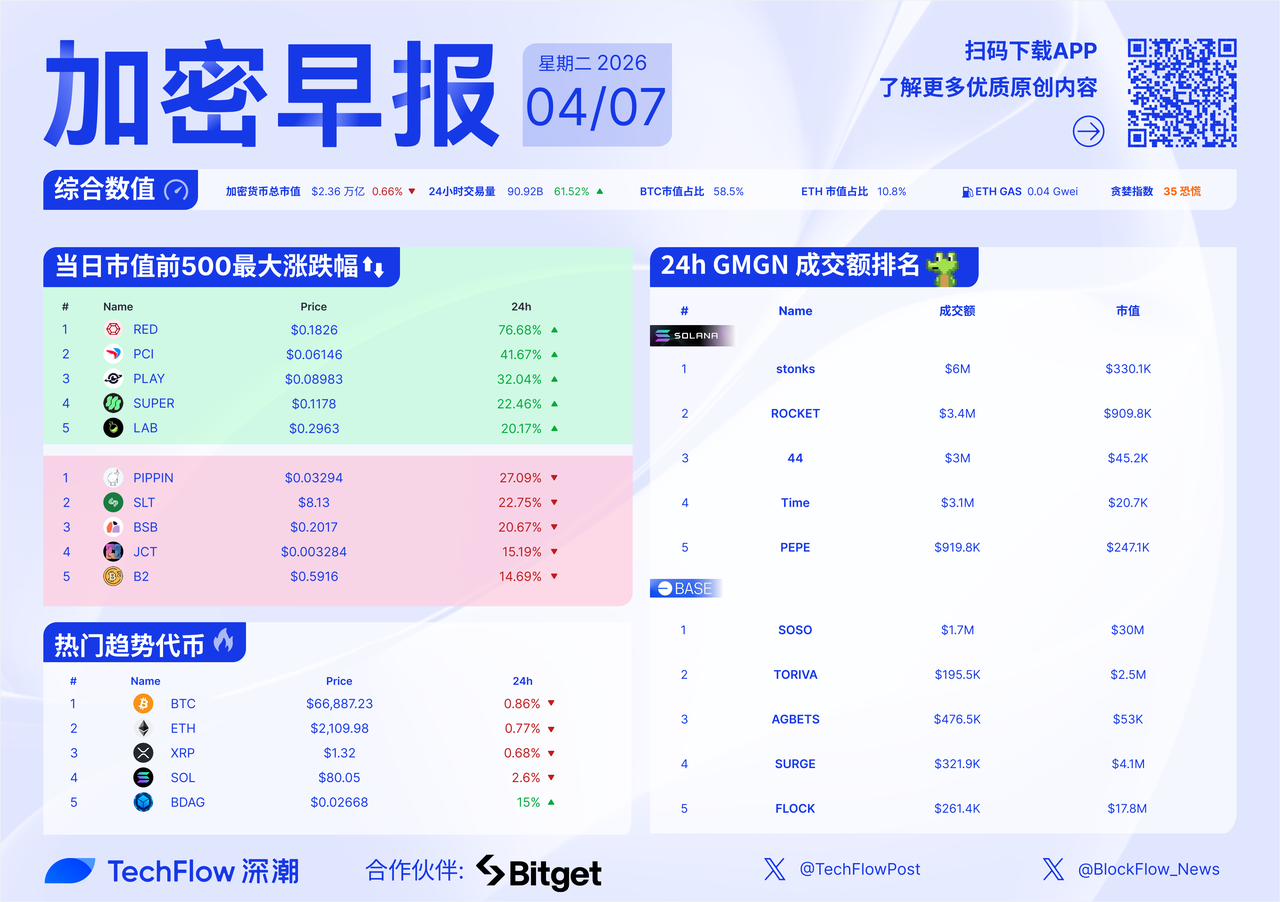
Market Data
Recommended Reading
The $2.4 Billion Dark River: The Rise and Fall of Huiwang Guarantee
https://www.techflowpost.com/zh-CN/article/30976
This article details the rise and fall of Huiwang Group and its subsidiary Huiwang Guarantee. It traces the personal journey of Huiwang Group founder Chen Zhi—from a cybercafé youth in Fujian Province to a Cambodian-Chinese entrepreneur—describing how he built a vast underground financial empire through fraud and money laundering. The article also uncovers Huiwang Guarantee’s illegal trading marketplace on Telegram, which collapsed under coordinated global regulatory enforcement—though similar criminal models persist on other platforms.
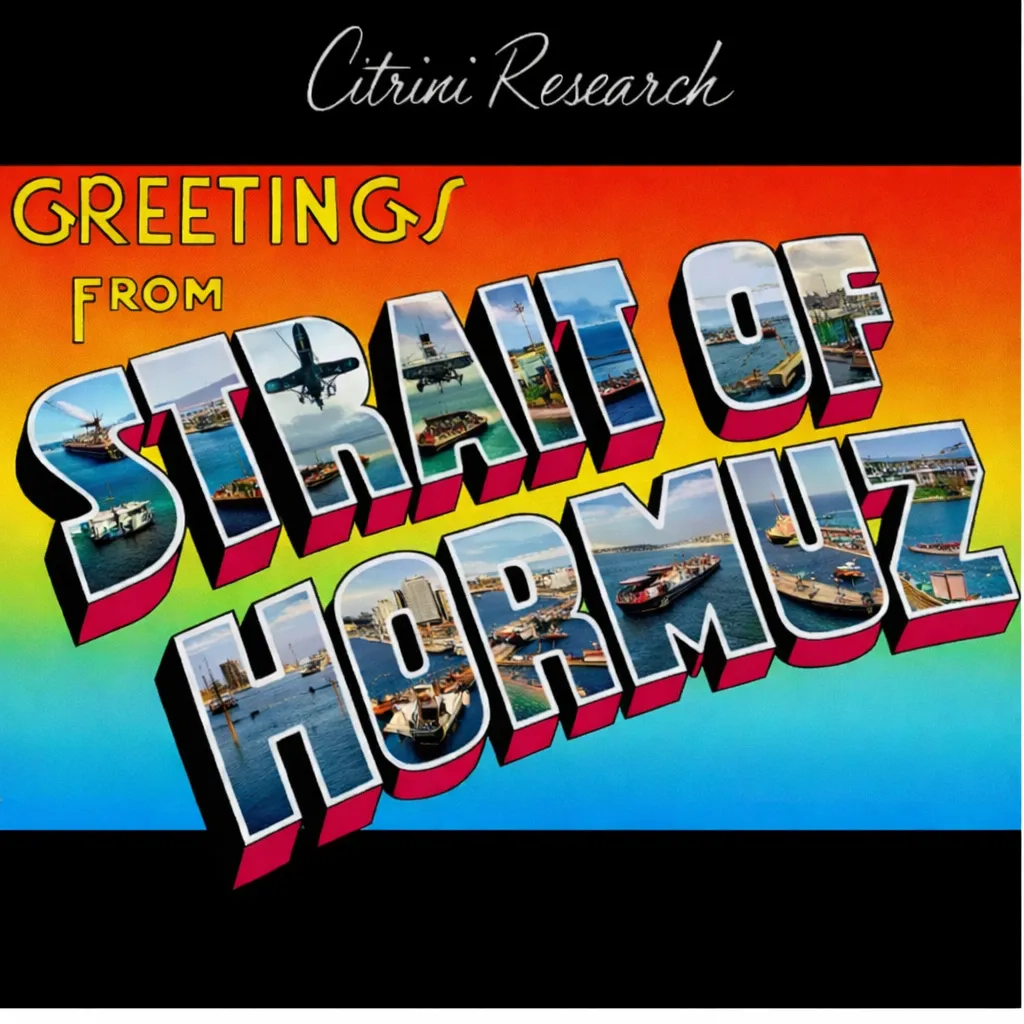
Citrini Research’s field study in the Strait of Hormuz
https://www.techflowpost.com/zh-CN/article/30994
This article documents Analyst No. 3’s full field research trip to the Strait of Hormuz and analyzes the current geopolitical situation there and its impact on the global economy. It explores how Iran manages the strait through a “toll-based passage” model and reveals the complex realities on the ground amid ongoing conflict. The author notes that despite escalating U.S.-Iran tensions, shipping volumes through the strait are gradually recovering—and the world is shifting toward multipolarity.
23 AI Trends That Keep Me Up at Night: From “One-Hour Startups” to “Ambience-First Businesses”—The Golden Window for AI Entrepreneurship Closes in Just 12 Months
https://www.techflowpost.com/zh-CN/article/30978
This article explores 23 AI-related trends reshaping entrepreneurship—including one-hour startup tech stacks, autonomous companies, agent economies, vertical AI opportunities, and AI-driven outcome-based pricing models. It further analyzes AI-related security risks and mitigation strategies, underscoring the urgent, narrowing window for entrepreneurial opportunity in AI.
NVIDIA’s China market share falls below 60%; domestic AI chips deliver 1.65 million units annually to capture market share
https://www.techflowpost.com/zh-CN/article/30982
This article describes how U.S. export controls and China’s domestic substitution policies have reduced NVIDIA’s share of China’s AI chip market from 95% to 55%, while domestic vendors’ share has risen to 41%. Domestic chipmakers are racing to replicate NVIDIA’s CUDA software ecosystem to enhance competitiveness. China’s GPU sector is experiencing an IPO wave, with Huawei, Bitmain, and Moore Threads intensifying R&D efforts and reducing reliance on U.S. technology.
X deploys “killer measure” against crypto scams: First-time token launch tweets automatically locked—identity verification required to unlock
https://www.techflowpost.com/zh-CN/article/30986
This article analyzes X’s new anti-crypto-scam mechanism: accounts publishing crypto-related content for the first time will be automatically locked and must undergo identity verification before unlocking. This policy aims to economically disincentivize hackers from promoting fraudulent tokens using hijacked accounts, while X also strengthens monitoring of account takeovers and bulk spam.
Join TechFlow official community to stay tuned
Telegram:https://t.me/TechFlowDaily
X (Twitter):https://x.com/TechFlowPost
X (Twitter) EN:https://x.com/BlockFlow_News
 深潮TechFlow