Crypto Morning Brief: Initial Jobless Claims Better Than Expected; SpaceX’s IPO Target Valuation Rises to Over $2 Trillion
TechFlow Selected TechFlow Selected
Crypto Morning Brief: Initial Jobless Claims Better Than Expected; SpaceX’s IPO Target Valuation Rises to Over $2 Trillion
Telegram’s built-in crypto wallet announces the launch of perpetual contract functionality, powered by Lighter.
 Navigating Web3 tides with focused insights
Author: TechFlow
Yesterday’s Market Highlights
Iran says it is drafting a Strait of Hormuz passage agreement with Oman
According to the Islamic Republic News Agency (IRNA): Iranian Deputy Foreign Minister Gharibabadi stated that Iran is drafting a Strait of Hormuz passage agreement with Oman.
U.S. initial jobless claims for the week ending March 28 totaled 202,000, below expectations of 212,000; prior week revised from 210,000 to 211,000
According to JINSHI Data, U.S. initial jobless claims for the week ending March 28 totaled 202,000, below expectations of 212,000; the prior week was revised upward from 210,000 to 211,000.
Fed’s Logan: Supports holding rates steady
According to JINSHI Data, Federal Reserve Governor Logan stated support for holding interest rates steady at the most recent FOMC meeting, noting that the labor market has stabilized since the second half of 2025 through this year.
MII: Exploring innovative services such as “Compute Power Banks” and “Compute Power Supermarkets” to enable SMEs to deposit idle compute resources
According to JINSHI Data, the Ministry of Industry and Information Technology (MIIT) issued a notice on launching an inclusive computing power initiative to empower SME development. The notice highlights innovation in inclusive computing services: enhancing dedicated SME zones on China’s Computing Power Platform, China SME Service Network’s computing resource matching zone, and national computing power internet service nodes (collectively referred to as SME platform zones), facilitating precise matching between SME demand and computing supply; promoting flexible payment models including “GPU-hour,” “CPU-core-hour,” and token-based billing; exploring innovative services such as “Compute Power Banks” and “Compute Power Supermarkets” to allow SMEs to deposit idle computing resources and withdraw them flexibly via cross-regional and cross-temporal scheduling; implementing an AI-focused SME startup support program, encouraging local authorities to subsidize qualified SMEs—aligned with industrial policy priorities—with “compute vouchers,” “storage vouchers,” and “networking vouchers” via SME platform zones, while streamlining application and usage procedures.
MOC responds to Meta’s acquisition of Manus and questions on cross-border corporate operations
According to JINSHI Data, the Ministry of Commerce (MOC) held its regular press briefing on April 2. A reporter asked about China’s stance on Meta’s acquisition of Manus and broader issues concerning cross-border corporate operations. MOC Spokesperson He Yadong responded that the Chinese government supports enterprises engaging in cross-border operations and technological cooperation as needed, provided such activities comply with Chinese laws and regulations and follow statutory procedures.
Telegram’s built-in crypto wallet launches perpetual futures trading, powered by Lighter
Telegram’s built-in crypto wallet, Wallet in Telegram, has officially launched perpetual futures trading. Users can now open long or short positions directly within the Telegram app. The feature currently supports over 50 trading markets across asset classes including precious metals, equities, crude oil, and cryptocurrencies, with maximum leverage up to 50x. The underlying infrastructure is provided by Lighter, a decentralized perpetual futures protocol.
Coinbase receives conditional OCC approval to establish a national trust company
According to Coinbase’s official disclosure, Coinbase has received conditional approval from the U.S. Office of the Comptroller of the Currency (OCC) to establish Coinbase National Trust Company, thereby formally obtaining a federal trust charter.
This charter is specifically designated for custody and market infrastructure services. Coinbase explicitly states it will not transform into a commercial bank, will not accept retail deposits, and will not engage in fractional-reserve banking. The OCC federal trust charter provides a unified federal regulatory framework for its custody business and lays the groundwork for new offerings such as payments and related services.
Bitcoin miner MARA cuts ~15% of workforce amid strategic pivot to energy and digital infrastructure
According to Blockspace, MARA (NASDAQ: MARA), one of the world’s largest Bitcoin mining companies, has reduced its workforce by approximately 15%, affecting full-time employees and some contractors across multiple departments. In an internal memo, CEO Fred Thiel stated this layoff is not purely a financial decision but part of the company’s strategic transformation from a pure Bitcoin miner into an energy and digital infrastructure company.
Earlier this year, in February, MARA completed a majority acquisition of Exaion, a subsidiary of French energy giant EDF, marking its formal entry into AI and high-performance computing (HPC). MARA also entered into an agreement with data center developer Starwood to repurpose approximately 1 GW of its mining infrastructure for AI workloads.
In addition, MARA recently sold over 15,133 BTC (valued at ~$1.1 billion) to repay its $1 billion convertible bond. Its net loss for fiscal year 2025 totaled $1.3 billion, with adjusted EBITDA at -$330.8 million. Affected employees will receive one month of paid leave, 13 weeks of severance pay, and full compensation for unused vacation days.
Bloomberg: OpenAI shares cooling off in secondary markets as investors pivot to Anthropic
According to Bloomberg, OpenAI shares are losing appeal in secondary markets—so much so that they are nearly unsellable in some cases. Ken Smythe, founder of secondary market platform Next Round Capital, revealed that roughly six institutional investors recently attempted to sell ~$600 million worth of OpenAI shares but found no buyers. Meanwhile, buyers have signaled readiness to invest $2 billion in Anthropic.
Multiple secondary market platforms—including Augment and Hiive—have recorded record demand for Anthropic shares, with valuation bids reaching ~$600 billion, representing over a 50% premium relative to its last funding round valuation of $380 billion.
Analysts note that the vast gap between OpenAI’s current $852 billion valuation and Anthropic’s makes the latter more attractive on a risk-adjusted basis. Furthermore, OpenAI’s high operating costs and slow enterprise customer adoption are prompting investor caution, whereas Anthropic’s dominance in the high-margin enterprise market is widely viewed as promising for growth.
Tether pushes final push for fundraising at $500 billion valuation
According to JINSHI Data, Tether is making a final push to close its fundraising round at a $500 billion valuation, urging investors to commit within the next two weeks.
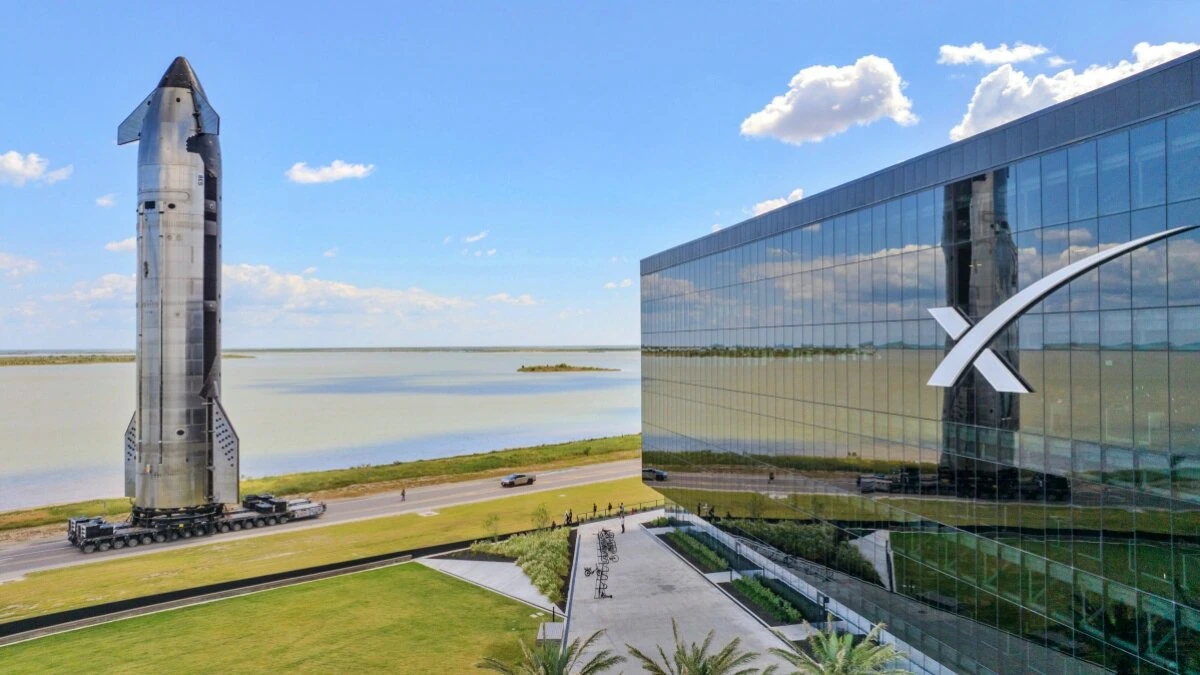
SpaceX poised to reach $2 trillion valuation, surpassing Meta and Tesla
According to JINSHI Data, informed sources indicate SpaceX has raised its target valuation for its initial public offering (IPO) to over $2 trillion. These sources say the company and its advisors are communicating this valuation goal to potential investors in preparation for meetings scheduled in the coming weeks. As previously reported by foreign media, these so-called “test-the-waters” briefings may include additional information supporting this valuation.
A February report indicated that after acquiring Elon Musk’s xAI, the combined entity’s valuation stood at $1.25 trillion. At a $2 trillion valuation, SpaceX would rank above all S&P 500 companies except NVIDIA, Apple, Alphabet (Google’s parent), Microsoft, and Amazon—and would also exceed two members of the “Magnificent Seven”: Meta and Tesla, both led by Elon Musk.Market Updates
Recommended Reading
The $59 billion mirage: How the “female Buffett” fell from grace
https://www.techflowpost.com/zh-CN/article/30960
This article chronicles the rise and fall of Cathie Wood—the so-called “female Buffett”—and her ARK Investment Management fund. It analyzes her investment strategy, the drivers behind her success and subsequent decline, and the contradictions between her personal brand and investment philosophy, revealing how she transformed from “stock-picking goddess” to a fleeting phenomenon.
Nearly $300 million targeting the 2026 U.S. midterm elections: Tether executive chairs crypto’s second-largest political action committee
https://www.techflowpost.com/zh-CN/article/30965
This article discusses the escalating “arms race” in cryptocurrency politics. Jesse Spiro, a Tether executive, has been appointed chair of Fellowship PAC, formalizing Tether’s association with this super PAC. Combined, Fellowship PAC and Fairshake PAC—two major crypto-aligned PACs—hold nearly $300 million in political funds targeting the 2026 U.S. midterm elections. Meanwhile, the CLARITY Act—a bill governing stablecoin yields—has stalled in the Senate, directly impacting the business models of Tether and other crypto firms. Through this executive appointment, Tether demonstrates proactive engagement in legislative negotiations.
DeFi’s “God Key”: Examining DeFi’s greatest vulnerability through the $285 million Drift hack
https://www.techflowpost.com/zh-CN/article/30954
This article provides a detailed analysis of the April 1, 2026, hack against Drift Protocol—the largest perpetual futures exchange on Solana. Attackers exploited compromised admin keys to steal hundreds of millions of dollars in assets. The piece explores the contradiction between DeFi’s decentralization ethos and persistent centralized security risks in practice, urging the industry to confront this issue head-on and proposing potential solutions.
After open-sourcing code, Anthropic issues 8,000+ copyright takedown requests—its “security-first” image suffers its most awkward week yet
https://www.techflowpost.com/zh-CN/article/30966
This article recounts how Anthropic—a company built around the principle of “AI safety”—found itself in unprecedented embarrassment over the past week due to two major incidents. First, its core product Claude Code’s source code was accidentally exposed due to human error, resulting in 512,000 lines being mirrored and modified. Second, its DMCA takedown requests submitted to GitHub triggered significant community backlash, forcing Anthropic to withdraw most of them. These events expose serious deficiencies in internal process management and ignite legal debates over copyright ownership of AI-generated code. Occurring during a sensitive pre-IPO period, the incidents may impact operational transparency and valuation.
SpaceX files confidential IPO documents, targets $1.75 trillion valuation in bid for history’s largest listing—space stocks surge intraday
https://www.techflowpost.com/zh-CN/article/30972
This article reports that SpaceX has confidentially filed its IPO registration documents with the U.S. Securities and Exchange Commission (SEC), targeting a $1.75 trillion valuation and aiming to raise $7.5 billion. If successful, it would become the largest IPO in history. Current geopolitical tensions and market volatility could affect IPO execution; analysts estimate a 63% probability of completing the listing before June 30. SpaceX’s IPO is seen as a bellwether for both the aerospace industry and the AI investment boom, potentially ushering in a 2026 “super-cycle” of IPOs alongside anticipated listings from OpenAI and Anthropic.
Join TechFlow official community to stay tuned
Telegram:https://t.me/TechFlowDaily
X (Twitter):https://x.com/TechFlowPost
X (Twitter) EN:https://x.com/BlockFlow_News
 深潮TechFlow