

The New York Stock Exchange has completely revolutionized the traditional closing process.
TechFlow Selected TechFlow Selected
The New York Stock Exchange has completely revolutionized the traditional closing process.
This article will delve into the New York Stock Exchange’s actual operational model and explain why it is more than just a headline-grabbing news item.
 Navigating Web3 tides with focused insights
By: Vaidik Mandloi
Translated by: Block Unicorn
Introduction
Last week, the New York Stock Exchange (NYSE) announced plans to build a 24/7 blockchain-based tokenized securities trading platform. At first glance, this appears to be yet another headline about “traditional finance adopting blockchain.” For those who have followed the cryptocurrency space over the past several years, tokenized equities, on-chain settlement, and stablecoin financing are already familiar concepts.
Yet this announcement is not about testing new technology—it is about challenging market domains that have rarely changed.
Equity markets still operate on fixed trading hours and delayed settlement—a structure preserved because it has effectively managed risk for decades. Trading occurs within narrow time windows, while clearing and settlement happen afterward. Significant capital sits idle between trade execution and settlement to absorb counterparty risk. Though stable, this system suffers from slowness, high cost, and increasing misalignment with how global capital flows today.
The NYSE’s proposal directly challenges this architecture by redefining how markets handle time: a never-closing trading venue, settlement occurring closer to execution time, fewer—but still present—periods when prices stop updating—all point in the same direction.
Unlike crypto markets, which were built under different constraints and run continuously—pricing, executing, and settling in real time, reflecting risk instantly rather than deferring it—regulated equity markets can pause trading or delay settlement. While continuous operation has its own shortcomings, it eliminates the inefficiencies inherent in time-dependent systems still relied upon by traditional markets.
The NYSE is now attempting to integrate elements of continuous trading into a regulated environment while preserving the safeguards that maintain equity market stability. This article explores how the NYSE would actually operate—and why this initiative is far more than a headline-grabbing announcement.
Why This Is Not “Just Another Tokenization Announcement”
The core focus of the NYSE’s announcement is not tokenization itself. Tokenized equities have existed in various forms for years—but most attempts have failed. What sets this announcement apart is who is initiating tokenization—and at what level it operates.
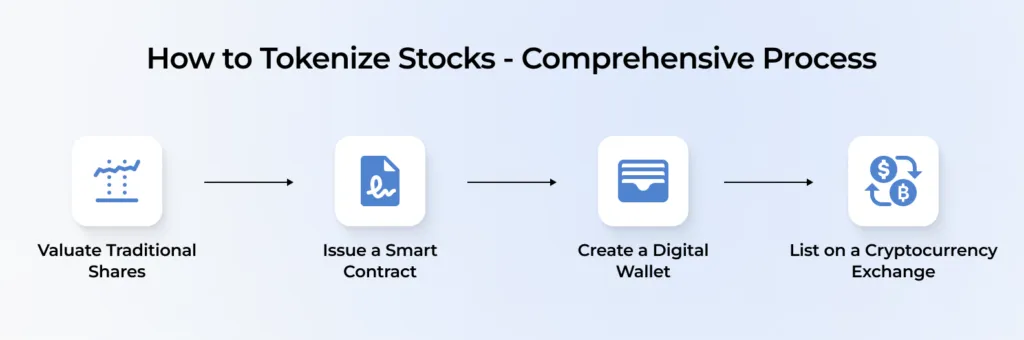
Past efforts to launch tokenized equities aimed to replicate underlying stocks outside core markets—for example, FTX’s tokenized equities, Securitize’s tokenized equity products, and synthetic equity products built on protocols like Mirror and Synthetix. These traded across different venues and time zones, relying on price data from markets that frequently close. As a result, they struggled to sustain liquidity and were largely relegated to niche access tools—not core market instruments.
All these early attempts occurred outside the primary equity market. They did not alter how equities are issued, settled, or priced—or how risk is managed within the actual pricing framework.
In contrast, the NYSE is tackling the problem from within. Rather than launching parallel products, it is adapting trading and settlement mechanics inside a regulated exchange. The securities themselves remain unchanged—but how they are traded and settled evolves over time.
The most critical part of this announcement is the decision to combine continuous trading with on-chain settlement. Either change could be implemented independently: the NYSE could extend trading hours without introducing blockchain; it could experiment with token issuance without altering trading hours. Yet it chose to bundle both. This signals that the NYSE’s priority is not convenience or user experience—but rather how risk exposure and capital behave when markets run continuously.
Much of today’s market infrastructure exists to manage what is known as the “time gap.” When markets close, trading halts—but positions remain open. Even if prices no longer move, risk and exposure persist. To manage these gaps, brokers and clearing agencies require collateral and safety buffers—capital locked up until settlement completes. This process is stable, but its efficiency erodes as trading speeds increase, global participation grows, and more activity occurs outside local trading hours.
Continuous markets and faster settlement shorten this gap. Risk is addressed as soon as it arises—not deferred overnight or across multiple days. This does not eliminate risk, but it reduces how long capital must sit idle solely to cover temporal uncertainty. This is precisely the challenge the NYSE is addressing.
It is also why stablecoin-based financing fits naturally into this model.
Today, cash and securities flow through separate systems—often on divergent schedules—causing delays and requiring extra coordination. On-chain cash enables counterparties to transact synchronously, eliminating waits for external payment systems. Combined with continuous trading, this is essential for a global market where information and investors are active around the clock. Prices can adjust in real time when news breaks—not hours later at the next market open. Yet whether this improves market resilience under stress remains unclear—and that is exactly where the true significance lies.
What Changes Inside the Market
A simple yet profound consequence of the NYSE’s proposed model lies behind the scenes—in how trades are cleared and settled. Today’s equity markets rely heavily on netting. Millions of trades offset each other before settlement, reducing required cash and collateral. This works well in systems built on fixed trading hours and delayed settlement—but it also depends on time gaps to operate efficiently.
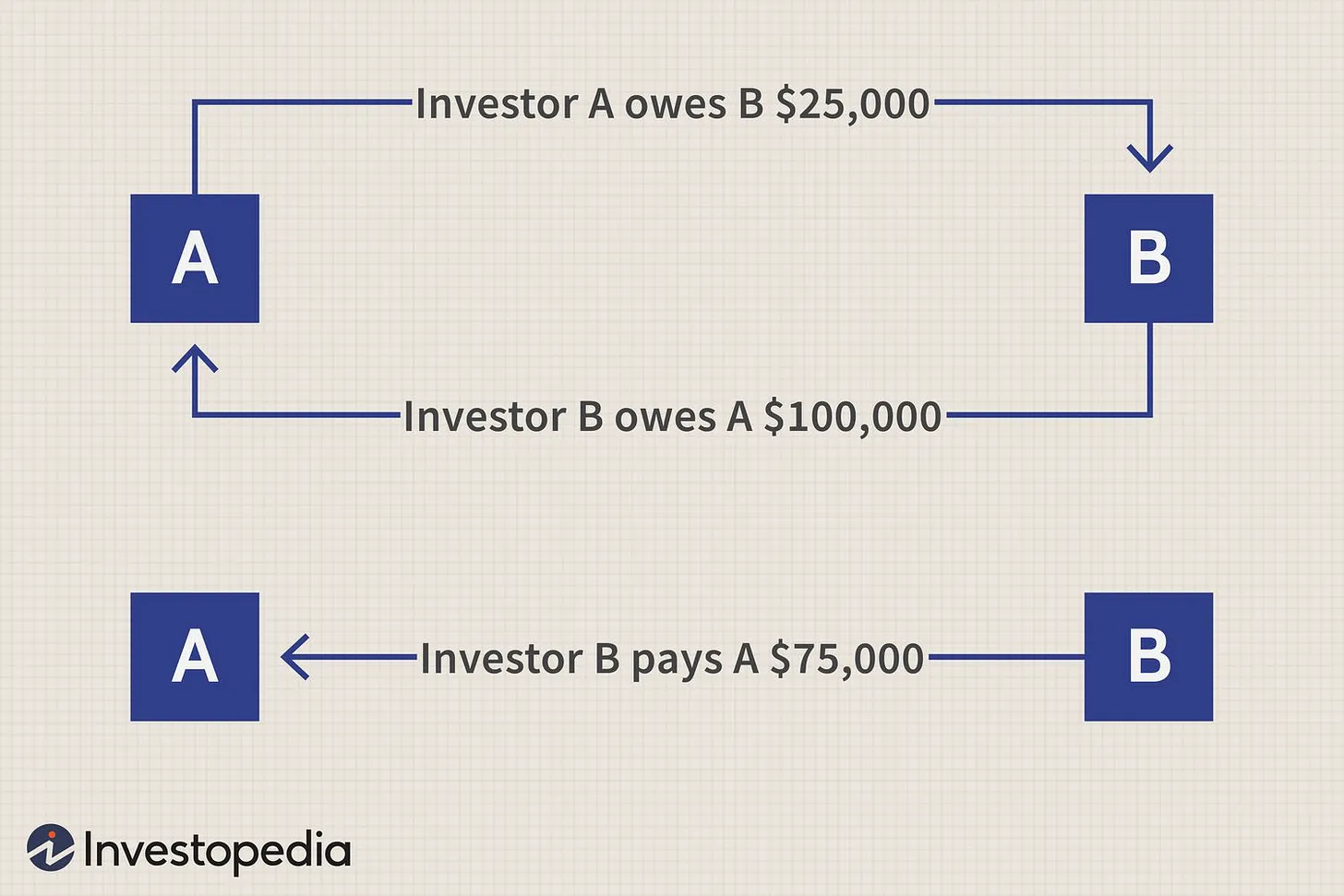
Continuous trading and faster settlement change how clearing works. When settlement accelerates, opportunities to net large volumes of trades via end-of-day netting shrink. That means some efficiency gains from batch processing diminish. Brokers, clearing members, and liquidity providers must manage funds and risk exposures throughout the trading day—not rely on overnight settlement processes to absorb and distribute risk.
Market makers and large intermediaries will adapt first. Under current models, they hold inventory and adjust positions according to predictable settlement cycles. With faster settlement and continuous trading, position turnover accelerates—and capital must arrive faster. Firms already using automation, real-time risk checks, and flexible liquidity will navigate this more easily. Others face tighter constraints, as there is less time to rebalance positions or rely on overnight settlement.
Short selling and securities lending face similar pressure. Today, borrowing shares, locating inventory, and resolving settlement issues typically involve multiple steps and time windows. Shorter settlement timelines compress these steps—making delivery failures harder to postpone and causing borrowing costs and availability to adjust more rapidly to market shifts.
Most importantly, much of this impact happens behind the scenes. Retail users may notice little change at the interface level—but institutions providing liquidity and managing funding positions face stricter time constraints. Some friction points vanish, while others become harder to ignore. Time no longer masks errors; systems must stay synchronized throughout the trading day—not reconcile afterward.
Second-Order Effects
Once markets stop relying on time as a buffer, a new set of constraints emerges—starting with how large institutions reuse capital internally. Today, a single balance sheet can support positions across multiple settlement cycles because debts eventually offset over time. But tighter settlement cycles make such reuse harder. Capital must arrive earlier and more precisely—quietly reshaping internal capital allocation decisions, limiting leverage, and altering how liquidity is priced during market volatility.
Another consequence is how volatility propagates. In batch-processing markets, risk often accumulates during market closures and releases at predictable moments—like open or close. With continuous trading and settlement, this clustering effect disappears. Price moves spread across the entire timeline—not concentrated in specific windows. This doesn’t make markets calmer—but it does make volatility harder to predict and manage, and less amenable to legacy strategies relying on pauses, resets, or downtime.
This also affects coordination across markets. A significant portion of price discovery today occurs not on primary equity venues—but via futures, ETFs, and other proxy instruments—largely because the underlying market is closed. When primary venues stay open and settle faster, the need for such workarounds declines. Arbitrage opportunities shift back to primary markets—altering derivatives’ liquidity patterns and reducing demand for hedging through indirect instruments.
Finally, it changes the exchange’s own role. Exchanges evolve from mere order matchers to active participants in risk coordination. This increases their responsibility during stress events—and narrows the distance between trading infrastructure and risk management.
Collectively, these effects explain why this initiative matters—even if it won’t immediately transform market appearance or atmosphere. Its impact unfolds gradually: in how capital is reused, how volatility disperses over time, how arbitrage migrates toward primary venues, and how balance sheets are managed under tighter constraints. These are not short-term improvements or superficial upgrades—they are structural changes reshaping incentives deep within the system. Once markets begin operating this way, reversing them will prove far harder than adopting them in the first place.
In today’s market structure, delays and multi-layered intermediaries act as buffers when problems arise—allowing issues to surface later, losses to be absorbed incrementally, and responsibility to be diffused across time and institutions. But as timelines compress, this buffering effect weakens. Funding and risk decisions move closer to execution. There is less room to conceal errors or defer consequences—so failures surface earlier and become easier to trace.
The NYSE is testing whether a large, regulated market can function reliably under these conditions—without relying on delayed trading to manage risk. Shortening the time between trade execution and settlement leaves less room to adjust positions, diversify funding, or address issues post hoc. This forces problems to surface during normal trading—not defer them to downstream processes—clearly exposing market vulnerabilities.
Join TechFlow official community to stay tuned
Telegram:https://t.me/TechFlowDaily
X (Twitter):https://x.com/TechFlowPost
X (Twitter) EN:https://x.com/BlockFlow_News















