YC's Latest Barometer: 9 Startups Backed by Top VCs
TechFlow Selected TechFlow Selected
YC's Latest Barometer: 9 Startups Backed by Top VCs
YC Demo Day, a "barometer" for the global venture capital community, has become a stage for startups in the AI era to "showcase their strength."
 Navigating Web3 tides with focused insights
Every year, YC (Y Combinator) Demo Day serves as a barometer for the global venture capital community—a stage that launched companies like Airbnb and Dropbox, and has now become the arena where startups in the AI era flex their muscles.

Last week, YC’s Summer 2025 Demo Day concluded, with over 160 startups making their debut. Unlike previous batches, this year's trend is clear: many companies are no longer focused on "AI-powered" products, but instead are building AI agents or developing the infrastructure and tools needed to create these agents.
TechFlow spoke with several investors specializing in YC, learning which startups they found most compelling and which attracted the highest investment interest. We hope this serves as a starting point for you to gain insight and spark deeper thinking.
Autumn

Business focus: Stripe for AI startups (payment solutions).
Why it stands out: Many AI startups use complex pricing models, often combining fixed subscription fees per seat, usage-based billing, credits, and various add-ons. Managing such intricate pricing on Stripe is time-consuming and requires manual intervention.
To address this, Autumn has developed an open-source infrastructure that simplifies integration with Stripe for AI startups. The company claims its technology is already used by hundreds of AI applications and 40 YC startups. Given Stripe’s dominance in payments and the explosive growth of the AI market, could a billing solution purpose-built for AI become the next major fintech success story?
Dedalus Labs

Business focus: Vercel for AI agents (frontend development and deployment platform).
Why it stands out: Just as Vercel helps developers deploy and host websites, Dedalus Labs claims its platform automates the infrastructure required to build AI agents, reducing hours of coding to just a few clicks. The company handles complex tasks like auto-scaling and load balancing, making AI agent deployment fast and simple.
Design Arena
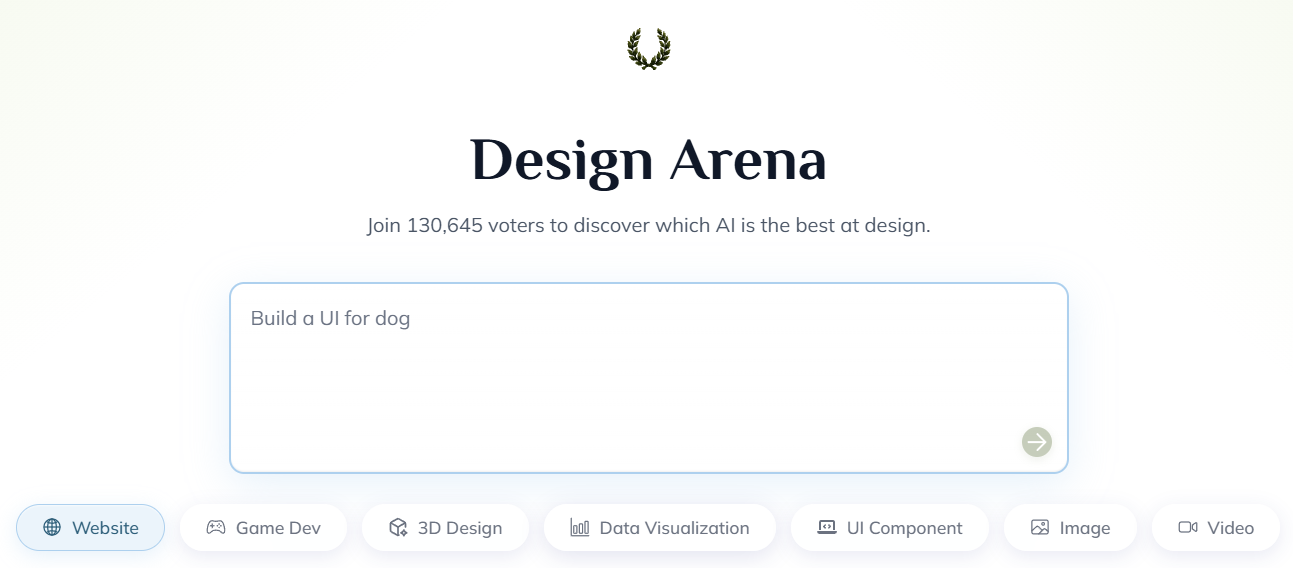
Business focus: Crowdsourced ranking of “vibe-coded” designs.
Why it stands out: AI can rapidly generate vast quantities of design work, creating a new challenge: how to determine which designs are truly good. Design Arena solves this by crowdsourcing rankings of AI-generated visual content, creating a feedback loop that forces AI models to improve. Major AI labs see value in training their models to produce better designs, and some have already become Design Arena customers.
Getasap Asia
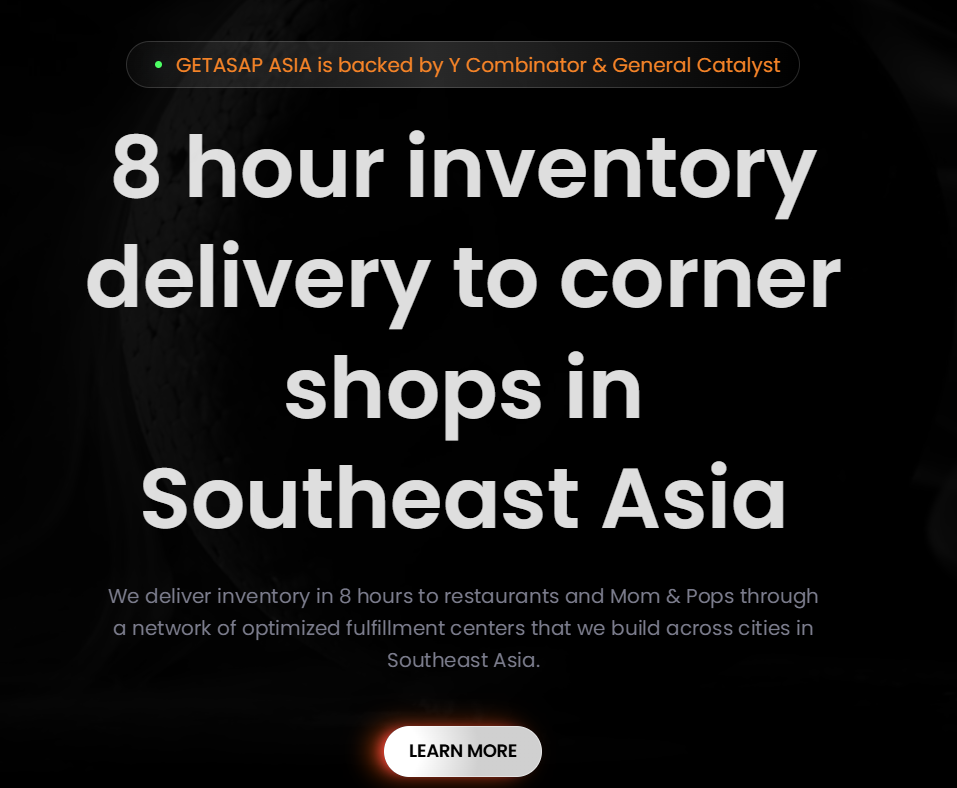
Business focus: Technology-driven distributor for retailers in Southeast Asia.
Why it stands out: Founded three years ago by 14-year-old Raghav Arora, Getasap Asia has since grown into a startup that uses technology to deliver supplies to corner stores, restaurants, and large supermarkets across Southeast Asia within eight hours, generating millions in revenue. According to its website, Getasap Asia has raised funding from top-tier investor General Catalyst, and we’ve heard the company commands one of the highest valuations in this YC batch.
Keystone

Business focus: AI engineers that fix software bugs in production environments.
Why it stands out: Keystone was founded by 20-year-old Pablo Hansen, who earned his master’s degree in AI last year. The company’s mission is to reduce software crashes. Its AI identifies and fixes vulnerabilities for clients like Lovable, and Hansen says they’ve already turned down an acquisition offer in the seven-figure range.
RealRoots

Business focus: An AI matchmaking platform for women seeking friends.
Why it stands out: While dating apps abound, RealRoots tackles a different kind of loneliness. The company’s AI matchmaker “Lisa” interviews women and then organizes social experiences to connect them with like-minded friends.
Although the AI component may be more performative—Lisa’s conversations may not yield deeper insights about participants than written questionnaires—RealRoots may still be onto something. The founder reports that last month alone, the company earned $782,000 in revenue from 9,000 paying customers.
Solva

Business focus: Automating insurance claims using AI.
Why it stands out: Solva’s AI automates the most routine tasks for insurance adjusters, from filling out complex claim forms to preventing improper payouts. Just ten weeks after launch, Solva’s annual recurring revenue (ARR) has reached $245,000—a figure that has excited investors.
Pingo AI

Business focus: AI foreign language tutor.
Why it stands out: Apps like Duolingo have made language learning easy and fun, but they often lack a key ingredient for fluency: consistent conversation. Pingo addresses this by enabling users to engage in spoken dialogue with AI that acts as a native speaker. The company’s unique approach is gaining rapid traction, with the founder claiming 70% monthly growth and $250,000 in monthly revenue.
The above provides a snapshot of the most talked-about projects. However, for sharp investors, the value goes beyond surface-level observations. Looking beneath the surface, TechFlow and its expert team have distilled four core trends—offering perhaps the best lens through which to understand current innovation directions in Silicon Valley.
1: From “Empowerment” to “Native” and “Agent”
The clearest signal from this YC batch is that startups are no longer satisfied with simply adding an “AI feature” to existing products. Instead, they are building AI-native applications—or even AI agents capable of autonomously performing tasks.
For example, Keystone’s “AI engineer” and Solva’s “AI adjuster” are not just assistive tools; they function as “digital employees” replacing parts of entire workflows. This shift signifies that the moat in AI startups is evolving from “owning data” to “reengineering processes,” representing a fundamentally higher level of market displacement potential and commercial value.
2: The Rise of Infrastructure and Toolchains
During the AI gold rush, the “pick-and-shovel” strategy—providing tools and services to the miners—remains a hot investment theme, becoming increasingly vertical and specialized. Autumn tackles the unique “billing” challenges in AI; Dedalus Labs lowers the barrier to developing and deploying AI agents; Design Arena solves the “quality evaluation” problem of AI-generated content.
Investing in these companies is equivalent to betting on the entire AI sector. Regardless of how application layers evolve, as long as the AI economy continues to grow, these infrastructure providers will continue to benefit.
3: Verticalization and Mission-Critical Use Cases for AI
AI is rapidly moving beyond general-purpose chat and image generation into more vertical, high-value industries, solving specific, costly pain points. Whether it’s Solva entering traditional insurance, Pingo AI transforming language education, or Perseus Defense targeting the defense industry, they share a common trait: clear business models and strong customer willingness to pay. Investors are increasingly drawn to strong commercial execution, as seen with Solva, which generated significant ARR shortly after launch.
4: Huge Potential in “Non-Mainstream” Sectors and Model Innovation
While AI dominates, one of the highest-valued companies in this YC batch, Getasap Asia, is a classic case of “technology-driven transformation of traditional industries.” Meanwhile, RealRoots, which generated astonishing revenue, demonstrates that innovative business models addressing real human needs—like social connection—can unleash tremendous commercial power, even if the technology isn’t particularly “hardcore.” This reminds us that investment perspectives must move beyond pure technological worship and return to the fundamentals of business.
These trends reveal the investment logic behind public information, but real decisions require answers to deeper questions:
How defensible is Keystone’s technology?
What is Solva’s customer acquisition cost, and can its model scale?
How will Autumn’s open-source model generate revenue?
The answers to these questions cannot be found in any public report—they come only from deep conversations with founders, early investors, or core technical experts.
Join TechFlow official community to stay tuned
Telegram:https://t.me/TechFlowDaily
X (Twitter):https://x.com/TechFlowPost
X (Twitter) EN:https://x.com/BlockFlow_News