AI large model startups quietly set sights on "gusu economy," the youth's favorite market
TechFlow Selected TechFlow Selected
AI large model startups quietly set sights on "gusu economy," the youth's favorite market
The emotional赛道 never sleeps.
 Navigating Web3 tides with focused insights
By Lian Ran
Applying makeup to Barbie, changing her outfits, designing her look, or talking to her as if she were your best friend—perhaps even imagining a perfect story for her, like finding her a boyfriend, going on vacation together, and getting married… These are things many girls probably did when they were young. Even though Barbie couldn’t respond, her mere presence offered comfort and companionship.
Now, with advancing technology, AI can breathe "life" into toys like Barbie, enabling them not only to converse with users but also to deliver personalized responses based on individual needs and moods.
Barbies are no longer silent playthings—they’ve become interactive “companions” capable of forming genuine emotional connections. Interactions once confined to imagination are gradually becoming reality.
This trend isn't limited to traditional toys; it's also expanding into the realm of anime culture, giving rise to an entirely new consumer market.
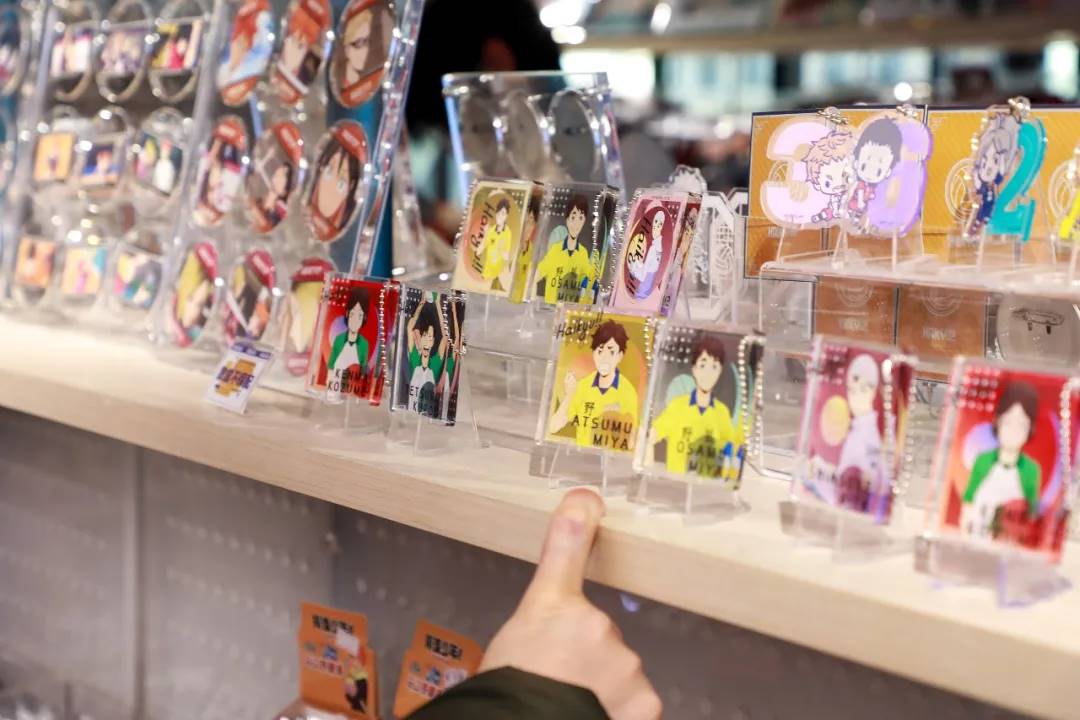
In Shanghai’s bustling Nanjing Road shopping district, stores overflowing with “otaku goods” (referred to as “guzu”) are packed with Gen Z shoppers picking out plush dolls and figurines—a snapshot of the surging “guzu economy” at the end of 2024.
As anime culture grows in popularity, guzu (short for anime-related merchandise) have become important vessels for fans to express emotion. Yet despite their sentimental value, these items remain “silent paper characters,” lacking interactivity and unable to fulfill users’ deeper need for emotional companionship.
What users truly desire isn’t just a collectible character—it’s an interactive, communicative “friend” who can accompany them through life.
Hence, the fusion of anime and AI has given birth to intelligent guzu care—“AI-powered guzu nurturing.”
AI Guzu Nurturing: Bringing Emotion to Life
The term “guzu” is a phonetic translation of the English word “goods,” referring broadly to anime-derived merchandise such as figurines, badges, posters, cards, keychains, standees, and plush dolls. Originally affordable and widely accessible, these products have evolved into a form of social currency among youth.
Traditional guzu come in various forms: lightweight items like badges and acrylic charms emphasize portability, while heavier ones like plush dolls and figurines focus on visual appeal. However, all are “silent companions,” offering only one-way emotional expression.
The core of the guzu economy is emotional economics. But current interactions remain unidirectional—users crave reciprocal emotional exchange.
In reality, fans’ emotional attachment to anime characters runs far deeper than it may appear. Many bring their guzu along everywhere—to meals, shopping trips, or travels—and specifically take photos and interact with them.
According to Guo Yijie, founder of Neurobo, this behavior signals a strong demand for technological upgrades in traditional guzu products. Neurobo aims directly at this segment of anime fans—leveraging their deep emotional bonds with characters to integrate virtual figures seamlessly into real-life experiences through smart guzu.
Neurobo (Yizhi Interaction), a Shanghai-based startup, has received investment from Qi Ji Founders Camp, founded by Dr. Lu Qi, former president of Baidu and VP at Microsoft. Its core team members hail from top institutions including Tsinghua University and Japan's University of Tsukuba. The company focuses on combining large language models (LLMs) with real-world scenario data, allowing anime fans to transform their “guzu” into tangible, always-accessible emotional companions.
Neurobo is building a “guzu-nurturing” platform centered around context-aware interaction—a process where continuous engagement enables virtual characters, via physical guzu, to progressively understand and respond to user emotions.
In its early phase, Neurobo launched a tool that allows users to “sculpt” their own smart guzu—designing and editing how their favorite virtual characters interact with them through the smart device in different contexts.
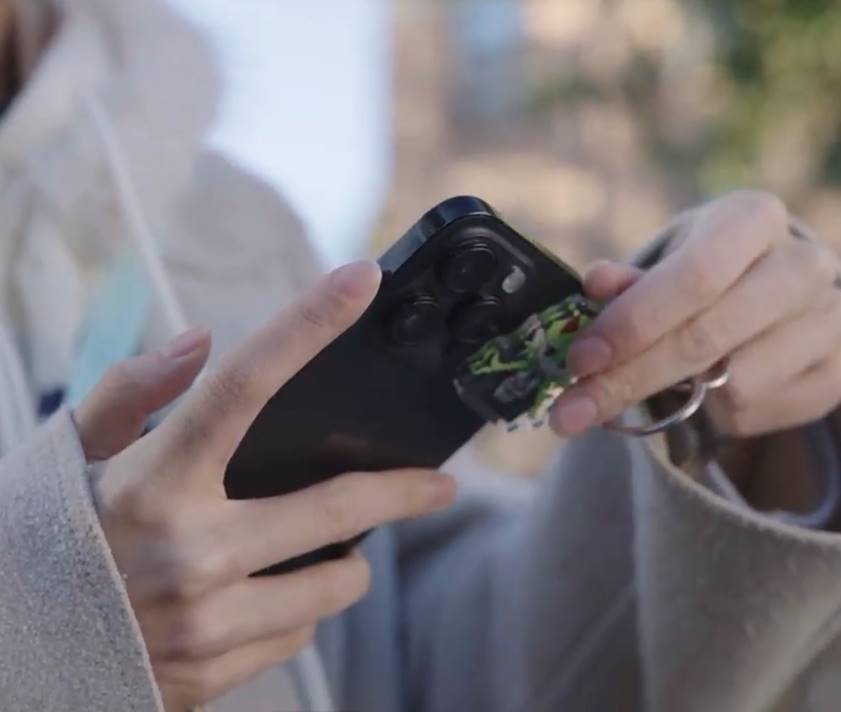
User interacting with Neurobo’s smart guzu|Image source: Neurobo
The team is also developing a hardware product called the “smart doll bag.” While ordinary doll bags are simply used to carry and protect plush dolls, Neurobo’s version is different. Equipped with built-in sensors, microphones, speakers, and its proprietary context-aware interaction system, it enables deep interaction between users and characters in the physical world—including letting the “doll” perceive the user’s actions and emotions, then adjusting the character’s behavioral responses accordingly.
Through interaction with the “doll bag,” users can feel emotional feedback from the character—just like conversing with a real friend.
For example, during testing, when a user brought the Neurobo “doll bag” near a hotpot restaurant they liked, the bag would ask whether they wanted to eat there—an act of attentiveness indistinguishable from a human companion!
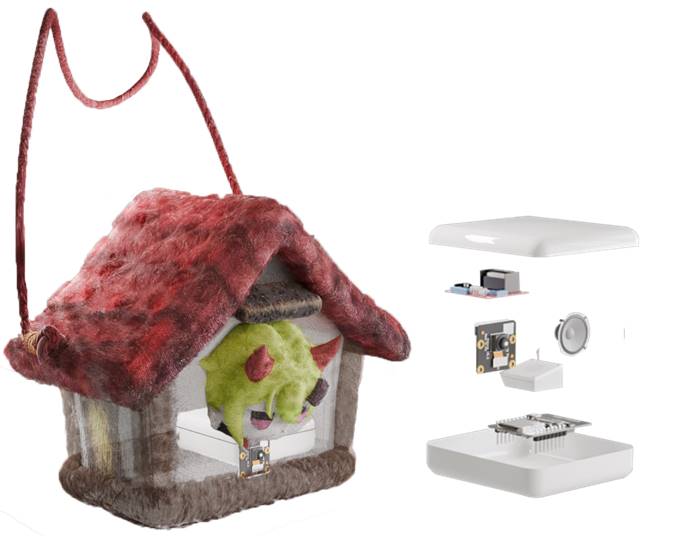
The “doll bag” currently under development—not yet in final form, still undergoing iteration and testing|Image source: Neurobo
As Neurobo accumulates more real-world scenario data, the guzu will increasingly “understand” users’ behaviors, emotions, and social habits, achieving true deep companionship. This innovation bridges the gap between virtual characters and the real world, using technology to strengthen emotional connectivity.
The core philosophy of Neurobo is to enable deep interaction between anime characters and the real world, granting virtual figures companion-like presence and support.
Whether through the creative process of customizing interactions with “sculpted” guzu, or through hardware-enabled immersive engagement, Neurobo is pushing beyond the boundaries of traditional anime merchandise, striving to make virtual characters integral parts of daily life and delivering highly personalized, emotionally rich companionship experiences.
New Opportunities in AI + Hardware
In 2024, the AI hardware sector emerged as a battleground for both tech giants and innovative startups.
In the eyewear space, companies like Meta, Rokid, Baidu, and Flash Technology unveiled new products or progress, breathing fresh life into glasses with AI. In audio wearables, ByteDance launched OlaFriend, embedding a “soulmate” inside headphones.
At CES 2025, an “emotional tech revolution” erupted: Yukai Engineering’s cat-eared robot Mirumi charmed users with affectionate antics, Nékojita FuFu’s bio-inspired pet responded to owners’ emotional shifts, and Romy, a companion robot designed for seniors, redefined “filial piety economics” with AI.
Underpinning all this is the multimodal interaction revolution driven by large models. The integration of AI and hardware is no longer just an enhancement—it’s now essential for elevating user experience and unlocking new markets. As such, AI + hardware is seen as one of the primary avenues for AI commercialization in 2025.
Industry estimates suggest the global AI hardware market reached $53.71 billion in 2024 and is projected to hit $473.53 billion by 2033, with companion-type products growing at an annual rate of 25%. A hundred-billion-dollar emotional economy is opening up.
On one hand, demand for emotional companionship continues to rise. AI arrives precisely when needed, offering innovative solutions. By equipping toys and other objects with intelligent interaction capabilities, they become emotional anchors, filling emotional voids.
On the other hand, anime culture boasts a massive global fanbase, with its fictional characters and narratives holding immense emotional value and commercial potential.
Combining AI with anime not only creates more immersive and interactive experiences but also enhances user satisfaction and loyalty through personalization, strengthening the bond between fans and virtual characters.
Currently, most large model applications remain online—for instance, according to Sensor Tower, the emotional companion app Character AI achieved 22 million monthly active users in 2024, with nearly 19 million downloads.
However, the industry has already recognized that integrating large models with hardware unlocks even greater potential. Another data point: in 2024, the AI + toy sector shipped approximately 5–10 million units. This year’s shipment target exceeds 50 million units (including partners), showing rapid growth and vast market potential.
As demand expands, AI-powered toys are poised to become a key application area for large model technologies—but significant challenges remain.
First, the technical complexity and hardware implementation pose substantial hurdles. Integrating AI models with physical devices requires meticulous R&D and continuous optimization across every stage to ensure seamless user experience.
Enabling multimodal interaction on compact hardware demands balancing computing power and energy efficiency. For instance, given the limited internal space of a plush doll, custom chips may be required for sensors, and models must be further lightweighted.
Besides, the accuracy of context awareness directly affects user experience. To make users genuinely feel emotional interaction with virtual characters, the system must precisely interpret and respond to their behaviors and needs.
Another major challenge for companies like Neurobo is attracting a broader user base and encouraging adoption of this new mode of character-based interaction. While the anime community is sizable, shifting users from passive collecting to active interaction requires patience and continued innovation.
With technological advancement—especially in AI—new possibilities are emerging for the consumption patterns within guzu culture. AI empowers users to create content and products tailored to their unique preferences, customizing characters and interaction styles, fulfilling personal needs while deepening emotional resonance and psychological fulfillment.
In the future, AI + toys could evolve into a vast commercial landscape filled with emotional value and personalized experiences.
Join TechFlow official community to stay tuned
Telegram:https://t.me/TechFlowDaily
X (Twitter):https://x.com/TechFlowPost
X (Twitter) EN:https://x.com/BlockFlow_News