Conversation with Azuki Founder Zagabond: The Crypto Journey and the Dream of an ANIME Metaverse
TechFlow Selected TechFlow Selected
Conversation with Azuki Founder Zagabond: The Crypto Journey and the Dream of an ANIME Metaverse
Azuki's power comes from our passion and creativity, and we've built something truly special here.
 Navigating Web3 tides with focused insights
By: TechFlow
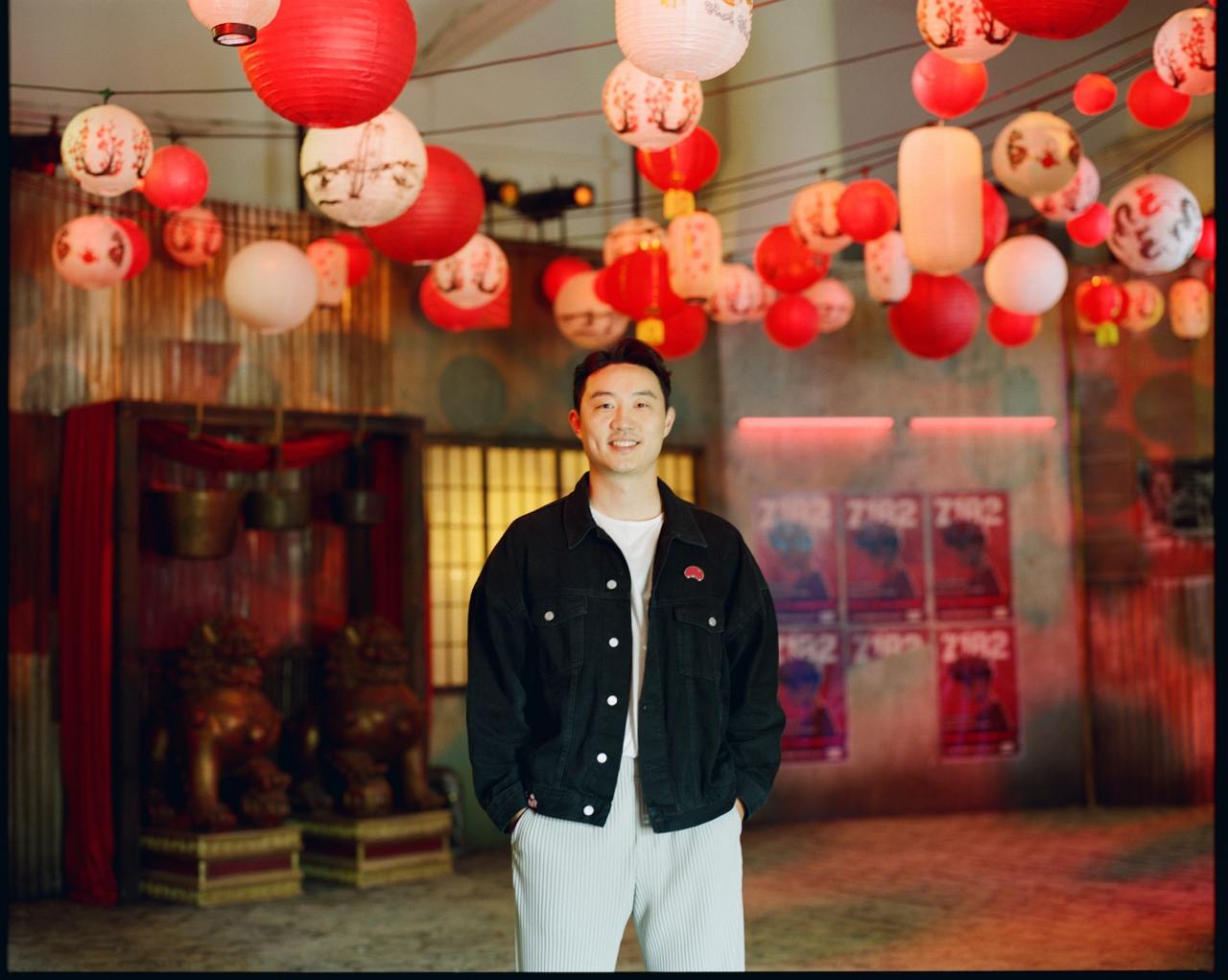
Through countless waves, the red beans bloom toward the sun!
Once, Azuki was a dazzling dream in the hearts of many NFT enthusiasts—a proud display of social identity. Then, as the NFT market cooled, Azuki faced numerous challenges and criticisms.
Now, Zagabond, founder of Azuki, returns to the spotlight with Animecoin and his vision for an anime metaverse, ready to confront the controversies head-on.
On January 23, ANIME (Animecoin) will officially launch.
TechFlow collected questions from multiple members of the Azuki community and conducted an exclusive interview with Zagabond.
Zagabond believes there's a significant gap between how people who know him personally perceive him, versus assumptions made by strangers online. A person’s character isn't defined by opinions from internet strangers, but by how consistently they treat those who matter most.
In closing, Zagabond delivered a message to the community: “Azuki’s strength comes from our passion and creativity. We’ve built something truly special here. We’re on our way.”
About Zagabond
TechFlow: What was your career path before founding Azuki? What inspired you to enter the Web3/NFT space?
Zagabond:
"My journey began in China. At age six, I moved to Germany—the first time I experienced being an outsider. As the only Chinese child in kindergarten who didn’t speak German, I remember speaking in Chinese to classmates, confused when they didn’t understand me.
These early experiences of isolation—compounded by attending seven different schools across several countries—helped me adapt quickly to new environments, though they also made me cautious about forming deep connections. By the time my family finally settled on Long Island, New York, I had already developed strong independence and resilience.
My passion for digital worlds started with the MMORPG RuneScape, where I discovered my fascination with digital economies. Rather than focusing on traditional gameplay, I was drawn to its markets—obsessively collecting rare items like blue party hats, foreshadowing my later interest in digital assets and NFTs. Similarly, Pokémon showed me how powerful IPs could span multiple media and build passionate communities through storytelling and collectibles.
When I discovered Ethereum in 2016, I immediately saw its potential as an open, programmable blockchain for digital economies. That led me to join the 0x Protocol in 2017 as a founding team member, building decentralized trading infrastructure. I participated in early discussions where we coined the term ‘DeFi,’ which later became a mainstream category name for crypto protocols.
After four years in DeFi, I saw an opportunity to combine crypto’s decentralization principles with the community-building power of NFTs. This vision—merging digital economies with brand-building—became the foundation of Azuki, where we aim to revolutionize the anime industry through decentralized IP."
TechFlow: Why did you choose the name "Zagabond"? Is there a story behind it?
Zagabond:
"Zagabond originates from 'Vagabond,' a classic manga by Takehiko Inoue that tells the life story of Japanese swordsman Miyamoto Musashi. The manga’s profound philosophical themes around self-discovery and the meaning of life deeply resonated with me.
I considered several other pseudonyms, but I remember hearing one of my favorite songs by Nujabes, ‘Feather,’ and these lyrics stood out:
‘I'm just a Vagabond with Flowers for Algernon An Average Joe who knows what the fuck is going on’
In that moment, I decided on the name Zagabond."
TechFlow: Why did you initially launch Azuki anonymously, then later reveal your identity? What changed during that process?
Zagabond:
"One of my favorite designers is Margiela, a fashion designer who never appeared publicly. He stayed behind the scenes, letting his designs speak for themselves.
When I founded Azuki, I saw it as a form of self-expression. I didn’t want my appearance or background to influence how people perceived the art and brand I created.
I remember walking into Azuki’s first event at NFT LA, standing in the center of the party, looking around at all the holders having fun—no one knew who I was. Seeing community members enjoy some of the best moments of their lives brought me immense joy and peace.
As Azuki grew and we started making progress in the anime industry, I felt it was necessary to become more visible. Eventually, it was time to put a real face to the name—to show the community that there’s a real person behind Zagabond, to do more interviews and attend live events—so I could honestly and transparently lead this space toward my Anime 2.0 vision."
TechFlow: What do you think is the biggest misconception people have about you?
Zagabond:
"The biggest misconception is that I’m primarily driven by personal gain—but that couldn’t be further from the truth.
What truly drives me is a deep belief in building an open anime universe through Azuki and Animecoin. After eight years in crypto, I’ve already achieved financial freedom—I don’t need to work at all, let alone in such a demanding field. But if I didn’t pursue this vision during my prime years, I would deeply regret it.
Being a crypto founder isn’t always glamorous. It means constant pressure, online hate, and adapting to rapidly shifting trends. I’ve made significant personal sacrifices for this role. But I’ve stayed because I love creating extraordinary things with exceptional people—that’s the essence of the Azuki garden.
There’s a huge gap between how people who know me—my friends, team, and Azuki community—see me, versus assumptions made by complete strangers online. I’m in this space because I’m passionate about innovation, about bringing creative minds together to build revolutionary things."
TechFlow: Compared to two years ago, how have you changed? When was the last time you completely changed your mind about something?
Zagabond: "Over the years, watching people spread false information about me online has paradoxically given me a strange sense of freedom—it taught me what really matters.
I know who I am, and so do the people closest to me. That’s enough. A person’s character isn’t defined by opinions from strangers on the internet—it’s shown in how consistently you treat the people who matter. Through every high and low, I’ve remained by the side of the community because I genuinely care about each member. That’s what matters most."
About the Elementals Controversy and Community Sentiment
TechFlow: In 2023, Azuki launched the 'Elementals' series, sparking major backlash and pushing community frustration to its peak. Looking back, do you consider Elementals a failed attempt that hurt community sentiment? Do you regret it?
Zagabond: "Azuki Elementals represented our vision to expand the Azuki universe, aiming to create a more accessible entry point into the garden. With Elementals, we achieved something unprecedented—it remains the most intricately hand-drawn PFP collection to date, unmatched in artistic complexity and trait combinations.
The core strategy of expanding Azuki’s ecosystem accessibility was correct, and we’ve seen validation through the vibrant new community members Elementals brought in. However, our execution—especially in marketing and communication—could have been better. We were used to maintaining mystery and surprise at product launches, but this space has matured.
Elementals taught us valuable lessons about transparency and expectation management. While I personally believe expanding the Azuki universe was the right decision, we’ve since improved our approach to better meet the community’s needs for clear communication and involvement."
TechFlow: The Elementals mint raised 20,000 ETH. Where has that money been spent?
Zagabond:
"All company revenue has been reinvested into advancing our vision of creating an open anime universe.
We’ve built an outstanding team of 45 members. Our hiring standards are extremely high—we look for people with not only exceptional skills but also genuine passion for web3 and anime.
This funding has been crucial for developing high-quality products and experiences that showcase what Web3 can achieve. We’ve made significant progress establishing Azuki as the leading anime brand in the space, while building anime.com into a true home for global anime fans."
TechFlow: Aside from the Elementals incident, in May 2022 you admitted to previously launching other failed NFT projects (like Tendies and CryptoZunks), which shook many holders’ trust in you. Two years later, do you feel you’ve rebuilt trust with the community? What efforts have you made toward that?
Zagabond:
"Let me address this directly: Before Azuki, I did launch three experimental NFT projects—Phunks, Tendies, and Zunks. While I delivered all promised features for these projects, I recognize my handling of project transitions could have been more professional and transparent. As a result, I returned all proceeds from those projects back to their respective communities.
Since acknowledging this in May 2022, I’ve been fully focused on Azuki’s growth. The evolution of Azuki from a PFP project into a globally recognized anime brand reflects not only my personal commitment but also the strength of our entire team and community. Azuki embodies my long-term vision and dedication to building something truly meaningful in this space."
About the ANIME Token
TechFlow: After Pudgy Penguins launched PENGU and succeeded, Azuki announced its own ANIME token. Is this simply chasing market trends? How do you ensure $ANIME brings real value to the ecosystem instead of being just another hype play?
Zagabond:
"$ANIME is a cultural token for the anime world, designed to transform the anime industry into a community-driven creative network. The Animecoin Foundation announced the Animecoin project back in March 2024—this has been in preparation for nearly a year."
TechFlow: On the official website, ANIME is described as a 'cultural token.' What does that mean? What are $ANIME’s long-term goals and vision?
Zagabond:
"Anime has evolved from subculture to mainstream pop culture. Luxury brands like Chanel and Burberry are collaborating with anime IPs. Athletes mention anime in post-game interviews. Rappers like Megan Thee Stallion use anime soundtracks.
Yet despite its global reach, the anime industry still faces structural issues. Fans invest heavily in crypto but lack proper loyalty programs and consumption attribution mechanisms. Creators, due to Japan’s unique anime financing model, often earn little despite massive popularity.
We see a unique opportunity here—what we call Anime 2.0. Blockchain technology can revolutionize the fan experience by consolidating fragmented fan activities on-chain, enabling IP holders to accurately measure fan engagement depth and unlock new revenue streams by monetizing dedicated fanbases.
To support Anime 2.0, our strategy involves what we call 'full-stack anime'—a flywheel effect where each component drives the growth of others. By seamlessly integrating blockchain infrastructure, consumer platforms, and IP, full-stack anime ensures the network becomes increasingly valuable and self-sustaining as more users and developers join. It consists of three pillars:
-
Blockchain Infrastructure: Animechain is an L3 blockchain built using Arbitrum Orbit technology, with Animecoin as the custom gas token. This setup simplifies the experience for Web2 anime fans—they only need to understand and purchase Animecoin, reducing complexity from managing multiple tokens, while enabling fee-less (sponsored) transactions for seamless onboarding.
-
Anime.com: Introducing Web2 users via consumer products is critical to triggering the value flywheel. A large user base attracts more teams to build on the network, which in turn brings in more users. Anime.com aims to become the dominant social layer for the entire anime industry—just as Discord is for gaming.
-
Content & IP: IP development creates the cultural energy that powers the entire stack. IP is the unifying layer that connects everything and channels community enthusiasm around Animecoin."
TechFlow: According to the published tokenomics, 37.5% of tokens go to the Azuki community, 13% to AnimeDAO, 24.44% to the Animecoin Foundation, 2% to partner communities, 15.62% to team and advisors, and 7.44% to Azuki Inc.—meaning 60.5% of tokens remain under official Azuki control. What was the rationale behind this distribution?
Zagabond:
"I’ve noticed some misunderstandings and misinformation suggesting that 60.5% of the tokens are controlled by Azuki—that is incorrect.
The Animecoin Foundation is an independent, memberless entity (with no shareholders) and is unaffiliated with Azuki. No one from the Azuki team—including myself—is a shareholder (again, it has none), director, employee, or controller of the Animecoin Foundation. It has its own board, advisors, and service providers. The Foundation manages the AnimeDAO governance process and serves as the dedicated entity driving ecosystem growth, using its allocation to fund launch operations, ongoing activities, grant programs, and initiatives connecting Animecoin to the broader anime ecosystem. The Foundation’s token allocation will be held in its own multi-signature wallet—Azuki is not a signatory and has no control.
The 13% allocated to AnimeDAO will be used and deployed solely based on governance decisions by ANIME token holders. These tokens will reside in an independent DAO treasury multi-sig wallet, managed by the Animecoin Foundation—Azuki is not a signatory and has no control. These tokens can only be spent according to governance proposals approved by AnimeDAO votes."
TechFlow: At token launch, 76.94% of tokens will be fully unlocked, with 37.44% coming from the Animecoin Foundation and AnimeDAO allocations. Will this portion flood the market? Why design such a high TGE unlock percentage?
Zagabond:
"As mentioned, the 13% allocated to AnimeDAO will be used only through holder-driven governance. I cannot predict what initiatives AnimeDAO will propose or approve, but typically governance takes time, and DAO-spent tokens often take time to actually enter circulation (e.g., grants may require milestone achievements before funds are disbursed).
Regarding the Animecoin Foundation, aside from funding initial operations (such as payments to service providers and partners involved in the launch), ecosystem development grants managed by the Foundation may also include milestones, requiring time before tokens fully enter circulation."
TechFlow: In March 2024, the Arbitrum Foundation announced a collaboration with Azuki to co-create AnimeChain. What is the relationship between Azuki NFT, AnimeChain, and Animecoin?
Zagabond:
First, it must be clarified: Animechain was neither created by the Arbitrum Foundation nor by Azuki. The Animecoin Foundation is not only the steward of Animecoin but also the entity leading Animechain’s development.
Azuki is a core contributor to the Animecoin Foundation, supporting its mission to grow and develop the Animecoin ecosystem.
TechFlow: After the token launch, where will you and the Animecoin Foundation focus your time and resources? What are the major strategic plans ahead?
Zagabond:
"I cannot speak on behalf of the Animecoin Foundation regarding its specific resource allocation. Its sole mission is to support the growth of the Animecoin ecosystem, and it has its own team and service providers to achieve that goal.
As for Azuki, our primary focus will be executing the full-stack anime strategy outlined above."
About the Future of NFTs
TechFlow: NFTs have gone through highs and lows over the past few years—from simple PFPs and social currency to now often relying on a public chain or real-world project. Many NFT projects are launching tokens, seemingly becoming subordinate to them. What do you see as the future trend for NFTs?
Zagabond:
"NFTs can represent many different things. Honestly, I don’t like treating ‘NFT’ as a single category because use cases vary widely. That said, it’s clear that NFTs remain one of the best tools for building communities—and they’re here to stay."
TechFlow: As a global project, how do Azuki and Animecoin balance the needs of users from different regions? What is your development strategy for the Asian market specifically?
Zagabond:
"The Asia-Pacific region is critically important for both Azuki and Animecoin. Given that Azuki’s art style is rooted in Japanese anime, we’ve always maintained a strong connection with the APAC market.
We’re investing in building our presence in the region, including establishing a world-class business development team in Japan to engage directly with the anime industry."
TechFlow: Finally, what would you like to say to Azuki community members?
Zagabond:
"Azuki’s strength lies in our passion and creativity—these are the keys to our success. We see these values strongly reflected in our community, and we’re grateful for their support. Anyone who joins the garden can feel how unique our culture is. I believe we’ve built something truly special here. My goal is to lead us toward mainstream Web2 adoption, representing Web3 the right way. We’re on our way."
Join TechFlow official community to stay tuned
Telegram:https://t.me/TechFlowDaily
X (Twitter):https://x.com/TechFlowPost
X (Twitter) EN:https://x.com/BlockFlow_News
 深潮TechFlow