TechFlow Logo
Login/ Sign up
ETH Gas
Gwei
Fear
gas
Trump Family's Web3 Investment Preferences: Another Spring for MEME & DeFi Sectors?

Trump Family's Web3 Investment Preferences: Another Spring for MEME & DeFi Sectors?

2025.01.20
Share
The crypto industry is expected to face more opportunities and challenges in the coming years.

Author: HashKey Exchange

1. What Does Trump's Ascension Mean for the Crypto Industry?

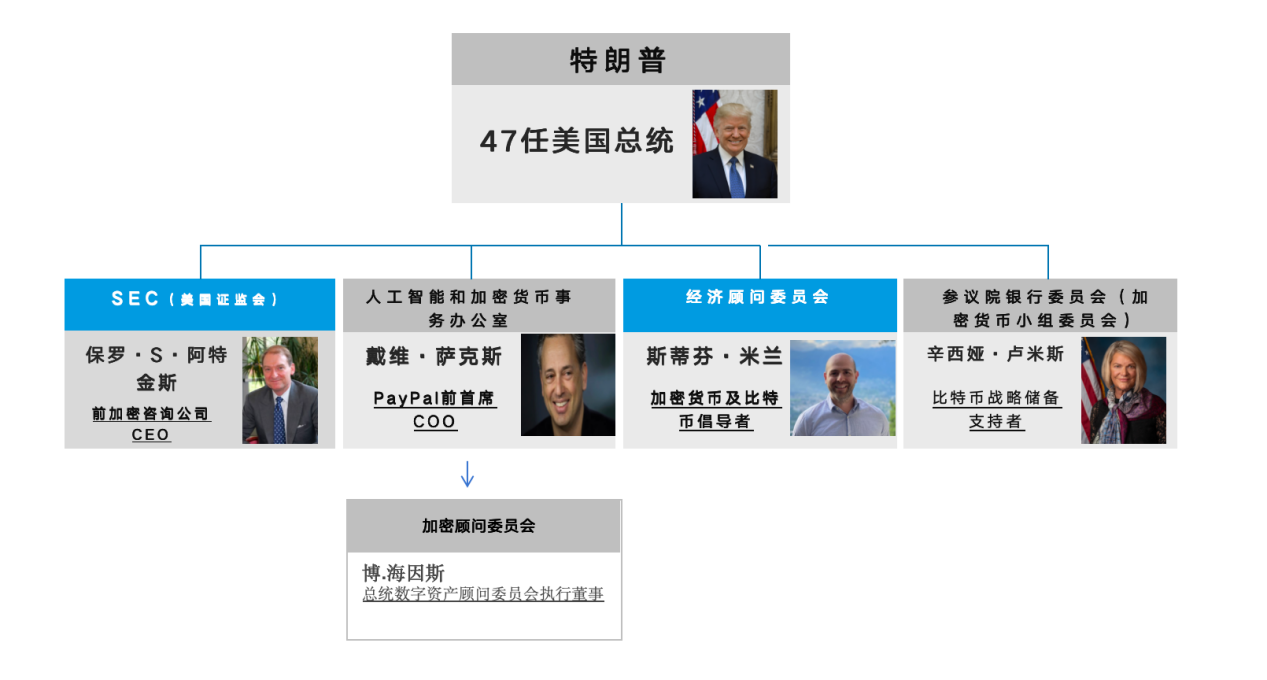
Since December, the so-called "Trump trade" has ignited market enthusiasm. For the crypto industry, the focus has now shifted to how fully Trump will deliver on his campaign promises. During the power transition period, Trump swiftly nominated key officials—appointments that will shape U.S. and even global crypto policy over the next four years. This means Trump’s return to office will fundamentally reshape the current industry landscape. Regardless of the extent to which he implements his policies, it signals both new, significant opportunities and accompanying policy uncertainty for the sector. Before Trump officially takes office, let’s first review which officials have been nominated for key roles and their respective stances toward the crypto industry. Under the U.S. political system, a president's cabinet consists of two main components: formal cabinet members requiring Senate confirmation (e.g., Secretary of State, heads of major executive departments), and cabinet-level officials who may not require such confirmation (e.g., Chief of Staff, National Security Advisor). Currently, within Trump’s emerging administration, the following positions are either held by crypto supporters or significantly influence the direction of crypto policy:
Examining the Trump Family’s Web3 Investment Preferences: A New Spring for Meme & DeFi Sectors?

As shown in the chart above, the most closely watched entity in Trump’s administration is the newly established Office of Artificial Intelligence and Cryptocurrency Affairs. According to available information, this office will be primarily responsible for formulating the overall regulatory framework for the crypto industry, coordinating with agencies such as the SEC, CFTC, and Congress. Its subordinate Crypto Advisory Committee claims to include 24 CEOs from crypto companies who will advise on policy formulation. Based on Trump’s stated commitments, the following new policies are worth noting:

1) Make the U.S. the global cryptocurrency capital

2) Immediately cease crackdowns on cryptocurrencies upon taking office

3) Block the development of a central bank digital currency (CBDC)

4) Establish a strategic Bitcoin reserve

5) Fire the SEC Chair

6) Halt the sale of Bitcoin held by the U.S. government

7) Use Bitcoin to address U.S. national debt

8) Develop a more comprehensive cryptocurrency policy

9) Establish a Crypto Advisory Committee

From Trump’s personnel appointments during the transition phase, at least items 5 and 9 have already been fulfilled. From the creation of new advisory bodies to changes in Senate cryptocurrency committees and the replacement of the SEC chair, these appointments—with strong crypto backgrounds—indicate that Trump is indeed moving forward with his campaign promises. For the crypto industry, this suggests that, at the very least, previously restrictive regulatory policies may gradually ease, while more robust legislation could further mainstream the industry.

2. What Do the Trump Family’s Initial Project Investments Reveal?

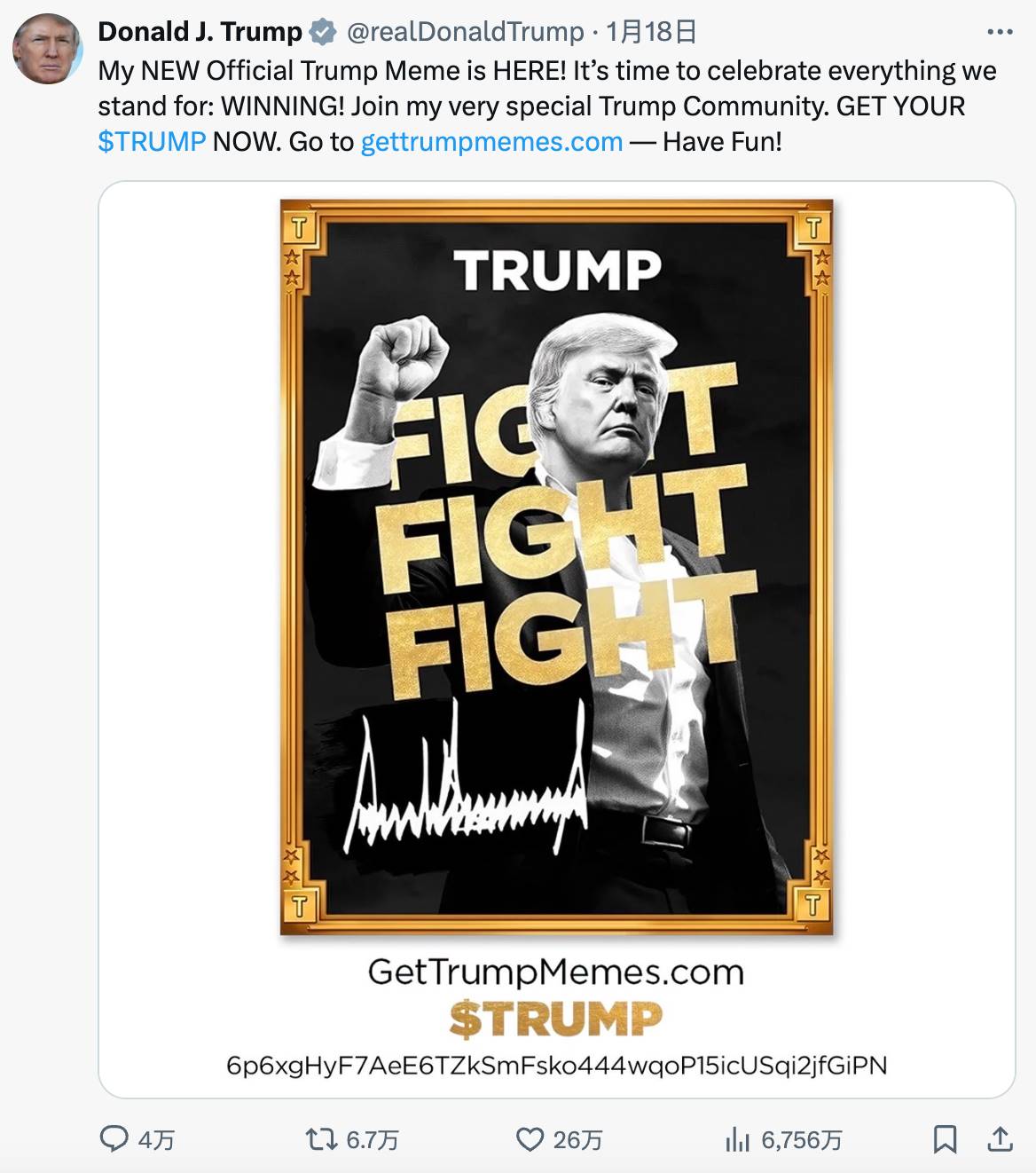
Trump’s shift in attitude toward cryptocurrencies during his second term has significantly boosted the industry—not only through the establishment of a cabinet-level advisory team but also through direct family involvement in crypto investments, providing early signals of future regulatory relaxation. At the start of 2025, the biggest catalyst in the industry was undoubtedly the meme coin TRUMP, personally launched via Trump’s official X account. The project surged past a $30 billion market cap within one day, creating yet another instant wealth legend in the crypto space.
Examining the Trump Family’s Web3 Investment Preferences: A New Spring for Meme & DeFi Sectors?

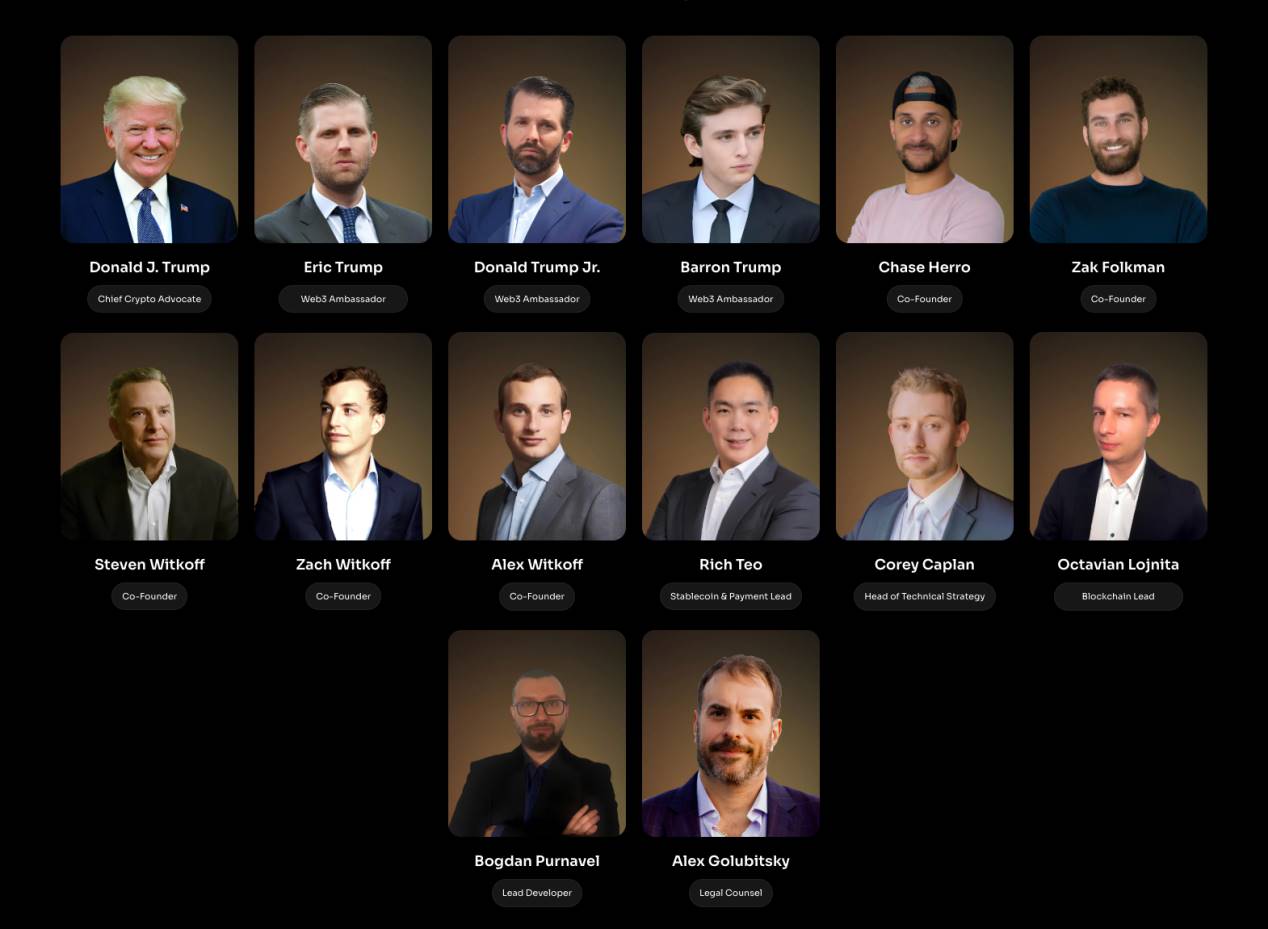
The significance of Trump personally launching a token goes far beyond merely adding another celebrity meme coin to the market. In many ways, it reflects Trump’s support for and deep engagement with the crypto industry—potentially exceeding market expectations. After witnessing the rapid market surge of the TRUMP token, Trump and his administration may find further motivation to accelerate the formalization of the crypto industry and loosen regulations, which would be a major positive for the sector. Additionally, an underlying impact of Trump’s token launch is that increased on-chain transaction volume and new wealth stories could intensify competitive pressure on centralized exchanges, making industry competition fiercer overall. Beyond the TRUMP meme coin, the most significant project associated with the Trump family is World Liberty Financial (hereinafter “WLFI”). Although the project’s website states that Trump, his family members, or affiliated businesses are not employees of WLFI, three of Trump’s sons are titled as “Ambassadors” in the project, and Trump’s close ally Steve Witkoff (nominated as Middle East Envoy) and his son serve as co-founders. The advisory board also includes partners and CEOs from well-known industry firms such as Polychain and Scroll. While legally distanced from the Trump family, the promotional efforts—including aggressive promotion by Trump’s sons—make it difficult for the market to interpret WLFI as anything other than a de facto Trump family project.

Examining the Trump Family’s Web3 Investment Preferences: A New Spring for Meme & DeFi Sectors?

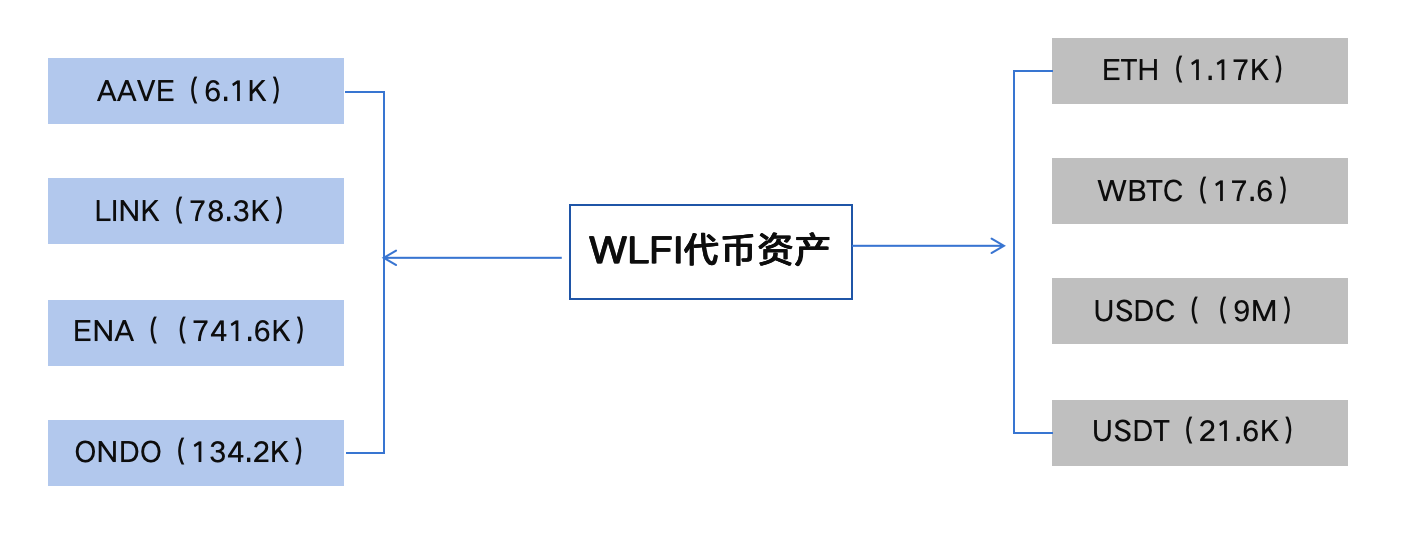
In terms of legal structure, WLFI appears relatively robust, employing multiple strategies to navigate existing regulations—such as issuing non-transferable tokens and raising funds under SEC Regulation D Rule 506(c)—minimizing compliance risks. The project is still in its public fundraising phase, with a total token supply of 20 billion, of which 5.49 billion have been sold. However, due to the current non-transferability of tokens, progress has lagged behind expectations. Operationally, WLFI is positioned as a DeFi platform built on Aave for decentralized lending, though a concrete user interface has not yet been released. Another notable development is that since late November, WLFI has been actively purchasing large quantities of various tokens. Given its association with Trump, these purchases have become a new market indicator. Overall, the sectors and projects involved are illustrated below:

Examining the Trump Family’s Web3 Investment Preferences: A New Spring for Meme & DeFi Sectors?

From the tokens held, it is evident that WLFI, given its DeFi orientation and partnership with ENA announced in December 2024, primarily holds BTC, ETH, stablecoins, and other DeFi-related tokens. In terms of trading activity, aside from Coinbase, most operations occur on CowSwap. Moreover, the team composition further confirms WLFI’s DeFi focus. For example, technical lead Corey Caplan previously worked on Dolomite, a DeFi project, and chief developer Bogdan Purnavel was formerly a developer at Dough Finance, another DeFi initiative. Recent actions—from team hiring to token acquisitions—suggest that the Trump family’s WLFI project remains heavily focused on DeFi, pointing to potential expectations of more lenient policies in this domain.

3. How Will the Trump Family’s Projects Impact the DeFi Sector?

The market imagination sparked by Trump’s meme coin is enormous. A sitting president launching a cryptocurrency is unprecedented. Setting aside considerations of personal gain, this move clearly signals a general trend toward a more relaxed regulatory environment for the industry over the next four years. Further analysis reveals that this was not a spontaneous or hastily executed token launch, but rather one carefully prepared within legal, compliance, and institutional frameworks. The certainty and powerful narrative behind a presidential token are unique, creating a one-of-a-kind on-chain phenomenon. However, current support remains limited to expectations of regulatory easing. Long-term sustainability remains unproven. The Trump family appears more intent on establishing WLFI as a sustainable, long-term project. By examining WLFI’s operational moves and subsequent investment patterns, we can infer that the project has proactively addressed regulatory compliance. Combined with the U.S. Internal Revenue Service’s proposed DeFi tax rules at the end of December 2024, it is reasonable to anticipate that systematic legislative oversight targeting DeFi could emerge in 2025. While perhaps less stringent than initially proposed by the IRS and other agencies, increased compliance requirements—such as KYC (which WLFI also requires), anti-money laundering (AML), and counter-terrorism financing measures—are likely to become key developments in 2025. In a more optimistic scenario, WLFI—as the Trump family’s first non-meme project—signals strong confidence in the DeFi sector, particularly its future growth potential. From a policy standpoint, the project’s comprehensive compliance design from inception indicates clear anticipation that under Trump’s administration, regulatory easing and enhanced compliance will proceed in parallel—paving the way for DeFi to enter the mainstream. Considering Trump’s own token launch, his cabinet appointments, and the family-backed DeFi project, his supportive stance toward the broader crypto industry is now relatively clear. However, the extent of regulatory relaxation remains uncertain. Markets will continue adjusting expectations around evolving policies. Nevertheless, until the 2027 U.S. midterm elections, resistance to Trump’s policy initiatives is expected to be significantly reduced—making this a relatively favorable and critical period for DeFi and the entire crypto industry.