

BlackRock and Citadel Intensify “Bulk Purchases”: What Fundamental Shifts Have Occurred in Traditional Finance’s Entry into DeFi?
TechFlow Selected TechFlow Selected
BlackRock and Citadel Intensify “Bulk Purchases”: What Fundamental Shifts Have Occurred in Traditional Finance’s Entry into DeFi?
As the regulatory environment becomes clearer and token tools mature, DeFi tokens are evolving from “soft governance” toward functionalities akin to “on-chain equity,” triggering a structural transformation driven by institutional players.
 Navigating Web3 tides with focused insights
Author: Yogita Khatri
Translation & Editing: TechFlow
TechFlow Intro: For years, traditional finance (TradFi) giants’ engagement with cryptocurrency has largely been limited to equity investments or pilot projects. Recently, however, moves by BlackRock, Citadel, and others to directly purchase governance tokens such as UNI and ZRO signal a major shift.
This article delves into the deeper logic behind this transformation: it is not merely about asset allocation, but about securing future access to onchain financial infrastructure.
As regulatory clarity improves and token tooling matures, DeFi tokens are evolving from “soft governance” toward functions resembling “onchain equity,” marking the onset of an institutional-driven structural shift.
Full Text Below:
Traditional finance (TradFi) institutions are no longer just partnering with the crypto industry—they are now directly purchasing governance tokens.
Within just a few days earlier this month, BlackRock, Citadel Securities, and Apollo Global Management each disclosed purchases of DeFi tokens or related acquisition plans. BlackRock brought its tokenized Treasury fund BUIDL onchain via UniswapX and acquired UNI tokens; Citadel Securities supported the launch of LayerZero’s “Zero” blockchain and received ZRO tokens; and Apollo—or an affiliated entity—entered a partnership with Morpho, planning to acquire up to 90 million MORPHO tokens over 48 months, representing roughly 9% of total supply.
For years, large financial firms’ exposure to crypto has largely been confined to equity investments, venture capital rounds, or pilot initiatives. Direct token holdings have been exceedingly rare.
So what has changed? Most investors I spoke with said this is less about broad bets on DeFi tokens and more about securing access to infrastructure.
“Each company is buying the token of a specific protocol they intend to use as infrastructure. This is vendor alignment—not portfolio allocation,” said Jake Brukhman, Founder, Managing Partner, and CEO of CoinFund. In other words, token exposure is tied to the infrastructure these firms plan to deploy—not to a broad belief that governance tokens constitute a new asset class.
Investors emphasized distribution and product strategy—not asset allocation—as the core focus.
TradFi firms are tokenizing their products to distribute them onchain. These products require DeFi venues, and purchasing tokens of protocols they rely on is “largely symbolic, yet does establish some alignment and brand halo,” said Lex Sokolin, Co-Founder and Managing Partner at Generative Ventures. He added: “Unless the purchase size is enormous, it’s unlikely to shift market dynamics—but that’s not TradFi’s goal. They’re selling us products, not buying from us.” He described TradFi firms as “factories,” while crypto serves as the “store” for distributing tokenized products.
Investors widely agree that DeFi itself hasn’t undergone a fundamental, overnight shift in fundamentals. Rather, infrastructure has matured—and regulatory transparency has improved significantly over the past few years.
“Custodial and operational infrastructure has improved markedly over the past 12–24 months,” said Lasse Clausen, Founding Partner at 1kx. “Tools, controls, and governance around holding and using tokens are better than before—making direct token holdings far more feasible for large, compliant institutions.”
On regulatory transparency, Amir Hajian, Researcher at crypto investment firm Keyrock, pointed to several announcements. The rescission of Staff Accounting Bulletin No. 121 (SAB 121) in early 2025 removed accounting requirements that had previously imposed high costs on public companies offering crypto custody. The SEC concluded investigations into companies including Uniswap, Coinbase, and Aave without enforcement action. The GENIUS Act established a federal framework for stablecoins. Additionally, the SEC’s “Project Crypto” introduced a four-tier token classification system, which Hajian says “signals that most governance tokens are not securities.” Meanwhile, several investors noted that the pending CLARITY Act represents another regulatory tailwind—and TradFi firms are positioning themselves ahead of its passage.
Structural Shift or Symbolic Gesture?
Most investors view these TradFi moves as reflecting a genuine structural shift in how institutions engage with crypto—not merely symbolic bets. Others see reality as falling somewhere between the two extremes, while a minority still regard them primarily as strategic positioning.
“I believe this is structural,” said Richard Galvin, Executive Chairman and Chief Investment Officer at Digital Asset Capital Management—and former executive at Goldman Sachs and JPMorgan Chase. “Companies of this scale don’t allocate capital casually. Having spent 20 years in traditional finance, I know the internal governance, risk, and compliance thresholds required to approve such investments. These are deliberate, strategic decisions—not symbolic gestures.”
That said, scale remains critical. Some investors note that, based on disclosed figures, these allocations remain tiny relative to institutional balance sheets. Anirudh Pai, Partner at Robot Ventures, stated that calling this a structural shift is premature “until governance tokens represent a meaningful share of assets under management (AUM) or become central to core strategy—markets may be extrapolating stronger confidence than actually exists.”
Governance Tokens vs. Equity
Are we entering a “New Meta,” where governance tokens begin functioning more like strategic equity?
Most investors say not yet—but the industry appears to be moving in that direction.
Investors point out that tokens still lack legal recourse to protocol assets, impose no fiduciary duties on holders, and remain subject to regulatory ambiguity. They argue that for governance tokens to truly serve strategic equity-like roles, meaningful shifts toward shareholder-style rights and clearer value-capture mechanisms are needed.
“If governance can genuinely control cash flows or meaningful economic levers, then tokens can operate like strategic equity,” said Boris Revsin, Partner and Managing Director at Tribe Capital. “If token holders can influence fee switches, treasury usage, or protocol direction in economically impactful ways, the analogy begins to hold weight. But in most cases today, rights remain ‘soft’—legally enforceable only to a limited degree, and governance tends to be social rather than contractual. If institutions expect strict enforcement, clearer regulatory treatment may be required. Cases like the Aave governance debates illustrate just how messy this can get.”
Rob Hadick, Partner at Dragonfly, expects to see new token designs resembling “onchain equity” following passage of the crypto market structure bill.
Why Haven’t Token Prices Moved Significantly? What Needs to Change?
These TradFi moves are significant—but price reactions have been muted. Most investors attribute the tepid response to a simple reality: markets were weak when announcements dropped, risk appetite was low, and Bitcoin faced pressure.
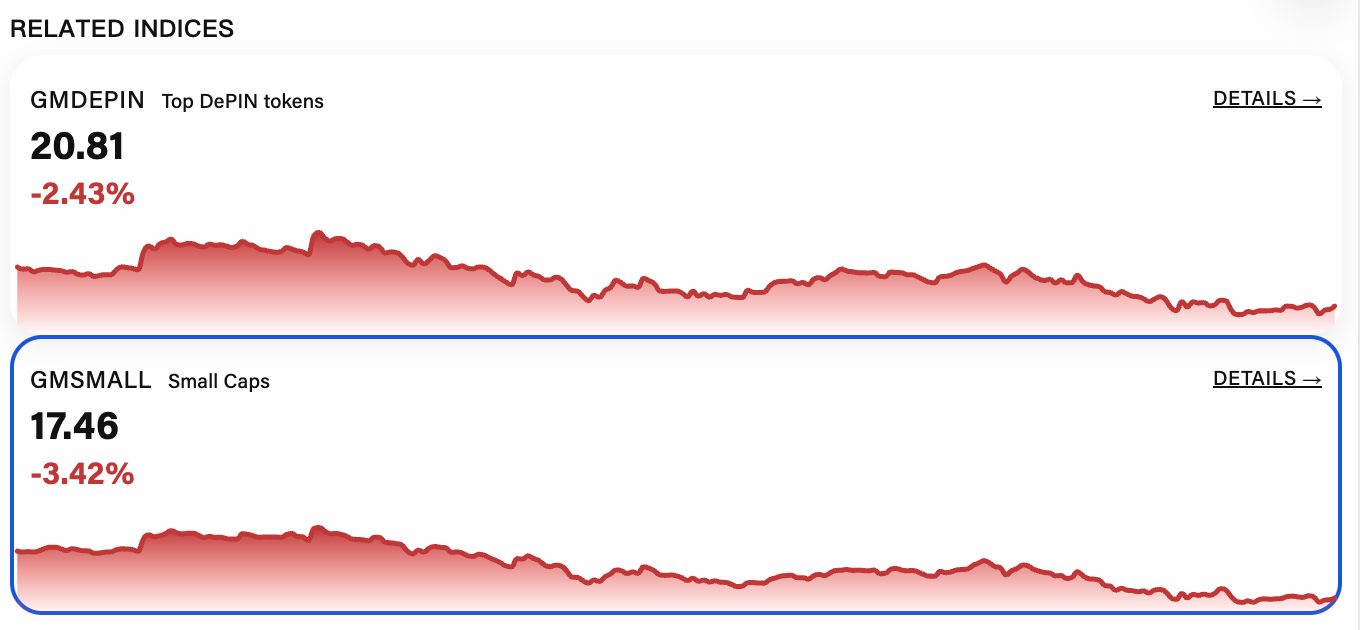
More importantly, tokenomics haven’t changed overnight. “Right now, seasoned holders often wait until economic benefits materialize meaningfully within the protocol before reacting,” said Samantha Bohbot, Partner and Chief Growth Officer at RockawayX. Pai agreed, noting that muted reactions are expected “if there’s no durable link between protocol cash flows and token holders”—which remains the case.
More broadly, even when protocols demonstrate robust revenue and total value locked (TVL), DeFi tokens continue underperforming. Why does this disconnect persist? “It’s a paradox,” observed Brukhman of CoinFund: historically, most DeFi tokens have captured almost no revenue. “Value flows to liquidity providers (LPs) and development teams—not token holders—while persistent VC unlock schedules create enduring sell pressure.” He added: “Institutional capital entering in 2025 demands proof of cash flow before allocating, selecting BTC and ETH selectively rather than broadly rotating into DeFi. Fragmentation across L1s/L2s further dilutes value capture for any single protocol.”
Several investors stressed that clear value capture is essential.
“We need protocols to open clear ‘fee switches’ and value-capture mechanisms for their tokens—and issuers must improve disclosures and reduce inflation,” said Thomas Klocanas, Managing Partner at Strobe Ventures. “Regulatory tailwinds like the CLARITY Act are expected to help attract sustained capital, while institutional inflows—by providing liquidity and validation—further accelerate this process.”
Brukhman added that beyond fee switches, VC unlock schedules must slow, revenues must scale to support fully diluted valuations (FDV), and regulatory clarity around token status must improve—so institutional allocators can hold tokens without compliance risk. “The biggest potential catalyst is approval of DeFi ETFs—Grayscale AAVE -2.66% and Bitwise,” he noted.
Hadick of Dragonfly said regulatory constraints have thus far prevented a clear, direct relationship between protocol revenue and token prices. With the market structure bill’s passage, he expects this linkage to become more explicit.
Meanwhile, Pratik Kala, Head of Research and Portfolio Manager at Apollo Crypto (unaffiliated with Apollo Global Management), noted that many DeFi tokens still appear “overvalued” on a price-to-earnings (P/E) basis. Without naming specific projects, he cited examples operating similarly to traditional banks—but trading at P/E multiples as high as 80x. “Markets always find equilibrium—eventually,” he said.
Governance Capture Risk and Potential Pitfalls
Rising institutional participation naturally raises the question: Could this lead to power concentration?
Several investors acknowledged this risk as real, while others argued that professional governance participation could enhance discipline and long-term orientation.
Hajian of Keyrock said the bigger governance challenge today isn’t concentration—it’s “apathy.” DAO voting participation typically sits in the single digits, he noted. He added that institutional participants—who tend to vote at much higher rates in traditional markets—could raise oversight standards and improve proposal quality.
As for what could go wrong with these TradFi moves, regulation remains the largest risk. Several investors warned that the current regulatory environment depends on government policy. A reversal—or more aggressive classification of revenue-sharing tokens as securities—could force institutions to retreat, or compel protocols to adopt more permissioned models.
“A future SEC Chair could reclassify governance tokens with fee switches as securities,” Hajian said. “The CLARITY Act on market structure hasn’t passed yet—though its passage seems highly likely.”
“We must get the CLARITY Act across the finish line!” Brukhman urged.
Will More TradFi Firms Follow Suit?
Most investors expect additional TradFi firms to purchase DeFi tokens—but they’ll be highly selective, focusing on blue-chip protocols.
The prevailing view is that future purchases will tie to product strategy—not speculation. Firms already building tokenized products or onchain infrastructure are seen as the most likely next actors.
Pai said Fidelity Investments, Franklin Templeton, Goldman Sachs, and JPMorgan Chase may allocate positions where aligned with their settlement or liquidity strategies. Hajian named Goldman Sachs, BNY Mellon, Franklin Templeton, and Cantor Fitzgerald as potential next entrants. Klocanas cited JPMorgan Chase, Morgan Stanley, Fidelity, Franklin Templeton, Janus Henderson, and Visa as candidates. Brukhman speculated Fidelity, Franklin Templeton, and State Street could act—while JPMorgan Chase is more likely to build its own infrastructure than buy tokens.
On the protocol side, investors expect activity to concentrate on liquid, large-scale protocols tied to stablecoins, tokenized real-world assets (RWA), and trading infrastructure. Given Aave’s scale in lending, institutional integration, and evolving value-capture mechanisms, both Hajian and Brukhman highlighted it. Other names mentioned include Maple Finance (institutional credit), Sky and Ethena (stablecoins, per Klocanas), and Sky and EtherFi (per Brukhman).
While these moves currently mostly align with strategic partnerships or working relationships, Hadick said he ultimately expects TradFi firms to “invest in DeFi protocols without explicit strategic ties.”
Join TechFlow official community to stay tuned
Telegram:https://t.me/TechFlowDaily
X (Twitter):https://x.com/TechFlowPost
X (Twitter) EN:https://x.com/BlockFlow_News
 The Block















