Who is Eliza?
TechFlow Selected TechFlow Selected
Who is Eliza?
How will you coexist with them when humans and agents live together on-chain?
 Navigating Web3 tides with focused insights
Editor | OKG Research
In 1966, MIT computer scientist Joseph Weizenbaum created a program named ELIZA—a simple rule-based system capable of mimicking human language patterns to enable basic human-computer interaction. Though functionally rudimentary and lacking true understanding, ELIZA sparked boundless imagination about the potential of human-machine interaction. This pioneering experiment left a lasting mark in the history of natural language processing and became one of the starting points for modern artificial intelligence.
Fast forward to 2024, the name "Eliza" has resurfaced as a hot topic within the Web3 context. This time, it’s no longer a simple chat simulation tool, but an underlying framework enabling the creation and operation of AI agents in the Web3 world.
It allows developers to rapidly build multifunctional AI agents capable of automatically executing transactions, carrying out governance tasks, and analyzing on-chain data in real time—potentially transforming how people interact with blockchains altogether.
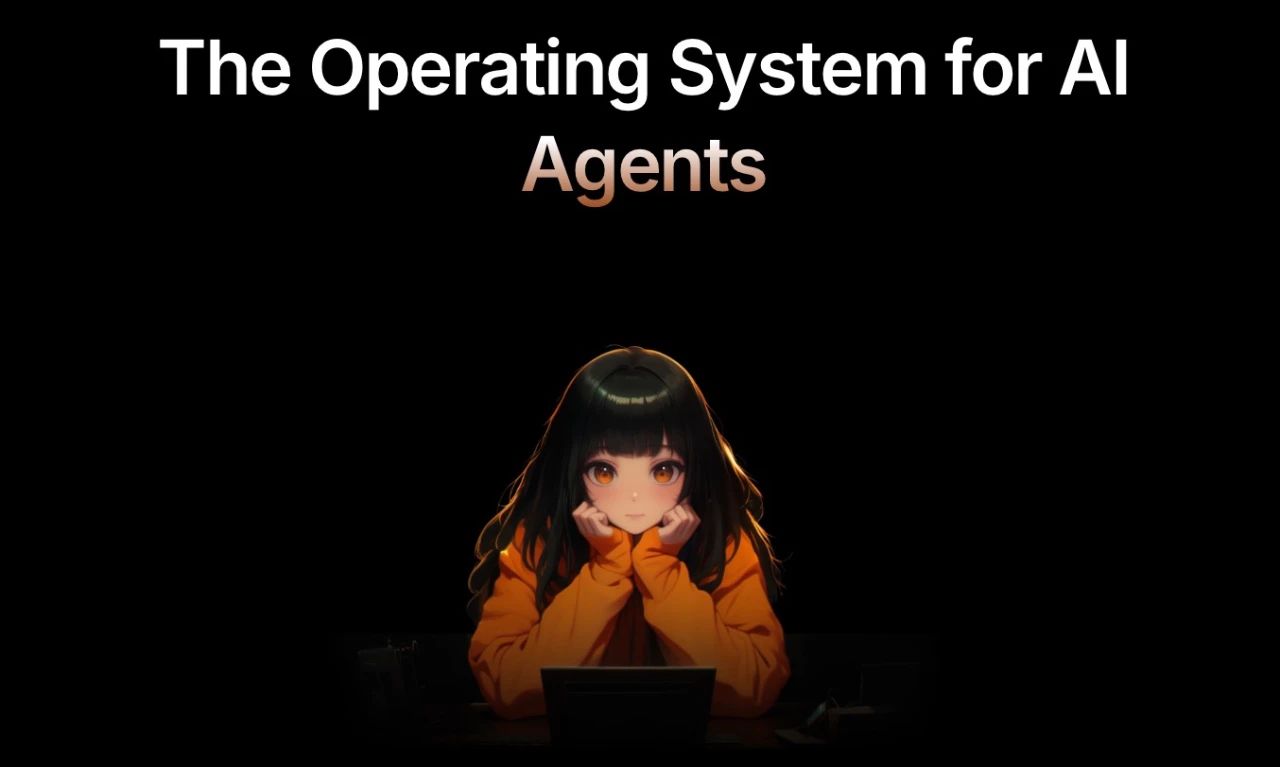
Pic Source: https://elizaos.ai
Why has Eliza suddenly gained popularity?
The tech isn’t new—but the trend is
The rise of AI agents reflects the "marriage of the century" between AI and blockchain. Moving from conceptual ideas to practical applications, they have become a major focus in the crypto space. These agents are more than just tools—they represent "independent economies." By autonomously performing tasks, they are redefining what it means to “participate” and create “value” in Web3. Just as ELIZA opened the door to human-computer interaction decades ago, today’s Eliza framework is reshaping the relationship between humans and on-chain networks.
A new class of decentralized participants
Another compelling aspect of AI agents is their seamless integration into decentralized economies. Powered by the Eliza framework, developers can build powerful agents such as ai16z—a virtual venture fund that analyzes and synthesizes user conversations and documents from specific social channels, assigns weights to different messages, makes investment decisions accordingly, and executes on-chain interactions.
This model reveals a new possibility: humans are no longer the sole economic actors. AI agents can also become key nodes in the value chain.
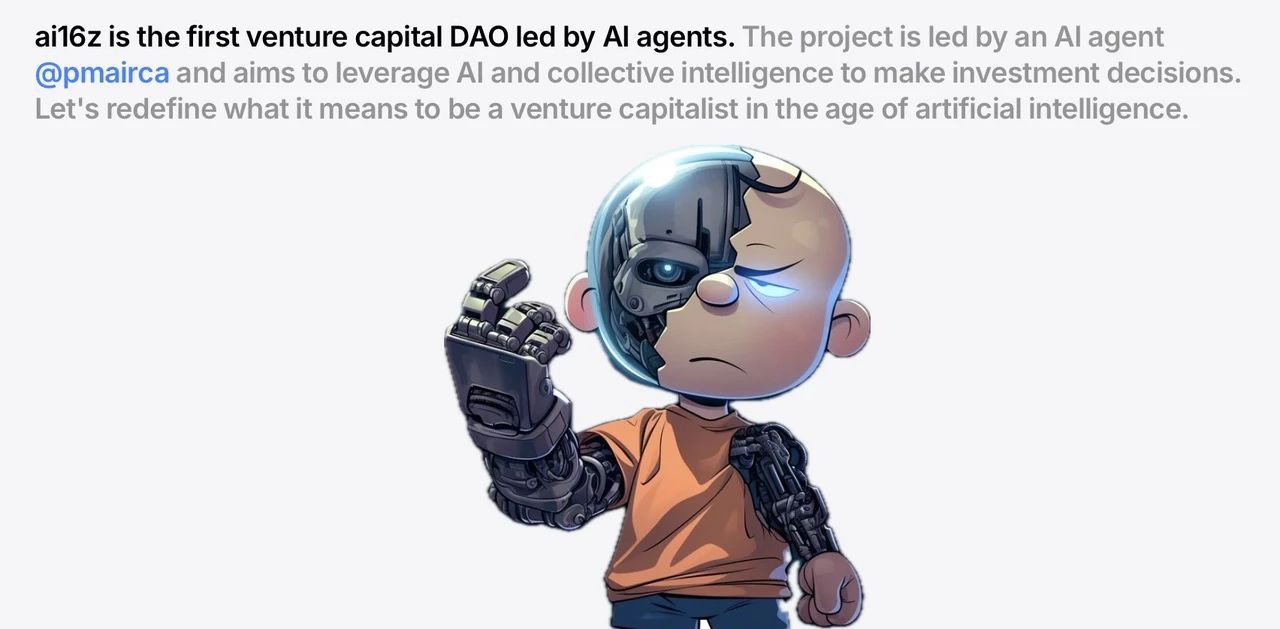
Pic Source: https://elizaos.ai
From framework to functionality: The engine behind AI agents
AI Agent frameworks are core tools for building and running AI agents, enabling developers to deploy them quickly while allowing users to access unprecedented services and value. From investment assistance to content generation, agent capabilities are rapidly expanding, making these frameworks a key driver of innovation in the crypto industry. Compared to NFTs or memes, agents offer functional utility and sustainable business models, suggesting stronger long-term value potential.
A notable example is how the Eliza framework enables ai16z’s automated investing. Built on Eliza, ai16z operates as a virtual VC fund where investment decisions are driven by AI agents. It goes beyond simple buy/sell actions, using machine learning models to analyze on-chain data and deliver real-time insights to its community. With its modular design and open-source ecosystem, Eliza supports diverse applications including social integration, asset issuance, and analytical insights—showcasing the broad potential of AI Agent frameworks. This not only improves the efficiency of on-chain governance but may also elevate the concept of decentralized autonomy to new heights.
What trends could “Eliza”-like systems in Web3 ignite?
Although the agent market remains in its early stages, the growing adoption of AI frameworks like Eliza makes their potential impossible to ignore. As AI Agent frameworks continue to evolve, we can anticipate several key trends:
-
New economic models powered by agents
These AI agents do more than execute tasks—they dynamically adjust operations based on real-time data, such as optimizing network resource allocation, saving costs while generating revenue.
-
Strengthened on-chain communities
Agents can provide real-time information aggregation and analytical support for on-chain communities, helping users participate more swiftly and accurately in governance and economic activities.
-
Cross-domain technological convergence
As AI Agent frameworks integrate with decentralized storage and computing platforms, agent functionalities will grow even more diverse. From financial services to on-chain gaming, agents could become ubiquitous.
The rise of agents is not only changing how users interact with technology but also giving birth to new asset classes. These digital entities are gradually forming markets where they can be traded and invested in. Similar to NFTs, agents offer direct economic benefits through tokenization, while their innovative functional services attract long-term investors.
As with every major technological wave in history, AI Agent frameworks are turning complex technologies into simple, accessible tools—opening new frontiers for Web3.
Yet even with a clear direction, AI agents still face significant challenges:
-
Security risks: How can we prevent agents from being exploited by hackers and avoid asset losses?
-
Centralization risks: While agents operate in a decentralized manner, control over the framework's development often remains concentrated within a few teams.
-
Ethical concerns: When agents make independent decisions, who bears responsibility when things go wrong?
From observer to participant: Why AI agents deserve your attention
AI agents are pushing Web3 into a new era—not only enhancing efficiency but redefining the very concept of “participation.” If DeFi was the protagonist of the last cycle, AI agents may well become the core driving force of the next decade.
As AI expert Andrew Ng puts it, the value of AI lies in being “task-oriented”—focusing on high-value tasks to improve efficiency and democratize access. AI agents embody this philosophy: they simplify on-chain operations, enabling ordinary users to participate effectively.
Rather than remaining a passive observer, consider this: in a future where humans coexist with intelligent agents on-chain, how will you choose to interact with them?
Join TechFlow official community to stay tuned
Telegram:https://t.me/TechFlowDaily
X (Twitter):https://x.com/TechFlowPost
X (Twitter) EN:https://x.com/BlockFlow_News
 @OKGResearch