Reshaping the Landscape: 10+ Groundbreaking Contributions by TON Core Team "NEWTON"
TechFlow Selected TechFlow Selected
Reshaping the Landscape: 10+ Groundbreaking Contributions by TON Core Team "NEWTON"
Although the TON Foundation is better known, few people are aware of the fascinating story behind its early contributing team—the NEWTON team (the core TON team).
 Navigating Web3 tides with focused insights
Author: @drawesomedoge
Translation: Nicky, Foresight News
Through voluntary technical contributions, the NEWTON team earned official recognition from @Telegram's core team in 2021 and successfully completed a technology handover—an event hailed as the most significant "community takeover" in blockchain history.
Introduction: Joining Forces with the NEWTON Team on a Mission
When I joined the NEWTON team, our mission was clear and resolute: maintain the stability of TON testnet2 code while continuously improving developer tools.
Since we couldn’t directly manage the ton-blockchain GitHub repository but code iteration was essential, we founded the NEWTON organization. To ensure smooth network upgrades, we actively promoted the adoption of the NEWTON-developed validator as the standard version across the community.
From the founding of the NEWTON team until June 2021, we achieved numerous groundbreaking results and completed many critical infrastructure projects. Let’s now dive into the 10 major contributions that were pivotal to TON’s early development.
1/ mytonctrl: Automated Node Management Tool
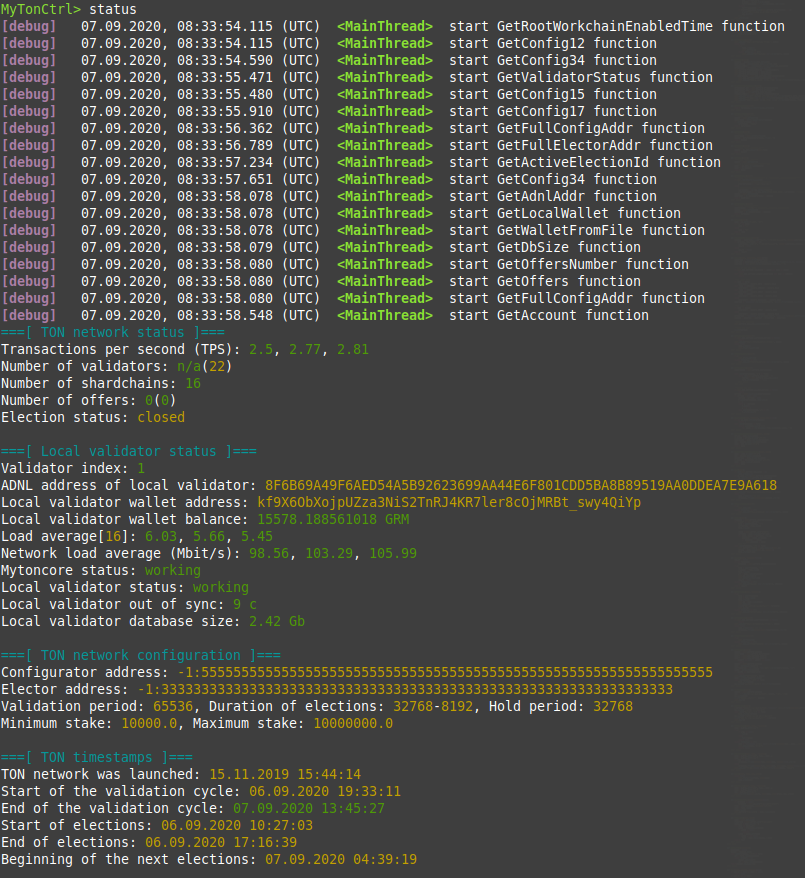
Our first contribution was mytonctrl, a powerful automation tool designed specifically for node installation and validator setup.
It offered a range of core features such as wallet creation, contract deployment, transaction history retrieval, and even a DNS registration system. Notably, this early DNS system differed significantly from today’s modern NFT-packaged DNS systems.
In addition, mytonctrl could configure validators, light servers, and light clients, making it easy to access and parse node data. By 2021, we further enhanced it with CPU-based mining scripts and automated power consumption testing, simplifying the TON mining process.
2/ tonmon: Blockchain Health Visualization Tool
Simply having nodes and accessing data wasn't enough—we needed better visualization tools to monitor the blockchain's health in real time.
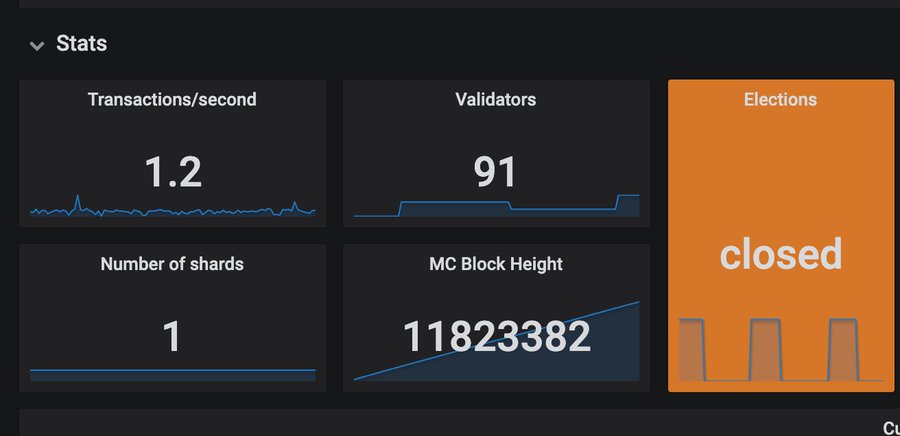
To improve monitoring capabilities, we developed tonmon, a tool capable of tracking key metrics including block creation times, shard states, dPoS (delegated proof-of-stake) election schedules, validator count and weight, and mining contract status. These insights enabled us to quickly respond to any anomalies within the network.
At the time, the network was still relatively small, with only around 80 validators operating globally.
3/ tonmine: Monitoring Giver Contracts
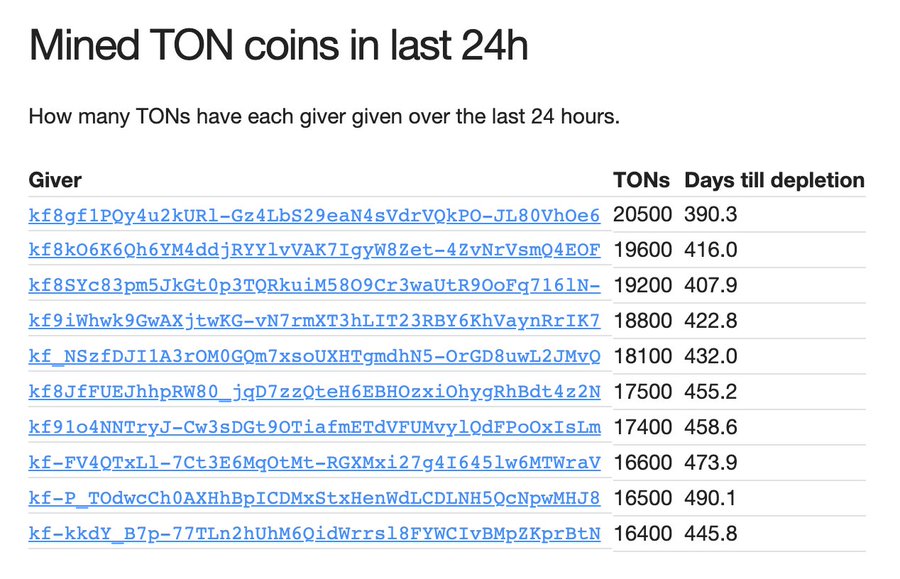
We created tonmine to track mining activities on the TON blockchain. Although there were both large and small givers in TON’s early days, by 2021 only ten small givers remained active. tonmine displayed daily mining statistics for each contract, showing that an individual contract generated approximately 20,000 TON per day, with all contracts combined producing about 200,000 TON daily.
Mining difficulty varied significantly among givers, primarily depending on the number of participating miners. Some givers had low difficulty due to few miners, while others became extremely difficult due to high miner participation. tonmine provided valuable data on mining activity, helping us better understand TON’s mining ecosystem.
4/ Cross-Chain Bridge
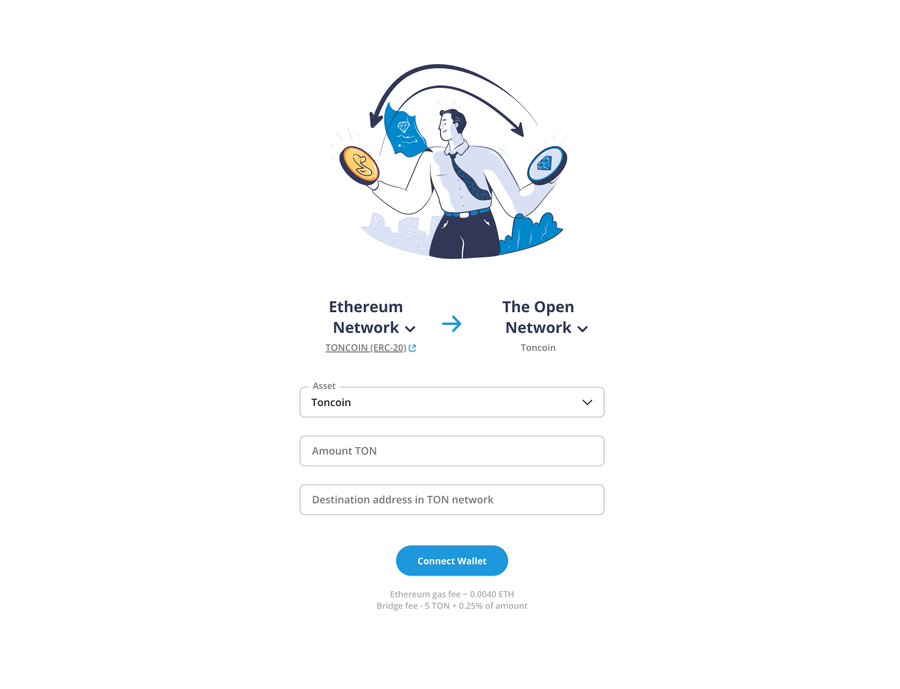
Prior to the establishment of jetton or NFT standards on TON, we already recognized the importance of cross-chain compatibility. Therefore, the NEWTON team began developing a native TON bridge specifically designed for ERC-20 tokens on EVM (Ethereum Virtual Machine)-compatible chains. The bridge was successfully tested at bridge.ton.org, enabling seamless asset transfers between TON, Ethereum, and BSC (Binance Smart Chain), greatly enhancing interoperability and flexibility across blockchain ecosystems.
This cross-chain bridge allowed users to effortlessly transfer assets between different blockchain networks without worrying about compatibility issues, significantly expanding the application scope and utility of digital assets—an important step forward in advancing blockchain adoption.
5/ @cryptobot: Telegram Bot Wallet
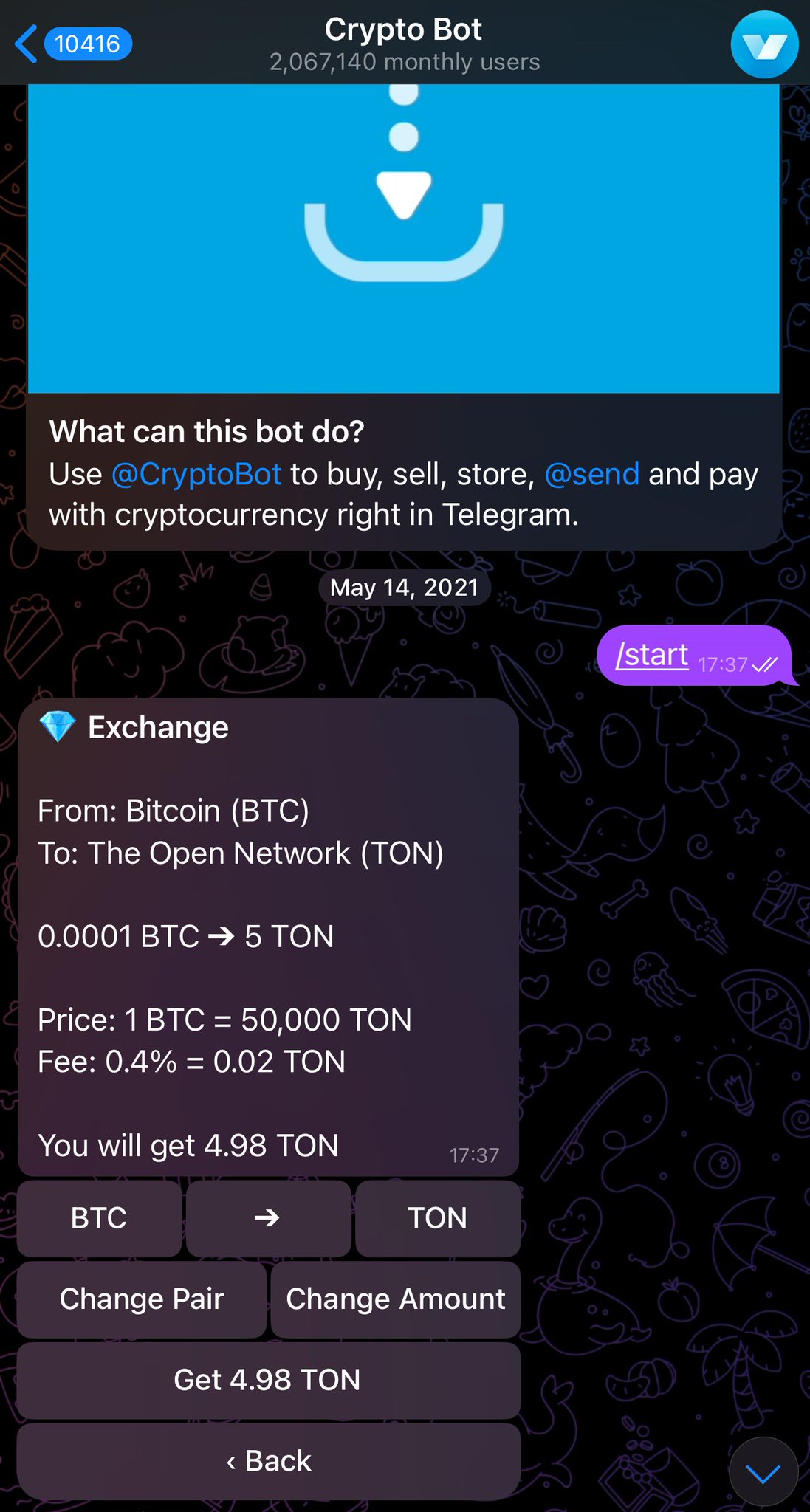
In 2021, before Telegram Mini Apps existed, a member of our team proactively developed the @cryptobot Telegram bot wallet. Initially supporting BTC, TON, BNB, and USDT, it offered users diversified asset management options.
Later, with the launch of Telegram Mini Apps, @cryptobot underwent a full upgrade. This transformation not only enhanced functionality and user experience but also better aligned with Telegram’s native usage patterns, delivering a smoother and more convenient asset management experience.
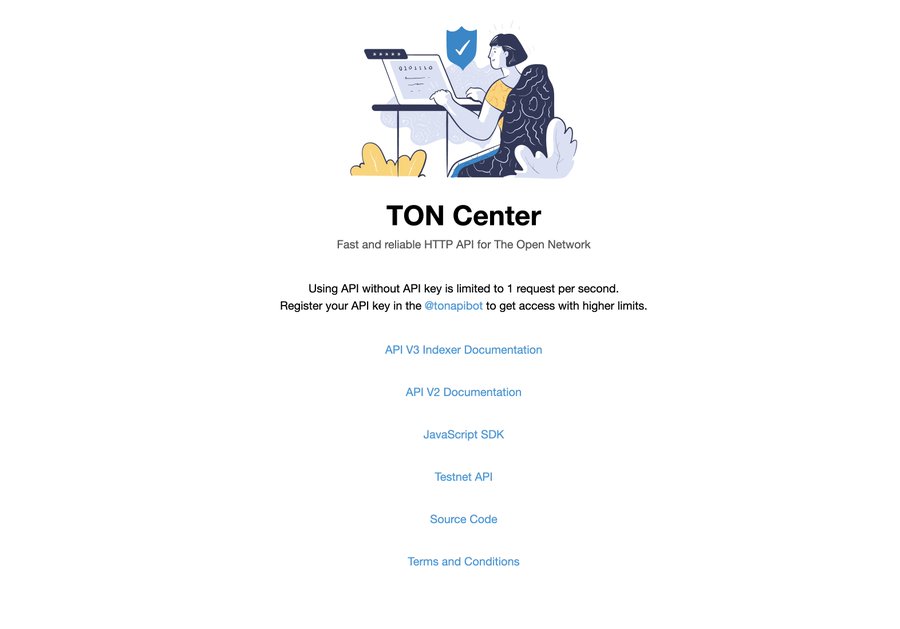
6/ toncenter: Simplified Blockchain Data Access
The introduction of toncenter dramatically simplified how developers accessed blockchain data. They no longer needed to set up full nodes, study liteclient or liteserver implementations, or struggle with serialized data formats. toncenter provided an intuitive public API, allowing wallets and blockchain explorers to easily retrieve on-chain data.
Although TON’s infrastructure has evolved over time—with new API providers like tonxapi.com emerging—toncenter remains operational and continues to serve developers reliably, a testament to its robust design and enduring significance in blockchain data access.
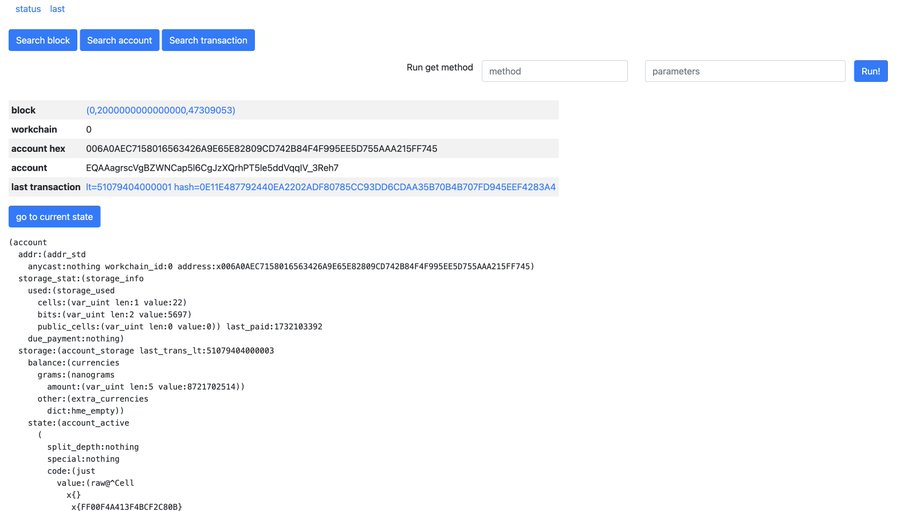
7/ explorer.toncoin.org: TON’s First Blockchain Explorer
explorer.toncoin.org, TON’s first blockchain explorer, was a tool embedded directly within the core codebase. While impressive in its speed of data retrieval, its presentation was highly technical and complex, posing challenges for average users trying to interpret the information.
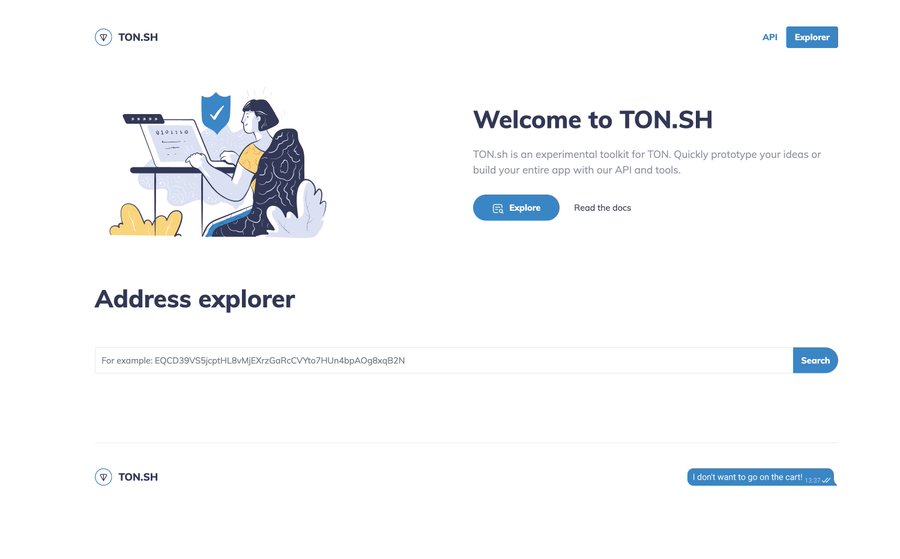
8/ ton.sh: A Next-Generation Blockchain Explorer
To address the complexity of explorer.toncoin.org, we carefully built ton.sh. After solving the challenge of deserializing blockchain data, we launched this public API-powered browser.
ton.sh focused on essential functions: wallet balance checks, transaction history viewing, and crucially, memo support. Before TON Connect or complex DeFi contracts existed, memos played a vital role for early TON users, serving as command instructions—especially critical during exchange deposit operations.
Although more advanced explorers like TONScan and TONViewer later emerged, ton.sh remains a significant milestone in TON’s evolution. It not only reflects technological progress but also offers valuable lessons and inspiration.
9/ TonWeb: An Essential JavaScript SDK
Given that TON smart contracts used relatively complex programming languages like Fift and Func, the NEWTON team developed TonWeb—a JavaScript SDK that greatly simplified wallet creation, deployment, and transaction processes, offering developers a more accessible and efficient toolkit.
With TonWeb, developers could easily perform various operations on the TON blockchain without needing deep expertise in Fift and Func, lowering the entry barrier and accelerating the growth of the TON ecosystem. The release of this SDK laid a solid foundation for broader applications on the TON blockchain.
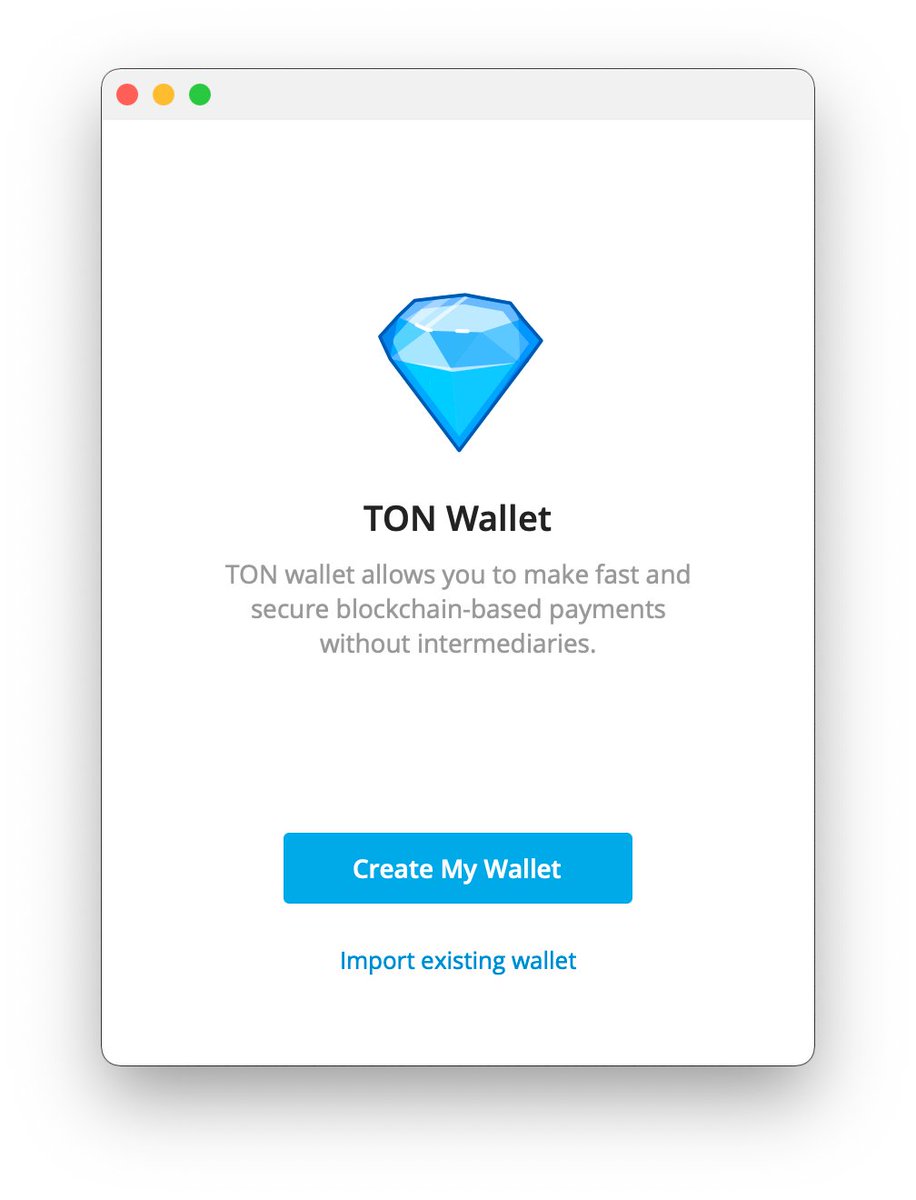
10/ ton wallet: My First TON Wallet
This TON wallet originated from the Telegram era—it was the very first TON wallet I ever used. Surprisingly, it is still functional and actively used today.
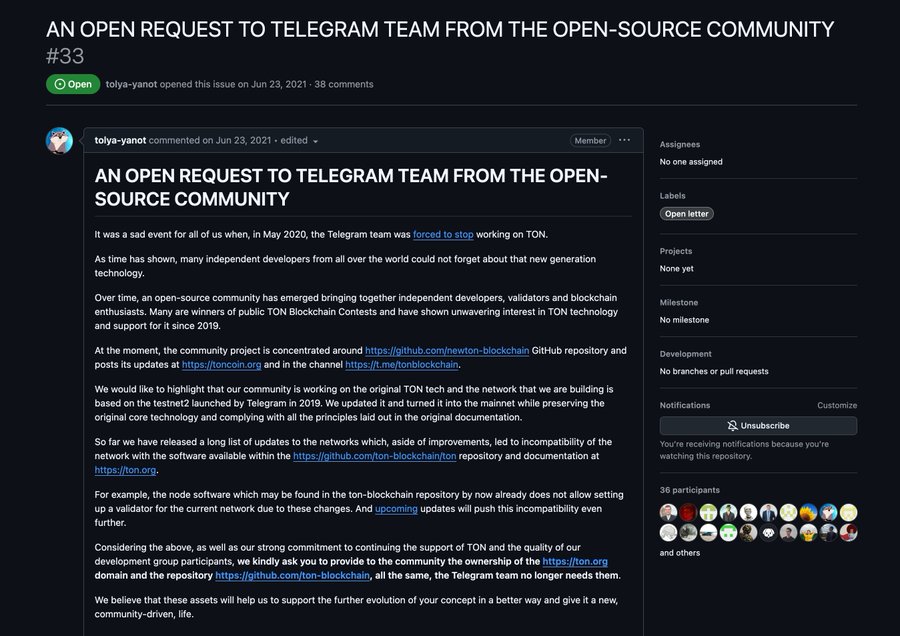
Historic Recognition: NEWTON Team’s Open Letter to @Telegram’s Official Team
Summary of the open letter:
By June 2021, the NEWTON team had made significant contributions to the TON blockchain ecosystem. We committed to running public Liteservers, DHT servers, and archive nodes to ensure network stability and secure data storage.
During this period, our team member tolya-yanot wrote a heartfelt open letter (link: https://github.com/ton-blockchain/TIPs/issues/33) representing the NEWTON team to the TON blockchain team. In the letter, we detailed our efforts and achievements over the past year and respectfully requested GitHub organizational permissions to deepen our involvement in project development and maintenance.
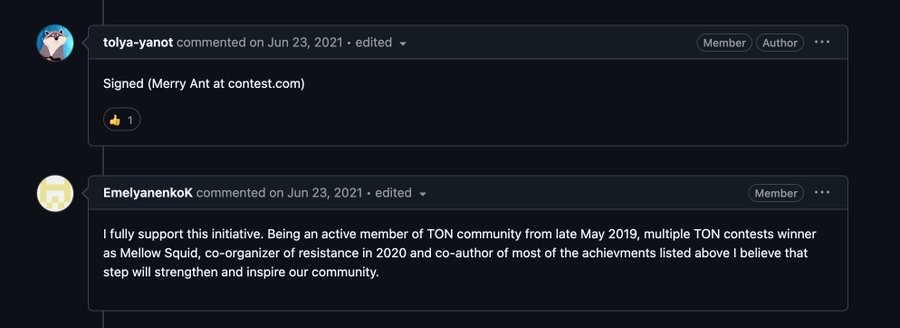
The letter specifically acknowledged two leaders and core members of the NEWTON team.
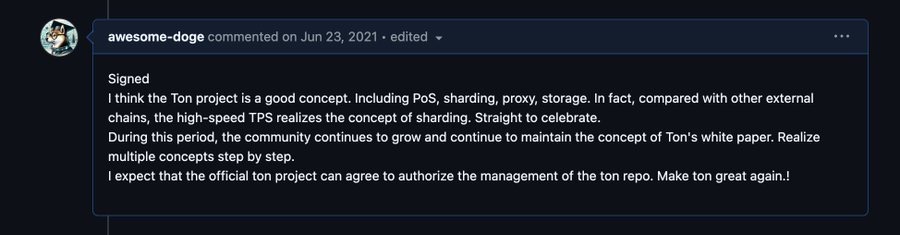
And yes, I myself, Dr. Awesome Doge, was proudly included among them.
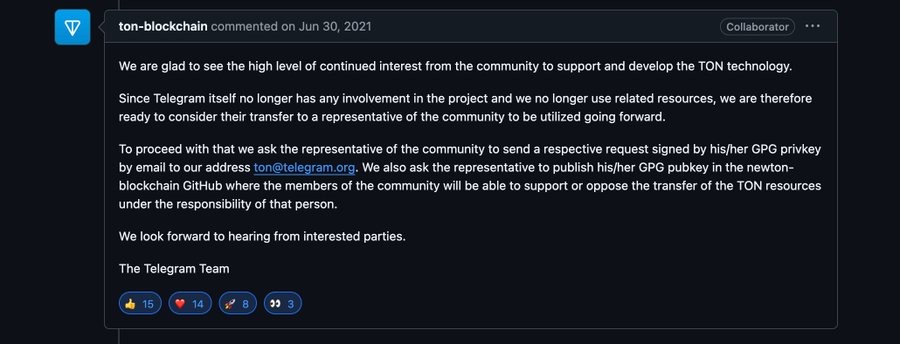
At the time, I viewed the letter merely as a good way to showcase our contributions to the TON network, without expecting any response. Unexpectedly, however, @Telegram’s official team replied on June 30, 2021. Their reply was not only surprising but also marked the beginning of a new chapter in TON blockchain history.
Reflection and Outlook: A Developer’s Notes
Looking back on this extraordinary journey, the early contributions of the NEWTON team went far beyond writing code. Every line of code, every tool we built, every sleepless night spent maintaining the network—all these relentless efforts collectively formed the foundational bedrock upon which TON stands today.
Entering 2024, TON is experiencing explosive growth, with tens of thousands of builders joining the ecosystem—a powerful validation of the vision we held during those challenging early days: TON’s potential was worth fighting for.
So where am I now?
NEWTON members are now spread across the globe, each contributing to TON in their own unique ways. As the only Mandarin-speaking member of the original team, I continue to focus on developer needs and development in Asia. Through the team I lead—@TONX_Studio—we are building critical infrastructure for the TON ecosystem: from developer tools and educational platforms to services tailored for Asian users, we’re working hard to advance TON’s global adoption.
The spirit of NEWTON lives on. This is just the beginning.
Join TechFlow official community to stay tuned
Telegram:https://t.me/TechFlowDaily
X (Twitter):https://x.com/TechFlowPost
X (Twitter) EN:https://x.com/BlockFlow_News
 @drawesomedoge