Can ordinary people use U Cards? Will U Card issuers get into trouble?
TechFlow Selected TechFlow Selected
Can ordinary people use U Cards? Will U Card issuers get into trouble?
For ordinary people using a U card, as long as the source of the U is clean, there shouldn't be much problem.
 Navigating Web3 tides with focused insights
Article by: Xiao Sa Team
As the use of crypto assets becomes increasingly widespread, we can observe a deep integration between traditional financial systems and digital assets, giving rise to products such as Bitcoin and Ethereum spot ETFs, U cards, and more.
Given that the September 24th notice remains in effect, what legal risks do providers of U card services and related business services face? What about ordinary individuals who use U cards for daily transactions, currency exchanges, or moving funds across borders?
Today, the Sa Team will discuss these issues in detail.
What is a U Card?
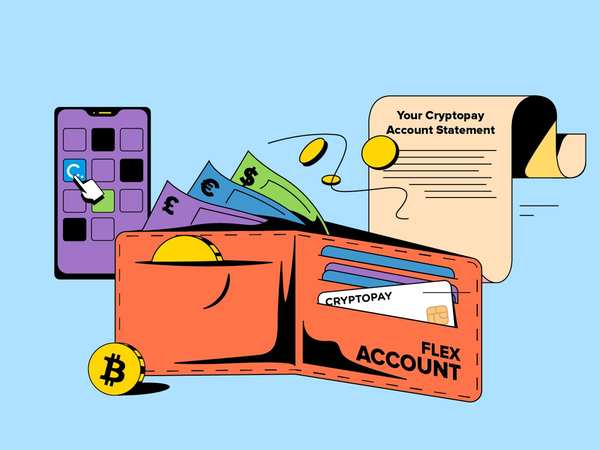
In simple terms, a U card is a bank card that supports depositing, spending, and cash withdrawals using USDT.
Using a U card is very straightforward and similar to using a traditional bank card: users simply transfer USDT from their wallet address to the U card’s designated address. Once loaded, the U card can be used just like a regular debit card—for payments on platforms like Alipay, Meituan, or Elema, grocery shopping, meat purchases, or withdrawing fiat currency from ATMs offline. In practice, it functions almost identically to a standard bank card.
However, the actual payment settlement isn’t directly conducted in USDT. In reality, when a user deposits USDT into the card, the service provider instantly converts the USDT into the fiat currency of a specific country at an agreed exchange rate. When the user makes a purchase, the U card provider handles the clearing and settlement in fiat currency with banks or other entities.
Therefore, even though you're loading USDT onto the card, your spending and ATM withdrawals are effectively done in legal tender. Currently available U cards include Mastercard-based U cards, UnionPay U cards, and others.
Notice anything familiar? The functionality of U cards sounds remarkably similar to that of OTC traders (currency exchangers). Indeed, to some extent, you could think of U card service providers as "licensed" OTC dealers.
Are U Card Service Providers and Related Businesses Compliant?
Short answer: No, they are not compliant—and this poses significant risk.
As widely known, in 2021, China's central bank and nine other government departments issued the “Notice on Rectifying Virtual Currency ‘Mining’ Activities” (commonly referred to as the September 24th Notice), which clearly defines activities such as “conducting exchange services between fiat currency and virtual currency, exchanging one virtual currency for another, acting as a central counterparty to buy or sell virtual currencies, or providing information brokerage and pricing services for virtual currency transactions” as **illegal financial activities**. These are strictly prohibited and subject to legal crackdowns. Moreover, if such illegal financial activities involve unauthorized issuance of tokens, unlicensed securities offerings, illegal futures operations, or illegal fundraising, criminal liability may be pursued.
The September 24th Notice further states: “Overseas virtual currency exchanges providing services via the internet to residents within China also fall under the category of illegal financial activities. For domestic personnel working for overseas virtual currency exchanges, as well as any legal entity, non-legal organization, or individual who knowingly or should have known they were engaged in virtual currency-related businesses but still provided marketing, payment settlement, technical support, or other services, relevant responsibilities shall be pursued according to law.”
Thus, under the September 24th Notice, the nature of U card providers offering Chinese residents conversion, trading, and settlement services between USDT and fiat currency is quite clear—this constitutes a violation of the September 24th Notice.
Additionally, providing promotional services, network technical support, or operational maintenance for U card platforms also qualifies as violating the September 24th Notice.
To date, mainland China has not established any administrative approval mechanism in the financial regulatory domain related to cryptocurrency. Therefore, there is no applicable administrative license (i.e., operating permit) for U card–related businesses.
Hence, our view is that even if a company holds a financial license from a foreign jurisdiction, any entity providing U card services or related business activities to citizens of China must proceed with extreme caution.
Do Ordinary Users Face Legal Risks When Using U Cards?
Short answer: As long as the source of the USDT is clean, there is generally no major issue.
Our position remains unchanged: occasional personal holding and trading of crypto assets by residents in China does not violate laws and regulations nor constitute a crime. Under this premise, directly trading crypto assets versus using a U card for spending are not substantially different.
Can You Receive Illicit Funds Through a U Card?
So far, in handling various crypto-related cases, the Sa Team has not observed instances where individuals faced administrative penalties or criminal risks solely due to using a U card. However, it is common for people who trade through OTC dealers or conduct peer-to-peer trades on exchanges to receive illicit funds (e.g., money from online gambling or telecom fraud), resulting in frozen bank accounts.
As previously mentioned, since the funds handled by U card service providers originate from the traditional financial system and undergo relatively strict compliance checks, the fiat-side funding sources are generally legitimate. Therefore, the likelihood of U card users receiving tainted funds is actually quite low.
Accordingly, for those holding USDT, so long as you don't mind the card issuance fees or transaction charges, using UnionPay or other major bank-issued U cards for personal and family daily expenses or normal overseas travel can be a convenient option.
Note: The above views do not constitute any investment advice. Investing in crypto carries risks; please exercise caution and make independent judgments based on comprehensive information.
Is It Feasible to Use U Cards for Cross-Border Asset Transfers?
In practice, most Chinese crypto users whose bank accounts have been frozen encountered problems during the process of sending out USDT—often because they received illicit funds (such as proceeds from online gambling or telecom scams). In contrast, converting RMB or USD into USDT is generally safer.
Since using a U card poses minimal personal risk, can it be used as a convenient method for moving assets abroad? Is this feasible?
First, China maintains strict foreign exchange controls. Those with study-abroad experience or international travel background are likely familiar with the “$50,000 rule.” According to Article 2 of the *Implementation Rules for the Administration of Individual Foreign Exchange*: “Individual foreign exchange conversion and domestic individual foreign currency purchases are subject to annual quota management, with a limit of USD 50,000 per person per year. The State Administration of Foreign Exchange may adjust the annual quota based on the balance of payments situation.”
In short, unless for special purposes and accompanied by proper documentation at banks, each individual is limited to converting or receiving up to $50,000 worth of foreign currency annually. This is commonly known as the “convenience quota.”
Now, suppose a U card does not impose personal limits on depositing or withdrawing USDT (most U cards currently do not allow direct transfers of USDT), could one convert funds far exceeding $50,000 into USDT, load them onto the card, and then withdraw cash in places like the United States or Dubai?
The Sa Team believes that even if technically feasible in practice, such behavior would violate China’s foreign exchange control laws and regulations such as the *Implementation Rules for the Administration of Individual Foreign Exchange*, and if detected by foreign exchange authorities, could result in administrative fines.
Furthermore, if this method is used to evade taxes, illegally transfer case-related assets, conceal personal property to avoid court enforcement, or operate a profit-driven currency exchange business, it may constitute criminal offenses—subject to case-by-case analysis.
Final Thoughts
In fact, the Sa Team harbors certain concerns regarding this emerging product—the U card. As discussed earlier, while U cards serve as a bridge between traditional finance and the crypto world, enabling users to spend and transfer USDT more conveniently, could they also become new channels for money laundering or hiding and transferring funds?
Moreover, based on current observations, the KYC (Know Your Customer) and AML (Anti-Money Laundering) procedures implemented by U card service providers remain somewhat lax. Combined with the fact that U card providers operating in China are engaging in legally gray activities, the associated legal risks are far from negligible. Therefore, the Sa Team advises U card service providers to prioritize compliance infrastructure development to effectively mitigate potential future risks.
Join TechFlow official community to stay tuned
Telegram:https://t.me/TechFlowDaily
X (Twitter):https://x.com/TechFlowPost
X (Twitter) EN:https://x.com/BlockFlow_News