Polymarket Betting Frenzy: Trump's Victory, Market Consensus or Public Opinion Manipulation?
TechFlow Selected TechFlow Selected
Polymarket Betting Frenzy: Trump's Victory, Market Consensus or Public Opinion Manipulation?
Predictions on Polymarket differ significantly from national opinion poll results.
 Navigating Web3 tides with focused insights
By Kyle Chayka
Translated by Yanan, BitpushNews
Imagine a website where you can bet on future events just like trading stocks—ranging from who will win the presidency to the Federal Reserve's interest rate decisions, or even the relationship status of Taylor Swift and her boyfriend (currently, the odds of them breaking up are priced at 7 cents, meaning the market assigns only about a 7% probability—the breakup isn’t seen as very likely). This is Polymarket, a fascinating and challenging prediction market.
Back in early October, when people were still debating whether Donald Trump or Kamala Harris would prevail, Polymarket’s odds were nearly 50-50, with tiny probabilities left for other candidates including Joe Biden and “other Republican politicians.” But by this week, the landscape had shifted: Trump’s odds rose to 64%, meaning that if you bet on Trump now and hold until the election concludes, every 64 cents wagered could return $1 should he win.
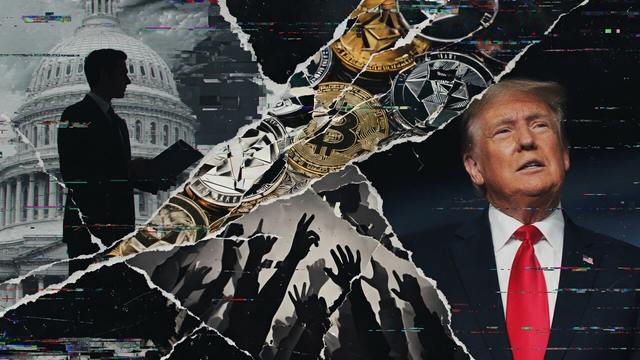
Interestingly, this forecast on Polymarket diverges significantly from national opinion polls and exceeds assessments on similar platforms like Kalshi and PredictIt, which place Trump’s chances at 60% and 58%, respectively. To date, total wagers on Polymarket have surpassed $2 billion. Behind this striking phenomenon lies an undeniable force. Starting in June, an account named Fredi9999 began placing massive bets in favor of Trump. Then, in August and September, several accounts seemingly linked to Fredi9999 joined in, collectively betting over $43 million—not only on Trump but also on broader Republican success—directly fueling the surge in Trump’s perceived likelihood of victory.
In turn, Polymarket’s predictions about Trump have themselves become part of the mainstream election discourse. Prestigious outlets such as Bloomberg and the Financial Times, when analyzing electoral trends, now routinely cite Polymarket data alongside traditional polling results. On October 6, Elon Musk posted on X, stating that Polymarket is “more accurate than polls because real money is at stake here.” By October 18, Trump himself mentioned the platform during a rally in Michigan, commenting on his support levels there: “I’m not entirely sure what it means, but it clearly shows we’re doing exceptionally well.” For those deeply analyzing the election, a central question emerges: Can the enthusiasm of a relatively niche group of crypto-savvy bettors—Polymarket had around 150,000 active accounts as of October—genuinely reflect real-world dynamics? Or could these bets actually be acting as a hidden lever, amplifying Trump’s momentum?
Rarely seen in public, 26-year-old Shane Coplan, founder of Polymarket, recently made an exception and engaged in an in-depth conversation with me, focusing precisely on the dramatic rise in Trump-supporting wagers. He emphasized that the activity of “whale” players like Fredi9999 exemplifies how market forces quietly operate. “While the market allows people to buy assets they believe are undervalued, that hasn't happened yet,” he explained when asked about Harris, adding, “Because no one is confident enough that her value is severely underestimated to justify action.”
Coplan, hailed as a prodigy in the blockchain world, grew up in a teacher’s family in New York City and became an early adopter of Ethereum as a teenager. He immersed himself in academic classics on market theory, among which Robin Hanson’s 2013 essay “Shall We Vote on Values, But Bet on Beliefs?” left a profound impact. In it, Hanson argues that free markets are powerful engines for “incentivizing people to acquire information” and “aggregating that information into consensus prices persuasive to the public”—thus, market mechanisms should influence government decisions and political policies much like they shape corporate valuations in stock markets. Hanson even coined the term “futarchy” to describe a policy-making system driven by prediction markets.
With venture backing from Peter Thiel’s Founders Fund and Ethereum creator Vitalik Buterin, Coplan is attempting to bring Hanson’s vision to life. His creation, Polymarket, is effectively a marketplace for ideas—or more accurately, an intelligent upgrade of sports betting. “Our true goal,” he told me, “is to build a lighthouse for truth.”
I spoke with Coplan via video call from his glass-walled office in SoHo, where he leads a lean team of about 30. With deep golden curls and a slightly urgent tone, he seemed ready to unpack questions he’d long been pondering.
Markets on Polymarket are selected based on user suggestions, but in keeping with cryptocurrency’s core principle of decentralization, the platform uses blockchain technology to remain hands-off in managing them. Each betting topic is carefully framed as a clear question—for example, “Who will be the next James Bond?” (Henry Cavill currently has an 8% chance), or “Will Macron resign as French president in 2024?” (only 1% say yes). Coplan stresses that every question “must have a clear resolution criterion,” meaning there must be an unambiguous method to determine the outcome.
For presidential elections, Polymarket sets strict standards: the result is only finalized when three major news organizations—AP, Fox News, and NBC—consistently declare the same winner. Once a market opens, bettors can place wagers on their preferred outcomes within this peer-to-peer environment. This means every bet requires another user to take the opposite side, creating a battle of wits. As Coplan puts it, the percentage figures represent “the collective judgment of all willing traders in the current market.”
Polymarket operates using a cryptocurrency called USDC. Unlike speculative currencies like Bitcoin, USDC is a “stablecoin,” its value tightly pegged to the U.S. dollar. Yet, like other cryptocurrencies, every transaction on the blockchain is transparent and publicly traceable. This transparency is why we can detect extraordinary betting behaviors like those of Fredi9999.
When an outcome appears settled, Polymarket deploys another market-driven cryptographic tool: UMA. UMA enables a system for proposing and challenging results, adding an extra layer of fairness to the process. (Polymarket notes that despite widespread disputes over the 2020 election in reality, resolving related bets on the platform encountered few issues.) Ultimately, blockchain smart contracts—the self-executing, irreversible exchange mechanisms of the crypto world—efficiently settle all trades and distribute winnings accurately to winners.
Polymarket’s original slogan was “Use the power of free markets to uncover truths about real-world events that matter to you.” Coplan envisioned his platform predicting the arrival of a COVID-19 vaccine and offering a more rational alternative to the chaotic social media landscape. “News and misinformation flood your feed all day—you have to ask yourself: Is this important? Is it real, or just nonsense? You’ll often find something trending wildly while the market remains flat—that’s the market telling you, ‘Hey, this isn’t valuable.’” Coplan’s logic is simple: markets force participants to engage deeply, and the collective market judgment tends to be smarter than expert opinions.
Yet, the self-selected bettors on Polymarket clearly aren’t infallible. First, since the U.S. Commodity Futures Trading Commission ruled in 2022 that the platform functioned as an unlicensed derivatives market, using Polymarket in the United States became illegal. In response, Polymarket reached a settlement, paid a $1.4 million fine, and blocked U.S. users. Nonetheless, many circumvent this ban using VPNs and other tools. (Platforms like Kalshi and other election betting sites face similar challenges.) Moreover, despite easier pathways now available for traditional bank-based betting, the platform still requires users to be proficient with cryptocurrency wallets. As a result, Polymarket’s user base skews noticeably: they are mostly non-Americans, male, and heavy internet users.
Thus, it’s easy to imagine that many users betting on the election may not deeply understand American politics, and their views may instead reflect the crypto community’s favorable disposition toward Trump. After all, Trump has directly courted the industry, even launching his own NFTs, whereas Harris has not done so as explicitly. The pro-Trump “whales” appear to fit this pattern. As one election bettor told me: “It’s hard not to notice who he is; many ‘whales’ know each other and talk.” Polymarket’s superusers noticed these trades and successfully traced them back to a common source. Domer, one of the site’s most active bettors (who supports Harris), briefly chatted with Fredi9999 on Discord and used ChatGPT to analyze the interaction, concluding the user was likely French. Reuters later confirmed these accounts are indeed held by non-Americans.
When I asked Coplan whether these factors might undermine Polymarket’s accuracy in election forecasting, he insisted that political knowledge isn’t necessarily correlated. “According to price discovery theory, even a large group of politically uninformed traders can produce more accurate predictions than a single expert,” he explained. (In 2020, Polymarket bettors assigned Trump a 36% chance of winning.) However, the Polymarket users I interviewed held different views. One suggested that only half of Trump’s market surge reflected crowd wisdom, while the other half was driven by the whale. Could manipulating Polymarket odds become a strategy to influence the election outcome? Perhaps, as some observers speculate, the whale aims to give Trump and his supporters positive talking points, thereby motivating more voters. But when I raised this possibility, Coplan replied: “No, the bets merely reflect the outcome—they don’t imply a direct causal link to the event itself.” His rationalist stance seems at odds with the fact that Trump supporters have found it alarmingly easy to manipulate many other political platforms.
Still, if the broader market disagreed with a large bettor’s position, we’d expect corrective forces to emerge. So far, that hasn’t happened. Even though Fredi9999’s betting has slowed or stopped (or possibly shifted to more obscured accounts), Trump’s odds on Polymarket continue to climb. Yet Coplan remains unfazed. “People are overreacting,” he said. “A 64% chance still means it’s a close race.”
Join TechFlow official community to stay tuned
Telegram:https://t.me/TechFlowDaily
X (Twitter):https://x.com/TechFlowPost
X (Twitter) EN:https://x.com/BlockFlow_News
 @NewYorker