Morph, Monad, Berachain: How a New Generation of Web3 Founders Are Building Cult-Like Communities?
TechFlow Selected TechFlow Selected
Morph, Monad, Berachain: How a New Generation of Web3 Founders Are Building Cult-Like Communities?
From Monad to Berachain再到Morph, the irreplaceable role of the "founder" as a unique cultural symbol for projects is gradually emerging.
 Navigating Web3 tides with focused insights
For Web3 projects, what role should a founder truly play?
Should they be a pure technical genius, a marketing-savvy promoter, or a community wizard skilled at cultivating atmosphere? Aside from the early pioneers of the crypto industry, over the years very few founders of crypto projects have successfully stepped into the spotlight and delivered tangible value to their project's growth.
However, as attention economics and consumer-driven trends continue to permeate the Web3 space, new projects like Monad and Berachain are beginning to demonstrate the irreplaceable significance of the "founder" as a unique cultural symbol for a project:
A founder with strong personal charisma or distinct personality traits can serve as a concrete representative of the project, directly reaching the broadest (potential) community users. Even before mainnet launch, such founders can rally a loyal user base and foster an almost religious community culture—a factor that has become nearly essential for success in this new era of Web3 projects.
The Evolution of the Web3 Founder
In the Web3 world, a community is more than just a collection of users—it’s a culture, a belief, a force. Members unite around shared values and goals.
And for such communities, beyond the project vision itself, the crucial binding cultural core is often “the founder’s personal charisma.”
We can look at Gavin Wood as a prime example—an archetypal case study of an early Web3 founder with extraordinary personal magnetism.
Although Polkadot today faces criticism regarding its development and governance, Gavin Wood, co-founder of Ethereum and founder of Polkadot, was initially celebrated not only for his deep technical expertise but especially for his sharp market insight and communication skills:
Precisely because of these strengths, when Gavin Wood first introduced and marketed Polkadot and concepts like “one-click blockchain creation,” he was able tosuccessfully translate complex technical ideas into accessible user experiences, and through effective promotion, rapidly capture widespread attention and participation from users and investors alike.
Many veteran crypto enthusiasts still clearly remember the moment in 2018 when Gavin Wood demonstrated building a blockchain in just 15 minutes at a Web3 summit.Regardless of how commonplace such a narrative may seem today, back then it genuinely shocked even non-technical audiences, offering a visceral sense that a new era had begun.
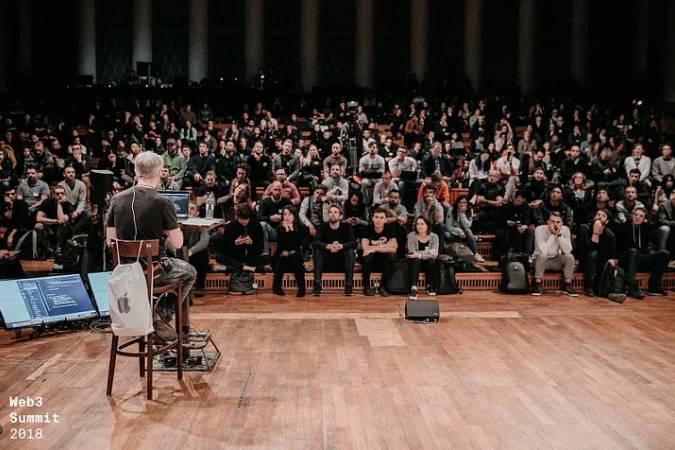
This illustrates thatthe ability to make new narratives and concepts understandable and acceptable to ordinary users is vital for a project’s promotion and growth. Founders must possess not only solid technical skills but also sharp market awareness and exceptional communication abilities to stand out in a competitive landscape and attract more users and investors.
Years later, competition in Web3 has shifted further from pure tech narratives toward large-scale commercial adoption. This means next-generation Web3 founders must go beyond technical prowess, accurately identifying market trends and user needs while effectively communicating with investors, community members, and partners.
Simply put, in the new wave of consumer-focused DApps and other Web3 innovations, the speed and reach of information dissemination determine a project’s influence. This demands thatfounders excel at communication, clearly articulating the project’s value and vision to attract investor interest, earn user trust, and build strong partnerships.
More deeply, Web3 founders must strike a delicate balance between technology, marketing, and community governance—to attract devoted, almost faith-driven community members and cultivate a near-religious atmosphere. This culture isn’t blind worship, but rather a shared belief in the project’s future, uniting people to contribute actively to its development.
Founders as the Critical Few in Community Building
In Web3, consumer-centric narratives are becoming a key driver of industry transformation. Compared to traditional tech-first storytelling, consumer narratives prioritize user needs and experience, positioning users as the core engine of the project. This requires a unifying figure who can reach and bind together as many (potential) community members as possible.
Berachain: From NFT Community to Blockchain Network
For the currently trending Berachain, NFTs are both the project’s origin and its unique cultural symbol. This stems largely from Smokey, one of Berachain’s co-founders, who excels at creating vibrant community energy.
In 2021, he jokingly proposed minting 100 cannabis-smoking bear NFTs, with the twist that these original NFTs would continuously rebase, spawning second- and third-generation offspring. The idea quickly gained massive attention and support, launching Berachain as a fun NFT project with successful distribution across the DeFi community.
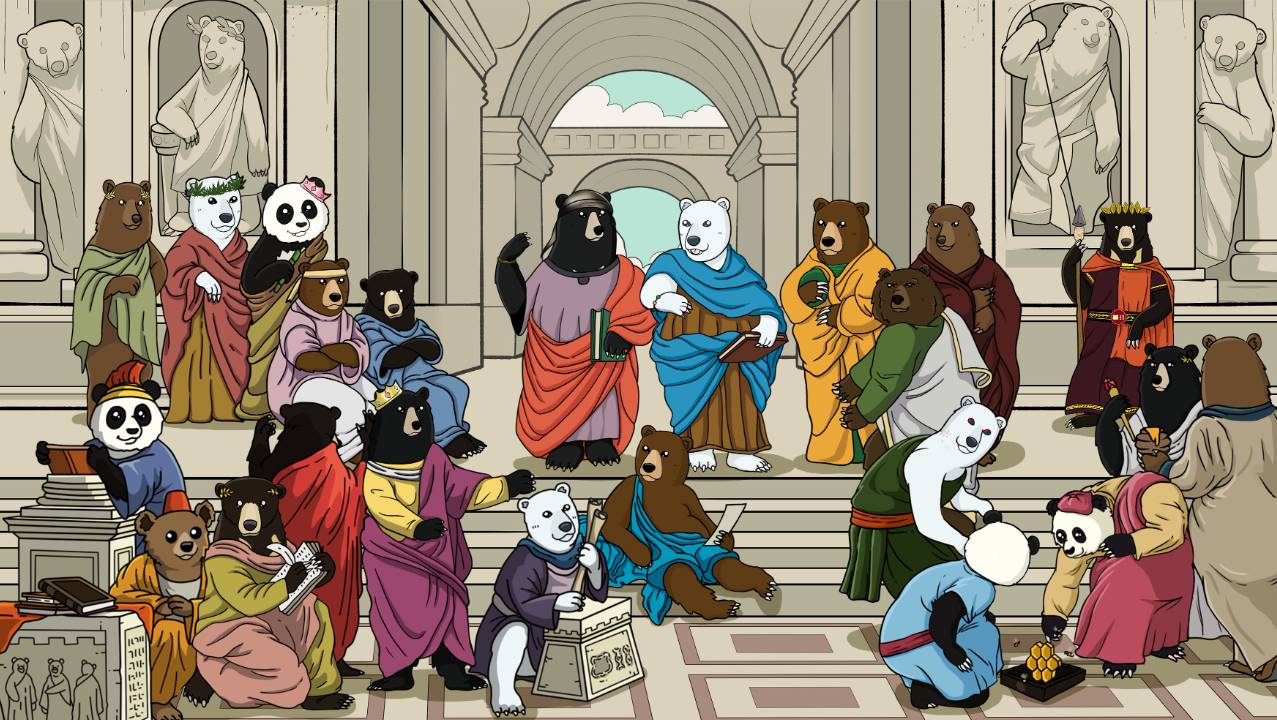
This unique approach attracted technically skilled individuals who were also natural storytellers. As the community grew, members proactively added new gameplay mechanics, maintaining high engagement.
It was during this process of collective building that Smokey identified a market gap, leading him to transition from an NFT community to building a full blockchain—a shift that wasn’t accidental, but organic.
Monad: The Standard-Bearer of "Religious" Community Building
Objectively speaking, while many Web3 projects today claim to build unique cultures and communities, only a handful achieve this at a truly exceptional level. Monad stands out as one of the rare success stories.
Beyond its technical narrative of being a “high-performance EVM-compatible L1,” Keone Hon, founder of Monad, embodies the archetype of a technically driven founder who deeply believes in true decentralization—such as emphasizing low hardware requirements so anyone can run a full node, achieving genuine decentralization.
It is precisely this commitment to decentralization that allows Monad to embrace completely free meme culture, tightly integrating it with community growth and pioneering a new model for Web3 community building:
Creative expression, technical innovation, and cultural output—all find a home within the Monad community. Through meme contests, themed events, and more, community creativity and participation are consistently sparked, with members contributing imaginative and engaging meme content.
These creations spread widely within the community and draw external attention, amplifying Monad’s influence. Over time, a distinctive community atmosphere has emerged—empowering users with a sense of involvement and recognition, making every member feel valued and important.
Members are no longer just users—they are creators and drivers of the project. This powerful cohesion has enabled Monad to generate greater market buzz than most major players, despite its mainnet not yet launching.
An AI-Generated Co-Founder for Morph?
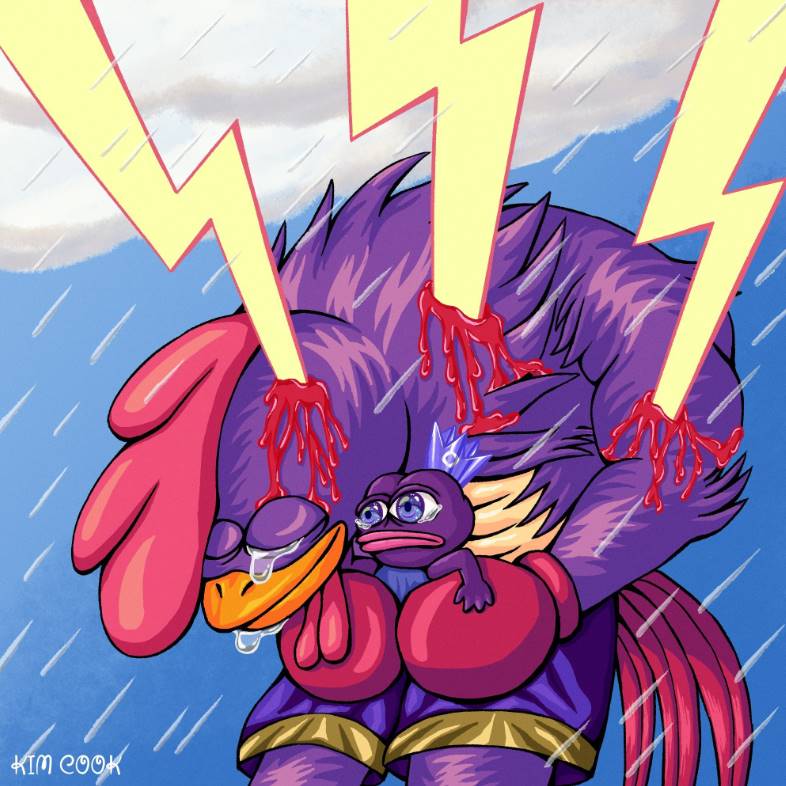
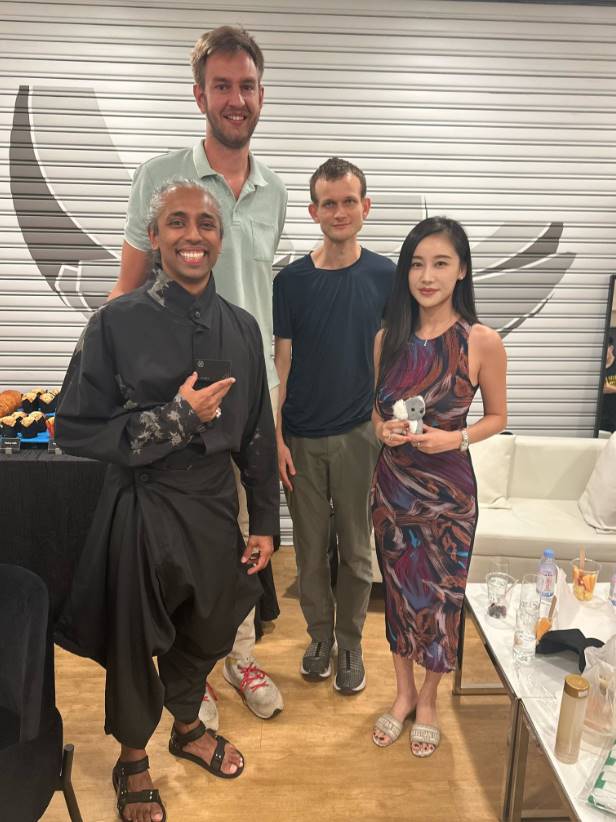
Interestingly, there was recently a Twitter thread questioning Cecilia Hsueh, founder and CEO of Morph, from an angle that now seems almost absurd: the claim was that Cecilia appeared so perfectly competent across all dimensions—like a “hexagonal warrior”—that some speculated she might be an “AI-generated CEO.”
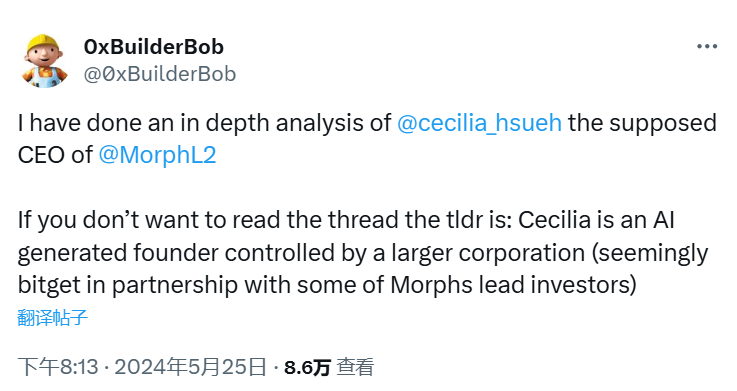
Of course, after Cecilia Hsueh appeared in person at offline events like Singapore’s “Consumer Day,” the speculation quickly faded. But it highlights a paradox facing Web3 founders in this new era:Expectations and standards for founders are rising so high that when someone displays extraordinary—or seemingly “perfect”—ability and charisma, it can trigger skepticism instead of admiration.
On one hand, this bizarre accusation arose partly because of Cecilia’s highly active presence on Twitter and her diverse range of posts, making her seem more like a “Chief Community Officer for Morph.” Her constant engagement creates the impression of 24/7 access to developers and users, while she frequently shares updates, industry insights, and personal views on Morph and consumer applications.
While the Web3 industry has seen many talented women professionals, Cecilia Hsueh stands out as one of the few female CEOs—and the only female CEO in the L2 space—naturally drawing more scrutiny. Traditional biases mean achievements by women in tech are often met with extra skepticism.
Thus, for a serial entrepreneur like Cecilia,entering Web3 early by co-founding a top-five global exchange, then launching Morph—a project that immediately connects with elite industry players likeDragonfly, Pantera, Bitget, Spartan Ventures, Foresight Venturesand reaches the widest possible user base—is a head start that many L2 projects simply don’t have. No wonder some might view her success as too “perfect” to be real.
On the other hand, this is simply the standard expected of any Web3 project aiming to succeed in consumer applications.
For a project like Morph, whose core narrative revolves around consumer apps, meeting end-user demands for Web3 in daily life and enabling developers to easily build consumer-facing Web3 apps requires the founder to think from market and user perspectives, build public trust through engagement, and align strategies with real-world needs.
Only this way can a friendly, inclusive community culture emerge—one that encourages user participation and testing, strengthens product feedback loops, and boosts retention. Cecilia’s frequent use of social media, live events, and public speeches to share insights and explain Morph’s value proposition is clearly a strategic necessity.
Final Thoughts
High-performance L1, Cosmos SDK-based L1, consumer-grade public chain—if judged solely by these labels, Monad, Berachain, and Morph might appear as generic entries among countless unoriginal crypto projects.
Yet in Web3, people often focus too much on technical narratives and overlook the catalytic power of strong ecosystems and communities. In this process, the founder—as the soul of the project—plays an irreplaceable role.
Recently, as Morph approaches mainnet launch, Cecilia publicly shared: “I asked my team: at what stage should we launch the mainnet—early on, or only after significant progress? Many infrastructure projects in crypto keep delaying mainnet (or even testnet) launches and token releases because they don’t know what to build afterward. As long as you haven’t launched, you can’t be proven wrong—you can keep fundraising and attracting user interaction. Then I asked one final question: Do you believe we can truly serve consumer users in the long term? The answer was surprisingly unanimous. So we chose a different path: once the tech is ready, we launch the mainnet.”
In the end, Cecilia believes technology must be “useful”—users must first recognize it as useful, then willingly try it and genuinely believe in its utility. That’s the key to breaking through in Web3 storytelling. And the founder remains the central force driving this culture forward.
Let’s look forward to the Web3 revolution led by this new generation of founders.
Join TechFlow official community to stay tuned
Telegram:https://t.me/TechFlowDaily
X (Twitter):https://x.com/TechFlowPost
X (Twitter) EN:https://x.com/BlockFlow_News