

Forced donations, witch hunts—the LayerZero airdrop drama ends with a 90% drop in on-chain data
TechFlow Selected TechFlow Selected
Forced donations, witch hunts—the LayerZero airdrop drama ends with a 90% drop in on-chain data
In this wave of witch hunt, LayerZero gained plenty of attention, but seemingly failed to deliver significant gains in on-chain activity.
 Navigating Web3 tides with focused insights
Author: Frank, PANews
With ZRO listing on exchanges on the evening of June 20, LayerZero's airdrop spectacle has finally come to an end.
According to the latest Dune dashboard, 85 million ZRO tokens were available in this round, with 278,000 users claiming approximately 40 million tokens by the morning of June 21. The smallest allocation was 8 tokens, while the largest single address received 10,662 tokens. The median claim stood at 53 ZRO tokens.
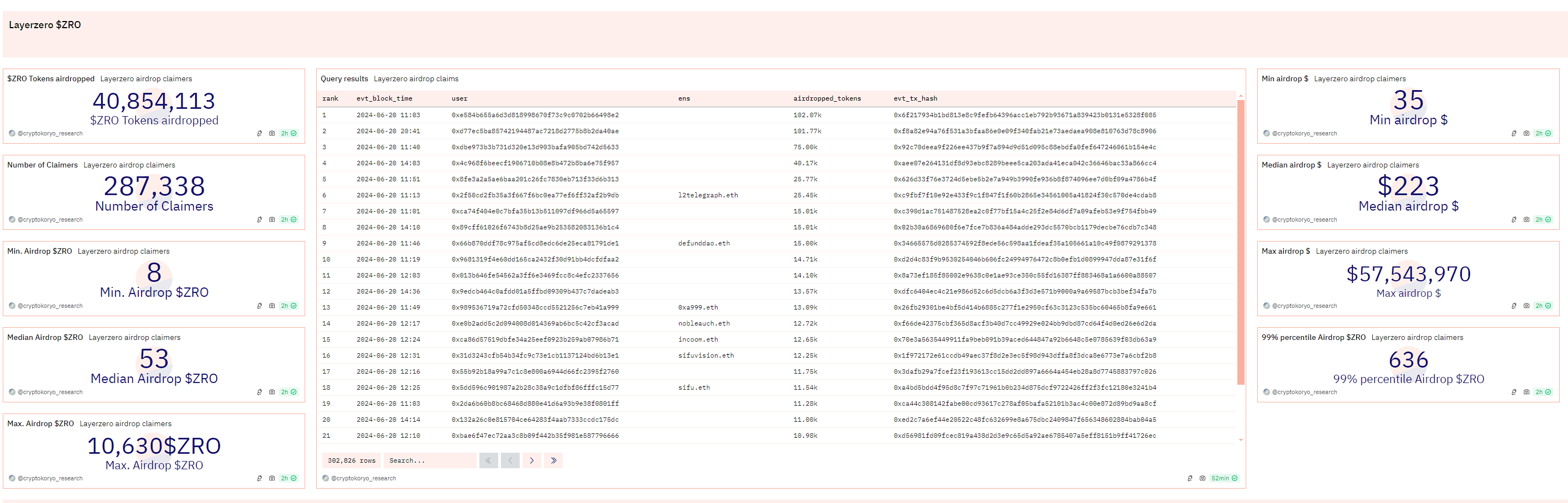
At a price of $3.46 per ZRO on June 21, the total value of this airdrop round reached approximately $290 million. On average, each user received tokens worth $229, with the top recipient gaining $36,000. While significantly lower than previous major airdrops—such as Starknet’s $360,000 maximum and Jupiter’s $130,000—the average payout showed improvement compared to JUP, where nearly half of recipients got only $127. The anti-Sybil campaign appears to have genuinely benefited ordinary, genuine users.
On the other hand, LayerZero’s on-chain activity dropped by over 90% after announcing its crackdown on Sybil accounts. Coupled with widespread backlash against the last-minute donation initiative introduced during token claims, LayerZero’s airdrop captured immense attention but may have also cost it some user goodwill.
The Strictest Anti-Sybil Campaign Ever: Nearly 2 Million Sybil Addresses Blocked
LayerZero is a universal data messaging protocol that securely and simply transfers information across blockchains to enable cross-chain application communication. The project has previously raised three funding rounds totaling $261 million.
After completing a $135 million Series A1 round at a $1 billion valuation in 2022, LayerZero became labeled as a potential “high-reward” project. According to official figures, nearly 6 million wallet addresses had interacted with the protocol, and developers had deployed over 54,000 OApp contracts. Amid soaring airdrop expectations, LayerZero unexpectedly launched what it called the strictest anti-Sybil campaign in history—a full-scale war against Sybil accounts.
On May 4, LayerZero announced the completion of its first snapshot phase and planned for TGE (token generation event) on June 20, launching the ZRO token. It introduced a self-reporting program allowing Sybil operators to voluntarily disclose their addresses and receive 15% of the originally expected allocation. However, this was just the appetizer. LayerZero then launched a bounty program incentivizing users to report Sybil addresses, offering 10% of the reported account’s anticipated rewards. According to the latest Sybil report, about 1.04 million addresses were flagged through community reports, while over 800,000 addresses self-reported as Sybil.
LayerZero stated this anti-Sybil effort saved roughly 1% of the total token supply (about 10 million tokens), which will be redistributed to eligible addresses. As of now, the final list of Sybil addresses and their forfeited allocations remains unpublished.
Farming Studios Suffer Heavy Losses
In this anti-Sybil campaign, farming studios were severely hit—not only losing two years of interactions but also having their carefully cultivated wallet addresses blacklisted.
For example: 0xe93685f3bba03016f02bd1828badd6195988d950
This address had been active for 730 days, starting interaction on March 28, 2022, and completed 229,400 transactions—the longest-interacting address on LayerZero’s chain. Yet it has now been marked as a Sybil account and received nothing. The second-ranked address, 0xcaf331a897594b6f8604d40439fe93f758348dea, with 120,000 interactions, received 5,010 ZRO tokens. Based on this ratio, the 0xe9 address would have qualified for around 10,000 ZRO. At the June 21 price of $3.46 per ZRO, this translates to a lost gain of $34,600.
Another airdrop hunter starting with 0x196a received only 354.92 ZRO from LayerZero. Previously, he had already claimed 104,806 ZK (worth $29,000), 10,250 ARB (worth $14,000), and 17,007 OP (worth $24,000) from other airdrops.
Even more devastating for Sybil operators was the publication of the Sybil address list. The latest data shows around 1.04 million addresses labeled as Sybil. Critics argue these lists could be reused by other projects for future anti-fraud measures, forcing farming studios to either rebuild new identities or exit the ecosystem entirely.
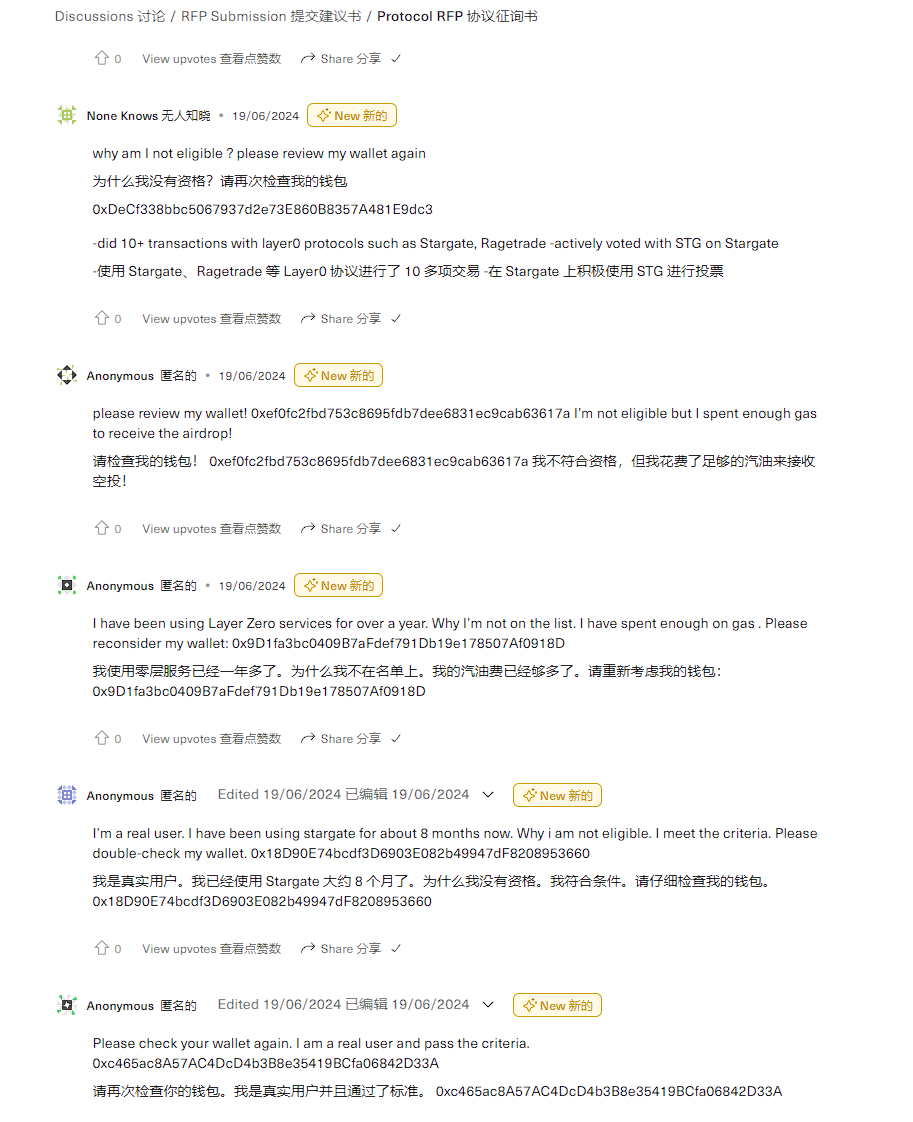
Additionally, the bounty system may have caused misidentification. On LayerZero’s Sybil reporting portal and social media comment sections, numerous users complained their addresses were wrongly flagged as Sybil and requested re-evaluation. This likely explains why LayerZero staff reportedly worked around the clock compared to other airdrop campaigns.
Mandatory Donation Sparks Outrage
Starting at 7:00 PM on June 20, users began claiming tokens, assuming LayerZero’s airdrop was finally complete—only to discover a surprise twist. The LayerZero Foundation published an article introducing a new “Proof of Donation” mechanism: users must donate $0.10 for every ZRO token claimed. The foundation said the donations—up to $18.5 million—would go directly to Protocol Guild, a public goods initiative funding core development in the Ethereum ecosystem.
This move triggered strong backlash from the community. Bryan Pellegrino responded on Twitter that donations weren’t mandatory—users could simply choose not to claim the tokens. His comment only poured fuel on the fire.
Many users felt deceived. During peak claiming times, Ethereum gas fees surged to $33. Many claiming addresses held no funds initially. To claim tokens, users had to deposit funds for donations, pay gas twice (once for deposit, once for claim), with every action incurring costs on-chain.
Facing criticism, LayerZero argued that “there is evidence free tokens do not lead to long-term protocol engagement,” emphasizing they never referred to ZRO distribution as an airdrop. In response, user @JackKeety retorted: “You think ZRO is free, but didn’t users pay all those high cross-chain fees during interactions? You gained visibility and profits, then treated users like electronic beggars waiting for charity. If we don’t plan to claim tokens, can you at least refund the cross-chain fees we’ve already paid?”
Others questioned why, after going to great lengths to exclude Sybils, LayerZero didn’t simply use the saved tokens to reward real developers instead.
In contrast to his usual responsiveness, Bryan Pellegrino remained silent amid growing user discontent.
On-Chain Data Plummets Over 90%
The cost behind the anti-Sybil war has been severe, and on-chain metrics offer the most direct reflection.

On May 1, LayerZero recorded 351,000 daily messages. After announcing the Sybil self-reporting plan on May 4, the number dropped to 75,000 on May 5—a 78% decline. The figure continued falling leading up to the airdrop, reaching just 31,000 by June 20. That’s a 91% drop from May 1 and merely 5% of the peak 766,000 messages recorded on June 30, 2023. Although other projects also experience post-airdrop declines—take ZKsync, for instance: daily active addresses peaked at around 528,000 this year and fell to a low of 194,000 before the airdrop, a maximum drop of 63.2%—LayerZero’s decline is far steeper. Moreover, activity across protocols built on LayerZero generally dropped by over 60% within one month.
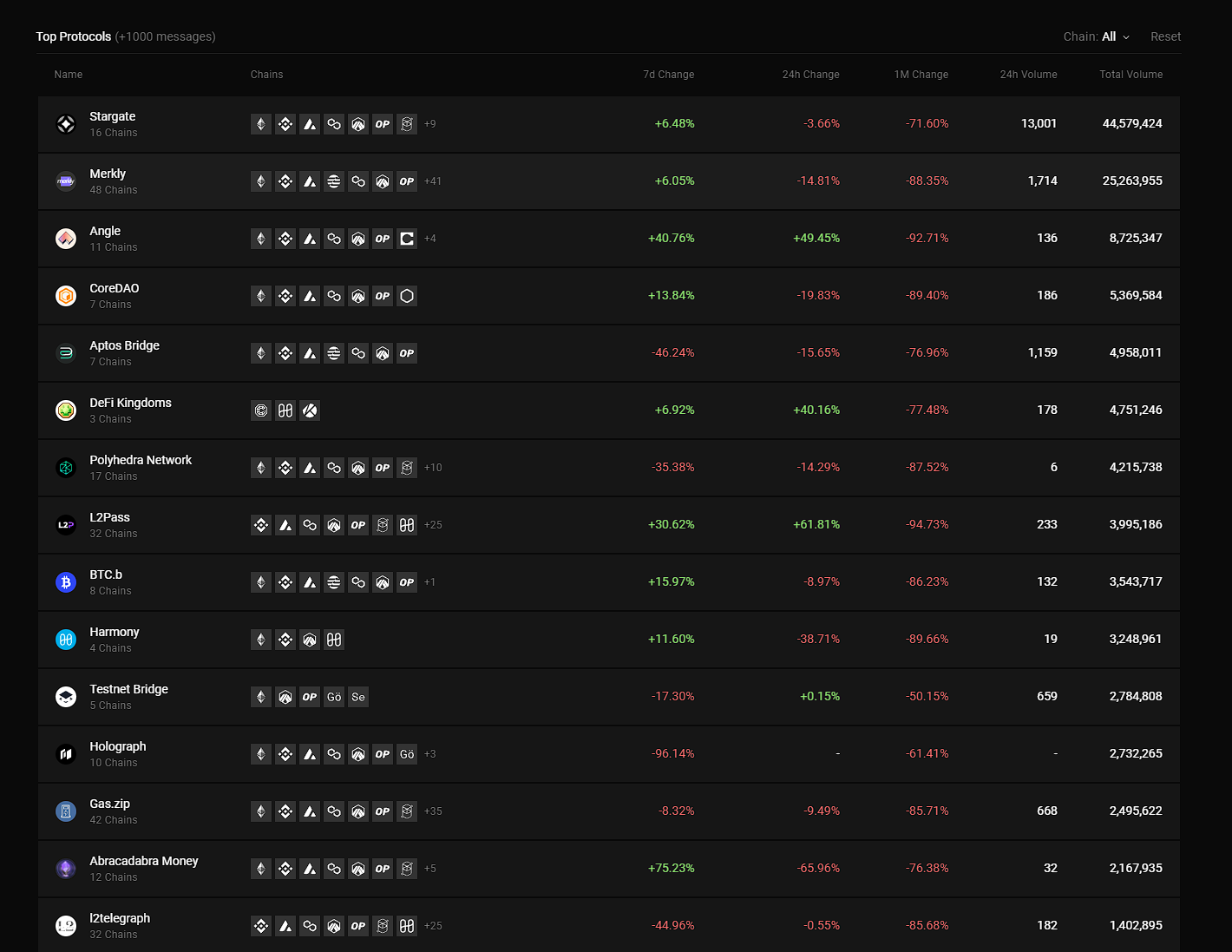
From this perspective, the apparent on-chain prosperity of LayerZero clearly owed much to Sybil activity. From an industry-wide long-term view, curbing Sybil operations does promote fairness for genuine users. But LayerZero’s approach resembled a series of traps: letting Sybil actors invest two years of effort, then launching bounties and publishing blacklists. While LayerZero gained massive attention through this hunt, it failed to generate meaningful sustained on-chain vitality.
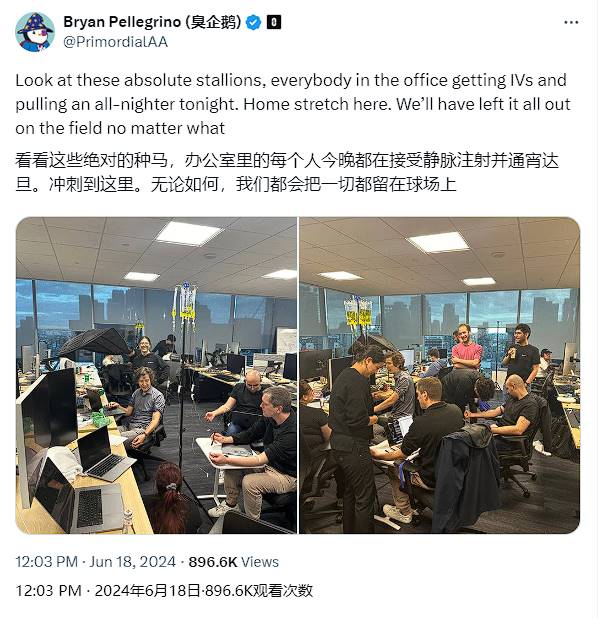
On June 21, LayerZero co-founder and CEO Bryan Pellegrino tweeted: “What an unreal day. I’ve never been this exhausted in my life. Turning off notifications and diving into unknown sleep. Wishing everyone well.” Over the past three days, Bryan has remained highly visible on social media, frequently posting images of late-night work sessions—including one showing employees receiving IV drips to stay awake. The entire team has poured enormous energy into this complex airdrop, but reigniting on-chain activity may prove to be LayerZero’s greatest challenge ahead.
Join TechFlow official community to stay tuned
Telegram:https://t.me/TechFlowDaily
X (Twitter):https://x.com/TechFlowPost
X (Twitter) EN:https://x.com/BlockFlow_News
 PANews















